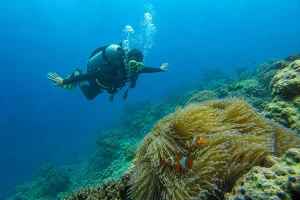

Nusa Penida sits just off Bali’s southeast coast, and it holds some of the clearest water in Indonesia. So it makes sense that Nusa Penida snorkeling has become one of the top reasons travelers add this island to their itinerary. First, the coral reefs stay healthy and colorful. Then, manta rays glide through several bays year round. Meanwhile, sea turtles feed calmly near the shallows.
This guide covers the eight best nusa penida snorkeling spots, along with difficulty levels, prices, and safety tips. As a result, you can pick the right spot for your skill level before you even book a tour.
Quick Summary
- Nusa Penida has 8 standout snorkeling spots, ranging from calm, beginner-friendly Turtle Point to the more advanced Manta Bay.
- The best visibility and calmest water usually happen from April to October.
- Budget group tours start around IDR 350,000, while private tours start from IDR 700,000.
- Manta Bay and other deep-water spots are not recommended for non-swimmers or nervous beginners.

Where Is Nusa Penida Snorkeling Best?
Nusa Penida’s coastline splits into three main zones, and each one offers a different nusa penida snorkeling experience. The west coast holds Crystal Bay and calmer, shallower water. The southwest coast holds Manta Bay and Manta Point, where currents run stronger. Meanwhile, the north coast holds Gamat Bay, Toyapakeh, and several quieter reef spots.
If you search for a nusa penida snorkeling map, you’ll notice most boat tours cluster around these three zones. So a typical day trip visits two or three spots within the same zone, rather than crossing the whole island.
8 Best Nusa Penida Snorkeling Spots
Here are the eight spots worth building your nusa penida snorkeling trip around. Each one includes difficulty, depth, and the marine life you can expect.
Crystal Bay
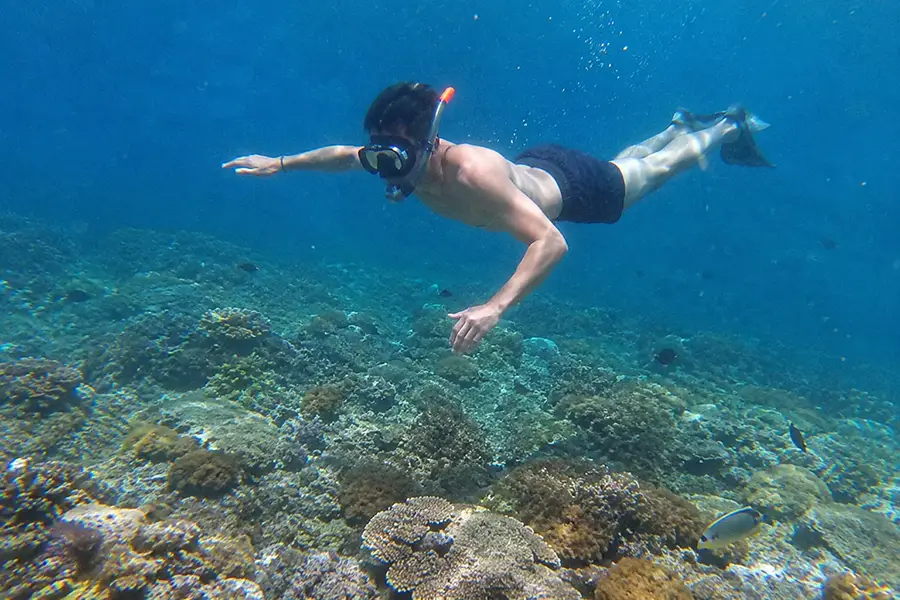
Crystal Bay is the most popular nusa penida snorkeling spot on the west coast. The water stays calm on most mornings, and visibility often reaches 15 to 20 meters. Because of this, Crystal Bay works well for first-time snorkelers.
| Difficulty | Beginner |
| Depth | 2–15 meters |
| Current | Mild, calmer in the morning |
| Best For | Coral reefs, tropical fish, occasional turtles |
| Best Season | April – October |
Gamat Bay
Gamat Bay sits close to Crystal Bay, yet it offers deeper water and more dramatic coral formations. Divers and confident snorkelers enjoy exploring the small underwater caves here. However, beginners should stay closer to the boat, since the drop-off appears quickly.
| Difficulty | Intermediate |
| Depth | 3–20 meters |
| Current | Moderate |
| Best For | Coral walls, underwater caves, reef fish |
| Best Season | April – October |
Manta Bay (Manta Point)
Manta Bay is the top choice for nusa penida snorkeling manta ray encounters. Giant manta rays feed here almost every day, and many swim within a few meters of snorkelers. Even so, the water runs deeper and the current can turn strong. So this spot suits confident swimmers rather than complete beginners.
Also, arrive early. Boats often crowd the bay between 8 and 10 a.m., which can stress the mantas and reduce your own visibility.
| Difficulty | Advanced |
| Depth | 5–20 meters |
| Current | Moderate to strong |
| Best For | Manta rays |
| Best Season | Year-round, calmest April – October |
Toyapakeh Wall Point
Toyapakeh sits on the north coast, and it rewards snorkelers with colorful coral walls and dense schools of reef fish. Because it stays a bit more secluded than Crystal Bay, it offers a quieter nusa penida snorkeling experience.
| Difficulty | Beginner to Intermediate |
| Depth | 3–18 meters |
| Current | Mild to moderate |
| Best For | Coral walls, reef fish, occasional reef sharks |
| Best Season | April – October |
Buddha Temple Underwater
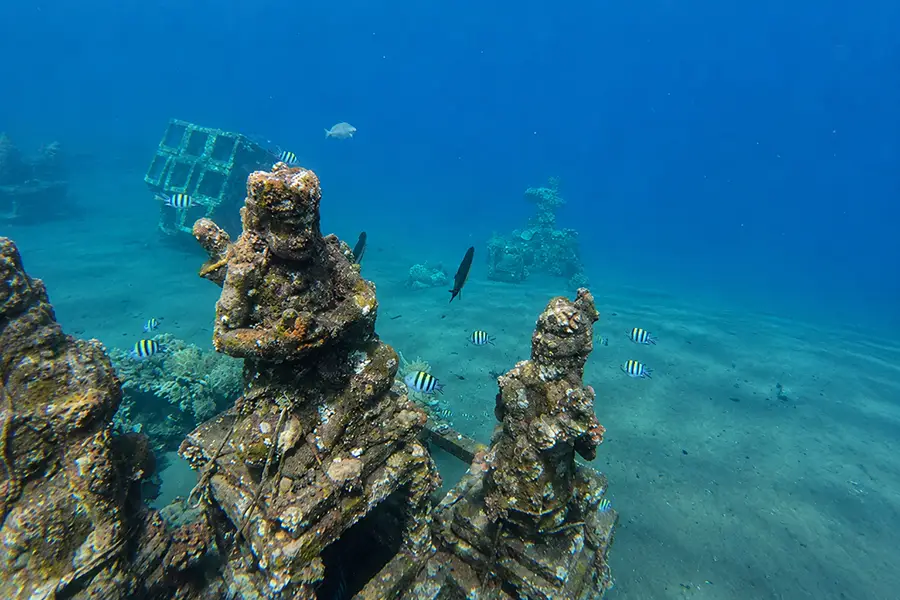
This artificial reef site combines culture with adventure. Local divers placed a Buddha statue on the seabed, and coral has since grown across it. Therefore, this spot works well if you want a unique photo alongside your regular nusa penida snorkeling stops.
| Difficulty | Intermediate |
| Depth | 6–15 meters |
| Current | Mild |
| Best For | Artificial reef, photography, coral growth |
| Best Season | Year-round |
Turtle Point
Turtle Point offers the calmest water on this list, which makes it ideal for nervous swimmers. Sea turtles feed on seagrass close to the surface, so you rarely need to dive deep to see them. In fact, several guides recommend Turtle Point as the very first stop for anyone new to nusa penida snorkeling.
| Difficulty | Beginner |
| Depth | 1–8 meters |
| Current | Mild |
| Best For | Sea turtles, calm shallow reef |
| Best Season | Year-round |
SD Point
SD Point sits near Toyapakeh, and it holds a colorful, healthy reef with fewer crowds than the bigger-name spots. Because the current stays moderate, intermediate snorkelers tend to enjoy this stop the most.
| Difficulty | Intermediate |
| Depth | 3–16 meters |
| Current | Moderate |
| Best For | Coral gardens, reef fish |
| Best Season | April – October |
PED (Ped Beach)
Ped Beach offers shallow, protected water close to the harbor, so it works well as a warm-up spot before you head to deeper sites like Manta Bay. First-timers often start their nusa penida snorkeling day here.
| Difficulty | Beginner |
| Depth | 1–6 meters |
| Current | Mild |
| Best For | Calm water, easy entry, small reef fish |
| Best Season | Year-round |
Nusa Penida Snorkeling for Beginners: Which Spots Are Safe?
If this is your first time in the water, stick to Turtle Point, Ped Beach, or Crystal Bay during calm morning conditions. Each of these spots for nusa penida snorkeling for beginners stays shallow, and the current rarely picks up before midday.
On the other hand, avoid Manta Bay and Gamat Bay if you’re not a confident swimmer. Both spots drop quickly into deeper water, and the current can shift without much warning. Instead, build your confidence at the calmer sites first, then move on once you feel ready.
Nusa Penida Snorkeling Spots to Avoid (and When)
- First, avoid Manta Bay between 8 and 10 a.m., since boat traffic peaks and the water gets crowded.
- Second, avoid Gamat Bay and Manta Bay entirely during the rainy season (November to March), because currents grow unpredictable and visibility drops.
- Then, avoid any deep-water spot if strong wind warnings are active. Local guides usually know before you do, so always follow their call.
- Finally, avoid snorkeling alone at any spot on this list. Currents around Nusa Penida can change fast, even at sites rated beginner-friendly.
Nusa Penida Snorkeling Price: What to Expect
Here’s what a typical nusa penida snorkeling price looks like, based on tour type:
- Budget group tour from Bali: IDR 350,000–500,000 per person
- Private tour from Bali: IDR 700,000–1,200,000 per person
- Fast boat from Sanur to Nusa Penida only: IDR 150,000–200,000 per person
Most group and private tours include snorkeling gear, a guide, and a boat ride between spots. However, lunch, underwater photography, and hotel pickup outside South Bali sometimes cost extra. So it’s worth confirming exactly what’s included before you book.
What to Expect on a Nusa Penida Snorkeling Tour
Most tours begin with a fast boat ride from Sanur, Bali. After that, you’ll typically visit two to three spots in the same zone, since traveling between zones takes extra time.
A standard nusa penida snorkeling tour usually includes:
- Snorkeling gear, including a mask, snorkel, fins, and a life jacket
- A professional guide who watches your safety throughout the day
- Refreshments on board
- Optional underwater photography, available on request
If you book through Bali Touristic, you can also arrange a private car rental with driver for the rest of your trip, which makes island-hopping between snorkeling days much easier.
Tips for a Great Nusa Penida Snorkeling Trip
- Go early. Morning water stays calmer, and visibility improves before boat traffic picks up.
- Listen to your guide. Safety instructions matter most at deeper spots like Manta Bay.
- Use reef-safe sunscreen. Regular sunscreen can damage coral over time.
- Keep your distance from marine life. Never touch or chase turtles or manta rays.
- Stay hydrated. Bring water, especially if you spend hours in the sun between spots.
How to Book a Nusa Penida Snorkeling Tour
Before you book, compare a few operators. First, check recent reviews rather than star ratings alone. Then, ask what’s included, since gear, lunch, and hotel pickup vary between providers.
Group tours cost less and suit solo travelers who want to meet other people. Private tours, meanwhile, cost more but let you set your own pace and pick your own spots. Finally, you can book directly with a local operator or through platforms like Klook, though direct booking often gives you more flexibility to customize your day.
If you’d rather skip the comparison shopping, Bali Touristic offers guided and private nusa penida snorkeling tours with experienced local guides. You can also add an airport transfer if you’re arriving in Bali just before your trip.
Ready to Explore Nusa Penida?
Whether you’re after your first calm swim at Turtle Point or a close encounter with manta rays, Bali Touristic’s tour packages can help you plan the right day. Need a ride from the airport first? Check their Bali airport transfer service. Prefer to explore at your own pace? Their car rental with driver makes that easy too.
Questions before you book? Message Bali Touristic on WhatsApp and the team will help you plan your trip.

Questions About Nusa Penida Snorkeling
Is Nusa Penida snorkeling good for beginners?
Yes. Turtle Point, Ped Beach, and Crystal Bay all stay shallow and calm, which makes them safe choices for first-time snorkelers.
How much does Nusa Penida snorkeling cost?
A budget group tour usually costs IDR 350,000 to 500,000 per person, while private tours start around IDR 700,000.
Where can I see manta rays while snorkeling in Nusa Penida?
Manta Bay, also called Manta Point, offers the best chance to swim near manta rays. Even so, this spot suits confident swimmers rather than complete beginners.
What is the best time of year for Nusa Penida snorkeling?
April through October usually brings the calmest water and best visibility. The rainy season, from November to March, can bring stronger currents at deeper spots.
Do I need to know how to swim to go snorkeling in Nusa Penida?
Basic swimming ability helps at every spot, and it becomes essential at deeper sites like Manta Bay and Gamat Bay. Beginners and non-swimmers should stick to shallow spots like Turtle Point.
What should I bring on a Nusa Penida snorkeling tour?
Bring reef-safe sunscreen, a towel, water, and a change of clothes. Most tours provide the snorkeling gear itself, so you won’t need to bring your own mask or fins.