
Learning to surf in Bali should feel exciting, not stressful. Canggu makes that easy, because it has some of the most forgiving beach breaks on the island. If you are searching for the right spot for Beginner Surfing Canggu, this guide walks you through where to go, when to go, and what your first lesson actually looks like.
Canggu has become one of the best places for new surfers in 2026. The vibe is relaxed, the waves are soft in several areas, and surf schools are easy to find along the coast. So grab your sunscreen, because your first wave is closer than you think.

Why Canggu Is Great for Beginner Surfing
The magic of Canggu lies in its mix of beginner-friendly waves and a genuinely welcoming atmosphere. Mornings here are quiet, the water stays warm year round, and nobody minds if you fall off your board a dozen times. That last part matters more than people expect, since a relaxed crowd makes learning far less intimidating.
Because so many beaches share the same easy conditions, you rarely need to travel far once you are ready to paddle out. This also means your Canggu surf spots options stay close together, so you can try a different beach each day without a long commute.
Best Beaches for Beginner Surfing Canggu
Not every beach in Canggu suits a first timer, so it helps to know which ones do. Here are the spots most beginners head to first, along with what makes each one different.
| Beach | Wave Type | Best For |
| Batu Bolong Beach | Sandy bottom, long rolling waves | Complete beginners, longboarders |
| Old Man’s | Reef bottom, mellow break | Beginners ready for the next step |
| Berawa Beach | Sandy bottom, gentle waves | Quieter practice, fewer crowds |
| Echo Beach | Reef bottom, powerful break | Intermediate and advanced surfers |
1. Batu Bolong Beach
Batu Bolong is the most popular starting point for beginner surfing Canggu, and for good reason. The bottom is sandy rather than reef, the waves roll in long and slow, and the beach stays busy with surf schools throughout the day. Longboarders especially love this stretch because the gentle break gives plenty of time to find balance.
Expect company here, since Batu Bolong draws the largest number of first time surfers in the area. That crowd is actually a plus for beginners, because instructors and fellow learners tend to look out for each other in the water.
2. Old man’s
Just down the beach from Batu Bolong, Old Man’s sits near a popular bar strip and offers a mellow wave with a wide break. It has more of a reef bottom than Batu Bolong, but the wave itself stays soft enough for confident beginners who have already caught a few waves. Many surfers treat it as a natural next step after their first lesson at Batu Bolong.
The atmosphere feels social and easygoing, which makes it a favorite for travelers who want to surf and relax in the same afternoon. Cafes and beach bars sit just steps from the sand, so a post-surf smoothie bowl is never far away.
3. Berawa Beach
Berawa Beach sits slightly south and offers a quieter alternative to the busier spots. The waves are still gentle, and the sandy bottom keeps things forgiving for anyone still working on their pop up. Because it draws smaller crowds, Berawa suits surfers who want more space to practice without dodging other boards.
Board rental and instructors are available right on the beach, so you do not need to plan ahead if you decide to try Berawa on a whim.
4. Echo beach: for when you are ready to level up
Echo Beach deserves a mention, but not as a beginner spot. The wave here breaks over reef and moves with more power, which makes it better suited to intermediate and advanced surfers. If you are just starting out, save Echo Beach for later in your trip once you have a few sessions under your belt.
For a broader look at spots across skill levels, our Bali surf guide breaks down where to go once you outgrow the beginner beaches. It covers everything from Kuta’s gentle beach breaks to the world class reef at Uluwatu.
Best Time to Surf in Canggu
Canggu offers waves throughout the year, but conditions do shift with the seasons. The dry season, from April to October, brings the most consistent swells and cleaner mornings, which makes it the easiest window for beginners. The wet season, from November to March, still has surfable waves, just smaller and with fewer crowds in the water.
Time of day matters too. Early mornings tend to have calmer wind and glassier conditions, so most surf schools schedule their beginner lessons before ten in the morning. If your schedule allows it, an early start will give you the smoothest waves of the day.
Tide plays a role too, especially at spots with more reef underneath. A mid to high tide covers the reef better and creates a softer, safer wave for beginners, while a low tide can expose rocks and coral at spots like Old Man’s and Echo Beach. Most surf schools already time their beginner sessions around a friendly tide, but it never hurts to ask before you book.
Choosing the Right Board for Your First Session
Your first board matters almost as much as your first wave. Nearly every beginner starts on a soft top foam board, which is longer, wider, and far more forgiving than a hardboard. The extra volume makes it easier to paddle and catch waves, while the soft foam surface means a stray bump hurts a lot less than fiberglass.
Surf schools in Canggu almost always provide a soft top as part of the lesson, so you will not need to buy or bring your own. Once you can consistently stand up and turn, your instructor will usually suggest moving to a smaller, harder board as the next step in your progression.
What to Expect on Your First Surf Lesson
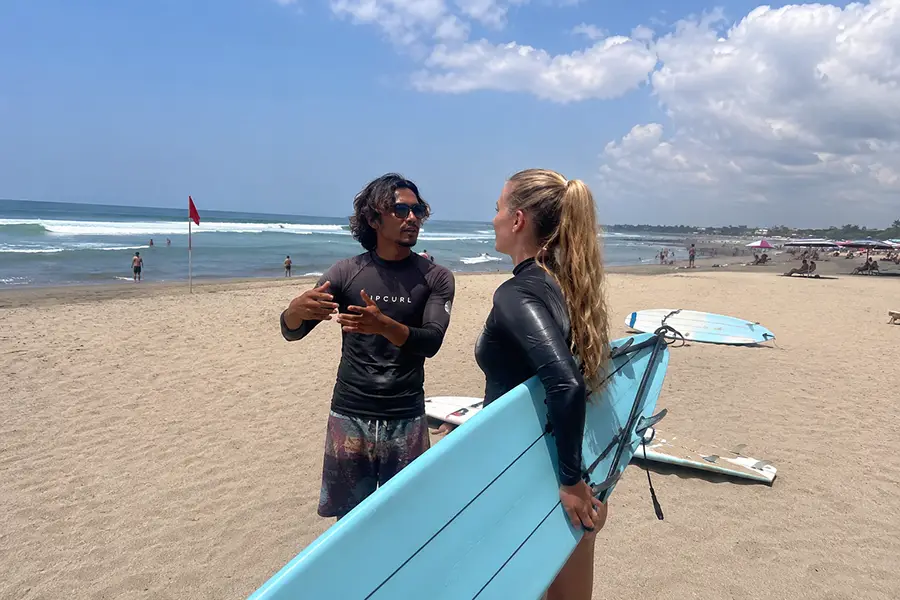
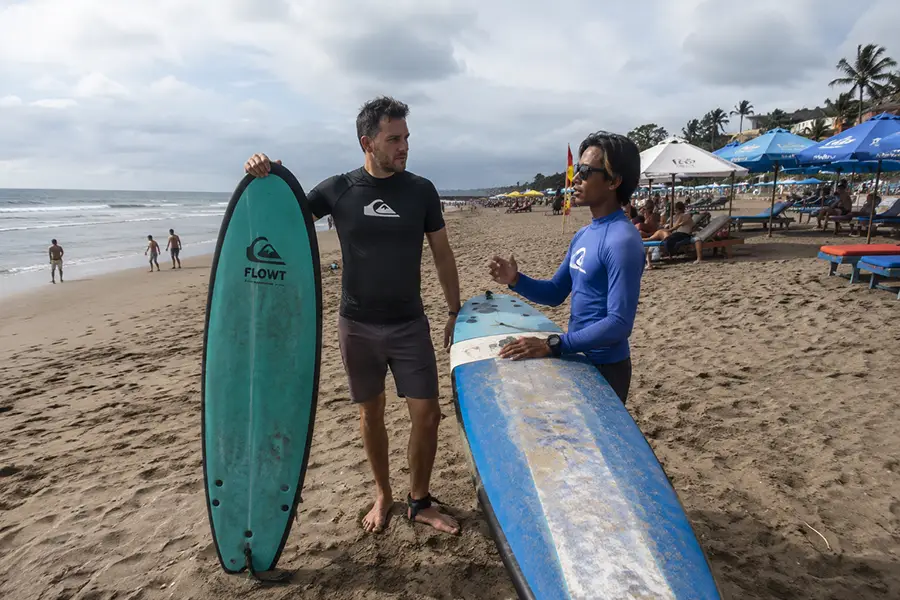
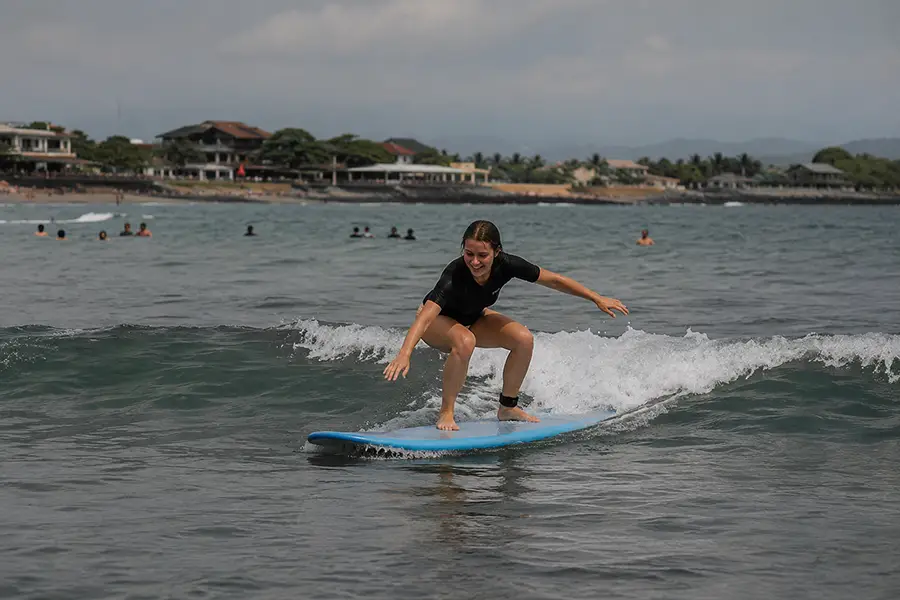
Most surf lessons for beginner surfing Canggu start on the sand, where your instructor walks you through paddling, popping up, and reading a wave before you ever touch the water. Once you feel ready, you head into waist deep water together and start catching small, whitewater waves.
Lessons are usually available as either a single two hour session or a multi day package, and pricing typically runs from around IDR 150,000 to 400,000 per session depending on group size and the school you choose. Board rental alone usually costs less, closer to IDR 50,000 to 100,000 if you already know the basics. Most packages include a board, a rashguard, and drinking water, so you really only need to bring sunscreen and a sense of humor.
Bali Touristic does not run or partner with any specific surf school, so you are free to book lessons directly with whichever school you choose once you arrive. Most schools take bookings through a simple WhatsApp chat, and Batu Bolong Beach is home to the highest concentration of surf schools in Canggu. If you prefer not to arrange your own transport, we can help you get there and back with a comfortable ride, which we cover in more detail further down this guide.
Group Lesson vs Private Lesson: Which One Fits You
Group lessons are the cheaper option and usually put two to four students with one instructor. They work well if you are comfortable sharing attention and want a more social introduction to surfing, since you often end up cheering each other on between waves.
Private lessons cost more, but you get the instructor’s full focus for the entire session, which usually means faster progress. If you only have a day or two to surf in Canggu, a private lesson is often the better choice, since it makes the most of limited time.
How Many Lessons Before You Can Surf on Your Own
Most beginners need somewhere between three and five lessons before they can catch whitewater waves and stand up consistently on their own. Progress depends on fitness, comfort in the water, and how often you practice, so do not worry if it takes a session or two longer.
A good sign you are ready to surf without an instructor is catching waves consistently at a beginner friendly beach like Batu Bolong or Berawa. Even then, it helps to stay near other surfers and stick to spots you already know well until your confidence builds further.
What to Bring to Your First Surf Lesson
Packing light makes your first session easier, since most gear is already provided. Here is what to bring along.
- Reef safe sunscreen, applied before you arrive
- A rashguard or swimsuit you do not mind getting wet
- A towel and a change of clothes for after
- A reusable water bottle to refill between waves
- A waterproof bag or phone case if you plan to take photos
Common Mistakes First-Time Surfers Make
A few habits slow beginners down more than anything else. Watch out for these as you get started.
- Standing up too early, before actually reading the wave
- Fighting the current instead of swimming across it
- Skipping sunscreen reapplication after an hour in the water
- Staying out too long and surfing while exhausted
- Gripping the board too tightly, which throws off balance
Surf Safety and Etiquette Tips for Beginners
A few simple habits will keep your first sessions safe and enjoyable, both for you and everyone else in the water.
What to do
- Always wear your leash so your board does not become a hazard to others
- Apply reef safe sunscreen generously and reapply it often
- Wait your turn in the lineup before paddling for a wave
- Ask instructors or locals if you are unsure about local etiquette
What to avoid
- Never paddle for a wave someone else is already riding
- Do not surf alone at a beach you are not familiar with
- Do not ignore red flags or warnings from lifeguards and instructors
Rip currents are a real risk on Bali’s beaches, including parts of Canggu. If you feel yourself being pulled out to sea, stay calm and swim parallel to the shore until you escape the pull, then angle back toward the beach. Never swim directly against a rip current, since that only tires you out faster.
The water in Canggu stays between 26 and 29 degrees Celsius year round, so you will not need a wetsuit, just a rashguard for sun protection and minor scrapes.
Getting to Canggu With Your Surfboard
Plenty of travelers land at the airport and head straight to Canggu to start surfing, sometimes with their own board in tow. Standard airport taxis are not always set up for surfboards, so it helps to book a service that already plans for the extra length and weight. Our airport transfer service for surfboards and luggage handles that from the moment you land, with vehicles sized for boards and bags so nothing gets left behind or squeezed in awkwardly.
Once you are settled in Canggu, getting between beaches with a board is easier with your own driver rather than juggling a scooter and a longboard. That is where a private car rental with driver comes in handy, especially if you plan to surf a different beach each day.
Make the Most of Your Canggu Trip
Surfing pairs naturally with everything else Canggu has to offer, from beachfront cafes to nearby rice fields and temples. Many travelers spend their mornings catching waves and their afternoons exploring, since the town rewards a slower pace once you are out of the water. Our Canggu travel guide covers where to eat, stay, and unwind once your surf session ends.
If you want to see more of Bali beyond Canggu, pairing your surf trip with a Bali Tour Package lets you combine beach mornings with temples, waterfalls, and rice terraces in the same itinerary. It is an easy way to balance surf time with the rest of the island’s highlights.
Ready to Catch Your First Wave in Canggu?
Planning transport is often the trickiest part of a surf trip, not the surfing itself. Whether you need an airport pickup that handles your board or a driver to shuttle you between beaches, Bali Touristic can help you sort the logistics so you can focus on catching waves. Reach out to our team on WhatsApp and we will help you plan a smooth start to your Canggu surf trip.

Frequently Asked Questions About Beginner Surfing Canggu
Is Canggu good for beginner surfers?
Yes, Canggu is one of the most beginner friendly surf areas in Bali. Beaches like Batu Bolong and Berawa have sandy bottoms and gentle, rolling waves that make learning far less intimidating than reef breaks elsewhere on the island.
Which beach in Canggu is best for beginners?
Batu Bolong Beach is widely considered the best beach for beginner surfers in Canggu, thanks to its sandy bottom, long forgiving waves, and large number of surf schools. Berawa Beach is a good quieter alternative if you prefer smaller crowds.
How much does a surf lesson cost in Canggu?
Group lessons typically cost between IDR 150,000 and 400,000 per session, while board rental alone usually runs IDR 50,000 to 100,000. Prices vary by school and whether you choose a private or group lesson.
What is the best time of year to surf in Canggu?
The dry season, from April to October, offers the most consistent waves and cleanest conditions for beginners. The wet season still has surfable waves, just smaller, with fewer crowds in the water.
Do I need my own surfboard to learn in Canggu?
No, you do not need your own board. Most surf schools include a soft top board and a rashguard as part of the lesson package, so you can show up with just your swimwear and sunscreen.
Can Bali Touristic book my surf lesson for me?
Bali Touristic does not partner with specific surf schools, so lessons are booked directly with the school of your choice, usually through a quick WhatsApp message. What we can help with is transport, from airport pickup with your surfboard to a private driver who takes you to and from the beach.