
Picking where to dive in Bali can feel more complicated than it should be. One friend tells you Nusa Penida is a must, another says skip it unless you are comfortable in strong current, and a quick search only adds more names to the list: Tulamben, Amed, Menjangan, Padang Bai. Every region has its own personality underwater, and choosing the wrong one for your experience level can turn an exciting dive into a stressful one. This guide breaks down the best diving spots in Bali by region, so you can match the site to your certification level, your interest (wrecks, manta rays, macro life), and the time of year you are visiting.

Why Bali Is One of the World’s Top Diving Destinations
Bali sits inside the Coral Triangle, an area recognized as the global center of marine biodiversity. According to WWF, this region is home to over 2,228 documented reef fish species and 76 percent of the world’s known coral species. Bali itself carries some of that richness close to shore: a peer-reviewed review of the island’s reef conservation notes that Bali has the second highest documented reef fish species richness in the Asia-Pacific region, with at least 805 fish species recorded around its coastline.
That combination of biodiversity and easy shore access is part of why so many divers, from first-timers to instructors, consider it some of the best scuba diving in Bali anywhere in Southeast Asia, and why they keep coming back for more than one trip.
Tulamben and Amed: Wreck Diving and Macro Photography
Bali’s northeast coast is where wreck diving and macro photography take center stage, thanks to two neighboring areas that could not be more different in pace. Tulamben revolves around one unmissable wreck, while Amed spreads its appeal across a string of smaller, quieter sites nearby.
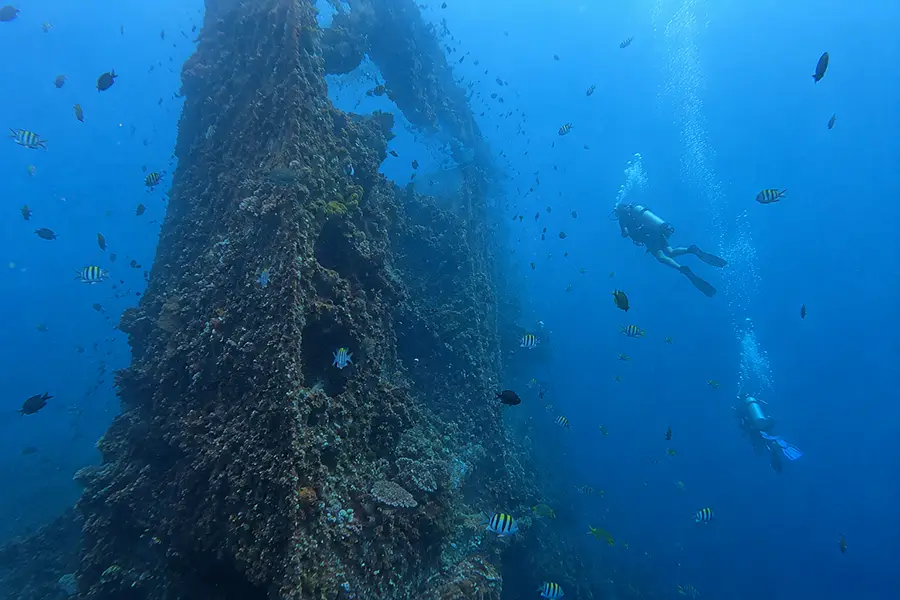
USAT Liberty shipwreck, Tulamben
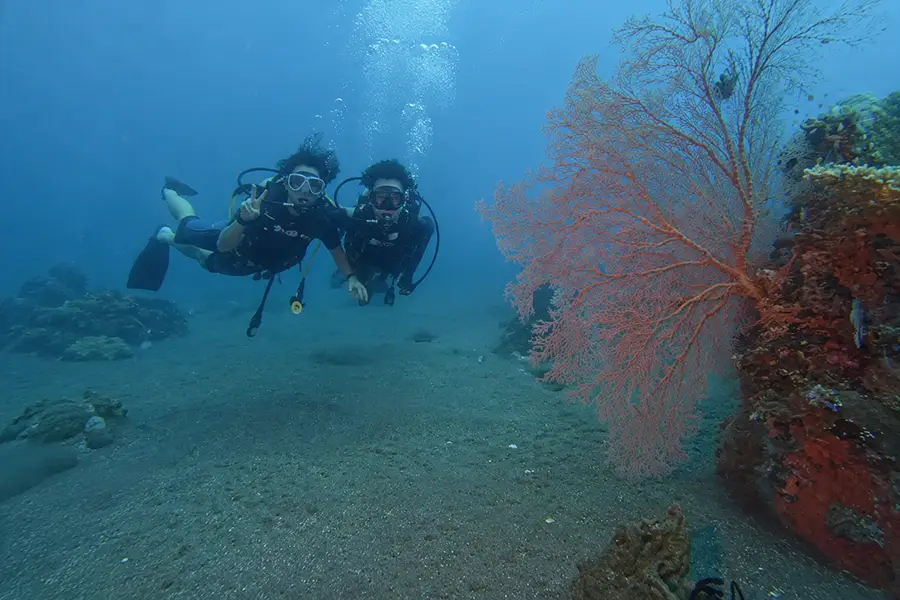
Tulamben diving centers almost entirely around one legendary site: the USAT Liberty shipwreck. This World War II cargo vessel rests just meters from the shore, with sections reachable from 5 to 30 meters deep, making USAT Liberty shipwreck diving suitable for open water divers as well as seasoned wreck specialists. The wreck itself now functions as an artificial reef, covered in soft coral and home to trevally, sweetlips, and the occasional passing turtle. Because entry is from the beach rather than a boat, it is also one of the most convenient dive sites on the island, and conditions stay diveable throughout the year.
Amed’s macro and muck diving spots
A short drive from Tulamben, Amed diving offers a different kind of experience. The currents here are gentle, and the coastline is dotted with smaller sites like Japanese Shipwreck and Seraya Secrets, both known for muck diving and macro subjects such as nudibranchs, frogfish, and ghost pipefish. It suits underwater photographers who want to slow down and search the sand rather than cover long distances, and it is also a comfortable area for divers still building confidence after a certification course. If wrecks are your focus, our Japanese Ship Wreck Point guide covers the site in more depth.
Nusa Penida: Manta Rays, Mola-Mola, and Strong Currents
Nusa Penida sits apart from the rest of Bali, both geographically and in the intensity of its diving. This is where the big animals show up, manta rays and mola-mola among them, and where currents are strong enough to remind you why a good guide matters more than usual.
Manta Point
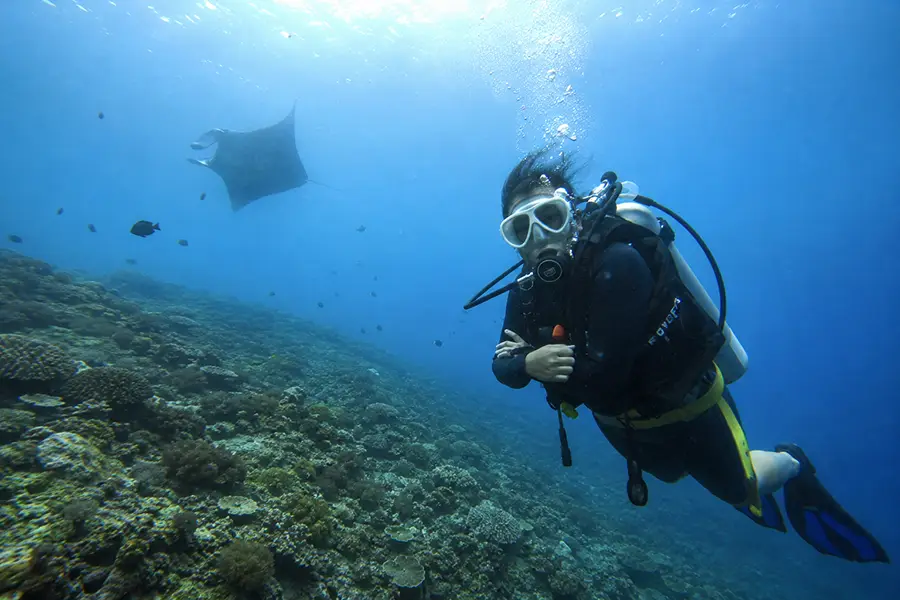
Manta Point diving is, for many visitors, the reason they come to Bali in the first place. Manta rays gather here at cleaning stations for most of the year, and sightings are common enough that even a single dive often delivers an encounter. The site sits in relatively shallow water, but the current can pick up quickly, so a guide who knows how to position the group matters more here than the depth does.
Crystal Bay
Crystal Bay is where Nusa Penida diving gets its reputation for testing skill level. Between July and September, cooler water upwells into the bay and draws in the elusive mola-mola, or oceanic sunfish, one of the most sought-after sightings in the region. Outside that window, Crystal Bay still delivers clear water and healthy coral, but the site is best reserved for divers with some experience handling current, since conditions can shift within a single dive. For a snorkeling-friendly overview of the same area, see our Nusa Penida snorkeling spots guide.
Menjangan Island: Wall Dives in a Protected Marine Park
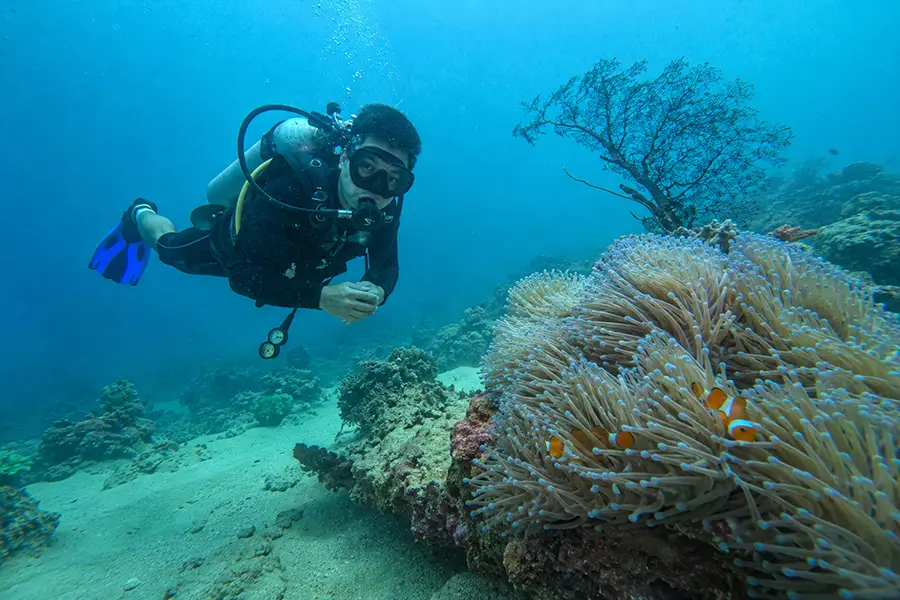
Menjangan Island diving is built around dramatic wall dives that drop past 40 meters, with visibility that regularly exceeds 20 meters. Because the surrounding waters are a protected marine park, boat traffic and diver numbers stay lower than at Bali’s busier sites, and the coral has had decades to recover and thrive undisturbed. The currents are typically calm, which makes the walls approachable even for divers who are not yet comfortable with the drift conditions found around Nusa Penida.
Padang Bai and Candidasa: Easygoing Dives for Every Level
On Bali’s southeast coast, Padang Bai and Candidasa offer a gentler contrast to Nusa Penida’s drama, with a mix of beginner-friendly bays and a few livelier drift sites tucked in between.
Blue Lagoon
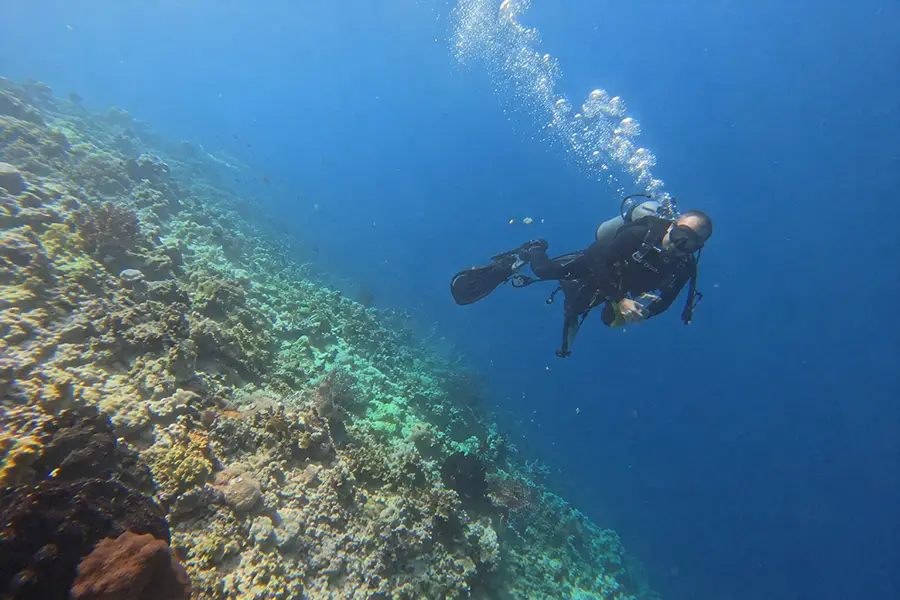
Blue Lagoon near Padang Bai is often where new divers complete their first open water dives, and it is easy to see why. The bay is sheltered, the coral sits close to the surface, and the shallow depth range keeps things relaxed. It is not the most dramatic site on this list, but it is one of the most forgiving, and a good place to build comfort before moving on to sites with stronger current. Our Blue Lagoon snorkeling guide has more detail on getting there and what to expect above the surface.
Shark Point and nearby drift dives
For divers who want a bit more adrenaline without traveling all the way to Nusa Penida, the drift dives around Padang Bai and Candidasa offer white tip reef sharks, occasional pelagic sightings, and a faster pace underwater. These sites suit divers who already hold an advanced certification or have logged enough dives to feel comfortable adjusting to current mid-dive.
Comparison Table: Choosing the Right Dive Spot for You
Here is a quick side-by-side look at how the main areas compare, useful if you are trying to fit more than one into a single trip.
| Spot | Best For | Max Depth | Season | Highlight |
| USAT Liberty, Tulamben | All levels | 30 m | Year-round | Accessible wreck dive |
| Amed (Japanese Wreck, Seraya Secrets) | Beginners, macro | 20 m | Year-round | Muck diving, calm current |
| Manta Point, Nusa Penida | All levels | 25 m | Year-round | Manta ray sightings |
| Crystal Bay, Nusa Penida | Advanced | 40 m | Jul to Sep for mola-mola | Mola-mola, strong current |
| Menjangan Island | Beginners to advanced | 40 m+ | Year-round | Wall dives, protected park |
| Blue Lagoon, Padang Bai | Beginners | 12 m | Year-round | Sheltered training dives |
Best Time to Dive in Bali
The dry season, from April through October, generally offers the calmest water and clearest visibility across most of Bali’s dive sites. Manta rays at Nusa Penida can be seen throughout the year, but mola-mola season is narrower, typically running from July to September when cooler water rises into Crystal Bay. Water temperature across the island generally sits around 26 to 28 degrees Celsius, though it can drop noticeably at sites affected by thermoclines, so a thicker wetsuit is worth packing if you plan to dive Nusa Penida or Padang Bai during peak sunfish season.
Certification Levels and What Diving in Bali Costs
Most dive operators in Bali offer a Discover Scuba session for travelers without certification, a short, closely supervised introduction in shallow water that requires no prior training. If you want to dive independently or reach sites like Crystal Bay or Menjangan’s walls, an Open Water certification is the minimum requirement, and Advanced Open Water opens up dives past 18 meters as well as stronger current sites.
Prices vary by operator and package, but as a general guide, a single fun dive typically runs from around USD 25 to 35, a Discover Scuba session from about USD 60 to 70, and a full Open Water certification course from roughly USD 275 to 290. Packages that bundle hotel transport, equipment, and two or three dive sites in a single day are common and usually work out cheaper than booking each element separately.
Tips for Choosing the Right Dive Site
Matching a site to your certification level is the first and most important filter when comparing Bali dive sites. Tulamben and Blue Lagoon are forgiving enough for newly certified divers, while Crystal Bay and the drift sites around Nusa Penida reward more experience. It is also worth booking through a dive operator that limits group sizes and emphasizes buoyancy control, since roughly half of Bali’s reefs are still considered to be in good health, while a meaningful share are declining, according to a 2017 assessment from Bali’s Marine and Fisheries Office. Every diver who avoids touching coral or kicking up sand helps keep that balance from tipping further.
Plan Your Bali Diving Trip with Bali Touristic
Most of the best diving spots in Bali sit an hour or more from the main tourist areas in the south, which makes transport one of the more overlooked parts of planning a dive trip. Renting a car with a driver takes that logistics headache off your plate, especially for early morning starts toward Tulamben or Amed, where dive shops often want you in the water before the day gets busy. If you are mapping out a multi-day dive itinerary, arranging this ahead of time means one less thing to think about between sites.

Frequently Asked Questions About Best Diving Spots in Bali
What is the best diving spot in Bali for beginners?
Tulamben and Blue Lagoon are generally considered the most approachable options for Bali diving for beginners. Both offer shallow entry points, calm conditions, and dive shops experienced in guiding newly certified divers.
When is the best time to dive in Bali?
The dry season from April to October offers the most consistent visibility and calmer seas. If you are hoping to see mola-mola at Crystal Bay, aim for July through September specifically.
Do I need certification to dive at Tulamben’s USAT Liberty wreck?
Yes, though the site is shallow enough in parts that even newly certified open water divers can explore much of the wreck safely with a guide.
Where can I see manta rays in Bali?
Manta Point at Nusa Penida is the most reliable location, with sightings reported through most of the year at its cleaning stations.
Can non-certified travelers still experience Bali’s dive sites?
Yes, many operators offer introductory dives that let non-certified travelers experience shallow sites like Blue Lagoon or parts of the Liberty wreck under close supervision from an instructor.