

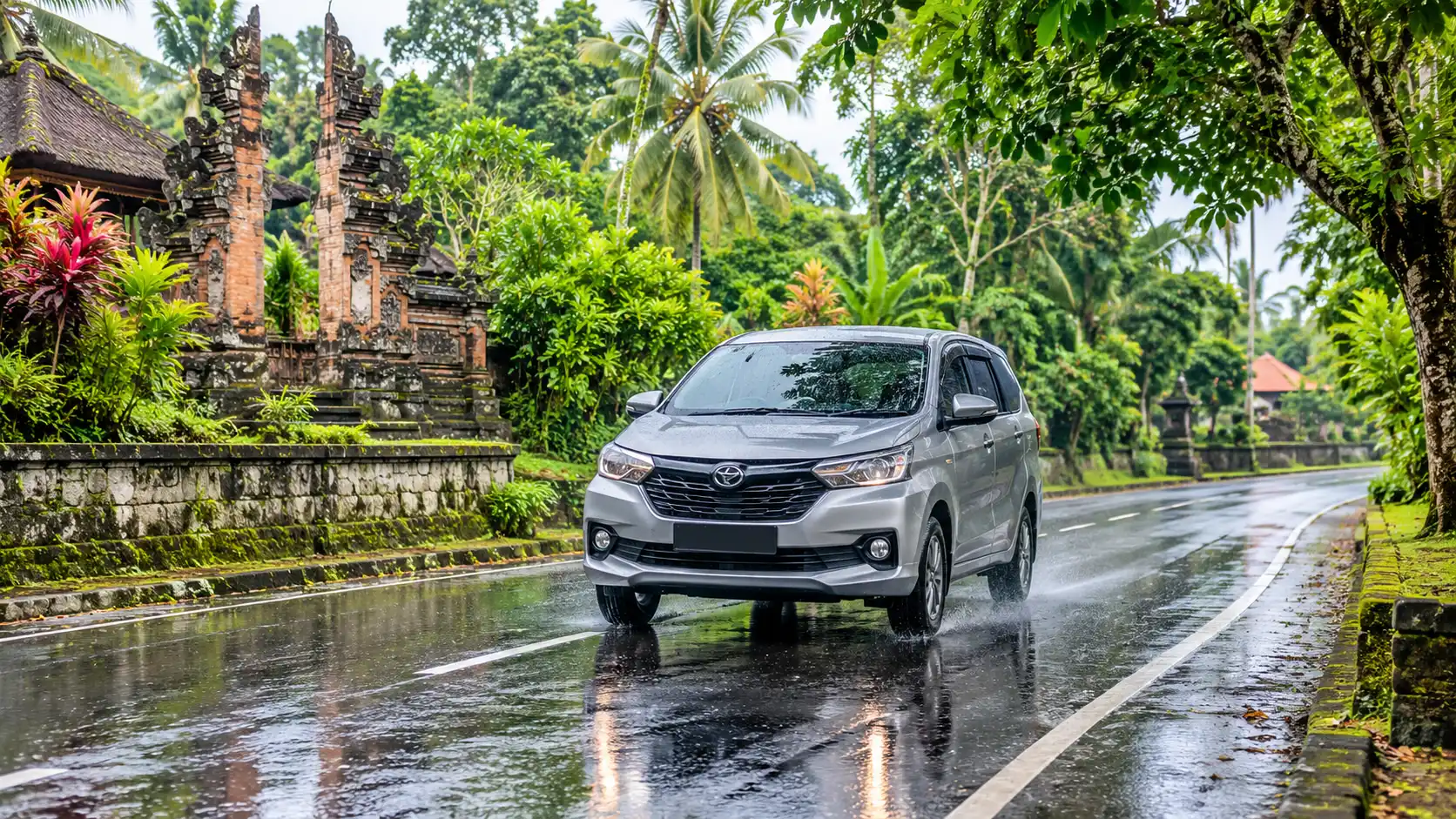
A Bali car with driver during the rainy season can make day trips easier to adjust when showers, slow traffic or temporary road disruption change the plan. The key is to organise a shorter, flexible route, allow extra travel time and agree with the operator how decisions will be made if conditions worsen. A private car provides transport between stops; it cannot guarantee that every road, viewpoint or attraction will remain accessible in heavy rain.
Rain does not necessarily mean a full day indoors. Showers can be local or intermittent and conditions may differ between the coast, inland areas and higher ground. However, intense rain can bring flooding, slippery surfaces, reduced visibility and delays. Plan around the forecast and the conditions on the day rather than treating a booked itinerary as fixed.
If you are comparing transport options, start by reviewing the service details and confirming the practical arrangements before you book. Bali car rental with driver is a useful next step once you know the kind of day and flexibility you need.

Rainy-season realities: what changes on a Bali day trip?
Bali’s wetter period is commonly described as running from around October or November into March, but the start, finish and intensity vary by year and location. A seasonal label is not a daily forecast. Some days have short showers; others bring prolonged or intense rain. Check a current local forecast close to the travel date and ask the driver or operator for an update before setting out.
The main planning issue is not simply getting wet. Heavy rain can slow traffic, reduce visibility and create localised flooding. Some roads may become difficult or temporarily impassable, while water can conceal drains or damaged road edges. Hillside and rural routes may also be affected by landslides or fallen debris after intense rainfall. Do not assume a route is suitable just because it was accessible on a previous visit.
A driver can help adapt the route to observed conditions, but cannot make an unsafe road safe or override a closure. If local authorities advise avoiding an area, or the driver recommends waiting or turning back because of conditions, change the plan. Never ask a driver to cross floodwater or continue through a closed road.
Build a flexible route instead of a packed itinerary
A wet-weather Bali day trip works best when the route has a clear priority and room to change. Choose one main area or group of nearby stops rather than trying to cross the island for several unrelated activities. Fewer transfers mean less time exposed to traffic delays and more time available if a shower interrupts an outdoor visit.
Choose a main stop and nearby alternatives
Select the experience that matters most, then identify one or two alternatives in the same general area. For example, if an outdoor viewpoint or garden becomes unpleasant in heavy rain, a nearby cafe, craft shop or indoor attraction may offer a practical change of pace. Check opening hours and access directly; do not assume every venue remains open during severe weather.
Keep the alternatives genuinely optional. A backup stop should not create a long detour or force the driver onto a less suitable road. If conditions deteriorate across the area, returning to your accommodation may be the most sensible choice.
Agree on a decision point
Before departure, decide when you will reassess the route. This could be after the first stop, before travelling into a higher or more remote area, or when a heavy shower begins. Confirm who will check local conditions, how you will communicate changes and whether the itinerary can be shortened without pressure to make up missed stops.
Timing: allow more room for road delays
Rain can make a journey slower even when there is no major flooding. Traffic may build around busy junctions, town centres and narrow roads, while drivers leave more space and reduce speed in poor visibility. A journey estimate that looks comfortable in dry conditions may not leave enough time for several stops on a wet day.
Avoid planning every hour in advance. Treat travel-time estimates as approximate ranges, not promises, and allow a buffer between destinations. The right allowance depends on your pickup area, route, traffic, weather, number of stops and the condition of the roads. Ask the operator for a realistic estimate for your actual route and confirm whether the day has a fixed finish time.
Starting earlier can help you complete the priority stop before afternoon plans become rushed, but it does not guarantee better weather. Check the forecast for each area where possible, not only the forecast for your accommodation. If rain is already heavy, waiting for an update may be wiser than leaving simply to keep to the original schedule.
Vehicle and luggage: match the car to the day
For a rainy-season trip, think about passenger numbers, luggage, the type of roads on the route and how easy it will be to get in and out at each stop. A suitable vehicle should have enough space for everyone and their belongings without blocking visibility or making the cabin uncomfortable. The largest vehicle is not automatically the best choice: narrow access roads, tight parking areas and turning space may matter as much as cabin size.
If you are carrying day bags, camera equipment, a pushchair or shopping, tell the operator in advance and ask how much usable luggage space is available with all passengers seated. Keep rain jackets, a change of clothes, water and essential items where they can be reached without unpacking the entire boot. Use a separate waterproof bag for electronics and anything that should stay dry.
Compare the vehicle’s passenger and luggage suitability with the route, not just its model name. The guide to cars suited to Bali road trips can help frame that comparison. Ask the operator to confirm the actual vehicle category, passenger capacity, luggage arrangement and whether the proposed route has access or parking constraints. Do not assume a particular model or vehicle is available until it is confirmed for your date.
Destination access: the last few metres matter

A car may reach the general destination while the final approach still involves an uneven path, steps, an unpaved lane or an exposed walk from the parking area. Rain can make these surfaces slippery or muddy. This matters at viewpoints, rural attractions, temple approaches, waterfalls, rice-field paths and smaller cafés where parking is not directly beside the entrance.
Wear footwear with a secure fit and a grippy sole. Flip-flops can be inconvenient on wet steps or uneven ground. Carry a compact umbrella or light rain jacket, and consider a small towel or spare socks for the return to the car. If you plan to visit a temple, check the venue’s clothing and entry requirements separately; wet-weather clothing does not replace local dress rules.
Before confirming a stop, ask whether the vehicle can reach the usual drop-off point, where it can wait or park, and how far you may need to walk. For a location with steps, steep paths or an unpaved approach, ask for current access information rather than relying on old photos or general descriptions. If access is unclear or conditions have made the approach unsuitable, choose another stop.
Create a practical backup plan
A useful backup plan is specific enough to act on but simple enough to change at short notice. Save the contact details for the operator, keep your accommodation address available offline and identify a nearby indoor alternative. If mobile coverage is unreliable on part of the route, agree in advance how you will reconnect or where to meet if plans change.
It is also worth confirming the service terms before the day. Ask whether waiting for a shower, changing the route, adding a stop or returning early affects the agreed duration or cost. Confirm what happens if a road closure makes a planned destination unreachable. These are operator-specific arrangements, so get the answer in writing rather than assuming that weather changes are automatically included.
Keep expectations realistic. A driver may be able to suggest a different route or nearby stop, but cannot promise clear skies, open attractions, a fixed arrival time or access through floodwater. Severe weather may mean cancelling an outdoor activity or ending the trip early. Build that possibility into the day and avoid making time-critical plans immediately after a long wet-weather route.
Questions to ask before confirming a rainy-season trip
- Can the route be adjusted on the day if rain or traffic changes conditions?
- Which stops are close enough to combine without long transfers?
- What is the estimated travel time for this route, and how much buffer should we allow?
- What vehicle category is confirmed, and will it fit our passengers and luggage?
- Where is the drop-off point, and what is the walking surface or distance to each main stop?
- What are the terms if we wait, change destinations, shorten the day or cannot reach a planned stop?
- Who should we contact on the day for a weather and road-condition update?
For Bali Touristic enquiries, share your travel date, pickup area, passenger count, luggage details and preferred destinations. Ask for a route suggestion that leaves room for weather-related changes, then confirm the vehicle and service terms before making plans around it.
Keep the plan flexible and confirm the details before you go
The best way to plan a Bali car with driver trip in the rainy season is to keep the route compact, allow extra time and make decisions around current weather and road conditions. Choose practical footwear, check the final approach to each destination, confirm the vehicle and luggage arrangement, and agree on what happens if the itinerary needs to change.
If you are planning a wet-weather day out, contact Bali Touristic with your date, pickup area and preferred stops. Ask for a realistic route with nearby alternatives and confirm the vehicle, timing and weather-change terms before you finalise the plan.

FAQs
Is the rainy season a bad time to book a Bali car with driver?
Not necessarily. A private car can make it easier to move between stops and adjust the day, but rain may cause delays or make some destinations unsuitable. Choose a flexible route and keep expectations realistic.
What months are considered the rainy season in Bali?
The wetter period is commonly around October or November to March. Timing varies by year and location, so check a current forecast rather than relying only on the season label.
Will a driver still take us out if it rains heavily?
That depends on the actual conditions, road access and the operator’s procedures. Ask how the driver assesses the route and agree that closed or flooded roads will be avoided. A trip may need to be delayed, changed or cancelled.
What should I wear for a wet-weather Bali day trip?
Choose secure footwear with a grippy sole, and bring a light rain jacket or compact umbrella. A small towel, spare socks and a waterproof pouch for electronics can also be useful.
Can we change destinations during the day?
Possibly, but this depends on the agreed service duration, route, availability and any additional charges. Confirm the change policy before booking and keep alternative stops close to the original route.
Does a larger car make rainy-season travel safer?
Vehicle size alone does not guarantee safety or access. Choose a suitable vehicle based on passenger and luggage needs, the route and the destination’s parking or access constraints. Road conditions still determine whether a journey should proceed.