

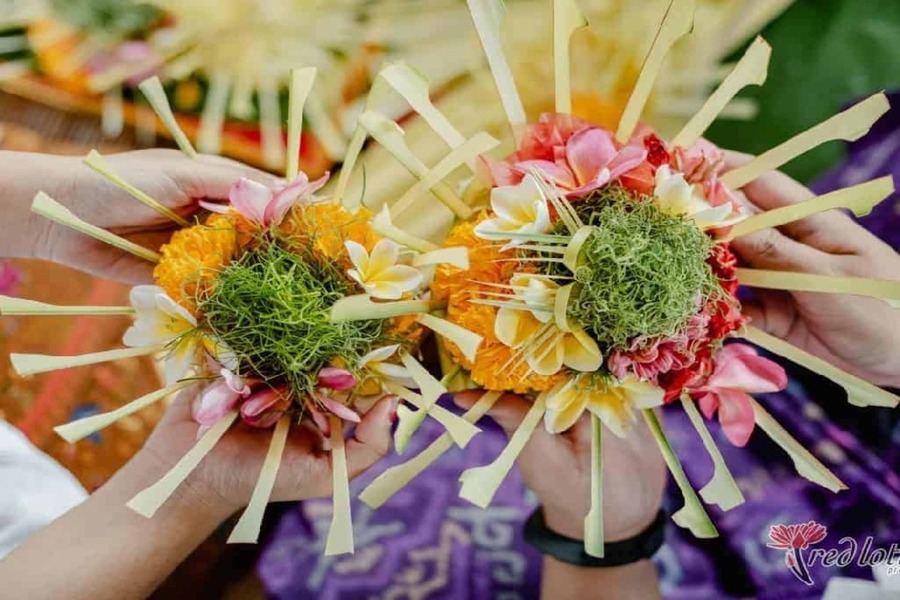
That small square-like leaves with some flower petals and an incense? It’s called Canang Offerings, and he re’s what you want to know about it!
Bali, often referred to as the Island of the Gods, is a place where spirituality intertwines with daily life. One of the most ubiquitous symbols of this spirituality is the canang offerings, small yet elaborate offerings that can be seen adorning homes, temples, and streets. These intricate creations, while seemingly simple, carry profound cultural and religious significance. Despite their everyday presence, many visitors are unaware of the depth of meaning and history behind these sacred offerings. Let’s explore the fascinating world of canang offerings, their origins, purpose, and the intricate craftsmanship that makes them a cornerstone of Balinese culture.
The Historical Roots of Canang Offerings
The tradition of canang offerings dates back to ancient times and is deeply rooted in Bali’s Hindu-Buddhist history. Balinese Hinduism, known as Agama Hindu Dharma, is a unique blend of indigenous animistic beliefs and influences from India’s Hindu and Buddhist traditions. Offerings, or “banten” as they are collectively called, play a central role in Balinese rituals, symbolizing devotion, gratitude, and the harmonious balance between humans, nature, and the divine.
The word “canang” is derived from the Balinese words “ça” (meaning beautiful) and “ŋang” (a form of purpose or intention). Together, it signifies an offering made with a beautiful intention. This practice reflects the Balinese philosophy of “Tri Hita Karana,” which emphasizes harmony among humans, the environment, and God. Over time, the crafting and presentation of canang offerings have evolved, but their core purpose remains unchanged: to honor the gods and maintain cosmic balance.
Influences and Symbolism in Canang Offerings
The design and composition of canang offerings are rich with symbolic meaning. Typically, a canang consists of a small palm-leaf tray filled with flowers, leaves, rice, and other natural elements. Each component carries specific symbolic significance:
- Palm Leaf Tray (“ceper”): The base of the offering represents the foundation of life and the importance of staying grounded.
- Flowers: Each color and type of flower symbolizes different deities. For instance, white flowers are associated with Shiva, red with Brahma, yellow with Vishnu, and blue or green with natural spirits.
- Rice: Represents sustenance and gratitude for the blessings of the earth.
- Incense: Often placed alongside the offering, incense carries prayers and intentions to the heavens.
The act of creating and placing the offerings is as important as the offerings themselves. Balinese women, who are primarily responsible for crafting canang offerings, do so with mindfulness and devotion. The process becomes a form of meditation and a tangible expression of their faith.
Usage and Rituals Surrounding Canang Offerings
The use of canang offerings spans a wide range of rituals and daily practices in Bali. From ancient times to the present day, they have been a medium through which Balinese Hindus communicate with the divine.
- Daily Offerings:
Every morning and evening, canang offerings are placed in various locations, such as home shrines, temple altars, and even sidewalks. These daily offerings express gratitude for the blessings received and seek protection from negative forces. - Ceremonial Use:
During major religious ceremonies and festivals, canang offerings are often paired with larger and more elaborate offerings. They serve as an invitation for the gods to bless the ceremony and its participants. - Special Occasions:
Canang offerings are also used in specific rites of passage, such as weddings, births, and cremations, symbolizing the sanctity and significance of these events. - Blessing Spaces:
In modern times, canang offerings are commonly seen in businesses, cars, and public spaces, ensuring that every aspect of life is imbued with spiritual energy and divine favor.
What Makes Canang Offerings Stand Out?
Several aspects of canang offerings make them distinct and integral to Balinese culture:
- Accessibility and Ubiquity:
Unlike many other forms of religious expression, canang offerings are accessible to all Balinese Hindus, regardless of social or economic status. Their ubiquitous presence across Bali reflects the inclusive nature of the island’s spirituality. - Ephemeral Beauty:
Canang offerings are intentionally ephemeral, crafted to last only a day before being replaced. This impermanence symbolizes the transient nature of life and the importance of living in the present moment. - Community and Family Bonding:
The preparation of canang offerings often involves multiple generations, fostering a sense of community and continuity. Children learn the art of creating these offerings from a young age, ensuring that the tradition is passed down. - Cultural Identity:
For the Balinese, canang offerings are more than religious items; they are a symbol of their cultural identity and way of life. This daily act of devotion reinforces their connection to their heritage.
The Modern Evolution of Canang Offerings
While the essence of canang offerings remains rooted in tradition, modern influences have brought subtle changes to their creation and use. The rise of tourism in Bali has introduced the practice to a global audience, with many visitors curious about their meaning and significance. In response, Balinese artisans have begun crafting decorative and souvenir versions of canang, blending traditional designs with contemporary aesthetics.
The materials used for canang offerings have also evolved. While traditional offerings are made from natural materials, modern versions sometimes incorporate store-bought elements for convenience. Despite these changes, the spiritual intent behind the offerings remains steadfast.
Challenges and Preservation Efforts
As Bali modernizes, the tradition of canang offerings faces challenges. Urbanization and the demands of tourism can sometimes overshadow the importance of maintaining traditional practices. Additionally, environmental concerns arise from the use of non-biodegradable materials in some modern offerings.
To address these issues, local communities and organizations are actively working to preserve the authenticity of canang offerings. Educational programs, workshops, and community events help ensure that future generations understand the cultural and spiritual value of this practice. Efforts to promote the use of sustainable materials are also gaining momentum, aligning the tradition with contemporary environmental values.
Conclusion
Canang offerings are more than decorative items scattered across Bali; they are profound expressions of faith, gratitude, and cultural identity. Their intricate design and symbolic components reflect the Balinese commitment to maintaining harmony with the divine, nature, and one another. From their ancient origins to their modern adaptations, these offerings remain a vibrant and essential part of Balinese life.
The next time you encounter a canang offering on a temple altar, a street corner, or the steps of a home, take a moment to appreciate the devotion and artistry it embodies. This simple yet profound act of giving serves as a reminder of the beauty and depth of Balinese culture, where even the smallest gestures carry infinite meaning.
Balitouristic.com is the ideal platform for booking activities and day trips in Bali, offering a wide selection of curated experiences that showcase the island’s beauty and culture. With user-friendly navigation, transparent pricing, and trusted partnerships with local operators, it ensures a seamless and reliable booking process.