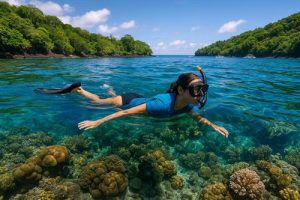


If you are planning a trip to Nusa Lembongan, the Bali Seaweed Farm is one stop you should not miss. Tucked in the shallow turquoise waters off the island’s coast, this working seaweed farm has become one of the most unique and educational experiences in the area.
It gives visitors a rare, up-close look at a traditional industry that has shaped island life for decades. Whether you are curious about how seaweed farming in Bali works or simply looking for something refreshingly different on your itinerary, this place delivers an experience that is equal parts scenic and fascinating.
Planning an easy arrival and onward transfer leaves more time to discover quieter experiences like the seaweed farm in Nusa Lembongan.

What Is Bali Seaweed Farm?
Bali Seaweed Farm is a working marine algae cultivation site located in the shallow coastal waters of Jungut Batu Village, Nusa Lembongan. Local farming families manage the plots here, growing red algae varieties used across industries ranging from food production to cosmetics. It is one of the few agricultural sites in Bali that welcomes visitors, making it both a livelihood for locals and a genuinely educational stop for tourists.
Visitor Information
📍
Jungut Batu Village, Nusa Lembongan, Klungkung Regency, Bali
🕐
Open daily, year-round. Best visited in the morning at low tide.
💰
Free to visit. No ticket required. Guided tour packages available through local operators.
⏱️
1 to 2 hours
📸
Morning light and low tide offer the best shots. Arrive early to catch farmers actively working their plots.
🌐
Dry season (April to October) for clear skies and calm seas on the boat crossing
History of Bali Seaweed Farm
Understanding how seaweed farming in Nusa Lembongan came to be adds a lot of context to your visit. What started as a small agricultural experiment has grown into a defining part of the island’s identity, shaping livelihoods and drawing tourists from around the world.
Seaweed farming was introduced to Jungut Batu Village in 1984, when a businessman from Surabaya brought the practice to the island. The industry grew steadily and reached its peak around 2010, establishing Nusa Lembongan as one of Indonesia’s top producers of high-quality marine algae.
In 2016, many farms suffered significant losses due to bad weather. At the same time, the island’s tourism sector was booming, which led many farmers to switch professions. However, some stayed committed to seaweed cultivation, and the practice has since become a tourism attraction in its own right. The local government actively supports the industry as part of what makes Nusa Lembongan culturally distinct.
Once you arrive on the island, getting around is easy. If you plan to explore Nusa Lembongan and the surrounding areas at your own pace, a Bali car rental with driver is a convenient option for getting between the harbor, the farm, and any other stops on your itinerary.
Location and How to Get to Bali Seaweed Farm
Getting to Bali Seaweed Farm is straightforward once you know the route. The journey combines a scenic sea crossing with a short land transfer, and it is all part of the adventure.
The farm is located in Jungut Batu Village on Nusa Lembongan Island, Nusa Penida District, part of Klungkung Regency. From Bali, head to Sanur Harbor and take a fast boat to Nusa Lembongan. The crossing takes around 40 minutes. Upon arrival at the port, hire local transport to reach the farm, which takes about 15 to 20 minutes.
The seaweed plots are also clearly visible from the road near Jungut Batu Beach, so even travelers on a tight schedule can take in the view without much effort. At the location itself, you will be greeted by a sweeping view of the sea filled with cultivation plots and the quiet activity of farmers tending their land.
Types of Seaweed at Bali Seaweed Farm
Not all seaweed is the same, and Bali Seaweed Farm is home to several varieties, each with distinct characteristics and commercial uses. Knowing what is being grown here adds real depth to what you see during your visit.
The primary species cultivated in Nusa Lembongan is Eucheuma cottonii, a type of red algae (Rhodophyta) prized for its carrageenan content. Carrageenan acts as a natural stabilizer, thickener, and gelling agent, making it valuable in the food industry, cosmetics, textiles, pharmaceuticals, and toothpaste. Another variety, Kappaphycus alvarezii, is also grown in some plots for similar industrial purposes.
Both species are well-suited to the shallow, warm coastal waters of Nusa Lembongan and Nusa Ceningan. They are relatively easy to cultivate, with a short harvest cycle and consistent demand from export traders. Despite their commercial potential, the full utilization of these seaweed varieties in Indonesia is still developing, which means there is real room for growth in this sector.
How Seaweed Cultivation Works
The cultivation process at Bali Seaweed Farm follows a well-practiced routine that local families have refined over decades. Watching this process unfold during your visit is one of the most memorable parts of the experience. Here is how it works from start to finish.
- Seed planting: Farmers purchase seaweed seedlings and plant them in coastal plots measuring roughly 5 x 50 meters. Each plot uses wooden supports and ropes to anchor the seaweed, with one plot holding around 100 bundles of seedlings.
- Harvesting: Seaweed is harvested after 30 to 45 days, typically during low tide in the morning. Farmers work from canoes, cutting the seaweed and returning it to shore. After each harvest, new seedlings are tied to the ropes to begin the next cycle.
- Drying: Freshly harvested seaweed is spread out in the sun for around three days until fully dry. This step reduces weight and prevents spoilage before sale.
- Sale: Dried seaweed is sold to local collectors in Lembongan, who then transport it to Nusa Penida for sale to export traders. From there, it enters supply chains for cosmetics, food manufacturing, and other industries.

The Economics of Seaweed Farming in Nusa Lembongan
Beyond the scenic appeal, seaweed farming is a real and meaningful source of income for families in Nusa Lembongan. Understanding the economic side of this industry adds an important layer to what you see during your visit.
A productive farmer can harvest around 400 kg of dried seaweed per month. With dried seaweed selling at roughly Rp 12,000 per kg (about USD 0.80), a dedicated farmer can earn approximately USD 320 to USD 400 monthly. While modest, this represents a stable income in a community where alternatives can be limited, and it is income that remains available even when tourism slows down.
Starting a seaweed plot is not cheap. A batch of 100 seedlings costs around Rp 5 million, so farmers must invest upfront before they can begin harvesting. However, the short harvest cycle keeps the turnaround manageable, and consistent export demand makes the risk worthwhile for most families. The industry also supports a broader supply chain, from seed suppliers and boat operators to the collectors who move product between islands.
Planning to visit Bali? A smooth start to your trip matters. Book a Bali airport transfer to get from the airport to Sanur Harbor comfortably, so you can head straight to Nusa Lembongan without any hassle on arrival.
Activities and Experiences at Bali Seaweed Farm
Bali Seaweed Farm is the only seaweed farming tourist destination in Bali, known for the quality of its harvest and the authenticity of the experience. A visit here offers something genuinely different from typical tourist attractions. Here is what you can do during your time at the farm.
- Seaweed viewing: The most immediate impression is the scale. Shallow waters filled with cultivation plots stretch along the coast, with small canoes gliding between them. It is a calming and visually striking scene.
- Watching the planting process: You can observe farmers carrying seaweed seedlings and securing them evenly across the plots, giving you a firsthand look at traditional cultivation techniques passed down through generations.
- Witnessing the harvest: If your visit coincides with harvest time, you will see farmers cutting seaweed from their plots using canoes, loading the harvest, and returning to shore. It is a uniquely memorable experience rarely found anywhere else. If you are also exploring the surrounding islands, consider pairing this with an East Nusa Penida tour to make the most of your time.
- Photography: The farm is naturally photogenic. The expanse of seaweed plots, small canoes on calm water, and the open coastal backdrop create excellent shots. Early morning light is especially flattering.
Best Time to Visit Bali Seaweed Farm
Timing your visit well makes a real difference to what you see and experience at the farm.
For weather, the dry season runs from April to October. During this period, skies are clear, seas are calm, and conditions are ideal for both the boat crossing from Sanur and exploring the farm and surrounding areas. The wet season from November to March brings more rain and rougher seas, though the farm remains active year-round.
For the best on-the-ground experience, aim to visit in the morning during low tide. This is when the seaweed plots are most visible and when farmers are typically active. At low tide, the plots sit close to the surface and stretch clearly across the shallows, giving you the fullest picture of how the farming works. Check local tide charts or ask your accommodation for the best timing on your specific travel dates.
Tips for Visiting Bali Seaweed Farm
A few practical notes will help you get the most out of your visit and show respect for the working community here.
- Wear comfortable clothes and shoes that you do not mind getting wet. The shoreline can be muddy at low tide, and you may want to walk along the water’s edge to see the plots more closely.
- Keep a respectful distance from active farming plots. Never walk on the seaweed or disturb the ropes and seedlings, as this can damage a family’s livelihood.
- If you want to photograph the farmers up close, always ask permission first with a smile. Most locals are welcoming, but a little courtesy goes a long way.
- Bring cash for local transport, snacks, or small purchases. ATMs on Nusa Lembongan are limited, so it is best to arrive prepared from Bali.
- Combine your visit with other Nusa Lembongan highlights like the Yellow Bridge, Dream Beach, and the Mangrove Forest for a full and rewarding day on the island.
- Cap off your visit with lunch at The Pontoon at Lago, a floating restaurant just off the coast serving fresh seafood with ocean views.
Plan Your Visit to Bali Seaweed Farm
Visiting Bali Seaweed Farm is one of those experiences that stays with you long after you leave Nusa Lembongan. It is peaceful, educational, and genuinely different from the typical Bali tourist trail. Whether you spend an hour watching farmers tend their plots or simply take in the view from the shore, it is the kind of stop that makes a trip feel meaningful.
If you are still putting together your Bali itinerary, browse our Bali tour packages to find the right trip for you. From island-hopping adventures to cultural day tours, we make it easy to explore Bali at your own pace. You can also reach out to our team directly via WhatsApp for personalised recommendations.
Frequently Asked Questions About Bali Seaweed Farm
Does Bali Touristic offer a tour package to Bali Seaweed Farm?
Bali Touristic doesn’t currently offer a tour package to the Bali Seaweed Farm. However, you can still book our car rental with driver service to visit the farm independently at your own pace.
What is Bali Seaweed Farm?
Bali Seaweed Farm is a working seaweed cultivation site located in the shallow coastal waters of Nusa Lembongan, Klungkung Regency, Bali. Managed by local farming families, the farm grows red algae varieties, most notably Eucheuma cottonii, used in food production, cosmetics, and pharmaceuticals. It is one of the few agricultural sites in Bali that welcomes visitors, making it both a working livelihood and an educational tourist attraction.
Is there an entrance fee for Bali Seaweed Farm?
There is no official entrance fee to view the seaweed farm. The cultivation plots are located along the coastal area of Jungut Batu Beach and are visible from the shore at no charge. If you join an organized guided tour through a local operator, standard tour fees may apply.
When is the best time to visit Bali Seaweed Farm?
The best time is during the dry season (April to October) for favorable weather and calm seas on the boat crossing from Sanur. For the most active farming scenes, visit in the morning during low tide, when the plots are fully visible and farmers are usually at work.
How much does a seaweed farmer make in Bali?
A seaweed farmer in Nusa Lembongan can produce around 400 kg of dried seaweed per month. With dried seaweed selling at roughly Rp 12,000 per kg (about USD 0.80), a productive farmer earns approximately USD 320 to USD 400 monthly. Income varies depending on weather, plot size, and current market prices.
Why do they farm seaweed in Nusa Lembongan?
The island’s shallow, warm coastal waters and strong sunlight create near-ideal conditions for growing Eucheuma cottonii and Kappaphycus alvarezii. The calm waters between Nusa Lembongan and Nusa Ceningan are particularly well-suited to these species. Seaweed farming became a stable income source for local families starting in 1984, offering a harvest cycle of just 30 to 45 days per crop and consistent demand from export traders.
What country is the largest producer of seaweed?
China is the world’s largest seaweed producer, accounting for more than half of global output. Indonesia ranks second and is one of the most important suppliers of tropical red algae varieties, including Eucheuma cottonii. Other notable producers include the Philippines, South Korea, and Japan.
Where is the largest seaweed farm in the world?
The largest seaweed farming regions are found along the coastlines of China, particularly in Shandong and Fujian provinces, where kelp and other varieties are cultivated on an industrial scale. In Southeast Asia, Indonesia and the Philippines host some of the world’s most productive tropical seaweed farms. While Nusa Lembongan is not the largest by volume, it is one of the most recognized in Bali and a meaningful contributor to Indonesia’s global seaweed supply.