
Ubud sits in the heart of Bali and is loved for its lush landscapes, art galleries, and spiritual energy. Among the many reasons travelers come here, one place stands out for its playful blend of wildlife and culture: the Ubud Monkey Forest.
This sacred sanctuary is home to hundreds of long-tailed macaques who are as curious as they are mischievous. A visit here offers a memorable glimpse into how nature and culture live side by side in Bali.

Quick summary
- Ubud Monkey Forest is a 12.5 hectare sacred sanctuary in Padangtegal village, home to over 1,200 long-tailed macaques.
- The site blends wildlife with ancient temples, so it works well for both animal lovers and culture seekers.
- Entry costs roughly IDR 100,000 for adults on weekdays, and the forest opens daily from 9:00 AM to 6:00 PM.
- Most visitors spend 1 to 2 hours here, and simple safety habits keep the visit fun for everyone.
The Ubud Monkey Forest: A Brief Overview
The Ubud Monkey Forest, also called the Sacred Monkey Forest Sanctuary, is far more than a zoo or a wildlife park. It works as both a nature reserve and a cultural site, so it appeals to a wide range of visitors. Located in the village of Padangtegal village, this forest spans over 12.5 hectares and shelters more than 1,200 long-tailed macaques.
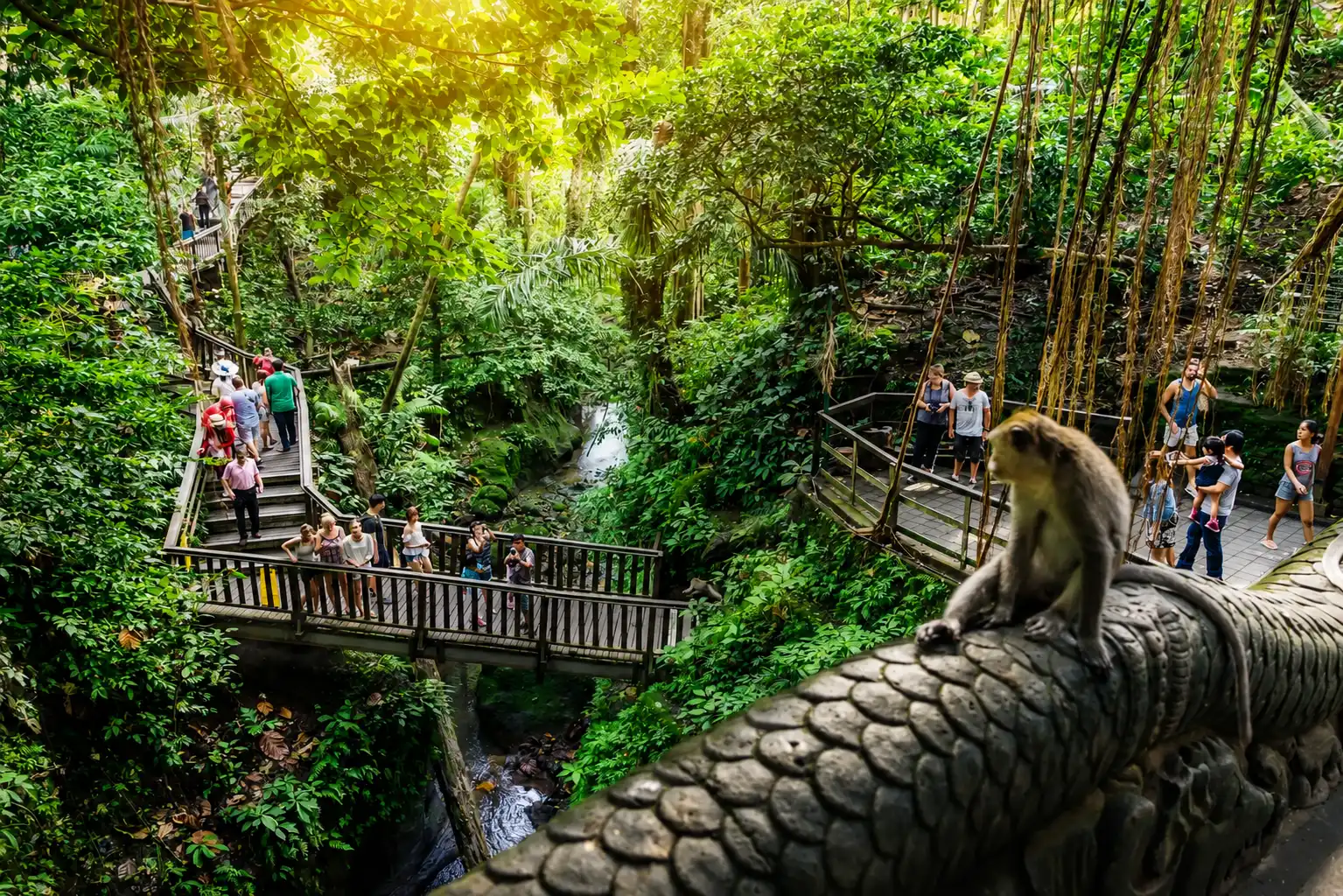
Beyond the monkeys, the forest also holds ancient temple ruins, traditional Balinese sculptures, and dense jungle trails. As a result, it appeals just as much to travelers curious about Balinese culture as it does to nature lovers.
| Location | Jalan Monkey Forest, Padangtegal village, Ubud, Bali |
| Opening hours | 9:00 AM to 6:00 PM daily, last entry at 5:15 PM |
| Entrance fee | Roughly IDR 100,000 for adults and IDR 80,000 for children on weekdays, with a small weekend surcharge. Prices change from time to time, so check the official counter before you go |
| Forest size | About 12.5 hectares of jungle |
| Monkey population | More than 1,200 long-tailed macaques |
| Recommended duration | 1 to 2 hours |
The Monkey Forest also plays an important role in Balinese spiritual life, since several temples sit scattered throughout the site. The most notable of these, the Dalem Agung Padangtegal Temple, is dedicated to the guardian spirits of the forest. Visitors are often fascinated by its architecture, which reflects the intricate artistry found across Balinese culture. As you stroll through the forest, you will notice how nature, wildlife, and spirituality coexist so naturally here.
Encountering the mischievous locals
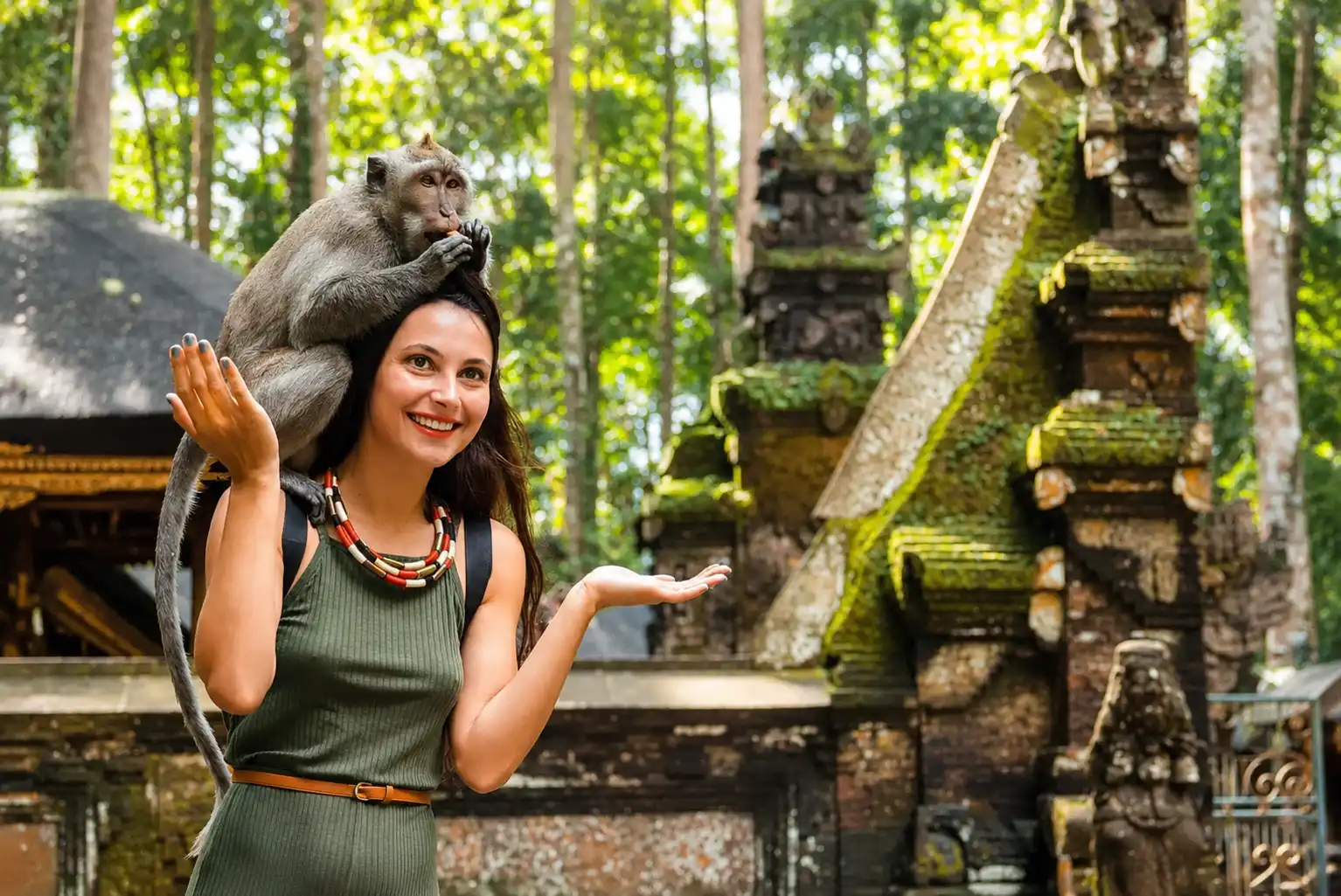
One of the biggest draws of Ubud Monkey Forest is the chance to watch, and sometimes interact with, the monkeys themselves. These long-tailed macaques are famously playful and occasionally mischievous. They are naturally curious, so visitors are often surprised by how closely the monkeys will approach, and some will even snatch sunglasses, hats, or snacks if given the chance.
That said, these are still wild animals, even though they are used to people. Therefore, it is important to respect their space rather than provoke them. Thankfully, the local community maintains the forest carefully to keep both visitors and monkeys safe.
The monkeys live in several troops, each led by a dominant male. Since these groups are highly social, visitors often see them grooming, playing, or caring for one another. This playful, social behavior adds real charm to the visit and makes it memorable for travelers of every age.
Staying safe around the monkeys
Safety is simple here as long as you follow a few habits. First, avoid direct eye contact, since the monkeys can read it as a challenge. Next, keep food, plastic bags, and loose items out of sight, because these are the items monkeys reach for most. If a monkey does jump on you or grab something, stay calm, move away slowly, and let the forest staff step in rather than trying to retrieve the item yourself.
Bites and scratches are rare when visitors follow the rules, and no rabies cases have ever been recorded among the monkeys here. Even so, it is wise to clean any scratch promptly and inform staff, who can point you to the nearest clinic if needed.
Exploring the sacred temples inside the forest
Beyond the playful monkeys, Ubud Monkey Forest also holds several ancient temples that add a spiritual layer to your visit. These temples are part of the long history of Padangtegal village and reveal the religious and cultural weight of the area.
The Dalem Agung Padangtegal Temple, the most significant of the three, is dedicated to the spirit of the forest and its resident monkeys. Local residents still consider it a place of worship, and it holds a special place in the community. Its detailed carvings, stone statues, and calm atmosphere make it one of the highlights of the whole forest.
If you want to explore Bali beyond Ubud afterward, the Batur Caldera makes a rewarding next stop, since it offers a completely different, volcanic side of the island.
Two smaller temples, the Holy Spring Temple and the Beji Temple, tend to stay quieter and less crowded. As a result, they offer a peaceful retreat for anyone who wants to connect with the sacred side of the site rather than just the wildlife.
The forest’s role in conservation and education
Ubud Monkey Forest is not just a tourist attraction. It also plays a genuine role in conservation and environmental education. As a protected area, the long-tailed macaques living here are cared for and studied closely by the local community, which helps preserve both the animals and their habitat for future visitors.
In addition to protecting the monkeys, the forest also teaches visitors why that protection matters. Informative signs throughout the site explain the behavior, diet, and social structure of the macaques. This educational layer makes a visit not only entertaining, but genuinely informative too.
Practical tips for visiting Ubud Monkey Forest
- Wear comfortable shoes with good grip, since forest paths can get slippery, and pair them with light clothing for the humid air.
- Keep your belongings secure. Monkeys are notorious for snatching sunglasses, bags, and snacks, so it helps to leave valuables at your hotel.
- Respect the monkeys as wild animals. Avoid feeding them or provoking them, even if they seem friendly.
- Bring a camera, since the forest offers plenty of great photo opportunities among the trees and temples.
- Visit early or late in the day. Midday tends to get crowded, so mornings or late afternoons offer a calmer experience.
If you would rather skip the logistics altogether, renting a car with a private driver takes care of the transport, parking, and timing for you, so you can focus on the visit itself.
Book Your Bali Tour Package Today
A visit to Ubud Monkey Forest is an essential part of any trip to Bali. Here, nature, wildlife, and culture come together in one unique, enchanting stop. Whether you enjoy watching the monkeys play, exploring the sacred temples, or learning about conservation, this forest genuinely offers something for everyone.
Ready to experience it for yourself? Let us help you plan the perfect Bali tour package that includes Ubud Monkey Forest along with other must-see spots across the island.
With experienced local guides and personalized itineraries, Bali Touristic makes sure you get the most out of your time in Ubud and beyond. From wildlife encounters to cultural experiences, our tours are built to make your trip to Bali genuinely unforgettable.

Frequently Asked Questions About Ubud Monkey Forest
How much does it cost to enter Ubud Monkey Forest?
Entry costs roughly IDR 100,000 for adults and IDR 80,000 for children on weekdays, with a small surcharge on weekends. The forest opens daily from 9:00 AM to 6:00 PM. Since prices are reviewed from time to time, it helps to bring cash and confirm the current rate at the entrance.
Can I feed the monkeys at Ubud Monkey Forest?
Feeding the monkeys is not allowed inside the forest. The sanctuary already provides natural food sources for the macaques, so feeding from visitors can disrupt their diet and behavior. If you want to feed them anyway, you can buy approved food from on-site vendors, but only under staff guidance.
Do the monkeys carry rabies, or is it dangerous if one bites me?
No rabies cases have ever been recorded among the monkeys here, and the sanctuary monitors their health regularly. Bites are rare overall, especially if you avoid direct eye contact and keep food out of sight. Still, if a scratch or bite happens, clean it promptly and let staff direct you to nearby medical help.
Is Ubud Monkey Forest safe for children?
Yes, generally, though parental supervision matters at all times. The monkeys stay unpredictable since they are wild, so children should avoid running, screaming, or making sudden movements around them. Keeping a safe distance and following posted guidelines helps everyone enjoy a safe visit.
How long do I need to explore Ubud Monkey Forest?
Most visitors spend about 1 to 2 hours here. That gives enough time to walk the forest paths, watch the monkeys, visit the temples, and take photos. If you prefer a slower pace or want to explore the temples in more detail, plan on staying a little longer.
What should I bring when visiting Ubud Monkey Forest?
Pack comfortable walking shoes, a camera or smartphone, and some cash for the entrance fee and any small purchases. Leave valuables, loose jewelry, and plastic bags at your accommodation, since these tend to attract monkey attention. A small daypack also helps keep your hands free.
How do I get to Ubud Monkey Forest from the airport?
Ngurah Rai International Airport sits roughly 1.5 to 2 hours from Ubud, depending on traffic. The easiest option is to book our airport transfer service, which takes you door to door straight to the Monkey Forest area in Ubud.