

Kreneng Market is one of the most authentic traditional markets in Denpasar, Bali. Located in the heart of the city on Jalan Kamboja, it draws both locals and curious visitors every single day. Moreover, this market offers something that most tourist spots simply cannot. It offers a real, unfiltered look at everyday Balinese life.
What makes Pasar Kreneng truly special is how it transforms throughout the day. In the morning, it functions as a busy day market packed with fresh produce, ceremonial items, and traditional crafts. Then, as the sun sets, it comes alive as the famous Pasar Senggol, a vibrant night market filled with the aroma of grilled meats and Balinese street food. Therefore, whether you visit in the morning or evening, you get a completely different experience.
Quick Facts
| Address | Jalan Kamboja No. 24, Dangin Puri Kangin, North Denpasar, Bali |
| Opening Hours | Day market: from early morning until ~4:00 PM | Night market (Pasar Senggol): 4:00 PM until midnight |
| Best Time | Early morning (fresh produce) or evening (street food) |
| From Seminyak | Around 30 to 45 minutes by car |
| From Canggu | Around 30 to 45 minutes by car |
| From Ubud | ~1 hour by car |
| Entry Fee | Free |
| Payment | Cash only (Indonesian Rupiah / IDR) |

A Historical Kreneng
Kreneng Market, or Pasar Kreneng, has been part of Denpasar’s cultural fabric since the early 1980s. However, its roots as a trading hub stretch even further back, as street vendors and informal markets were already active in the area long before the building was officially established.
The name itself carries interesting origins. According to local historians, there are three versions of where “Kreneng” comes from. First, it may derive from “Kereng Eneng,” meaning a place once short of water. Second, it may refer to the 1963 relocation of a nearby market from the Surapati and Melati junction. Third, and perhaps most fittingly, the name may come from the Balinese word for woven wrapping materials, which this market once sold in abundance.
Over the decades, Kreneng Market evolved from a simple community market into a three story commercial complex housing hundreds of vendors. Interestingly, it even served as a public transport terminal in the 1990s before fully transitioning into the market it is today. As a result, it holds historical significance not just as a marketplace, but as a testament to Denpasar’s rapid urban growth.
Cultural Role of Kreneng
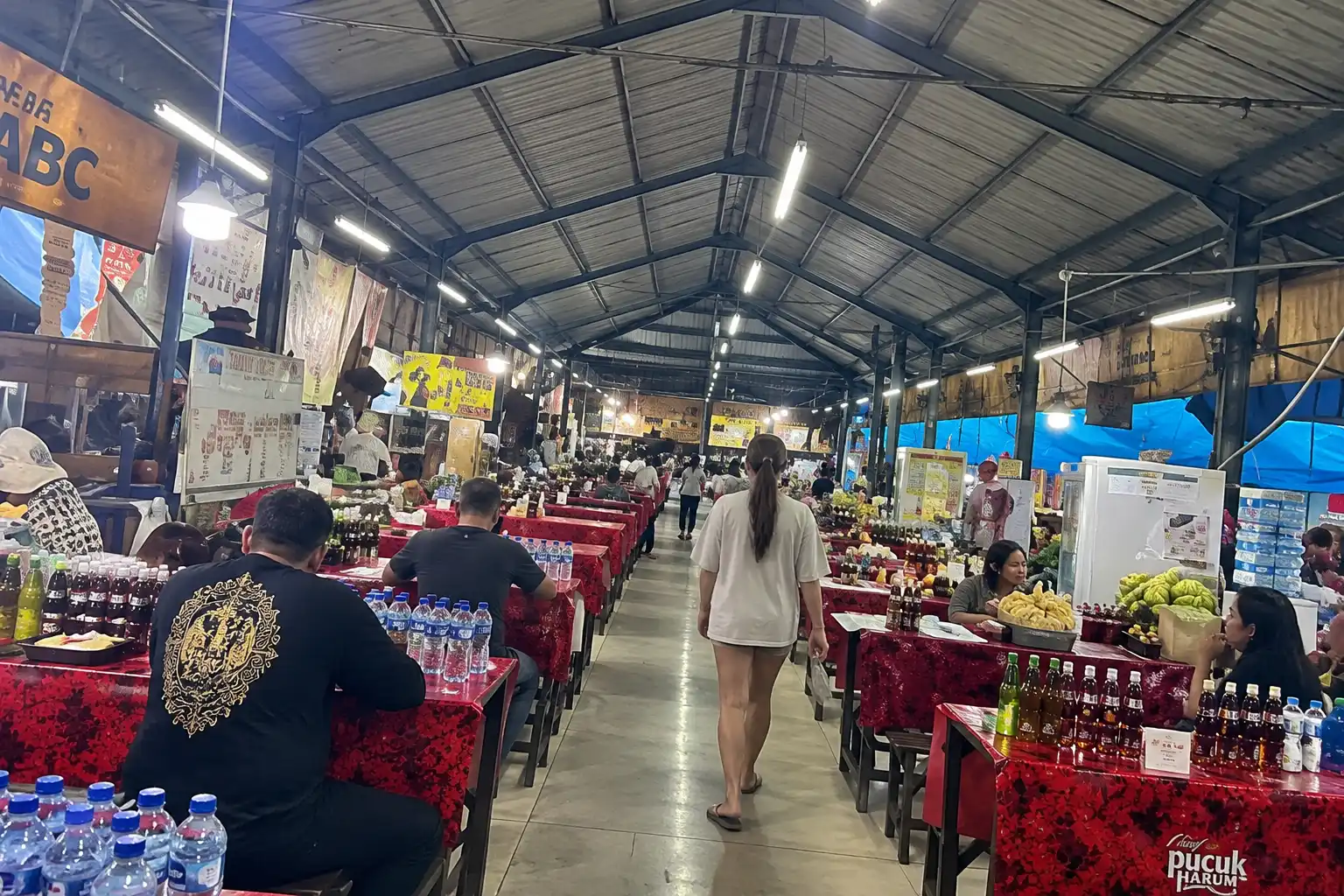
Beyond commerce, Kreneng Market plays an important role in preserving traditional Balinese culture. The products sold here, from Hindu ceremonial offerings to handwoven textiles, reflect the island’s deep spiritual and artistic heritage. Because the market operates as an open air, community centred space, it remains a living expression of how Balinese culture is practised daily, not just displayed for tourists.
Visitors who spend time here will notice the rhythm of a market deeply tied to religious life. Locals purchase fresh canang sari flowers for their morning offerings before heading home. Artisans sell their work directly, without middlemen. Furthermore, the market acts as a social gathering point where neighbours meet, trade gossip, and maintain community bonds that go far beyond buying and selling.
Kreneng Market Operating Hours and Best Time to Visit
Kreneng Market operates around the clock, but the experience changes dramatically depending on when you arrive. Therefore, knowing the difference between the day market and night market will help you plan the right visit.
The day market runs from early morning until around 4:00 PM. This is the best time to browse fresh produce, stock up on spices, find ceremonial items, and explore the artisan stalls. However, if you plan to focus on food, the evening is when things really heat up.
Starting at 4:00 PM, the market transforms into Pasar Senggol, the beloved local night market. Food stalls take over, vendors set up along every available space, and the entire area fills with the smell of grilling meat and Balinese spices. The night market runs until midnight, making it a perfect stop after exploring other parts of Denpasar.
For those travelling from outside Denpasar, getting here is straightforward. Seminyak and Canggu are roughly 30 to 45 minutes away by car, while Ubud is about one hour. Rather than dealing with Denpasar’s notoriously busy traffic yourself, many visitors prefer to hire a Bali car rental with driver for the day. This way, you can visit the market comfortably and continue exploring the city without the stress of navigating unfamiliar roads.
Day Market vs Night Market: What’s the Difference
Not sure when to visit? Here is a simple breakdown of what to expect at each time of day at Kreneng Market:
| Day Market | Night Market (Pasar Senggol) | |
| Hours | Early morning until ~4:00 PM | 4:00 PM until midnight |
| Vibe | Busy, local, practical | Lively, festive, social |
| Best for | Fresh produce, crafts, offerings | Street food, snacks, budget meals |
| Food highlights | Snacks, fresh ingredients | Babi guling, nasi jinggo, soto sapi |
| Shopping | Textiles, jewelry, ceremonial items | Clothing, accessories, household goods |
| Crowd | Mostly locals | Locals and visitors |
As the table shows, both sessions offer distinct value. So if your schedule allows, consider visiting twice. Go once in the morning for the local market experience, and again in the evening to enjoy the street food scene.
What Kreneng Market Offers
Fresh produce and local food
The day market is a vibrant source of fresh fruits, vegetables, spices, and herbs. Many of these ingredients are staples in traditional Balinese cooking, so this section is particularly popular with local households shopping for their daily needs.

Traditional Balinese offerings
Kreneng Market is well known for its wide selection of canang sari, the small beautifully arranged flower offerings used in Hindu rituals across Bali. Watching locals carefully select flowers and organise their daily offerings is one of the most genuine cultural moments you can experience here.
Street food and Balinese specialties
When the Kreneng night market opens in the evening, the food scene takes centre stage. You will find legendary dishes like babi guling (Balinese roast pork), nasi jinggo (small portions of rice with assorted side dishes), and soto sapi (beef soup). Beyond these, there are also bakso, sate lilit, gado gado, and a range of traditional Balinese snacks like laklak, bubur sumsum, and fried banana. Importantly, most dishes are incredibly affordable, with many available from as little as IDR 5,000 per portion.
Traditional Balinese Handicrafts
At Kreneng Market, the craft section offers a window into Bali’s artistic traditions. Each item here is typically made by hand and reflects the island’s Hindu cultural identity. Here are some of the standout categories:
- Wood carvings: from small decorative figures of gods and animals to large temple worthy sculptures, all carved with traditional tools and techniques
- Handwoven textiles: particularly ikat fabric, woven by hand in patterns that carry deep cultural meaning. You will also find sarongs and ceremonial sashes
- Batik and painted fabrics: Balinese batik uses wax resist dyeing to create intricate patterns, often with spiritual or symbolic themes
- Handmade jewellery: crafted from silver, gold, and other materials, incorporating classic Balinese motifs such as flowers, animals, and deities
Unlike mass produced souvenirs, these pieces are often created by artisans who have learned their craft directly from family members over generations. Purchasing from them means you are not just buying a souvenir. You are supporting a living artistic tradition.
Craftsmanship Passed Down Through Generations
The artisans you encounter at Kreneng Market carry knowledge passed directly from parents and grandparents. This generational transfer of skills is what keeps Bali’s cultural identity strong and vibrant. A single wood carving, for example, can take days or even weeks to complete, requiring deep knowledge of the material and patient, precise technique using traditional tools.
What sets Pasar Kreneng apart from other markets in Bali is the combination of this artisan energy with everyday local life. You get the colorful stalls, the hum of vendor conversations, the scent of food cooking, and the mix of traditional and practical goods all in one space. Unlike the more tourist focused markets in other areas of Bali, this market remains a space shaped by and for local people. Consequently, visitors get something far more authentic than a typical shopping experience.
Who is this market best for? It is ideal for travellers who want to experience the real pace of Balinese daily life, food lovers looking for genuinely local flavours, and anyone who appreciates handcrafted goods made with care. On the other hand, if you prefer air conditioned malls or a very polished shopping environment, the open air traditional setting of Kreneng Market may take some getting used to.
Tips for Visiting Kreneng Market
- Visit early in the morning. The market is at its liveliest before 9:00 AM. You will find the freshest produce and the best energy of the day
- Come back in the evening. Do not miss the night market session starting at 4:00 PM for an entirely different atmosphere and amazing street food
- Bring cash. Most vendors only accept Indonesian Rupiah. There are no card readers at the stalls, so withdraw cash beforehand
- Bargain politely. Negotiating prices is common at traditional markets in Bali, but always do it with a smile and genuine respect for the vendor
- Respect local customs. Some sections of the market involve ceremonial items and offerings. Be mindful, ask before photographing, and dress modestly
- Stay hydrated. Bali’s’s warm climate makes midday visits tiring. Bring water, wear sunscreen, and consider a hat if you plan to walk around extensively
- Watch your belongings. Like any busy market, stay aware of your surroundings and keep valuables secure
Nearby Attractions
Because Kreneng Market sits in central Denpasar, it is easy to combine with other nearby landmarks on the same day trip:
- Puputan Square: a historical landmark commemorating Bali’s resistance against Dutch colonial rule, just a short drive from the market
- Bali Museum: showcases Bali’s cultural and historical heritage through traditional architecture, artefacts, and exhibits
- Pasar Badung: another major traditional market in Denpasar for those who want to compare the two market experiences
Ready for Your Kreneng Market Adventure?
Kreneng Market offers one of the most genuine glimpses into everyday Balinese life, from fresh local produce to intricate handwoven textiles and traditional offerings. Whether you arrive at dawn to catch the morning market buzz or in the evening to join the street food crowd, this is the kind of place that stays with you long after your trip.
To make the most of your visit, consider joining one of our guided cultural tours. Our Bali Tour Package includes experienced local guides who know the market inside and out, plus comfortable transportation from your hotel. This means you can explore Kreneng and other Denpasar highlights without worrying about navigation or parking.
Frequently Asked Questions about Kreneng Market
Where is Kreneng Market located?
Kreneng Market is located at Jalan Kamboja No. 24, Dangin Puri Kangin, North Denpasar, Bali. It sits within close distance of the Bajra Sandhi Monument and the Bali Museum, making it easy to reach by car, motorbike, or ride hailing apps like Grab and Gojek.
What are Kreneng Market’s opening hours?
The day market opens from early morning and runs until around 4:00 PM. The night market, locally known as Pasar Senggol, begins at 4:00 PM and continues until midnight. Overall, the market area is active around the clock, so there is almost always something happening.
What can I buy at Kreneng Market?
You can find a wide variety of items including fresh fruits, vegetables, spices, traditional Balinese offerings (canang sari), handwoven textiles, wood carvings, batik fabrics, and handmade jewellery. The evening market also offers clothing, accessories, and household goods alongside the famous street food stalls.
What food is Kreneng Market famous for?
The Kreneng night market is particularly well known for babi guling (Balinese roast pork), nasi jinggo (small rice portions with assorted toppings), and soto sapi (beef soup). Additionally, you will find bakso, sate lilit, and a variety of traditional Balinese snacks. Most dishes are very affordable, starting from around IDR 5,000.
Is Kreneng Market suitable for tourists?
Yes, Kreneng Market is a great destination for tourists who want an authentic Balinese experience. Unlike more commercialised markets elsewhere on the island, this market caters primarily to locals, which gives it a genuinely unpolished and real character. Vendors are generally friendly and used to occasional visitors.
What should I wear when visiting Kreneng Market?
Wear comfortable, lightweight clothing suitable for Bali’s warm climate. Since the market is an open air space with lots of walking, comfortable footwear is essential. Modest attire is also recommended out of respect for the local culture, especially if you are visiting sections where ceremonial items are sold.
How do I get to Kreneng Market from popular areas?
From Seminyak or Canggu, the drive takes roughly 30 to 45 minutes. From Ubud, expect about one hour. You can use Grab or Gojek for a direct ride. Alternatively, if you are planning a full day in Denpasar, booking a Bali airport transfer or arranging transport through your hotel is a convenient option.