

The Bali Starling is one of the most striking birds you can find in Indonesia, and also one of the rarest. This small bird carries a big story, since it was once down to only a handful of wild individuals and has since become a symbol of successful conservation on the island. In this guide, you will learn what the bird looks like, why it nearly disappeared, where you can still see it today, and how to visit responsibly so this rare species keeps thriving for years to come.

What Is the Bali Starling
The Bali Starling, known locally as Jalak Bali and sometimes called the Bali Myna or Rothschild’s Mynah, is the only bird species found nowhere else on earth but Bali. Its scientific name is Leucopsar rothschildi, and British ornithologist Walter Rothschild formally described the species in 1912, a year after it was first documented in the wild. Because of this history, the bird carries both a scientific legacy and a deep cultural identity that has lasted for more than a century.
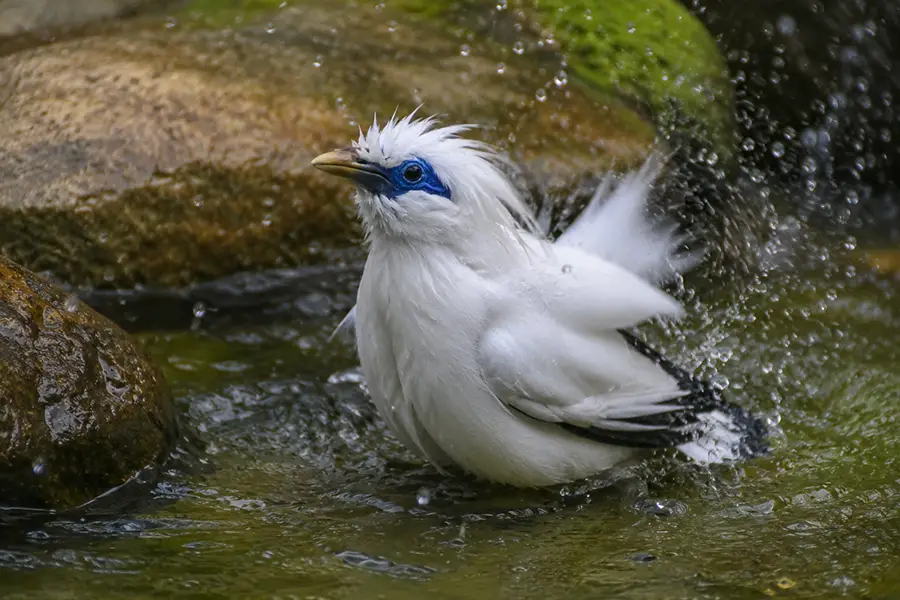
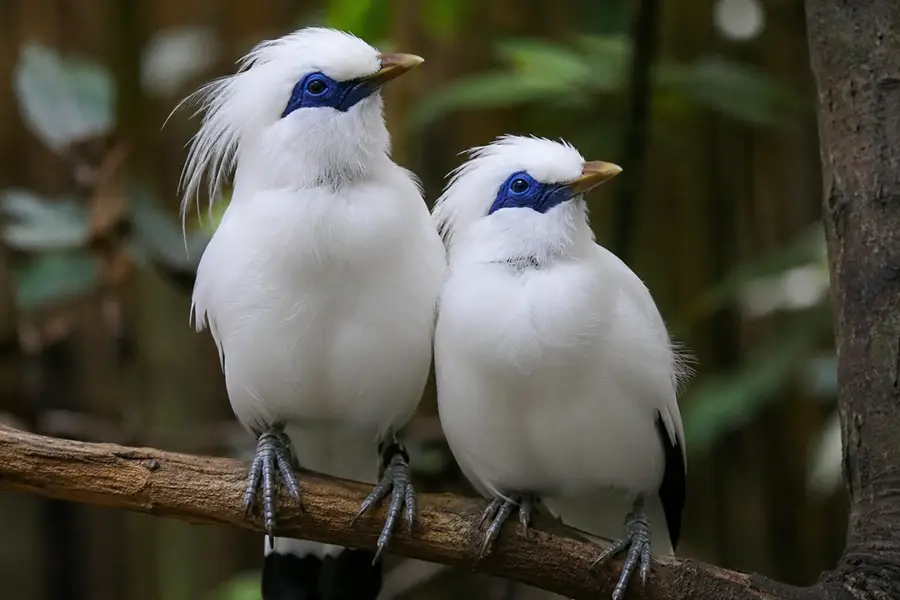
You can recognize a Bali Starling right away. Its body is covered in snow white feathers, while the tips of its wings and tail turn a deep black. A patch of bright blue bare skin surrounds each eye, and a short feathery crest sits neatly on top of its head. Adult birds measure around 25 centimeters long, similar in size to a common myna, and they mostly eat fruits, berries, and seeds, along with the occasional insect, especially while raising chicks.
Bali Starling at a glance
| Also known as | Jalak Bali, Bali Myna, Rothschild’s Mynah |
| Scientific name | Leucopsar rothschildi |
| Conservation status | Critically Endangered (IUCN Red List) |
| Wild population | Several hundred birds, up from only six in 2001 |
| Where found in the wild | West Bali National Park and Nusa Penida |
| Typical diet | Fruits, berries, seeds, and small insects |
The Story Behind Bali’s Most Famous Bird
Every Bali Starling you see today, whether in the wild or in a breeding center, is part of a much bigger story. This bird went from a scientific curiosity to a near extinction and back to a recovering wild population, and each stage of that journey shaped how Bali protects the species now.
A rare discovery that became a national symbol
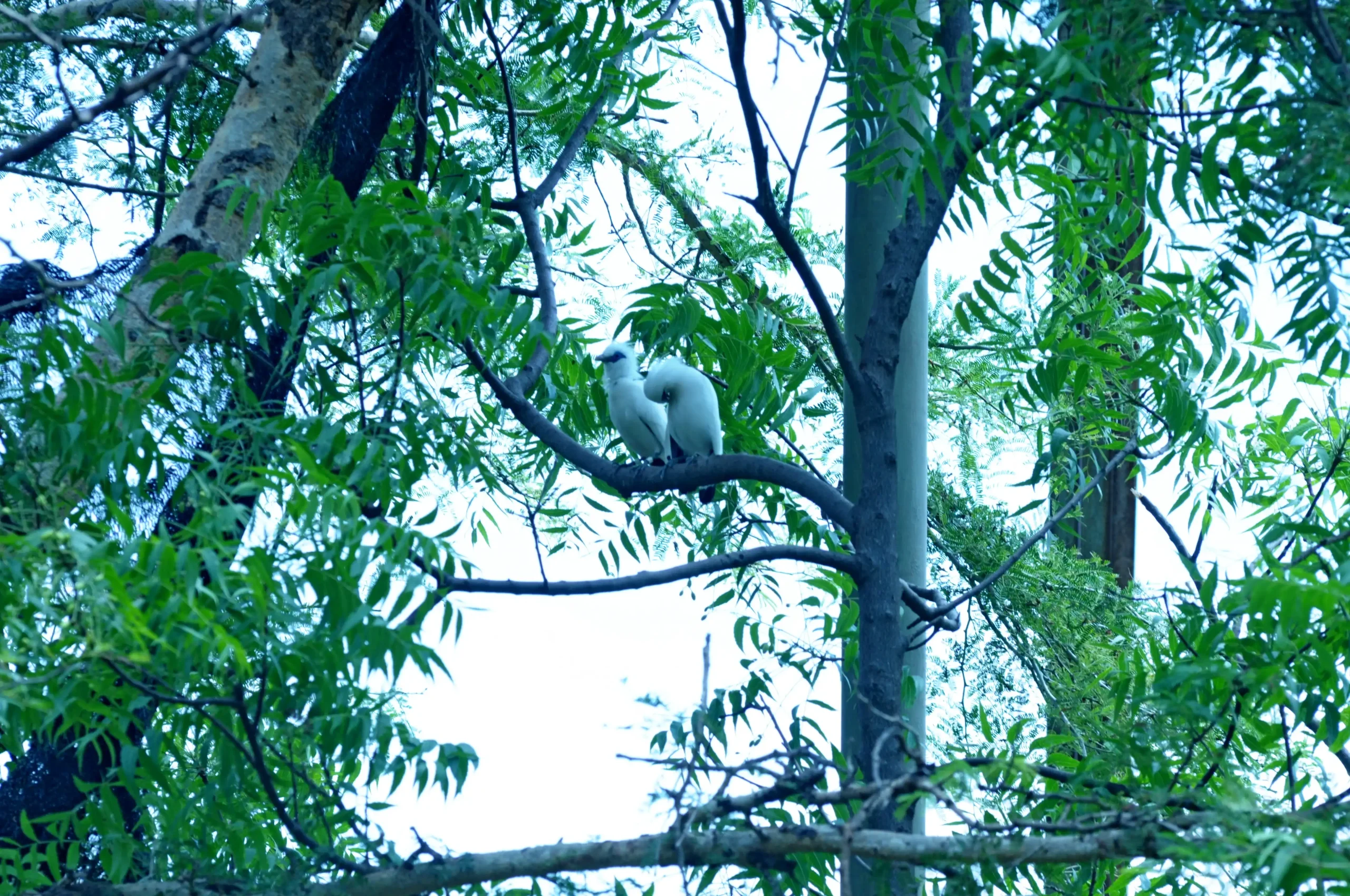
The species was first documented in the wild in 1911, and Walter Rothschild formally described it a year later, giving it the scientific name Leucopsar rothschildi in his own honor. Indonesia later adopted the bird as an official faunal symbol for Bali province, a recognition that reflects how closely the Bali Starling is tied to the island’s identity.
A species pulled back from the edge of extinction
Habitat loss from agriculture and tourism development pushed the Bali Starling out of most of its original range, but illegal trapping did far more damage. Traffickers paid the equivalent of thousands of dollars for a single breeding pair during the 1990s, more than a park ranger earned in a year, and poaching wiped out nearly the entire wild population. By 2001, only six known Bali Starlings remained in the wild. Coordinated breeding and release programs run by the Indonesian government, conservation groups, and local communities have since brought that number back up to several hundred, although the species still remains critically endangered and depends on continued protection.
Where to See the Bali Starling in the Wild
Two main sites give you a realistic chance of seeing this bird outside a breeding aviary, and each one offers a slightly different experience.
West Bali National Park
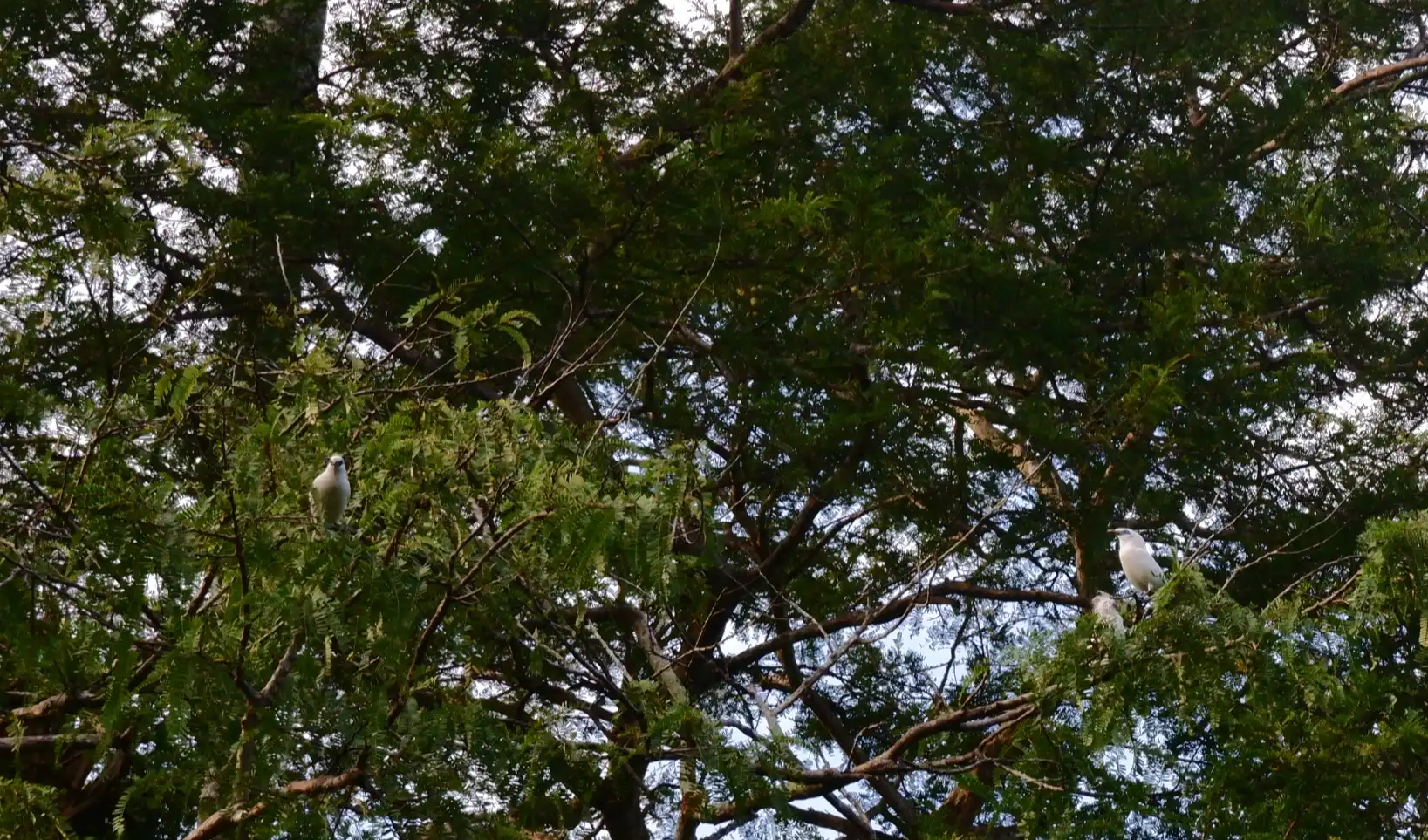
West Bali National Park, also called Bali Barat National Park, is the species’ original and largest stronghold. Recent surveys count several hundred wild Bali Starlings living across the park’s dry forests and savannah, a dramatic recovery from the early 2000s when only a handful remained anywhere on the island.
Nusa Penida
Nusa Penida is the second place where the Bali Starling now lives and breeds in the wild. A conservation group manages a program on the island that releases captive bred birds through a traditional Balinese temple ceremony, tying each release to local spiritual practice. If you are already planning a trip to the island, this Nusa Penida attractions guide covers other spots worth combining with a starling sighting.
Best Time and Way to Spot This Rare Bird
Spotting a Bali Starling in the wild takes a bit of planning, since these birds are shy and their numbers are still limited. Timing your visit well and going in with the right guide make a real difference to your chances.
Morning hours give you the best chance
Bali Starlings are most active in the early morning, typically between six and nine, when they forage for fruit and call to each other across the treetops. Arriving at first light also means cooler temperatures and fewer visitors on the trail, both of which improve your odds of a clear sighting.
Join a guided birdwatching walk
A local guide knows the current nesting areas and recent sighting spots, information that changes from month to month as the birds move around. Guided walks at West Bali National Park typically last one to two hours and often include stops to look for other native species among the park’s more than 160 recorded bird types.
Wildlife Photography Etiquette: How Close Should You Get
Getting a great photo of the Bali Starling does not mean getting close. A telephoto or zoom lens lets you capture sharp images from a comfortable distance, usually ten meters or more, without stressing the bird. Avoid using flash, since a sudden burst of light can startle a bird that is already wary of humans after decades of illegal trapping. Keep a wide berth around nesting trees, especially during breeding season, and always follow your guide or ranger’s directions, since some zones require prior permission for photography.
What to Know Before You Visit
- Keep noise to a minimum, since loud sounds startle the birds and disrupt other wildlife nearby.
- Stay on marked trails to protect fragile habitat and active nesting areas.
- Never feed the birds or any other wildlife you encounter.
- Check with your guide beforehand, since photography permits may be required in certain zones.
- Visit during the dry season, from April to October, for the most comfortable trekking conditions.
Getting There
West Bali National Park sits in Jembrana Regency, about 140 kilometers or four hours by car from Denpasar, and around 120 kilometers or three and a half hours from Ubud. If you are arriving through Gilimanuk Ferry Port, the park is only 15 kilometers away, roughly a thirty minute drive. Because the roads wind through several small towns along the way, most visitors prefer to book a Bali car rental with driver rather than drive themselves, especially if they plan an early start for morning birdwatching.
Plan Your Bali Starling Tour with Bali Touristic
Ready to see the Bali Starling for yourself? Bali Touristic can arrange a private trip to West Bali National Park with an experienced local driver, so you can relax and focus on spotting this rare bird instead of navigating the drive. Browse our Bali tour packages to find an itinerary that fits your trip, or send us a message on WhatsApp at +62 818 0899 5555 to start planning.

Frequently Asked Questions about Bali Starling
What is the difference between the Bali Starling and the Bali Myna?
There is no difference. Bali Starling, Bali Myna, and Jalak Bali all refer to the same species, Leucopsar rothschildi. The names are used interchangeably depending on the source, though Jalak Bali is the term most commonly used in Indonesia.
Why is the Bali Starling endangered?
Decades of illegal trapping for the exotic pet trade nearly wiped out the species, combined with habitat loss from agriculture and development. The wild population dropped to just six birds by 2001 before conservation programs helped it recover.
Where can you see the Bali Starling in the wild?
The two main sites are West Bali National Park, the species’ original stronghold, and Nusa Penida, where a community based release program has established a second wild population.
Can you keep a Bali Starling as a pet?
No. The Bali Starling is protected under Indonesian law, and owning, trading, or capturing one without a permit is illegal. Illegal pet trade is the main reason the species nearly went extinct, so buying or keeping one only adds to that pressure.
How close can you get to photograph a Bali Starling?
Keep a distance of at least ten meters and use a zoom lens rather than approaching the bird directly. Avoid flash photography and always follow your guide’s instructions, since some areas require special permits for photography.
What other wildlife experiences can you combine with this trip?
Bali is home to plenty of other wildlife spots beyond West Bali National Park and Nusa Penida. This guide to wildlife attractions in Bali rounds up other places to see native species if you want to build a full nature focused itinerary.


