
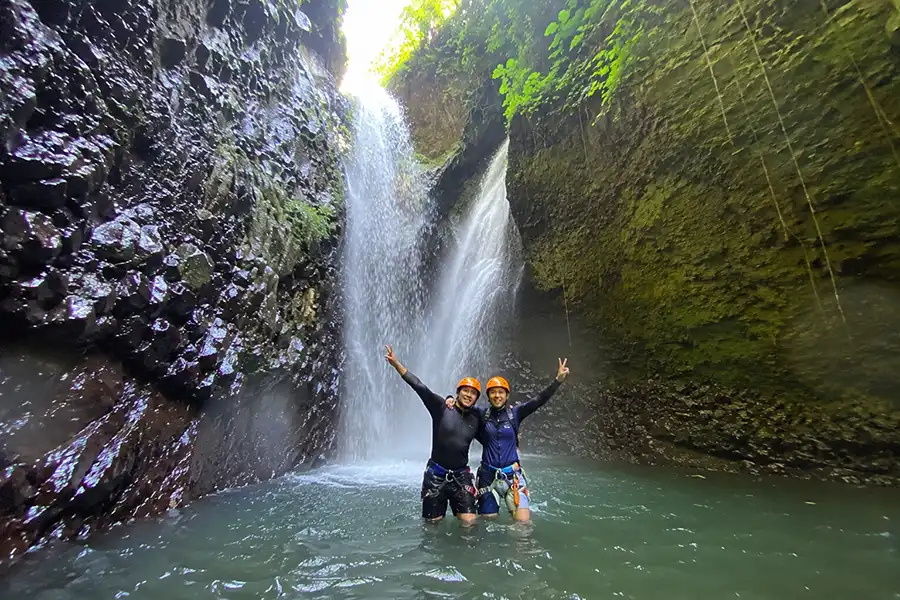
Canyoning in Bali has become one of the most talked about adventures on the island, and Gitgit Waterfall in the north sits right at the center of that reputation. Visitors rappel down natural rock walls, slide through cool river channels, and stand beneath a working waterfall along the way. Because the route mixes real adrenaline with guided safety, both first timers and experienced canyoners can join. This guide covers what canyoning in Bali looks like at Gitgit, current pricing, safety standards, packing tips, the best season to visit, and how to plan the trip.
Gitgit Canyon sits in Sukasada district, close to the well known Gitgit twin waterfalls in North Bali. The canyon offers a mix of trekking, rock rappelling, and natural water slides that guide visitors down through several waterfall drops. Since certified operators run the route daily, travelers join a scheduled tour rather than explore the canyon on their own.
Visitor Information
📍
Jl. Raya Bedugul–Singaraja, Gitgit village, Sukasada, Buleleng Regency (about 1.5–2 hours from Ubud, and around 2 hours from Kuta or Seminyak)
🕐
Daily, morning departures only. Pickup typically runs 6:00–7:45 AM depending on your hotel area
💰
From IDR 1,700,000 per person, depending on the package and trail difficulty
🅿️
Available at the tour operator’s base camp near the canyon entrance
⏱️
2 to 3 hours of actual canyoning. Including trekking, briefing, and lunch, most tours run 4 to 5 hours on site, plus hotel pickup and return
🔞
8 years old for the easiest beginner routes, 12+ for standard beginner canyons, and 16+ for advanced trails
🎫
Advance booking required through a tour operator. Many offer free cancellation up to 24 hours before the activity

What Is Canyoning in Bali
Canyoning in Bali is an outdoor activity that combines trekking, rappelling, and natural water sliding as you follow a river down through a canyon or waterfall system. Gitgit is one of the most popular starting points, thanks to its mix of beginner friendly and advanced routes within the same base camp.
While Gitgit is the focus of this guide, the island has several other canyon systems in the same North Bali highland region, which are covered later in this article for travelers who want to try more than one canyon during their trip.
Why Canyoning at Gitgit Waterfall Is Worth Trying
Canyoning at Gitgit Waterfall stands out because it blends excitement with a calm natural setting. With Bali’s extreme adventure activities, travelers feel both safe and daring at the same time. Many assume canyoning suits only advanced athletes, but guides confirm that beginners join just as often.
Part of the recent surge in interest also comes from social media. Short videos of visitors sliding down rocks, rappelling beside the falls, and cheering at the bottom of each drop have circulated widely online, and that visibility keeps drawing curious first timers who want to try the same experience for themselves.
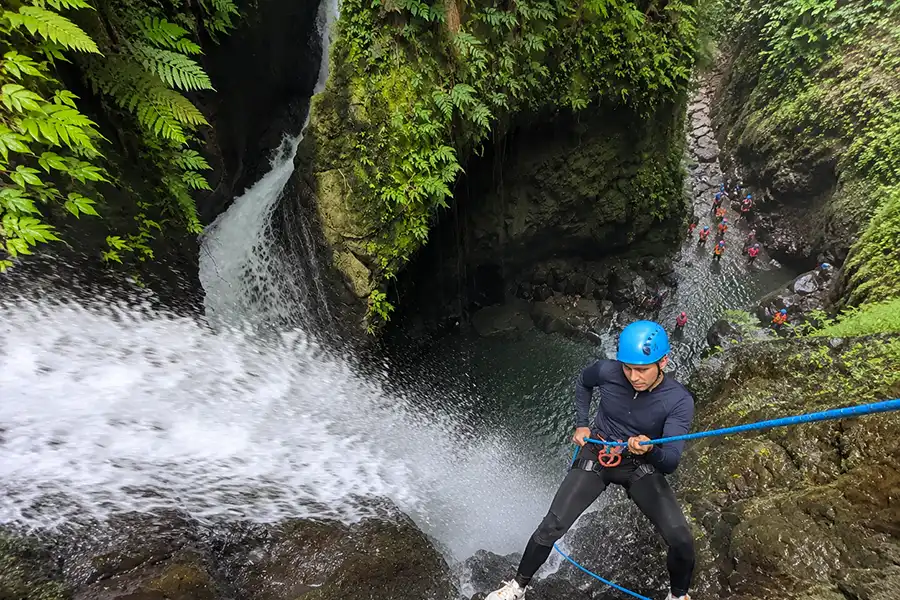
The air around Gitgit Waterfall also stays cool throughout the day, so the trek, the rappel, and the swim all feel refreshing rather than exhausting. Here is what makes the experience appealing:
- Real rappelling down natural waterfall drops, not artificial concrete courses, so every descent feels different depending on the current water flow
- Cool river paths surrounded by untouched forest, which keeps the trek comfortable even under Bali’s midday sun
- Certified guides who walk you through every step, from fitting your harness to coaching your body position on the rope
- Small group sizes that keep the pace personal, so nervous first timers are not rushed through the harder sections
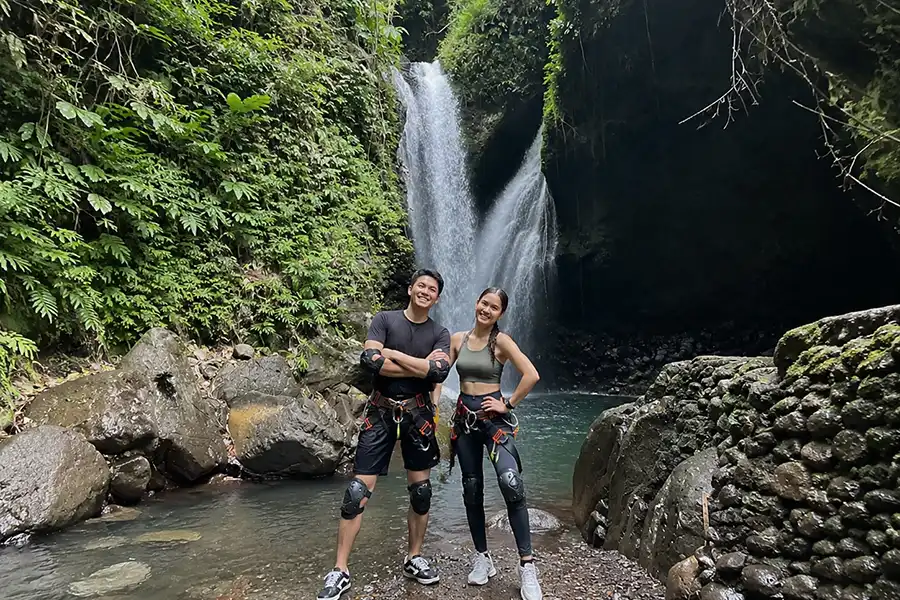
- Safety gear that includes ropes, helmets, and harnesses, all checked and rechecked before every descent
Choosing Your Canyoning Difficulty Level
Not every canyoning for beginners in Bali trip looks the same, and choosing the right level matters more than trying to prove your bravery. Operators typically group Gitgit canyoning into three tiers based on age, fitness, and time in the canyon.
| Difficulty | Best For | Minimum Age | Fitness Needed | Time in Canyon |
| Beginner | First timers, families | 8 years old | Moderate | 2 to 2.5 hours |
| Standard | Travelers with some outdoor experience | 12 years old | Moderate to good | 2.5 to 3 hours |
| Advanced | Experienced canyoners | 16 years old | Good | 3 to 4 hours |
Beginner routes keep the rappels shorter and the pace steady, while advanced trails add longer drops and more technical sections. If you are unsure which level fits your group, most operators are happy to recommend one during booking.
What to Expect on the Trek Before You Reach the Canyon
Before the canyoning begins, guides lead a short trek through the forest. The path stays narrow and slightly damp, but the cool air and tall trees make the walk pleasant rather than tiring.
Along the way, guides often share notes about local plants and wildlife, which turns the walk into a small nature tour of its own. This warm up stretch also gives your body time to adjust before the first rappel.
Here is what usually happens on the trek:
- A calm walk through shaded forest paths, with the canopy keeping most of the trail out of direct sun
- The sound of birds and flowing river water, which grows louder as you get closer to the canyon entrance
- A good chance to take photos before the adventure starts, since gear stays dry until you reach the water
- A guided route that leads straight to the canyon entrance, so there is no risk of wandering off the path
Rappelling and Sliding Down Gitgit Waterfall
Once you reach the canyon, guides clip your harness to the rope and walk you through the first descent. The water feels strong at first, but guides teach you how to lean back and control your body as you go down.
The canyon walls stay smooth, so moving down feels more like a controlled glide than a fall. Most travelers agree that the first drop feels the most intimidating, and everything after that turns into pure fun.
After the main rappel, a smaller drop usually follows, along with natural slides and pools where you can relax before heading back.
Safety Standards and Equipment
Safety comes first at every stage of the tour. Before entering the canyon, guides run a full briefing and fit each traveler with a harness, helmet, and rope system that meets CE safety standards.
Guides then explain how to position your body, keep your legs steady, and use your arms while rappelling. They check every rope setup twice, which helps first timers feel confident even if they have never tried canyoning before.
Most reputable operators also include personal accident insurance as part of the package, so it is worth confirming this when you book.
What to Bring for Your Canyoning Trip
Most operators supply the technical gear, so packing stays simple. Still, a few personal items make the day more comfortable:
- A swimsuit worn under your clothes, so you are not changing in the open near the canyon entrance
- Quick drying clothing, since everything will get wet during the trek and the descent itself
- Water shoes or sturdy sandals with good grip, which matter more than style on slippery rock
- Sunscreen and a hat for the trek, since parts of the walk pass through open ground before the canyon
- A dry change of clothes for after the tour, ideally packed in a separate bag left at the base camp
- A waterproof camera or phone case if you want your own photos, though most operators also offer photo packages
Because helmets, harnesses, gloves, and life jackets usually come with the package, you rarely need to bring your own safety gear.
Entrance Fee, Tickets, and Opening Hours
Prices vary depending on the operator and the difficulty of the trail. Beginner routes cost less, while longer or more technical trails carry a higher Bali canyoning price because they include more equipment and guiding time.
| Package | Price (per person) |
| Beginner canyoning trip | IDR 1,700,000 to 1,700,400 |
| Advanced or brave trail | IDR 2,500,000 |
Tours run on a fixed daily schedule rather than a walk in basis, so booking ahead matters.
| Day | Typical Schedule |
| Every day | Hotel pickup 6:00 AM to 7:45 AM, registration around 8:10 AM, canyoning 9:00 AM to 12:00 PM, return by early afternoon |
Best Time to Go Canyoning in Bali
Canyoning in Bali runs year round, but the dry season from June to October generally offers the clearest water, lower river levels, and the most consistent weather for the trek and the rappels.
During the wet season from November to March, some operators may reschedule or cancel canyoning trips if water levels rise too high for safety. Booking a morning slot also helps you avoid the afternoon showers that are more common later in the day, regardless of season.
How to Get to Gitgit Canyon
Gitgit Canyon sits in North Bali, so the drive takes longer if you are staying in the south. From Ubud, expect around 1.5 to 2 hours on the road. From Kuta, Seminyak, or Canggu, plan for roughly 2 hours each way through the Bedugul highlands.
Most tour packages already include return transport from your hotel, which removes the hassle of arranging your own ride. Travelers who prefer more flexibility, or who want to combine the trip with other stops, can also book a Bali car rental with driver to reach Gitgit at their own pace.
Things to Do Near Gitgit Waterfall
Since the canyon sits inside a wider highland region, many travelers pair canyoning with other nearby stops. If you want to extend the day and see more of what North Bali offers, joining a wider Bali tour package can help you add extra destinations without arranging separate transport.
- Cliff jumping and a natural rock slide at Aling-Aling Waterfall, another adventure spot in the same district that draws its own steady stream of thrill seekers, separate from the canyoning route at Gitgit
- The towering cascades of Sekumpul Waterfall, often called Bali’s tallest waterfall, reached by a steep staircase down into the valley and popular enough that early mornings help you avoid the crowds
- Coffee plantations and highland scenery around Bedugul, a quieter stop with cooler weather and none of the adventure crowds
These add ons balance the high energy of canyoning with slower, more relaxed moments later in the day.
Explore More Waterfalls Across Bali
Gitgit is not the only waterfall worth visiting in Bali. If your itinerary includes a separate day away from North Bali, these three waterfalls sit in different regions of the island and make excellent additions to a wider Bali trip.
1. Tukad Cepung Waterfall
Tukad Cepung Waterfall in Bangli has no canyoning or rappelling on site. It is a photography destination first, known for the natural light beam that falls through a narrow rock crevice above the water, usually strongest around midday. Because that lighting window draws a steady crowd, the site can feel busy during peak hours despite its small size, and arriving early or late in the day helps you get a clearer view of the beam without the queue.
2. Ulu Petanu Waterfall
Ulu Petanu Waterfall in Gianyar also has no adventure activities such as canyoning or cliff jumping. Its appeal is the opposite of Gitgit’s adrenaline pace: a short, easy walk through tropical forest ends at a calm pool framed by moss covered cliffs. It sees far fewer visitors than the more famous waterfalls in Gianyar, which makes it a good choice for travelers who want a quiet break rather than a physical challenge.
3. Tukad Unda Waterfall
Tukad Unda in Semarapura is not a natural waterfall at all. It is a series of stepped pools and cascades formed by a dam on the Unda River, which gives it a distinctly landscaped look compared to the jungle setting at Gitgit. There is no canyoning here either, but the easy access and shallow pools make it a popular quick stop for families and travelers passing through East Bali on the way to other attractions.
Book Your Canyoning Adventure with Bali Touristic
Bali Touristic can help arrange your canyoning day trip alongside other parts of your itinerary, including a smooth Bali airport transfer when you land. This keeps the whole canyoning in Bali adventure organized from arrival to departure, without the stress of coordinating separate operators.
Chat with us on WhatsApp at +62 818 0899 5555 to check today’s availability.
Check the team’s reviews on TripAdvisor before booking, where the operator holds a strong rating from past travelers.

Frequently Asked Questions About Canyoning at Gitgit Waterfall
Is canyoning at Gitgit Waterfall safe for beginners?
Yes. Certified guides run a full safety briefing and fit every traveler with CE standard equipment before the descent starts. Beginners join daily, and guides adjust their pace to match your comfort level.
How much does canyoning at Gitgit cost?
Beginner packages usually start around IDR 1,700,000 per person, while advanced or longer trails can cost up to IDR 2,500,000 per person. Prices vary by operator and season.
What is the minimum age for canyoning at Gitgit?
Most operators accept children from 8 years old on the easiest beginner routes, while standard beginner canyons require participants to be at least 12. Advanced trails are limited to travelers aged 16 and up.
How long does the canyoning tour take?
The canyoning itself lasts about 2 to 3 hours. Once you add trekking, the safety briefing, and lunch, most tours run 4 to 5 hours on site, plus travel time for hotel pickup and drop off.
What should I wear for canyoning?
Wear a swimsuit under quick drying clothes and bring water shoes with good grip. Pack a dry set of clothes for after the tour, since you will get fully wet during the activity.
Do I need to book in advance?
Yes. Tours run on a fixed daily schedule with limited group sizes, so booking ahead secures your preferred date and pickup time. Many operators also offer free cancellation up to 24 hours before the activity.
Do I need to know how to swim for canyoning in Bali?
Basic swimming comfort helps, but you do not need to be a strong swimmer for most canyoning in Bali tours. Life jackets are provided at every pool crossing, and guides stay close during any deeper sections. Let your guide know beforehand if you feel unsure in the water so they can adjust your pace.
Are there other canyoning spots in Bali besides Gitgit?
Yes. North Bali also has canyoning routes in Sambangan village, including canyons locally known as Kerenkali and Egar, near the Aling-Aling Waterfall area. These offer similar rappelling and sliding experiences with their own difficulty levels, so travelers who want to try best canyoning in Bali options more than once during their trip have alternatives beyond Gitgit.