
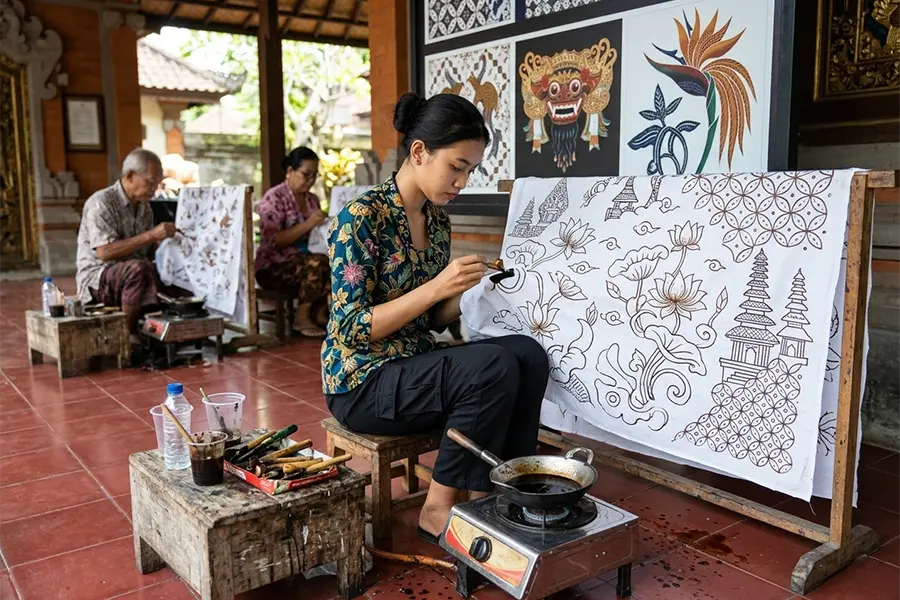
Not every part of Bali asks for your full attention, but Tohpati Village does. Tucked just 12 kilometers from Kuta along the road toward Ubud, this quiet working village has been at the center of Bali’s batik tradition for generations. Walk in, and you’ll find artists focused on their fabric, applying hot wax with steady hands, the same way their parents and grandparents did before them.
What makes Tohpati Bali worth a visit is how real it feels. This isn’t a curated showcase or a tourist-facing demonstration. It’s an active craft village where batik is still made the traditional way, sold directly by the people who made it, and where visitors are genuinely welcome to watch, ask questions, and try it themselves.
Read on to find out what to see, what to do, and how to make the most of your time in Tohpati Village.

What Is Tohpati Village?
Tohpati Village is a traditional craft village in Denpasar, Bali, best known as the center of batik production on the island. It sits along the main road connecting Denpasar to Ubud, making it an easy and natural stop for travelers moving between the two areas.
Batik is a fabric dyeing technique where hot wax is used to create intricate patterns on cloth before dye is applied. The wax acts as a resist, keeping color out of certain areas to form the design. UNESCO recognized batik as an Intangible Cultural Heritage of Humanity in 2009, and the tradition continues to thrive here in Tohpati Village Bali.
Unlike many tourist villages in Bali, Tohpati has maintained a working-village atmosphere. Artists here are not performing for visitors. They’re doing their actual work, and you happen to be invited to watch.
A Living Center of Batik Traditions in Bali
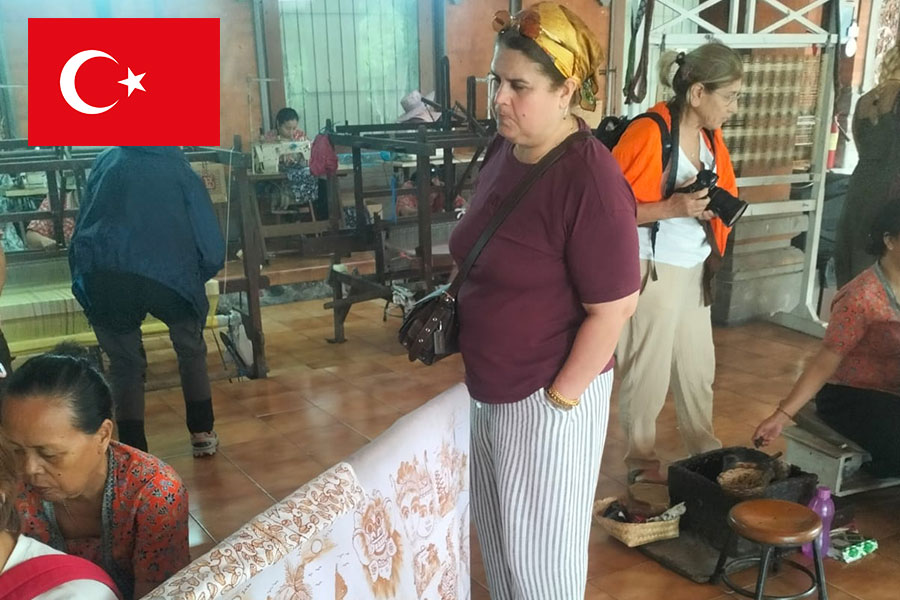
Walking through Tohpati Village feels different from other craft destinations on the island. This is a batik village Bali where the tradition is genuinely alive. Workshops line the quiet streets, and you can hear the gentle sounds of tools working on fabric as you pass by.
Artists here work with cotton and silk, applying hot wax using a canting (a small handheld tool with a copper tip) or a copper stamp called a cap. Each piece is then submerged in natural dyes, washed, and dried. The result is fabric that carries both skill and story.
Many of the artisans in this tohpati batik village Bali learned from their parents and grandparents. The knowledge is passed down not through formal schools, but through daily practice in family workshops. That continuity is what makes the batik here feel different from mass-produced fabric you’ll find elsewhere.
What to Expect: The Full Cultural Experience
One of the most appealing things about Tohpati Village is how welcoming it is. You’re not kept behind a rope watching demonstrations from a distance. Most workshops are open, and artists are happy to explain their work as they go.
During a typical visit, you’ll get to see:
- How hot wax is applied using a canting or cap tool
- The dyeing process, where fabric is submerged in color baths
- Washing and drying stages that reveal the final pattern
- Finished pieces in various stages of completion
Each step shows the patience required to make genuine handmade batik. A single piece can take several days to complete, depending on the complexity of the design and how many color layers are used.
Try a Batik Workshop in Tohpati Village
For visitors who want more than just observation, several studios in Tohpati Village offer short hands-on workshops. These sessions are led by local artists who guide you through the basics at a relaxed pace.
You can expect:
- A brief introduction to the tools and wax technique
- A chance to draw your own design on fabric
- Guidance on applying wax and basic dyeing
- Taking your finished piece home as a souvenir
No drawing skills are required. The instructors are patient and adapt to all skill levels. Kids enjoy these sessions just as much as adults, and the slow, focused nature of the craft makes it a surprisingly relaxing way to spend part of your day.
Joining a workshop also directly supports the local community. Revenue from these sessions helps artisans continue practicing their craft full-time.
Batik Motifs and What Makes Them Special
Balinese batik has its own distinctive visual language, shaped by the island’s Hindu traditions and natural surroundings. In Tohpati Village, you’ll find both traditional and contemporary motifs, often displayed side by side in the same studio.
Common motifs include:
- Floral and leaf patterns drawn from Bali’s tropical landscape
- Sacred symbols from Hindu mythology, including the lotus, naga, and barong
- Geometric patterns based on traditional Balinese weaving designs
- Modern interpretations that blend traditional symbols with contemporary color palettes
Because each piece is handmade, no two items are exactly alike. Even when artists work from the same pattern, small variations in wax application or dye depth mean every piece has its own character. That’s part of what makes handmade batik art from Tohpati worth owning.
Shopping Batik at Tohpati Village
The Bali Batik Center in Tohpati Village is the main retail area where you can browse and buy finished pieces. The selection ranges from clothing to home decor, and much of what’s on display was made right there in the village.
Popular items include batik shirts, dresses, sarongs, scarves, and wall hangings. Many visitors pick up fabric by the meter to have it tailored elsewhere.
Batik prices you can expect
Prices at Tohpati Village vary depending on the technique, fabric, and complexity of the design. Here’s a general guide:
| Item | Technique | Price Range (IDR) |
| Small scarf / handkerchief | Batik cap (stamp) | 10,000 – 50,000 |
| Batik shirt / blouse | Batik cap or kombinasi | 100,000 – 400,000 |
| Batik dress / long fabric | Batik tulis (hand-drawn) | 300,000 – 1,000,000 |
| Premium hand-drawn piece | Batik tulis fine detail | 1,000,000 – 2,000,000+ |
Batik tulis (fully hand-drawn) are more expensive than batik caps (stamp-made) because it requires significantly more time and skill. If you’re not sure which you’re looking at, ask the artist to explain. Most are happy to show you the difference.
Silver crafts near Tohpati Village
While Tohpati Village is primarily known for batik, visitors who search for ‘tohpati village batik and silver’ are on the right track. The nearby village of Celuk, located further along the road toward Ubud, is Bali’s center for silver and gold jewelry making. Many visitors combine a stop at Tohpati for batik with a visit to Celuk for silverwork, making it a natural half-day craft route.
If you’re interested in both, plan your trip to start at Tohpati in the morning and continue to Celuk before heading toward Ubud.
How to Get to Tohpati Village from Denpasar
Getting to Tohpati Village is straightforward. The village sits along Jalan Bypass Ngurah Rai in Denpasar, the main road heading northeast toward Ubud. From central Denpasar, the drive takes about 20 minutes. From Kuta or the airport area, allow 30 to 40 minutes depending on traffic.
Most visitors reach the village by Private car or scooter rental, Bali car rental with driver for a more comfortable and flexible experience and Adding it as a stop on a guided day tour that includes Ubud or surrounding cultural sites
The village is easy to navigate on foot once you arrive. There’s usually parking available near the main studios and the Bali Batik Center. A visit to the main area typically takes one to two hours, or longer if you join a workshop.
Tips Before You Visit
A few things worth knowing before you head to Tohpati Village for the first time:
- Come in the morning. Artists are most active between 8am and midday, and the village is quieter and cooler earlier in the day.
- Bring cash. Most workshops and the batik center prefer cash, especially for smaller purchases or workshop fees.
- Wear light, comfortable clothes. Some workspaces can get warm, especially near the wax stations.
- Don’t rush. This is not a place to tick off in 20 minutes. Give yourself time to wander, ask questions, and watch the process properly.
- Ask before photographing. Most artists are fine with photos, but it’s polite to ask first, especially inside working studios.
If you’re still putting together your Bali itinerary, how to plan a trip to Bali has a practical overview of how to structure your time across the island.
Plan Your Cultural Day in Bali with Bali Touristic
Tohpati Village pairs well with other cultural stops nearby, including the silver village of Celuk, the painter’s village of Batuan, and the art market in Ubud. Many travelers include it as part of a Bali tour package that covers the central art route. For a dedicated guided route through this cultural corridor, the Best of Ubud Scenic Tour and the Bali Greatest Ubud and Kintamani Tour both make excellent full-day options. If you want to cover more than one area in a day without the hassle of navigating Bali’s roads yourself, a private tour is the most practical option.
Bali Touristic offers flexible private tours in Bali with experienced local drivers who know the best routes and can adjust the itinerary based on what you want to see. Whether you want a full cultural day or just a few hours in the village, the team can help you put together something that works.
Get in touch via WhatsApp to ask about availability and custom itineraries.

Frequently Asked Questions About Tohpati Village
Is Tohpati Village part of Denpasar?
Yes. Tohpati Village is located within the administrative boundaries of Denpasar, the capital city of Bali. It sits along the main road connecting Denpasar to the Ubud area, roughly 12 kilometers northeast of Kuta.
What is the origin of the name Tohpati?
The exact etymology of the name Tohpati is not widely documented, but the village has long been associated with traditional weaving and batik production in Bali. Locals trace the village’s identity as a craft center back several generations, making it one of the oldest established batik communities on the island.
What is the main city center of Bali?
Denpasar is the official capital and main city of Bali province. It’s where Tohpati Village is located, along with the island’s main airport (Ngurah Rai International Airport), government offices, and a range of commercial and cultural sites. Most travelers pass through Denpasar even if they’re staying in resort areas like Kuta, Seminyak, or Canggu.
Where can you buy batik fabric in Bali?
Tohpati Village is one of the best places to buy batik fabric in Bali because you’re purchasing directly from the artisans who made it. The Bali Batik Center in the village carries a wide range of finished pieces. You can also find batik at markets in Ubud, Kuta, and Seminyak, though prices and quality vary more widely there.
What else can you find near Tohpati Village besides batik?
The area around Tohpati Village is rich with craft villages. Celuk, a few kilometers further toward Ubud, is Bali’s center for gold and silver jewelry. Batuan is known for its distinctive painting style. Mas is famous for woodcarving. Many visitors use Tohpati as the first stop on a longer craft route heading into the Ubud region.