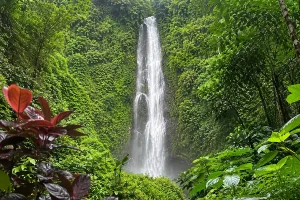


Fiji Waterfall is one of North Bali’s best-kept secrets. Three parallel cascades drop from a 30 to 40-meter volcanic cliff into a large natural pool, side by side, in a single dramatic scene. Most visitors discover it while trekking to the nearby Sekumpul Waterfall, and many agree that Fiji is the bigger surprise of the two.
The waterfall sits along the Tukad Panarukan river in Lemukih Village, deep inside a tropical gorge shaded by coffee and clove trees. Because the trail continues past Sekumpul, fewer tourists make it this far, which means quieter pools, better photos, and a more immersive jungle experience.
If you are planning a day trip to North Bali and waterfalls are on your list, Fiji Waterfall deserves a dedicated stop. This guide covers how to get there, what the trek looks like, entrance fees, what to bring, and tips to make the most of your visit.

What Is Fiji Waterfall?
Fiji Waterfall is a triple-cascade waterfall located in Lemukih Village, Sawan District, Buleleng Regency, North Bali. Unlike most waterfalls where a single stream drops from one point, Fiji has three separate streams flowing parallel to each other from the same cliff face. The combined width makes it impossible to capture in a single standard photo frame. The mist from the falls keeps the surrounding area cool and the vegetation intensely green year-round.
Visitor Information
📍
Lemukih Village, Sawan District, Buleleng Regency, North Bali (~2.5 hours from Denpasar)
🕐
8 AM – 6 PM daily (closed on Nyepi)
💰
IDR 10,000 (domestic) · IDR 15,000 (foreign) · Guided trek package ~IDR 200,000 per person
🅿️
Available near the entrance, IDR 2,000 per vehicle
⏱️
1–2 hours at the falls, plus 30–60 minutes trekking each way
📸
Use panorama mode to capture all three cascades · Bring a waterproof bag for your camera
🌐
Early morning (shortly after 8 AM) for golden hour light and smaller crowds
How to Get to Fiji Waterfall
From Denpasar, the drive to the Lemukih area takes about 2 hours 30 minutes. The route heads north through Bedugul and continues toward Singaraja. From Singaraja, follow signs pointing toward Sekumpul Waterfall or Lemukih Village until you reach the parking area.
Most visitors reach Fiji Waterfall as part of an organized tour or by hiring a private car and driver. Since the trek involves descending into a gorge and crossing rivers, having a knowledgeable local guide is strongly recommended. If you are staying in Canggu, Seminyak, or Kuta, the distance is significant enough that an early start is essential to get the most out of your day.
A Bali car rental with driver is one of the most practical ways to reach North Bali waterfalls. Your driver will know the best routes, handle parking, and can suggest other stops along the way so you make the most of the journey north.
The Trek to Fiji Waterfall
The trail to Fiji Waterfall begins after the base of Sekumpul Waterfall. From there, the path continues downstream, crossing the Tukad Daya river and then veering toward the Tukad Panarukan, the separate river that Fiji Waterfall flows on. The total trail covers roughly 1.1 miles with an elevation gain of about 318 feet, and most people complete it in 30 to 60 minutes one way.
Along the route, you walk through shady forest with views of coffee and clove plantations. The path includes concrete stairs in some sections and iron handrail fences where the terrain is steeper. You will also need to ford the Tukad Panarukan river at least once. The water can reach knee depth, the current moves quickly, and the rocks underfoot can be slippery. Ropes are sometimes installed at crossing points to help with balance.

One section of the trail was re-routed after a bridge washed out in 2020. A local guide familiar with the current path is particularly useful here. The trek is rated moderate difficulty. It is not recommended for visitors with serious health conditions, pregnant women, or very young children.
What to Expect at Fiji Waterfall
When you reach the base, the full scale of Fiji Waterfall comes into view. The three cascades are spread wide enough that they require panorama mode to capture in a single frame. The surrounding cliff is draped in moss and tropical vegetation, and the mist from the falls extends several meters outward, keeping the air noticeably cooler than the trail above.
The natural pool at the base is one of the largest at any waterfall in Bali. Swimming is allowed and the water is clear and cool. Because the extension trail to Fiji runs longer than the standard Sekumpul route, crowds thin considerably by the time you arrive. There is also a viewpoint near the entrance area where you can see both Fiji and Sekumpul waterfalls from above, if you prefer not to make the full descent.
Entrance Fee, Tickets, and Opening Hours
Fiji Waterfall has a straightforward entrance fee structure. Visitors who join a guided Sekumpul trekking tour to reach Fiji Waterfall can expect a combined package fee of around IDR 200,000 per person, which typically includes a local guide for the full route. Cash is the only accepted payment, and there are no ATMs near the site.
| Visitor Type | Price |
| Domestic visitors | IDR 10,000 per person |
| Foreign tourists | IDR 15,000 per person |
| Guided trek package (via Sekumpul) | ~IDR 200,000 per person |
| Parking | IDR 2,000 per vehicle |
| Day | Opening Hours |
| Every day (except Nyepi) | 8 AM – 6 PM |
| Nyepi (Bali Day of Silence) | Closed |
What to Bring to Fiji Waterfall
Packing the right gear makes a real difference on this trek. River crossings and mist from the falls mean you will get wet, so plan for it from the start.
- River sandals or sturdy water shoes with grip
- A change of dry clothes in a waterproof dry bag
- Waterproof case or bag for your phone and camera
- Sufficient cash (no ATMs or card payment options on site)
- Drinking water and light snacks
- Sunscreen and insect repellent
- A light rain jacket if visiting in the wet season (November to March)
Best Time to Visit Fiji Waterfall
Early morning is the best time to visit. Arriving shortly after the 8 AM opening puts you on the trail before guided tour groups start descending from Singaraja and Lovina. The golden hour light also makes for dramatically better waterfall photos than the flat midday sun.
The dry season runs roughly from April to October. Trails are generally safer during this period, river crossings are lower, and the risk of slipping on wet rocks is reduced. During the wet season from November to March, the waterfalls run with more volume and force, which is visually impressive, but trail conditions are more challenging.
More Waterfalls Worth Exploring Near Fiji
If you are already making the drive to North Bali, the surrounding area has several other excellent waterfalls that pair well with a Fiji visit.
Sekumpul Waterfall
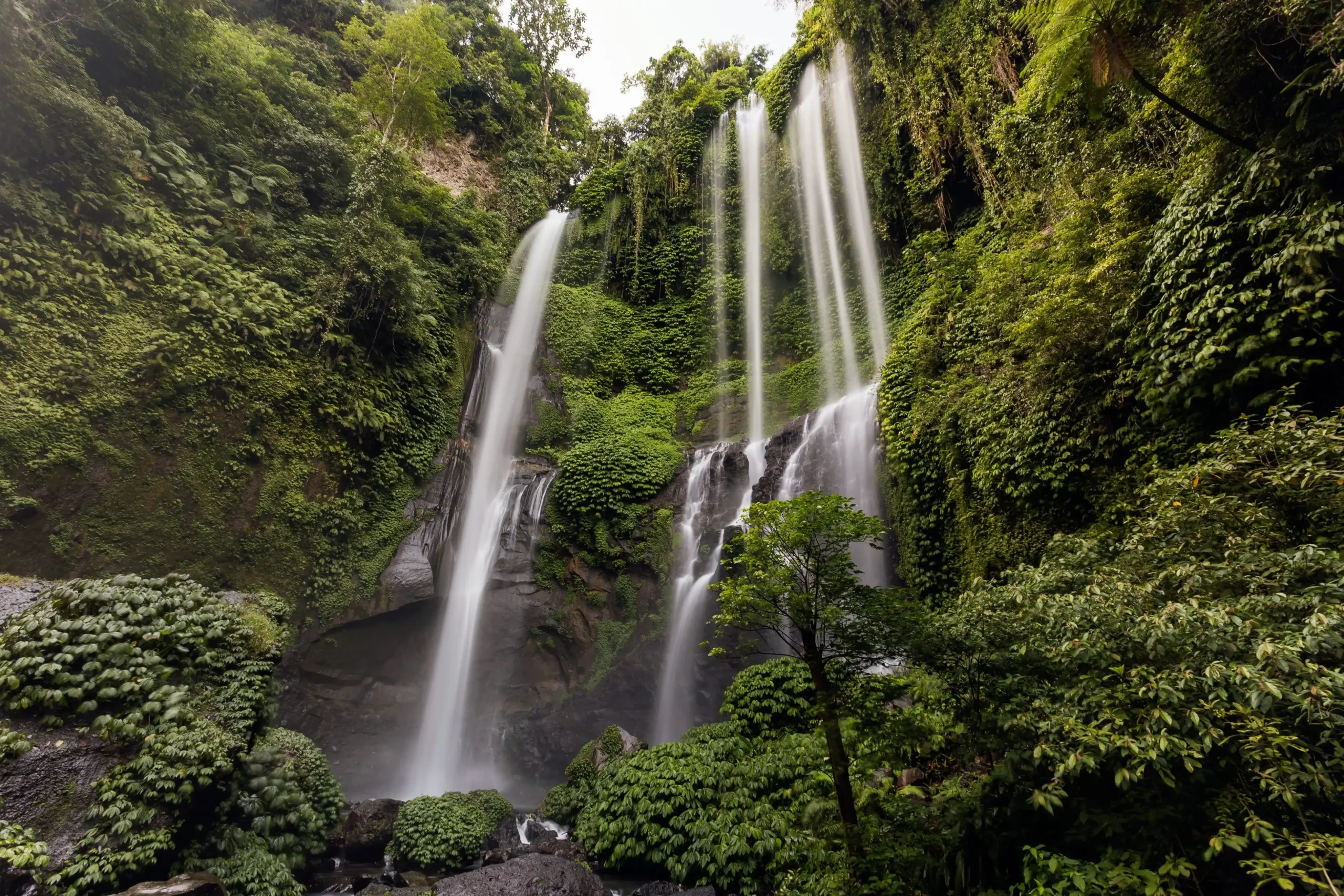
Sekumpul Waterfall is the most famous waterfall in Bali and the natural starting point for any visit to Fiji. At around 80 meters tall, it is roughly twice the height of Fiji and can be viewed from multiple angles along the gorge. Most visitors combine both waterfalls into a single half-day excursion, trekking to Sekumpul first and then continuing on to Fiji.
Banyumala Twin Waterfall

Banyumala Twin Waterfall sits in Wanagiri Village, roughly 30 to 40 minutes from the Lemukih area. Two cascades drop side by side into a clean natural swimming pool surrounded by dense jungle. The trek in is shorter than Fiji, crowds are smaller than Sekumpul, and the swimming pool is consistently rated among the best in North Bali.
Aling-Aling Waterfall
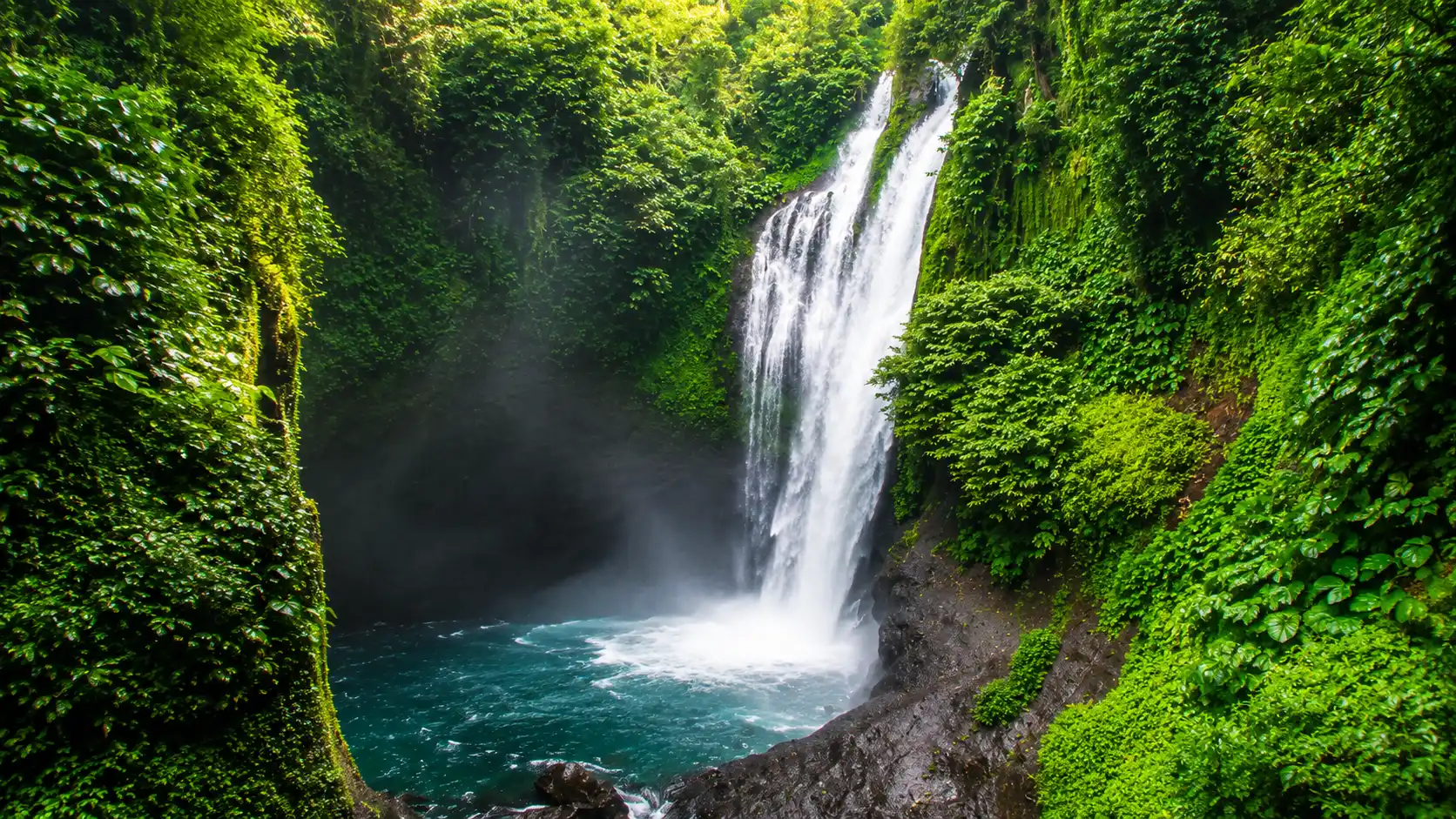
Aling-Aling Waterfall in Sambangan Village is about 30 minutes from Lemukih and offers a more active experience. In addition to the main falls, visitors can use natural water slides and jump from designated cliff points into the pool below. It works well as a second waterfall stop on a full North Bali waterfall day.
Plan Your Fiji Waterfall Visit with Bali Touristic
Getting to Fiji Waterfall from southern Bali is a full-day commitment, but a rewarding one. The best way to make it stress-free is with private transport so you can set your own schedule, stop wherever you like, and avoid crowded shuttle buses. Explore our Bali tour packages for pre-planned waterfall day trips, or book a Bali car rental with driver if you prefer to plan the itinerary yourself. Either way, our local drivers know exactly how to get to Lemukih and back efficiently. Reach out via WhatsApp and we will sort out the details.

Frequently Asked Questions
What is Fiji Waterfall in Bali?
Fiji Waterfall is a triple-cascade waterfall in Lemukih Village, North Bali. Three parallel streams drop roughly 30 to 40 meters from a volcanic cliff into a large natural swimming pool. It flows along the Tukad Panarukan river, separate from the nearby Sekumpul Waterfall, and is rated 4.2 out of 5 by visitors on Google.
How do I get to Fiji Waterfall?
From Denpasar, drive north through Bedugul toward Singaraja, then follow signs to Lemukih Village or Sekumpul Waterfall. The journey takes about 2 hours 30 minutes. Fiji Waterfall is reached by continuing on the trail past Sekumpul Waterfall. Using a Bali car rental with driver is the easiest option for visitors based in southern Bali.
What is the entrance fee for Fiji Waterfall?
The basic entrance fee is IDR 10,000 for domestic visitors and IDR 15,000 for foreign tourists. Visitors who join a guided Sekumpul trekking tour to reach Fiji pay approximately IDR 200,000 per person for the full guided package. Parking is IDR 2,000 per vehicle. Cash only, as there are no card payment options on site.
What are the opening hours of Fiji Waterfall?
Fiji Waterfall is open from 8 AM to 6 PM every day of the year except Nyepi, Bali’s annual day of silence. Arriving shortly after opening is recommended for the best light and smallest crowds.
Is the trek to Fiji Waterfall difficult?
The trek is rated moderate on AllTrails. It covers about 1.1 miles with an elevation gain of approximately 318 feet, and most people complete it in 30 to 60 minutes one way. The route includes steep sections and river crossings where the water reaches knee depth. It is not recommended for visitors with serious health conditions, pregnant women, or very young children.
Can you swim at Fiji Waterfall?
Yes. The pool at the base of Fiji Waterfall is one of the largest at any waterfall in Bali. Swimming is allowed, and the water is clear and cool. Wear appropriate swimwear to respect local customs, and consider bringing river sandals as the rocks can be slippery.
Is Fiji Waterfall better than Sekumpul?
They offer different experiences. Sekumpul is taller and more dramatic from a distance. Fiji’s triple cascade at close range is often described as the bigger surprise, partly because expectations are lower. Most visitors rate the full combined trek as one of the best waterfall experiences in Bali.