

Tucked away on the west coast of Nusa Lembongan, Mushroom Bay Nusa Lembongan is one of those rare beaches that genuinely lives up to the hype. With its calm turquoise waters, mushroom-shaped coral formations, and a laid-back atmosphere far removed from Bali’s busier shores, this bay is the kind of place that makes you slow down and actually breathe. Whether you are a first-time visitor or you have been to Bali a dozen times, Mushroom Bay has a way of surprising you the moment you step off the boat.
The beach is sheltered, shallow, and calm, which makes it ideal for families, beginners, and anyone who simply wants to swim without worrying about strong currents. Beyond swimming, there is snorkeling, kayaking, paddleboarding, and even a hidden secret beach that most visitors walk right past. The surrounding area is full of local culture, seaweed farms, and beachfront cafes where a fresh coconut and an ocean view come as standard.
Read on for everything you need to know about visiting Mushroom Bay, from what to do when you get there to how to get there and what to watch out for.

The Beauty of Mushroom Bay
Mushroom Bay Nusa Lembongan sits on the western edge of the island, sheltered by rocky headlands that keep the water calm and the vibe peaceful. The beach itself is not huge; it is a small, intimate cove, which is exactly what makes it so appealing. Unlike the busier beaches on the Bali mainland, there are no wall-to-wall sunbeds or aggressive touts here. Just soft sand, clear water, and the occasional sound of a traditional wooden fishing boat chugging into the bay.
The name comes from the mushroom-shaped coral formations found beneath the surface. These distinctive corals once covered large sections of the seabed, and while conservation efforts are ongoing, you can still spot them clearly during a snorkel. The shallow depth and excellent visibility make this one of the best snorkeling spots in Nusa Lembongan for beginners and experienced swimmers alike.
Surrounding the beach are rocky cliffs draped in tropical greenery, small beachfront cafes with plastic chairs practically in the water, and a handful of boutique resorts that feel genuinely local. It is this combination of calm sea, natural backdrop, and unhurried pace that sets Mushroom Bay apart from the more developed beaches across Bali.
| Detail | Information |
| Location | West coast of Nusa Lembongan, Klungkung, Bali |
| Best For | Swimming, snorkeling, families, sunsets |
| Entrance Fee | Free (activity fees apply separately) |
| Opening Hours | Open 24 hours; cafes and activities 7AM to 10PM |
| Boat from Sanur | Approx. 30 to 35 minutes via fast boat |
| Best Time to Visit | April to October (dry season) |
What makes Mushroom Bay unique compared to other Bali beaches
Mushroom Bay occupies a different category from the beaches most people picture when they think of Bali. Here is what sets it apart:
- Calm, shallow waters. While Uluwatu and Canggu attract surfers with powerful swells, Mushroom Bay stays gentle year-round, making it safe for children and non-swimmers.
- Mushroom-shaped corals. The bay is named after its distinctive underwater coral formations, which serve as shelter and feeding grounds for a wide range of marine life.
- Genuine island atmosphere. Nusa Lembongan still has the slower pace that mainland Bali has largely lost, and Mushroom Bay captures that spirit better than almost anywhere else on the island.
- Easy access to other top spots. Devil’s Tear, Dream Beach, and the Mangrove Forest are all within easy reach, making this a natural base for a day of exploration.
- A secret beach most people miss. At the edge of Mushroom Bay, you can access a hidden cove by squeezing under a rock formation, opening up a quieter spot with almost no crowds.

Is Mushroom Bay Good for Families?
Yes, and this is one of the main reasons Mushroom Bay Nusa Lembongan attracts such a loyal following among parents traveling with young children. The water is calm, shallow near the shore, and largely free from the strong currents and wave action that can make other Bali beaches feel stressful with kids in tow.
The beach has no steep drop-offs in the immediate swimming area, and the natural breakwater formed by the surrounding headlands keeps conditions predictable. Even during peak season, the vibe stays relaxed rather than crowded. Young children can wade and splash safely while adults snorkel nearby. There are also beachfront cafes within easy eyeline of the water, so you can keep an eye on the kids without missing out on a cold drink.
If you are planning a family day out, the bay pairs well with a visit to the Yellow Bridge and the Mangrove Forest. Both are nearby, low-effort, and genuinely interesting for children of most ages.
Marine Life at Mushroom Bay
The underwater world here is one of the main draws for visitors. Thanks to calm, clear conditions and ongoing conservation efforts, snorkeling at Mushroom Bay gives you a genuine chance to see a wide range of species without needing to travel far from shore.
Vibrant coral reefs and small marine species
The mushroom-shaped corals that give the bay its name provide habitat and food for a wide variety of smaller sea creatures:
- Clownfish weaving in and out of sea anemones
- Angelfish, butterflyfish, and parrotfish adding splashes of color to the reef
- Crabs, shrimp, and lobsters tucked into coral crevices
- Seahorses and nudibranchs visible during slower, more careful macro dives
The coral ecosystem here is actively protected, and visitors are asked not to stand on or touch the coral. Even minor contact can cause years of damage to formations that take decades to grow.
Encounters with larger marine species
Mushroom Bay occasionally produces some genuinely exciting sightings for those who venture slightly further out:
- Sea turtles are commonly spotted grazing on seagrass in the shallower sections.
- Blacktip and whitetip reef sharks are harmless to humans and often seen resting near the sandy bottom.
- Manta rays are typically found in deeper water near Nusa Penida, but occasionally visible on longer boat tours.
- Octopuses and cuttlefish are masters of camouflage and a favorite sighting for underwater photographers.
Your best chance of seeing the more active species is early morning or late afternoon, when marine life tends to be most mobile.
If the underwater world at Mushroom Bay has you curious about what else the Nusa islands have to offer, the Nusa Penida snorkeling experience is one of Bali Touristic’s most booked tours, and for good reason. The sites around Nusa Penida are a step up in scale, with manta rays, large reef systems, and crystal-clear visibility that keeps people coming back.
Activities to Enjoy at Mushroom Bay
Mushroom Bay offers more than just a nice view from a beach chair. Here is what you can actually do while you are there:
Swimming and snorkeling
Swimming and snorkeling are the two most popular activities here, and for good reason. The calm, clear water and healthy reef make it one of the most accessible snorkeling spots in the Nusa islands. Gear is available to rent from several operators along the beach, and no prior experience is needed. If you want a guided snorkeling trip with a great track record and plenty of five-star reviews, the Blue Lagoon snorkeling sharing boat from Bali Touristic is one of the most popular options in the area.
Kayaking and stand-up paddleboarding
Rental kayaks and paddleboards are available from beach vendors. The sheltered bay is ideal for both. It is calm enough for beginners but with enough space to genuinely explore. Paddling out toward the edges of the bay gives you a different perspective on the rocky cliffs and greenery surrounding the cove.
Island hopping and boat tours
Several boat tours depart from Mushroom Bay, taking you to nearby highlights like Devil’s Tear, Dream Beach, and Crystal Bay on Nusa Penida. These tours are one of the most efficient ways to see multiple locations in a single day, and they often include time in the water at each stop.
Sunset views and beachfront dining
As the light drops, Mushroom Bay transforms. The warm glow over the water makes for some genuinely photogenic sunset shots, and the beachfront cafes are well set up for a long, relaxed evening. Most serve fresh seafood, local Balinese dishes, and tropical drinks. It is the kind of end to the day that makes you wish you had stayed longer.
Relaxation and beachfront stay
A handful of boutique resorts and beachside villas sit right on or near the bay. Staying overnight gives you access to the beach in the early morning and late evening, easily the best times to visit before the day-trip crowds arrive from the mainland.
Sustainability and Conservation Efforts
Mushroom Bay has held onto its natural character largely because the local community takes conservation seriously. Dive operators, local businesses, and residents have worked together to establish programs that protect the reef and surrounding marine environment.
- Coral transplantation projects actively rehabilitate reef sections that were damaged in the past.
- Waste reduction programs run by local businesses and residents target plastic pollution specifically.
- Responsible tourism guidelines are promoted by most operators, covering everything from sunscreen choices to fin technique.
As a visitor, the asks are simple: use reef-safe sunscreen, do not touch or stand on coral, avoid taking anything from the water, and pack out your trash. These small choices collectively make a real difference to a reef ecosystem that is still recovering and still worth protecting.
Culture and Local Life
The community around Mushroom Bay is primarily made up of families who have lived and worked on Nusa Lembongan for generations. Most make their living through a combination of tourism and traditional fishing. Beach cafes, dive shops, and homestays are often family-run, and that personal quality comes through in how you are treated when you visit.
One of the more unusual sights along the beach is the seaweed farming activity that still takes place here. Farmers grow green and red seaweed on bamboo racks in the shallow water, harvesting it for export. Watching the process is genuinely interesting if you are visiting for the first time.
Hindu religious traditions are very much alive in the community. You will notice canang sari, small offerings of flowers and incense, placed in front of businesses and along the beach each morning. Temple ceremonies happen regularly throughout the year. These are not tourist attractions but genuine local rituals, and observing them with respect adds a layer of cultural richness to a visit that goes well beyond the beach itself.
How to Get to Mushroom Bay from Bali
The main route to Mushroom Bay Nusa Lembongan starts at Sanur Beach on the Bali mainland. Fast boat services run regularly throughout the day, with the crossing taking around 30 to 35 minutes. Several operators offer direct drop-offs at the bay itself, so you do not need to arrange onward transport from a separate harbor. Popular services include Rocky Fast Cruise, Scoot Fast Cruises, and Marlin Fast Boat.
If you prefer to have everything arranged in advance, from hotel pickup to boat tickets, it is worth looking into a private transfer. Bali Touristic offers Bali car rental with driver services that can get you to Sanur comfortably before your boat departs, without the guesswork of arranging each leg on your own.
Once you arrive on Nusa Lembongan, getting to Mushroom Bay is straightforward:
- Scooter rental is the most flexible and affordable option, available at the harbor.
- Hotel transfers are offered by many resorts and guesthouses, either included in the room rate or for a small additional fee.
- Local pickup trucks serve as shared taxis around the island and are easy to flag down near the harbor.
Visitor Information for Mushroom Bay
Operating hours
The beach itself is accessible at any time. Beachfront cafes, rental operators, and activity providers generally run from 7AM to 10PM.
Entrance fee
There is no entrance fee to access the beach. Individual activities such as snorkeling tours, kayak rentals, and boat trips are priced separately and vary by operator.
Best time to visit
The dry season runs from April to October and offers the most reliable conditions for snorkeling and swimming. Visibility underwater is typically at its best between May and September. Arriving early in the morning gives you the beach at its most peaceful, before day-trippers from the mainland begin to arrive.
Rules and restrictions
To help preserve the natural environment, visitors are asked to follow these guidelines:
- Do not touch or step on coral reefs, as even brief contact can cause lasting damage.
- No littering. Carry your rubbish out if bins are not immediately available.
- Respect local ceremonies and religious offerings. Do not disturb or photograph them without permission.
- No collecting marine life. Starfish, shells, and all other sea creatures must be left where they are.
- Drone usage is restricted in some areas. Check locally before flying.
- Swim with awareness. Waters are generally calm but boat traffic and tidal changes can affect conditions.
Nearby Attractions
Mushroom Bay makes an excellent base for exploring the rest of Nusa Lembongan. The following spots are all within easy reach:
Dream Beach
A short distance from the bay, Dream Beach is a more dramatic setting with steep cliffs, strong waves, and a wide stretch of white sand. The surf here is too powerful for casual swimming, but it is a standout spot for photography and cliff-top views.
Devil’s Tear
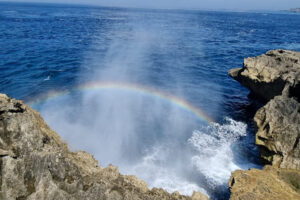
One of Nusa Lembongan’s most famous natural features, Devil’s Tear is a rocky outcrop where powerful waves crash against the cliffs with enough force to send spray high into the air. At the right moment, you will see natural rainbows forming in the mist. It is a popular sunset spot and one you should not skip.
Yellow Bridge
The iconic yellow suspension bridge connecting Nusa Lembongan to Nusa Ceningan is as photogenic as it looks. Walking across gives you great views over both islands, and the quieter Ceningan side has its own set of hidden beaches and scenic cliffs to explore.
Mangrove Forest Nusa Lembongan
A short ride from Mushroom Bay, the Nusa Lembongan mangrove forest offers a completely different kind of experience. Peaceful boat rides through narrow green waterways reveal crabs, fish, and birds up close. The forest plays a genuine ecological role in protecting the coastline. You can read more about what to expect in our Mangrove Forest Lembongan guide.
Sandy Bay Beach Club
Just along the coast from Mushroom Bay, Sandy Bay Beach Club is a relaxed spot with good food, fresh cocktails, and uninterrupted ocean views. It is well suited to a slow afternoon after a morning of snorkeling and exploring.
Gala-Gala Underground House
One of the more unusual attractions on the island, Gala-Gala is a hand-dug underground cave house created by a local Balinese farmer. The narrow tunnels, small rooms, and meditation spaces offer genuine insight into traditional Balinese spiritual life, and it is the kind of hidden gem that most visitors completely miss.
The Pontoon at Lago
A short ride from Mushroom Bay, The Pontoon at Lago is a floating restaurant and bar with bean bags, a jumping tower, and sweeping ocean views — a scenic stop for lunch or sunset drinks.
Nusa Lembongan Day Trip from Seminyak
If you would rather have everything organized in advance, our Nusa Lembongan day trip from Seminyak covers Mushroom Bay alongside other island highlights in one seamless day.
Plan Your Mushroom Bay Trip with Bali Touristic
Mushroom Bay is easy enough to reach independently, but having the logistics sorted in advance makes a real difference to how the day feels. Bali Touristic offers private Bali tours that can be tailored around Nusa Lembongan, including Mushroom Bay, Devil’s Tear, the Mangrove Forest, and any other spots on your list.
We handle the transport, the boat transfers, and the local know-how, so you can focus on enjoying the island. Check our Tripadvisor page for reviews from travelers who have done exactly that.

Frequently Asked Questions About Mushroom Bay Nusa Lembongan
Why is it called Mushroom Bay?
The bay takes its name from the distinctive mushroom-shaped coral formations found beneath the water’s surface. These unique corals were once abundant across the seabed, and the shape is still visible to snorkelers today, particularly in the shallower sections near the shore.
Can you swim at Mushroom Bay?
Yes, and it is actually one of the best spots on Nusa Lembongan for swimming. The water is calm, shallow near the shore, and largely protected from strong currents by the surrounding rocky headlands. It is suitable for adults and children alike, including those who are not confident swimmers.
Can you snorkel at Mushroom Bay?
Absolutely. Snorkeling is one of the main draws of the bay. The coral reefs are home to clownfish, parrotfish, sea turtles, and a wide range of other marine species. Visibility is generally good, and gear is available to rent directly on the beach. No experience is necessary.
Is there a hidden beach near Mushroom Bay?
Yes. At the edge of Mushroom Bay, you can access a smaller, quieter cove known as the Hidden Beach by squeezing under a rock formation. It sees far fewer visitors than the main bay and is worth the short detour if you are looking for somewhere more secluded.
Is Mushroom Bay family-friendly?
It is one of the most family-friendly beaches on the island. The calm, shallow waters and generally low wave activity make it safe for children to swim and play. The nearby cafes and relaxed atmosphere add to the appeal for families who want to spend a full day there without feeling rushed.
What is the best time to visit Mushroom Bay?
The dry season between April and October offers the most reliable conditions for snorkeling, swimming, and general sightseeing. For the most peaceful experience on the beach itself, aim to arrive early in the morning before the day-trip boats start arriving from Sanur.
How do I get to Mushroom Bay from Bali?
Take a fast boat from Sanur Beach. The crossing takes around 30 to 35 minutes. Several operators offer direct drop-offs at Mushroom Bay. From the harbor on Nusa Lembongan, you can reach the bay by scooter, hotel transfer, or shared local taxi.