

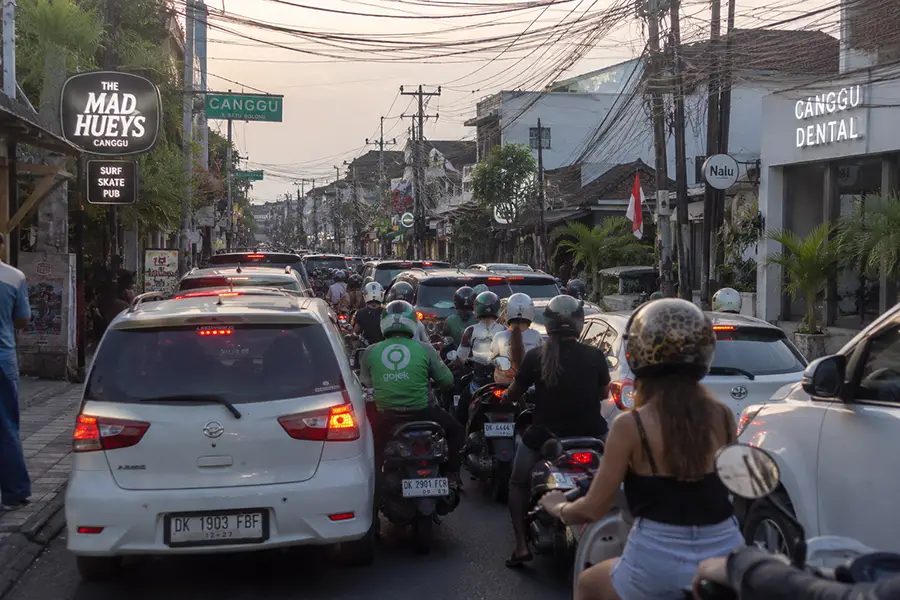
Bali roads can be deceptively tricky. If you are traveling without any Bali traffic tips, distances that look short on the map can take anywhere from 15 minutes to over an hour, depending on when you go. The good news is that traffic in Bali follows predictable patterns. With the right timing and a few practical strategies, you can avoid most of the headaches and spend more of your holiday actually enjoying the island.
So, before you head out, it helps to understand how Bali’s roads really work and when to use them.

Why Traffic in Bali Is More Complex Than It Looks
Most of Bali’s popular destinations are concentrated in a small stretch of coastline, from Kuta and Seminyak up to Canggu in the north, and down to Uluwatu in the south. That sounds convenient until you realize that hundreds of thousands of tourists, locals, and vendors are all trying to move through the same narrow roads every day.
Bali’s road infrastructure was never built for the volume of traffic in Bali it handles today. Many of the main routes through tourist areas are just two lanes wide. They pass through residential villages where scooters, delivery trucks, and pedestrians share the same space. There are very few bypass roads, so when congestion builds, it affects everyone on that route.
Unlike major cities where traffic jams follow a standard commuter pattern, Bali traffic is shaped by a mix of local school schedules, religious ceremonies, hotel check-in and check-out times, and sunset tourism surges. Understanding this rhythm makes it much easier to plan your days.
Bali Rush Hours: When to Stay Off the Roads
There are two main peak periods in Bali. Both can significantly affect your travel time if you are not prepared for them.
Morning rush (7:00–9:00 AM)
The first peak hits between 7:00 and 9:00 AM, when local workers, schoolchildren, and delivery vehicles all hit the roads at once. In tourist areas, this overlaps with early sightseers heading out for the day. Roads through Denpasar, Kuta, and the main corridors connecting the south coast can become quite slow during this window.
If you need to travel early, aim to leave before 7:00 AM. Roads before that hour are noticeably clearer, and you will often reach your destination in a fraction of the time compared to leaving at 8:30 AM.
Evening rush (4:30–7:00 PM)
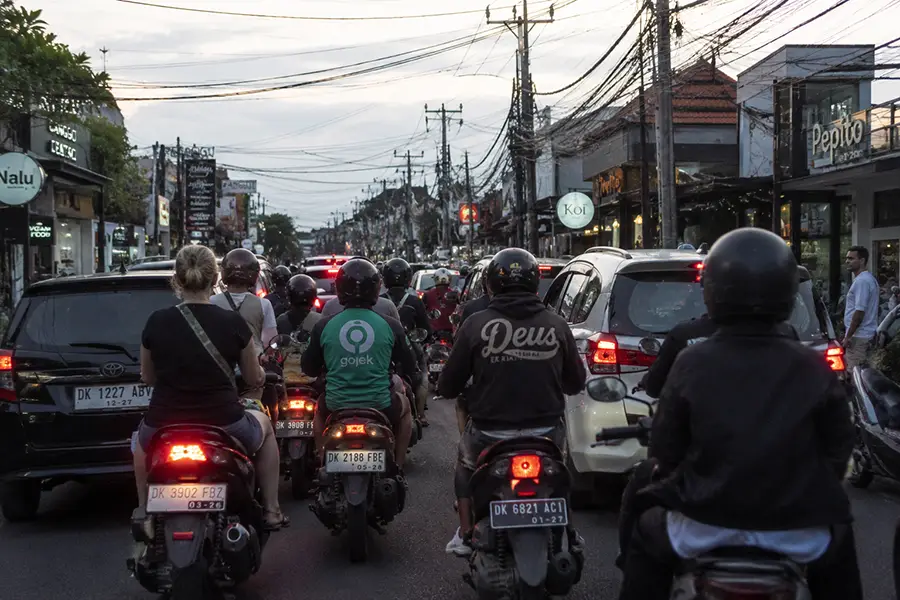
The evening rush is consistently the worst traffic in Bali period. Between 4:30 and 7:00 PM, local workers are heading home at the same time that tourists are moving toward sunset spots, beach clubs, and dinner restaurants. Airport transfers are also peaking during this window. In areas like Canggu, Seminyak, and the roads leading to Uluwatu, congestion can be severe and last for several hours.
If you have any flexibility, schedule your afternoon activities in one area and wait until after 7:30 PM to travel longer distances. Alternatively, plan to arrive at your dinner or sunset location before 4:00 PM and stay until the traffic eases.
Weekends and Hindu holidays
Traffic gets noticeably heavier on Saturdays and Sundays, when domestic tourists from Java join the usual mix of international visitors and locals. On major Balinese Hindu holidays like Galungan and Nyepi (the Balinese New Year), roads are either packed with processions or completely closed. In addition, large international events hosted in Bali, such as music festivals and MICE conferences, can push even major arteries like Sunset Road into gridlock for extended periods. Checking a Balinese calendar before your trip and building extra travel time around these dates is well worth doing.
The Worst Areas for Traffic in Bali
Not all of Bali is equally congested. Knowing which areas are most prone to gridlock helps you time your movements or avoid unnecessary crossings.
Canggu
Canggu is widely considered the most traffic-prone area in Bali right now. The main roads here, including Jalan Batu Bolong and Jalan Raya Canggu, are extremely narrow with almost no alternative routes. The mix of cafe-hopping tourists, surf traffic, and local residents creates congestion that builds quickly. Late afternoons between 4:00 and 7:30 PM are the worst. If you are based in Canggu, plan to either leave before 8:00 AM or after 8:30 PM for any longer-distance trip.
Seminyak and Kuta
Seminyak and Kuta experience consistent congestion from midday through the evening. Jalan Raya Seminyak and the broader Sunset Road corridor, which connects Kuta, Seminyak, and Denpasar, are among the busiest stretches on the island. Proximity to the airport, a high density of hotels and restaurants, and heavy shopping and dining foot traffic keep these roads busy for most of the afternoon and evening. Early morning (before 7:30 AM) or late night (after 9:00 PM) are your best windows here.
Ubud
Ubud traffic builds gradually from late morning and peaks in the afternoon, when tour buses, day-trippers from the coast, and local traffic all converge on the same narrow mountain roads. Jalan Raya Ubud is often at a standstill between 11:30 AM and 6:30 PM on busy days. If you are traveling to or from Ubud, the early morning window before 8:00 AM is by far the most reliable.
Denpasar and Sunset Road
Denpasar is one of the most significant bottlenecks in all of southern Bali. Almost every route between the airport and popular tourist areas passes through or near Denpasar, which means congestion here ripples outward in every direction. Sunset Road (Simpang Siur), where traffic from Kuta, Seminyak, and Denpasar converges, is one of the island’s most consistently busy corridors during both morning and evening rush hours.
Uluwatu
Uluwatu is mostly calm during the day, but the road leading to the cliffs becomes very congested in the late afternoon as tourists pour in for sunset. Between 4:00 and 6:30 PM, the single access road can back up significantly. A good approach is to arrive early in the afternoon, explore the area, and stay for sunset rather than trying to drive in at sunset time.
Legian
Legian is often overlooked but can be surprisingly congested, especially at night. The streets around Poppies Lane and Jalan Legian become heavily crowded on weekends from around 7:00 PM onwards, when nightlife venues fill up and pedestrian and vehicle traffic mix on the same narrow roads.
Best Times to Travel Around Bali
Based on how Bali traffic actually behaves across the island, a few time windows consistently offer smoother travel.
Early morning (5:30 to 7:30 AM) is the best time to be on the road in Bali. Roads are clear, distances feel short, and you can cover a lot of ground before the rest of the island wakes up. This is also a great window to visit popular spots before crowds arrive.
Late morning (10:30 AM to 12:00 PM) offers another reasonably calm period after the morning rush has passed. It is not as clear as early morning, but movement is steady rather than congested in most areas.
Midday to early afternoon (1:00 to 3:30 PM) is unpredictable. Some areas are fine, while others start building toward the evening rush. If you are traveling during this window, keep your schedule flexible and allow extra time.
After 8:00 PM, traffic across most of Bali eases again. If you are comfortable traveling at night with a reliable driver, this is a good time for longer transfers between areas.
Worth noting: during the rainy season (November to March), heavy downpours can cause flash flooding in low-lying areas like South Kuta and along the Ngurah Rai Bypass. This adds extra unpredictability to travel times, so always build in more buffer during the wet months.
Top Bali Traffic Tips That Actually Help
Beyond timing, there are some practical things you can do to make navigating Bali’s roads much easier. Here are the most effective Bali traffic tips that locals and experienced travelers rely on.
1. Leave early, even earlier than you think
The single most effective thing you can do is build your day around an early start. Getting on the road before 7:30 AM transforms travel in Bali. Routes that take 90 minutes at 9:00 AM can often be done in 30 to 40 minutes before 7:00 AM. If you have a long day of sightseeing planned, an early departure also means you reach popular temples and viewpoints before the crowds, which is a bonus on top of the traffic savings.
2. Use Google Maps or Waze in real time
Always check Google Maps or Waze before heading out. Both apps show live Bali traffic conditions and will often suggest alternative routes that bypass the worst congestion. Local drivers use these apps constantly. The key is checking conditions 15 to 20 minutes before you leave rather than only when you are already sitting in traffic.
For specific shortcuts, it is also worth knowing a few local alternatives. Jalan Batu Mejan, for example, offers a useful bypass for the Seminyak to Canggu route when the main road backs up. For routes coming from Denpasar toward Ubud, Jalan Kediri can help you avoid the worst of the Sunset Road congestion. These smaller roads appear in Waze and Google Maps, but knowing they exist helps you recognize when the app’s suggestion actually makes sense.
3. Book a private car with a driver
For most tourists, especially families or groups, a Bali car rental with driver is the smartest transport option in Bali. A local driver knows the road patterns intuitively, can adjust routes on the fly, handles all the parking, and takes the stress of navigating out of your hands entirely. The cost is very reasonable compared to what you get, and it is far safer and more comfortable than managing unfamiliar roads yourself.
4. Use Grab or Gojek for short trips
Grab and Gojek are ride-hailing apps that work well in Bali for shorter, more spontaneous trips. They are affordable, convenient, and let you skip the hassle of finding parking. Keep in mind that some hotel zones restrict pickup from the property itself, so you may need to walk a short distance to a nearby street. For longer multi-destination days, a private driver is generally a better fit than multiple Grab bookings.
5. Plan your accommodation close to what matters most
Where you stay has a big impact on how much road time you spend each day. Staying in Ubud while planning daily surf sessions in Canggu, or staying in Kuta while wanting to visit temples in Ubud every morning, will add hours to your trip in traffic. When possible, match your accommodation to your itinerary so that at least your core activities are within walking distance or a short ride.
6. Skip the scooter unless you are very experienced
Renting a scooter might seem like the fastest way to get around, but it carries significant risks in Bali. Road conditions are inconsistent, driving behavior is informal, and accidents involving tourist scooter riders are genuinely common. If you are an experienced rider who is confident navigating unfamiliar urban traffic, it can work. For most visitors, a car with a driver or ride-share apps offer all the convenience without the safety risk.
Scooter vs. Car: Which Is Better for Tourists in Bali?
This question comes up constantly, so it is worth a direct answer. Scooters give you flexibility and can move through congestion faster than cars on tight roads. However, Bali’s accident rates for tourist scooter riders are high, and a minor fall on Bali’s roads can seriously affect your trip. If you are hurt, you are also looking at medical costs and the loss of several holiday days.
Cars are safer, more comfortable for carrying bags and passengers, and give you the option of air conditioning on hot days. The trade-off is that cars do get stuck in traffic when scooters can filter through. For families, couples, or anyone not confident on a scooter, a Bali car rental with driver is clearly the better choice. For solo travelers who are experienced riders and plan to stick to quieter areas, a scooter can work, but comes with real responsibility for your own safety.
Let a Local Driver Handle the Roads for You
Traffic in Bali does not have to define your holiday. The island is absolutely worth the effort, and when you plan your timing well, you spend far more time at beautiful places than on the road between them. The travelers who enjoy Bali most are usually those who start early, stay flexible, and do not try to cram too many cross-island drives into a single day.
If you want to explore Bali with comfort and ease, the Bali Touristic team offers reliable Bali Tour Package options with experienced local drivers who know exactly when and how to move around the island. Whether you are planning a day trip to Ubud, a temple circuit, or a full island tour, having a knowledgeable driver handle the logistics makes a real difference. You can also arrange a quick and reliable Bali airport transfer so your trip starts smoothly the moment you land.

Frequently Asked Questions about Bali Traffic Tips
What is rush hour in Bali?
Rush hour in Bali peaks twice daily. The morning rush runs from around 7:00 to 9:00 AM, driven by local commuters and school traffic. The evening rush is worse, typically running from 4:30 to 7:00 PM, when locals head home and tourists simultaneously move toward sunset spots and dinner. In tourist-heavy areas like Canggu and Seminyak, the evening peak can last until 7:30 or 8:00 PM.
What time is traffic the worst in Bali?
Late afternoon to early evening, between 4:30 and 7:00 PM, is consistently the worst time for traffic in Bali. This is when local commuter traffic and tourist movement overlap most heavily. Areas near beach clubs, sunset viewpoints, and popular dinner strips are particularly congested during this window.
Which area in Bali has the worst traffic?
Canggu is currently the most traffic-prone area in Bali, largely because its roads are extremely narrow with very few alternative routes. Seminyak, Kuta, Denpasar, and the central streets of Ubud also experience heavy congestion, especially in the afternoon and evening. Uluwatu becomes congested near sunset but is generally calm at other times of day.
Is it safe to rent a scooter in Bali?
Scooter rentals are popular in Bali, but they carry genuine safety risks for tourists who are not accustomed to local road conditions. Driving standards are informal, roads can be narrow and unpredictable, and tourist accidents are common. If you do rent a scooter, always wear a proper helmet, carry an international driving permit, and avoid riding during rush hours. For most visitors, a private car with a driver is a safer and more comfortable alternative.
What apps are useful for navigating Bali traffic?
Google Maps and Waze are the most reliable navigation apps in Bali and both show live Bali traffic conditions. For ride-hailing, Grab and Gojek are widely used and affordable. Gojek also offers food delivery if you prefer to skip traveling during peak hours. Download these apps before you arrive, as they will come in useful throughout your trip.
How do I get from the airport to Ubud with minimal traffic?
The airport to Ubud route is best done before 8:00 AM or after 8:00 PM. During the day, this journey can take well over two hours due to congestion through Denpasar and along the Ubud approach roads. If your flight arrives during the afternoon or early evening, consider booking a Bali airport transfer with a local driver who can adjust the route based on real-time conditions.
Are there shortcuts to avoid traffic in Bali?
Yes, there are a few well-known shortcuts that locals and experienced drivers use regularly. Jalan Batu Mejan is a popular alternative for the Seminyak to Canggu stretch when the main road backs up. For routes between Denpasar and Ubud, Jalan Kediri can help bypass some of the Sunset Road congestion. These shortcuts appear in Google Maps and Waze, so turning on live traffic and following the app’s suggested route often gets you onto these smaller roads automatically.
Does rain make traffic in Bali worse?
Yes, heavy rain can significantly worsen traffic in Bali, particularly in the wet season from November to March. Low-lying areas like South Kuta and roads near the Ngurah Rai Bypass are prone to flash flooding during heavy downpours. This can block lanes and add unexpected delays to trips that would otherwise be straightforward. During the wet season, always build extra buffer time into your plans and check road conditions before heading out.