


Bali is one of the few places in Southeast Asia where you can encounter turtles in Bali both in the wild and through responsible conservation programs. From the coral-rich waters of Nusa Penida to the calm bays of Pemuteran, sea turtles in Bali are a central part of the island’s marine identity. Beyond their ecological role, these ancient reptiles hold deep cultural significance in Balinese Hindu tradition. Local communities view them as guardians of the ocean and symbols of wisdom and longevity.
Whether you want to snorkel with green turtles, witness a hatchling release on a moonlit beach, or learn about conservation challenges, this guide covers everything. Read on to discover the best spots, the right season to visit, and how to experience turtles in Bali responsibly.

The Sacred Status of Turtles in Bali
Turtles have held a sacred place in Balinese culture for centuries. In Balinese Hindu belief, the sea turtle connects to Bedawang Nala — the cosmic turtle at the foundation of the world. This spiritual relationship shapes how local communities treat and protect turtles today.
Turtles in Balinese mythology
According to Balinese mythology, the world was once a vast and formless ocean. Then a great turtle appeared and carried the earth on its back. This story gives the turtle a unique role in Balinese cosmology — it is both a creator and a protector.
As a result, Balinese people associate turtles with patience, wisdom, and balance. Coastal communities still perform ritual ceremonies at certain times of year to honor the sea and its creatures. These ceremonies include offerings, prayers, and chants dedicated to the turtles. In this way, cultural tradition and conservation reinforce each other.
Are turtles sacred in Bali?
Yes, turtles are considered sacred in Bali. Are turtles sacred is a question many visitors ask, and the answer goes beyond simple reverence. Balinese Hindus believe turtles protect communities from negative forces and maintain balance between land and sea. Because of this belief, many coastal communities actively support turtle conservation as a religious duty — not just an environmental one. This spiritual connection has, in many cases, strengthened community-led protection efforts.
Sea Turtle Species Found in Bali
Four species of sea turtle regularly appear in the waters around Bali. Each occupies a slightly different niche in the local marine ecosystem. Knowing which species to look for helps you choose the right location for your dive or snorkel trip.
| Common Name | Scientific Name | Status | Best Sighting Spot | Key Trait |
|---|---|---|---|---|
| Green Turtle | Chelonia mydas | Endangered | Nusa Penida, Padang Bai | Most commonly seen; feeds on seagrass |
| Hawksbill Turtle | Eretmochelys imbricata | Critically Endangered | Amed, Menjangan Island | Narrow beak; found near coral reefs |
| Olive Ridley Turtle | Lepidochelys olivacea | Vulnerable | Pemuteran, open waters | Most abundant species globally |
| Loggerhead Turtle | Caretta caretta | Vulnerable | Deeper reefs around Bali | Large head; strong jaws |
Of these four, the green turtle is the most frequently spotted. It often feeds on seagrass in shallow bays and rests on reef platforms. The hawksbill turtle is less common but regularly appears near coral-rich reefs in Amed and Menjangan Island. The olive ridley and loggerhead are rarer sightings and tend to appear in deeper or more open waters.
Best Places to See Turtles in Bali
Sea turtles in Bali are reliably spotted year-round if you know where to go. The following locations offer the highest chances of an encounter. Each site suits a slightly different type of visitor, from beginner snorkelers to experienced divers.
Nusa Penida
Nusa Penida is consistently rated the top location for turtles in Bali. Crystal Bay and Gamat Bay are the standout spots. Rich seagrass beds there provide a regular feeding ground for green turtles. Boat trips from Sanur take approximately 45 minutes. Additionally, many tour operators combine turtle snorkeling with other Nusa Penida highlights like Kelingking Beach and Angel’s Billabong.
Padang Bai
Padang Bai’s Blue Lagoon and White Sand Beach are calm and shallow. These conditions make them ideal for beginner snorkelers hoping to spot green and hawksbill turtles. The turtles here are accustomed to divers. As a result, they tend to rest on the reef without being disturbed. This makes for relaxed and unhurried encounters.
Pemuteran
Located on the northwest coast, Pemuteran is one of the most important nesting sites for sea turtles in Bali. The Reef Seen Aquatics turtle hatchery here lets visitors observe conservation work up close. Moreover, visitors can take part in hatchling releases during the nesting season. The Biorock coral restoration project nearby adds another layer of interest for eco-conscious travelers.
Amed
The black sand bay of Amed offers relaxed snorkeling with regular hawksbill turtle sightings. The area is less crowded than southern Bali spots. Therefore, it is a good choice if you prefer a quieter and more personal encounter. Amed is also a strong base for wreck diving, which often yields turtle sightings along the way.
Menjangan Island
Menjangan Island sits within West Bali National Park and is strictly protected. Access is only by boat, and visibility there is exceptional. Both green and hawksbill turtles frequently appear along the wall dives. Because the area sees fewer visitors than south Bali, turtle behavior here is especially natural and undisturbed.
Gili Islands (near Bali)
Technically part of Lombok, Gili Trawangan is easy to reach from Bali via fast boat. It is renowned for near-guaranteed turtle encounters during snorkeling. The shallow coral gardens host a resident green turtle population that is comfortable around people. For visitors who want a reliable swim with turtles in Bali experience, the Gili Islands are a top pick.
Turtle Hatching Season in Bali
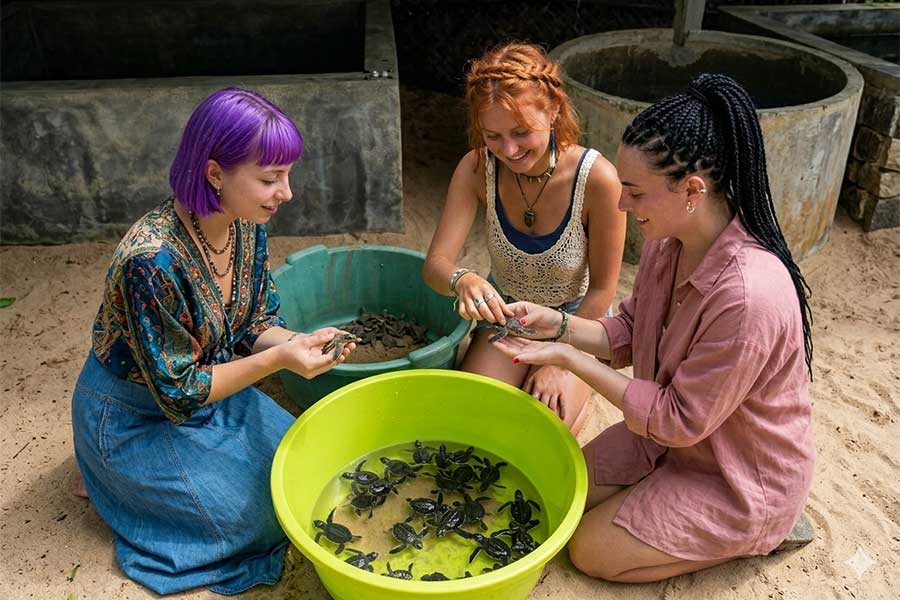
The peak hatching season for turtles in Bali runs from April through October. During this period, nesting females come ashore at night to lay their eggs. Conservation centers across the island then organize supervised hatchling releases. If witnessing a release is important to your trip, plan your visit between June and September. That window offers the highest probability of seeing hatchlings enter the ocean for the first time.
Outside of peak season, turtles are still regularly spotted in the water. However, organized releases are less frequent from November to March. If you visit during the dry season (April to October), you get the best of both worlds — great snorkeling conditions and active hatchling programs.
Turtle Conservation Centers in Bali
Several organizations run hatchery and rescue programs that are open to responsible visitors. These centers play a critical role in protecting nesting beaches and rehabilitating injured turtles. Supporting them through visits and donations is one of the most direct contributions a traveler can make to turtle conservation in Bali.
- Bali Sea Turtle Society (Kuta Beach) — A long-running community program that collects eggs from unprotected beaches and raises hatchlings before releasing them. Visitors can make a small donation to take part in a release.
- Turtle Conservation and Education Center (TCEC), Serangan Island — Run in partnership with government authorities, this center focuses on education, egg incubation, and the rehabilitation of injured turtles.
- Reef Seen Aquatics Turtle Hatchery, Pemuteran — One of the oldest turtle conservation initiatives in Bali. Visitors can tour the hatchery and learn about the challenges facing nesting populations in the northwest.
- Deluang Sari Turtle Conservation, Tanjung Benoa — Offers education programs and turtle encounters in the Tanjung Benoa area of southern Bali.
When choosing a conservation center to visit, look for programs that prioritize education and rehabilitation. Avoid any operator that allows visitors to ride or handle adult turtles. Those practices cause stress and injury to the animals, even when framed as a tourist experience.
How to See Turtles in Bali Responsibly
Responsible behavior around sea turtles is both legally required and ethically important. All sea turtle species found in Bali are protected under Indonesian law and international treaties. Hunting, capturing, trading, or harming sea turtles is illegal in Indonesia.
Follow these guidelines whenever you encounter turtles in the water or on land:
- Keep your distance — Stay at least 3 meters away from turtles at all times. Getting too close causes stress and can disrupt feeding, resting, or nesting behavior.
- Never touch or ride turtles — Physical contact is harmful and illegal. Even well-intentioned touching can damage the protective coating on their shells and spread disease.
- Do not use flash photography — Bright flashes disorient turtles, especially hatchlings navigating toward the ocean at night. Use natural light or a red-light setting instead.
- Do not block their path — If a turtle is moving toward the ocean or along the beach, step aside and let it pass. Surrounding or crowding a turtle is a form of harassment.
- Turn off artificial lights near nesting beaches — Bright lights confuse nesting females and hatchlings. Avoid using torches or phone lights on beaches known for nesting activity.
- Report injured or entangled turtles — If you find a turtle in distress, contact a local conservation group such as KURMA (Kura-Kura Malaysia) or the Turtle Conservation and Education Center (TCEC) in Serangan rather than attempting to handle it yourself.
In addition to in-water behavior, you can also help by reducing plastic use on Bali beaches. Sea turtles frequently ingest plastic debris, which causes serious internal injuries. Even small actions — like refusing single-use bags and picking up litter — have a meaningful impact on local turtle populations.
Plan Your Journey with Bali Touristic
Seeing sea turtles in their natural habitat is one of Bali’s most unforgettable experiences. While Bali Touristic does not currently offer dedicated turtle-watching packages, there are plenty of ways we can still support your adventure on the island.
Many of the best turtle sighting spots, including Nusa Penida, Padang Bai, and Amed, overlap naturally with our existing snorkeling and island tours. Our Nusa Penida day trip takes you through Crystal Bay and Gamat Bay, two of the island’s most reliable green turtle feeding grounds. You may well encounter turtles as part of the experience, even without it being the dedicated focus.
For more remote locations like Pemuteran and Menjangan Island, our car rental with driver service offers the flexibility to travel at your own pace, with a local driver who knows the roads and can guide you to the right spots along the way.
Whether you are planning a snorkeling trip, a full island day tour, or simply need reliable transfers around Bali, Bali Touristic is here to help make your journey as smooth as possible. Reach out to us to start planning your Bali adventure.
Questions About Turtles in Bali
Are there turtles in Bali?
Yes, Bali has a healthy sea turtle population in its surrounding waters. Four species are regularly found there: the green turtle, the hawksbill turtle, the olive ridley turtle, and the loggerhead turtle. Sightings are common at snorkeling and diving sites across the island, particularly in Nusa Penida, Padang Bai, and Amed.
Where is the best place to see turtles in Bali?
Nusa Penida is consistently rated the best location for sea turtle sightings in Bali. Crystal Bay and Gamat Bay are the standout spots, where green turtles regularly feed on seagrass. Padang Bai and Amed are also excellent options for snorkelers. Meanwhile, Pemuteran offers the added benefit of conservation center visits alongside open-water encounters.
What types of sea turtles live in Bali?
Four species live in the waters around Bali: the green turtle, the hawksbill turtle, the olive ridley turtle, and the loggerhead turtle. The green turtle is the most commonly sighted, especially at snorkeling and diving sites in southern and eastern Bali. The hawksbill is less common but regularly spotted near coral-rich reefs in Amed and Menjangan Island.
When is turtle hatching season in Bali?
Turtle hatching season in Bali runs from April to October. The highest activity happens between June and September. During this period, conservation centers at Kuta Beach, Pemuteran, and Serangan Island regularly organize supervised hatchling releases. The public can join these releases for a small donation or as part of an organized eco-tour.
Can you swim with turtles in Bali?
Yes, swimming and snorkeling with sea turtles is possible at several locations in Bali. Top spots include Nusa Penida, Padang Bai, Amed, and the nearby Gili Islands. The experience requires no special training or equipment beyond basic snorkel gear. However, visitors should always follow responsible wildlife guidelines and maintain a respectful distance from the animals.
Are sea turtles protected in Bali?
Yes, all sea turtle species found in Bali are protected under Indonesian law and international treaties. Hunting, capturing, trading, or harming sea turtles is illegal in Indonesia. Several government-supported and non-profit conservation centers across Bali actively protect nesting beaches, incubate eggs in safe hatcheries, and rehabilitate injured turtles before releasing them back into the ocean.
Are turtles sacred in Bali?
Yes, turtles are sacred in Bali. In Balinese Hindu belief, turtles connect to Bedawang Nala, the cosmic turtle at the foundation of the world. Coastal communities perform ceremonies to honor the sea and its creatures, including the turtle. This deep spiritual reverence is also one of the reasons why local communities actively participate in turtle conservation efforts.
How can tourists support turtle conservation in Bali?
Tourists can support turtle conservation in Bali by visiting legitimate hatchery programs such as the Bali Sea Turtle Society at Kuta Beach or the TCEC on Serangan Island. Entrance fees and donations go directly to fund operations. In addition, choosing responsible tour operators, avoiding plastic on beaches, and reporting injured or stranded turtles to local authorities are all meaningful ways to help. Together, these actions protect Bali’s sea turtle populations for future generations.
Does Bali Touristic offer turtle-watching tours?
Bali Touristic does not currently offer a dedicated turtle-watching package. However, several of our existing tours naturally pass through the best turtle sighting locations on the island. Our Nusa Penida snorkeling trips, for example, visit Crystal Bay and Gamat Bay, two spots where green turtle encounters are common during a regular snorkeling session. We also offer car rental with driver for travelers who want to explore more remote nesting sites like Pemuteran and Menjangan Island at their own pace. If seeing turtles is part of your Bali wishlist, get in touch and we will help you plan the best route using the tours and services we offer.