


A self-transfer at Bali Airport means arranging your own connection between two separately booked flights, rather than relying on an airline or booking provider to handle the whole journey as one protected itinerary. At I Gusti Ngurah Rai International Airport (DPS), this can involve collecting checked baggage, entering Indonesia, changing between the international and domestic areas, checking in again, and passing security or immigration for the next flight. The exact steps depend on your route, ticket conditions, airline, and whether you are entering or leaving Indonesia.
The key point is that a self-transfer is not automatically a protected connection. Allow enough time for every required step, and verify the process with both airlines before travelling. No single buffer can guarantee that you will make a flight.

What self-transfer means at Bali Airport
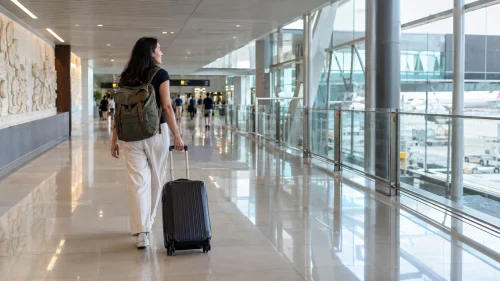
A self-transfer usually occurs when flights are booked separately, for example an international flight arriving at DPS followed by a separately purchased domestic flight to another Indonesian destination. Your onward airline may treat you as a new departing passenger, even if both flights appear in the same travel plan.
With a through ticket, an airline may be able to check baggage through and provide transfer instructions, subject to the itinerary and operating arrangements. With separate tickets, do not assume baggage will be checked to the final destination, that you can remain airside, or that the second airline will assist if the first flight is delayed. Ask the airlines to confirm these points in writing.
This guide concerns flight connections. If you need transport from the airport to accommodation during a long stop, review the separate ground transport arrangements, such as a Bali hotel transfer, rather than confusing that service with an airside flight transfer.
Before booking, check whether your itinerary requires you to enter Indonesia, collect and re-check baggage, change terminal areas, obtain a boarding pass at a counter, or satisfy visa and entry requirements. These are separate questions from whether the flights are sold together.
Baggage, immigration and customs: what to plan for
If you arrive on an international flight
For a self-transfer that requires you to enter Indonesia, plan for the international arrival process. Ngurah Rai Airport’s published arrival guidance directs arriving international passengers through health related procedures and immigration, then to baggage reclaim and customs. You should confirm the current entry requirements that apply to your nationality and circumstances before departure, including the applicable visa or visa on arrival category, the online arrival declaration required before landing, and any local visitor levy or fee. Requirements and the documents involved can change.
If you have checked baggage, allow time to wait for it and take it through the required arrival process. Then follow airport signs and your onward airline’s instructions for the next check-in. A boarding pass for the first flight does not by itself confirm that you are checked in for the second flight.
If your baggage is checked through
Only rely on through checking when the airlines confirm it for your exact flights and ticket arrangement. Ask where the bag will be tagged, whether it will be transferred automatically, and whether you must clear immigration or customs regardless. Keep essential medication, documents, valuables, and items needed during a delay in your cabin bag, subject to airline and security rules.
For a domestic to international connection
If you arrive domestically and then depart internationally, confirm whether you must collect baggage, check in at the international airline’s counter, and pass outbound immigration and security. The domestic arrival and international departure steps may differ from the same airline transit process. Follow current airport signage and airline directions rather than assuming there is a single transfer route for every passenger.
The airport publishes separate guidance for international and domestic arrivals and departures. Those pages are useful starting points, but your airline remains the source for ticket specific check-in deadlines, baggage acceptance, and transfer eligibility.
Moving between the domestic and international areas
Ngurah Rai has distinct domestic and international terminal areas. A self-transferring passenger may need to leave one area and make their way to the other, depending on the flights and check-in arrangements. Do not assume the connection can be completed entirely airside.
In August 2026, the airport introduced a dedicated International Domestic Terminal Transfer Bridge, connecting the international arrivals area directly to the domestic departure side (and the reverse route for domestic to international connections), with immigration, customs, quarantine, and security checkpoints built into the bridge itself. Where it applies, this route is designed to let eligible transfer passengers avoid exiting the terminal building and completing a separate check-in. As of publication, access is limited to passengers connecting on specific airlines, with coverage expected to expand over time. Do not assume this route applies to your booking: confirm directly with your onward airline whether your flights are eligible, since a self-transfer on an unsupported airline combination may still require the standard landside process described below.
Check the terminal and check-in location shown by the onward airline, and ask whether the airline has a designated transfer desk or requires you to use its standard check-in counters. At the airport, follow official signs and staff instructions. Terminal layouts, access arrangements, and counters can change, so avoid relying on old maps or third party descriptions as the final authority.
For an international arrival followed by a domestic flight, build the sequence around the steps you actually need: arrival formalities, baggage collection if required, movement to the domestic check-in area, bag drop or check-in, security, and reaching the correct departure gate. For a domestic arrival followed by an international departure, check the international check-in deadline and the time needed for any immigration and security procedures.
How much connection time should you allow?
There is no universal minimum buffer that makes every DPS self-transfer safe. The appropriate interval depends on the itinerary and on how many independent steps you must complete. Treat time as a planning factor not a guarantee.
- Ticket structure: separate tickets generally leave you responsible for making the onward flight and may not provide protection if the inbound flight is late.
- Arrival formalities: immigration, health or customs procedures may apply to international arrivals, and queues can vary.
- Baggage: checked bags must be delivered, collected, and possibly checked in again. Special or oversized baggage may require additional handling.
- Airline deadlines: check-in and bag drop closing times are set by the operating airline and can differ by route and carrier.
- Terminal movement: confirm whether you must change terminal areas and how to reach the correct check-in point.
- Flight timing: consider the inbound flight’s arrival time, the onward flight’s departure time, the time of day, and the consequences of disruption.
- Entry eligibility: if your plan requires entering Indonesia, make sure you meet the current entry requirements. An airside transit and an entry into the country are not interchangeable.
Before purchasing separate flights, compare the total journey cost with a through ticket and consider what happens if the first flight is delayed or cancelled. A longer gap may reduce pressure but still cannot guarantee a successful connection.
Planning checklist
- Confirm whether the flights are on one ticket or separate bookings.
- Ask both airlines whether baggage can be checked through and whether you must clear immigration or customs.
- Verify the onward airline’s check-in and bag drop closing deadlines.
- Confirm terminal/check-in locations and any transfer desk instructions.
- Check current Indonesian entry requirements if you must enter the country.
- Keep booking references, passports, visas, and onward flight details accessible.
- Decide in advance what you will do if the inbound flight is delayed.
What happens if you miss the onward flight?
When flights are booked separately, the second airline may treat a missed departure as a no show under its fare and ticket conditions. Rebooking, refunds, or assistance are not guaranteed. Contact the onward airline as soon as you know there may be a problem, and keep records of delay notifications and any communications.
Check the fare rules before buying: determine whether changes are permitted, what fees or fare differences may apply, and whether there are restrictions on using the remaining ticket. If the inbound flight is disrupted, contact its airline as well, but do not assume it is responsible for the separate onward booking.
Travel insurance may provide some cover for missed connections or travel disruption, but benefits and exclusions vary. Read the policy wording carefully, including requirements for minimum connection times, separate tickets, documented delays, and receipts. Do not rely on insurance until you have confirmed that your situation is covered.
When an overnight stop may be more practical
If your connection requires you to enter Bali and the time gap is long, an overnight stop may be worth considering. It can also be a practical choice when your onward flight is early, your arrival is scheduled late, or you prefer not to depend on a tight sequence of airport procedures. Compare the cost and inconvenience of a hotel with the risk and cost of missing a separately booked flight.
If you leave the airport, make sure you meet Indonesia’s entry requirements and allow time to return, check in, drop baggage, and complete departure procedures. Confirm the hotel’s location, check-in arrangements, and transport options directly. Do not assume a hotel is available for day use or that a particular transport service operates at your required time.
For a planned stay between flights, you can arrange accommodation and ground transport separately. BaliTouristic’s airport transfer from DPS page may help with onward ground transport planning after you have confirmed your arrival and accommodation details.
If you would rather avoid an overnight stay, compare alternative flight combinations, including a longer same day interval or a through ticket where available. Choose based on your entry status, baggage needs, airline conditions, and tolerance for disruption.
A practical sequence before and after landing
Before travel, save both booking references, check each airline’s baggage allowance and check-in deadline, confirm terminal and transfer instructions, and review entry requirements. Keep the onward itinerary available offline in case airport connectivity is unreliable.
After landing, follow the signs for arrivals or the transfer route that the airline has specifically confirmed for your booking. If you need to enter Indonesia, complete the required arrival formalities. Collect baggage if required, proceed to the correct onward check-in point, and complete security and immigration procedures applicable to your next flight. Check departure screens for gate information and listen for airline announcements.
If instructions are unclear, ask airport staff or the airline counter before leaving the relevant area. Keep an eye on the time and prioritise check-in and boarding deadlines over shopping or other airport activities.
Plan your DPS self-transfer around the steps involved
A self-transfer at Bali Airport can involve much more than walking from one gate to another. Separate tickets may mean handling baggage yourself, entering Indonesia, moving between terminal areas, checking in again, and meeting a second airline’s deadlines. Confirm the process for your specific flights and allow a buffer based on the actual requirements rather than relying on a guaranteed number of minutes.
If the connection is lengthy, consider an overnight stay and arrange any ground transport separately. For help planning the road journey after arrival, see BaliTouristic’s airport transfer information, and confirm all flight related requirements directly with your airlines.

Frequently asked questions
Is a self-transfer at Bali Airport the same as a normal transit?
No. A normal airline arranged transit may have specific transfer procedures, while a self-transfer on separate bookings can require you to manage check-in, baggage, and other formalities yourself. Confirm which process applies to your ticket.
Do I need to collect my baggage during a DPS self-transfer?
You may need to, especially when the flights are separately booked. Ask both airlines whether your baggage will be checked through for the exact itinerary. Do not assume it will transfer automatically.
Will I have to pass immigration at Bali Airport?
If your connection requires you to enter Indonesia, you must follow the applicable entry process. Whether you can remain airside depends on the itinerary, airline arrangements, and current airport procedures; confirm this before travel.
Can I change from the international terminal to the domestic terminal?
Ngurah Rai has separate domestic and international terminal areas, but the route and steps you must follow depend on your arrival, onward flight, and airline instructions. Confirm the current process with the airport or airline.
How long should I leave between separate flights?
There is no guaranteed interval suitable for every self-transfer. Consider arrival formalities, baggage, terminal movement, airline deadlines, and possible disruption. Verify the requirements for both flights before booking.
What should I do if my first flight is delayed?
Contact the onward airline promptly and check its change and no-show rules. With separate tickets, protection or rebooking is not guaranteed. Keep evidence of the delay and consult your travel insurance policy if relevant.