
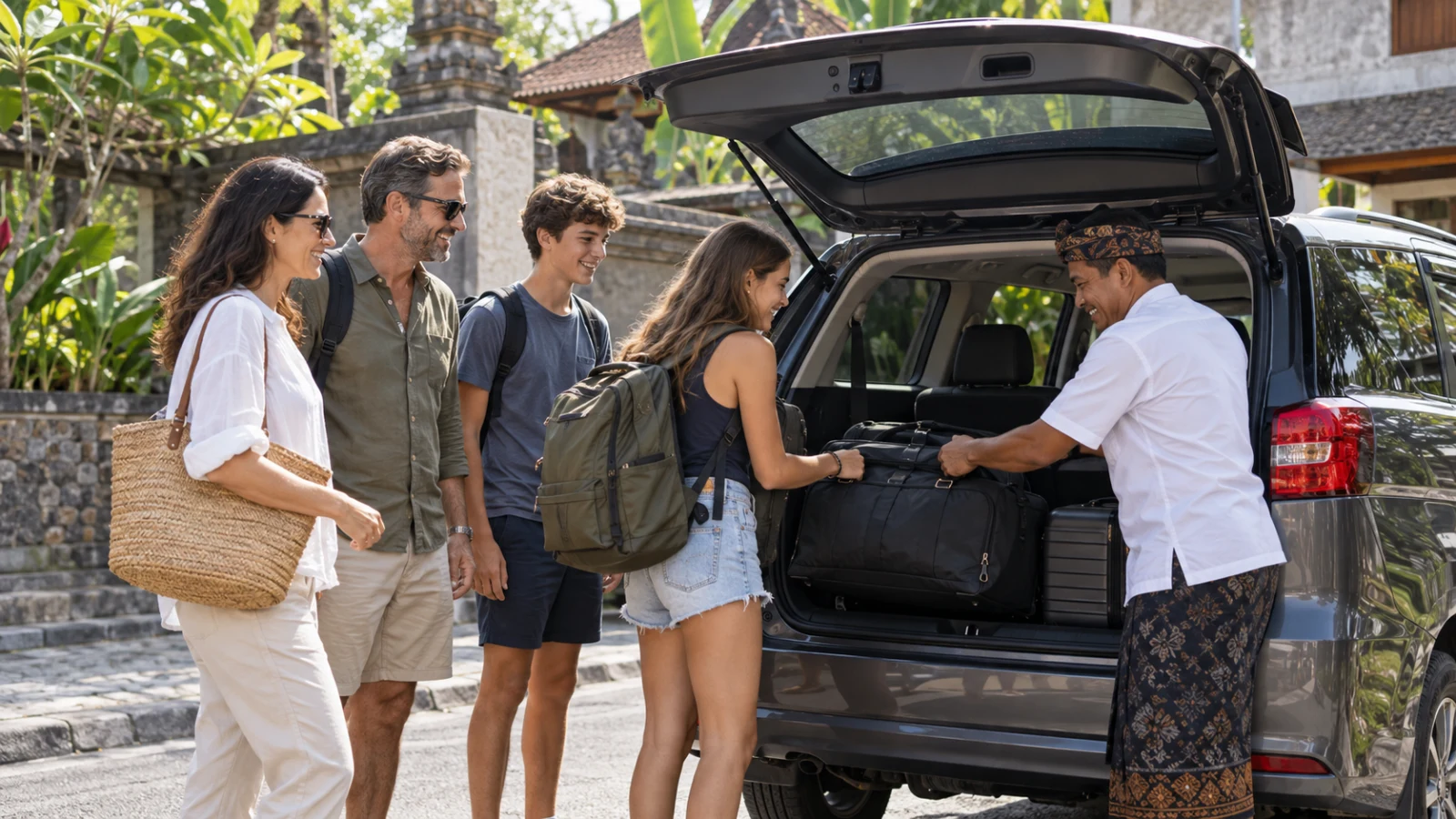
A Bali car with driver for families with teenagers can make sightseeing easier when parents and teens want different things from the same day. A private vehicle gives your family a shared base between stops, space to keep day bags together and more control over when to pause or change the plan. The best arrangement is not necessarily the largest or most expensive vehicle; it is one that fits your actual passenger and luggage needs, supports the day’s route and leaves enough time for everyone to enjoy it.
Teenagers may be happy to visit temples, beaches, cafes, markets or scenic viewpoints, but they may not want to spend the entire day following an adult-paced itinerary. Before booking, think about the balance between travel, activities, food, downtime and practical details such as phone charging. A little planning can prevent a full day from becoming a long sequence of car journeys. If a private vehicle suits your plans, review the car and driver service in Bali and ask the operator to confirm the vehicle, route, schedule and current terms for your travel date.

When a private car with driver helps a family with teenagers
A private car is particularly useful when your family wants to visit several places that are not conveniently connected by one short walk or a single local transport ride. It can also help when your group is carrying swimwear, spare clothes, camera equipment, shopping or other day items that would be awkward to manage between separate vehicles.
It is worth considering when:
- Parents and teenagers have different interests, so the day needs a few varied stops rather than one long activity.
- Your family wants to adjust the order of stops if someone is tired, hungry or more interested in spending longer at a particular place.
- You are travelling with several day bags, sports or beach items, or shopping that needs to stay together.
- You would rather leave navigation and driving to a local operator while your family focuses on the day.
A private driver does not remove traffic delays, walking distances, queues or the need to agree on a realistic schedule. It also does not mean every attraction will be accessible directly by car. Check the meeting point and any walking required for each planned stop.
Choosing a vehicle that fits passengers, comfort and luggage
Vehicle choice should start with the number of people travelling and what they will bring, not simply the number of seats shown in a vehicle description. Teenagers may need more personal space than younger children, particularly on longer drives. A vehicle that technically accommodates everyone can still feel cramped if the rear seats, legroom or luggage area are unsuitable for your group.
Use the table as a planning guide rather than a vehicle-capacity promise. Confirm the exact model and seating arrangement with the operator before confirming the booking.
| Family situation | What to prioritise | What to confirm |
| Parents and one or two teens | Comfortable seating, legroom and room for day bags | Whether the chosen vehicle suits all passengers with the bags you plan to bring |
| Three or more teens | A cabin layout that allows everyone to sit comfortably | Actual passenger capacity for the specific vehicle and whether all seats are suitable for your group |
| Family carrying beach or activity gear | Usable luggage space without blocking passenger seating | How much space remains when all passengers and bags are on board |
| Longer sightseeing day | Comfort, ventilation and practical access to personal items | Air-conditioning, charging options and any facilities or features you need |
For a wider overview of vehicle categories and general family transport considerations, see the guide to family car rental options in Bali. This article focuses more specifically on coordinating a day with teenagers, including their different interests, device needs and preference for a less rigid schedule.
Planning a day around mixed interests
The main challenge with teenagers is often not finding things to do; it is choosing a combination that feels fair to everyone. Parents may be interested in cultural sites or scenic stops, while teenagers may prefer water activities, cafés, shopping, photography or time near the beach. You do not need to satisfy every preference in one day. Instead, build a route around a small number of shared priorities and leave room for one optional stop.
1. Agree on the main reason for the outing
Ask each family member to choose one activity or place they would genuinely like to visit. Look for a natural combination within the same area rather than driving across the island to include every suggestion. A shorter route with a few meaningful stops is often more enjoyable than an ambitious list.
2. Mix active stops with slower ones
A beach or outdoor activity can be paired with a relaxed meal or café break. A cultural visit may work better earlier in the day, followed by a less structured afternoon. Consider heat, walking distances, opening hours and the energy level of the group when deciding the order.
3. Keep one part of the itinerary flexible
Teenagers may want extra time at a beach, market or photo stop, while another family member may be ready to move on. Identify one stop that can be shortened, extended or skipped without disrupting the whole day. Tell the driver which parts are priorities and which are optional, then agree how changes will affect the schedule or booking period.
A private driver family itinerary in Bali works best when everyone understands the broad plan but does not expect every minute to be fixed. Share the route in advance and ask whether the proposed stops are practical in one day.
Food, rest and downtime matter
Food stops should be part of the route, not an afterthought. Teenagers may become impatient when lunch is delayed, especially after a morning outdoors or a long drive. Choose a realistic meal window and identify a backup option in case the first choice is busy or unsuitable.
Useful planning habits include:
- Choose meal stops that are reasonably close to the route rather than adding a large detour.
- Check menus in advance if anyone has dietary requirements or strong food preferences.
- Allow time to sit down, use the bathroom and cool off instead of treating every stop as a quick takeaway break.
- Carry water and a small snack for the journey, while following any venue rules about outside food and drink.
- Plan a quieter pause after a demanding activity rather than filling every gap with another attraction.
Ask the operator whether the driver can wait at the agreed location during meals and how waiting time is treated under the booking. Do not assume that waiting, parking or extra stops are automatically included; confirm the arrangement before the trip.
Charging phones and managing devices on the road
Phones are often used for maps, photos, messaging, music and entertainment during a family holiday. Teenagers may also rely on a device for tickets, bookings or activity information. If charging access matters, ask the operator before confirming the vehicle rather than assuming that every car has a working USB port or compatible socket.
Confirm the following:
- Whether the specific vehicle has USB ports, a 12V socket or another charging option.
- Which cable or adapter is needed and whether your family should bring its own.
- Whether more than one device can be charged at the same time.
- Whether the vehicle has enough accessible storage for phones, power banks and small bags.
Bring charged power banks as a backup, particularly if you expect to spend time outdoors. Keep devices and valuables with you when leaving the vehicle, and agree on a simple family plan for staying in contact if anyone is briefly separated at a busy attraction.
Luggage and day-bag planning for family outings
For a sightseeing day, separate the bags you need in the cabin from anything that can remain at your accommodation. A family with teenagers may carry more than expected: a change of clothes, swimwear, towels, sunscreen, hats, water bottles, chargers and personal items can quickly fill the available space.
Before booking, tell the operator how many passengers will travel and describe the luggage or equipment you expect to bring. If you have unusually large items, such as sports equipment, bulky beach gear or several shopping bags, provide approximate dimensions or photographs. Ask whether the luggage can be stored without reducing the number of usable passenger seats.
Avoid planning around a vehicle’s advertised maximum passenger number without discussing luggage. The practical fit depends on the specific vehicle, seating configuration and shape of the bags.
Keep the day realistic: distance is not the only factor
A route that looks short on a map can take longer once traffic, weather, road conditions, parking, queues and walking are considered. Travel times in Bali vary by area and time of day, so treat online estimates as a guide rather than a guarantee. Ask the driver or operator to review the route and suggest a sensible order for the stops.
For a family with teenagers, a practical day usually has a clear start, a manageable number of main activities and enough time for meals and breaks. Avoid combining several distant areas simply because each attraction looks appealing. If a destination requires a long drive, consider making it the main focus of the day and choosing nearby stops.
Agree on the expected start and finish time, what happens if the day runs late, and whether additional time can be arranged. Confirm any overtime rate or other extra charge directly with the operator before travel. These details are more useful than assuming a full day has the same duration or terms with every provider.
Booking checklist: questions to ask before confirming
A clear enquiry helps the operator recommend a suitable vehicle and reduces the chance of a mismatch on the day. Include your travel date, pickup area, passenger count, ages if relevant to seating needs, route ideas and luggage details.
- Which specific vehicle would you recommend for our number of passengers and luggage?
- Can you confirm the seating layout and usable luggage space for that vehicle?
- Does the vehicle have charging ports or power sockets, and what type?
- Can we suggest flexible stops or adjust the route during the day?
- How are waiting time, parking, entrance fees, extra stops, overtime and any route-specific surcharges handled?
- What is included in the price, what are the cancellation and rescheduling terms?
For a useful quote, provide the full outline rather than asking only for the cheapest vehicle. A provider can give more relevant advice when they know whether the day involves beaches, outdoor activities, shopping, cultural stops or a longer cross-island route.
Before you book: plan a day that works for everyone
A Bali car with driver for families with teenagers is most useful when the vehicle, route and pace reflect how your family actually travels. Give attention to seating comfort, luggage space, charging needs, varied interests and time for meals or breaks. A flexible plan with a few shared priorities is usually more practical than trying to fit every attraction into one day.
Before confirming, send the operator your passenger count, luggage details and preferred stops, then ask the team to confirm the vehicle, inclusions, duration and any additional charges. If you are comparing arrangements for your trip, contact Bali Touristic with your proposed itinerary so the team can advise on a suitable vehicle and confirm the details for your date.

FAQs
Is a private driver useful for families with teenagers in Bali?
It can be useful when your family plans several stops, carries day bags or wants flexibility between activities. It also means the family does not need to manage the driving and navigation. The route still needs to account for traffic, walking and realistic stop times.
What type of car is suitable for a family with teenagers?
Choose based on the number of passengers, legroom, seating layout and luggage rather than the vehicle category alone. Ask the operator to confirm the exact vehicle and whether it can accommodate everyone and their bags comfortably.
Can teenagers charge their phones in a Bali car with driver?
Charging options depend on the specific vehicle, so ask the operator to confirm what is available before you book. Bring the right cables and a charged power bank either way.
Can we change our itinerary during the day?
Ask the operator how flexible routing works and whether extra stops or a longer day affect the agreed price or booking duration. Keep one or two optional stops rather than planning a route that depends on constant changes.
How many attractions should a family visit in one day?
There is no fixed number. Consider the distance between places, traffic, activity duration, meal breaks and how much time your teenagers want at each stop. A smaller number of well-chosen stops is often easier to enjoy.
Should we choose a larger vehicle for teenagers’ gear and personal space?
It depends on your group size and what you bring. Teenagers often carry more personal items, such as beach gear, shopping and devices, and may want more room to sit comfortably. Ask the operator for a recommendation based on the full passenger and bag load. A larger passenger capacity does not automatically mean enough luggage space.