
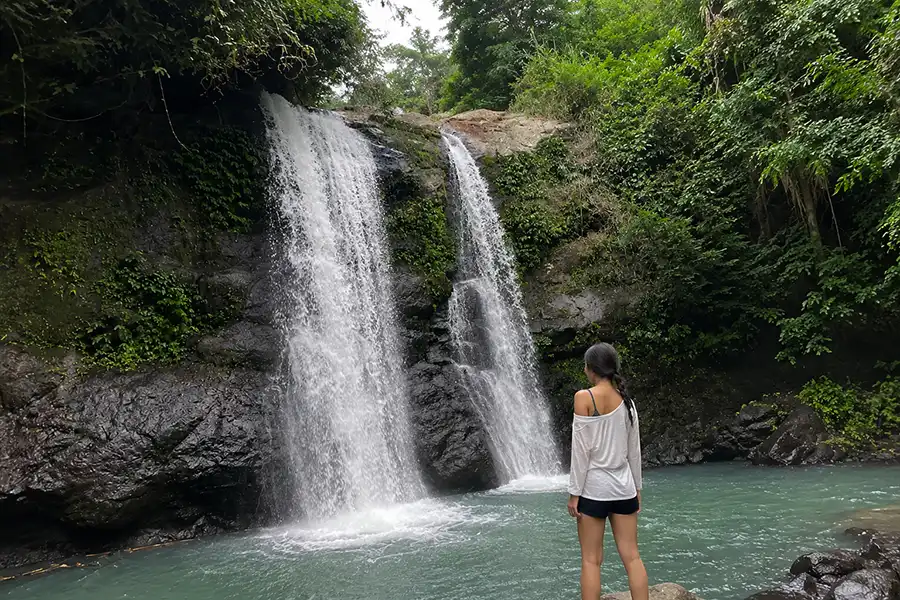
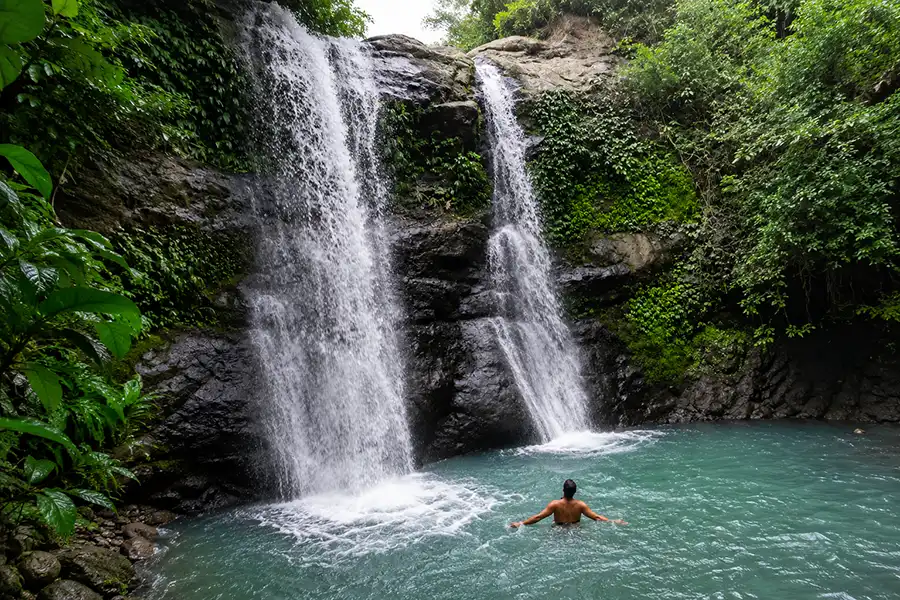
Juwuk Manis Waterfall is a secluded twin cascade tucked into the hills of Jembrana Regency, standing at just 5 meters tall. Unlike most waterfalls in Bali, its water splits across a cliff face and falls in two parallel streams, creating a rare visual effect that few other Bali waterfalls can match. Below the falls, a natural pool invites visitors to swim or simply soak in the cool mountain water.
Because it remains one of the lesser known hidden waterfall Bali destinations, Juwuk Manis stays quiet even during peak travel season. The surrounding hills are covered in coffee and clove plantations, so the walk to the falls feels more like a nature trek than a typical tourist stop. However, the flow can shift dramatically between seasons, calm and gentle during the dry months, then noticeably stronger once the rains arrive.
This guide covers everything you need before visiting Juwuk Manis Waterfall, including the exact number of steps on the trail, current entrance fees, the best time to go, and a few practical tips that most first time visitors miss.
Quick Facts About Juwuk Manis Waterfall
| Height | 5 meters |
| Location | Juwuk Manis Hamlet, Manggisari Village, Pekutatan, Jembrana Regency |
| Entrance Fee | Around IDR 5,000 to 20,000 per person (donation based) |
| Walking Distance | About 1 km from parking, including roughly 800 to 875 stone steps |
| Distance from Denpasar | Approximately 72 km, about 2 hours by car |
| Operating Hours | Daily, 08:00 to 20:00 WITA |
| Best Time to Visit | June to October (dry season) |

What does “Juwuk Manis” mean
In Balinese, Juwuk Manis translates to sweet fruit, a fitting name for a destination that rewards visitors with something refreshing after a challenging walk. Locals in the area have long used the waterfall as a natural gathering spot, and the name reflects the quiet charm that still defines Juwuk Manis Waterfall today.
Location and Travel Route of Juwuk Manis Waterfall
Juwuk Manis Waterfall sits in Juwuk Manis Hamlet, Manggisari Village, within Pekutatan District of Jembrana Regency. The drive from Kota Negara takes about one hour to cover 39 km, while travelers coming from Denpasar should expect roughly two hours to cover the 72 km distance.
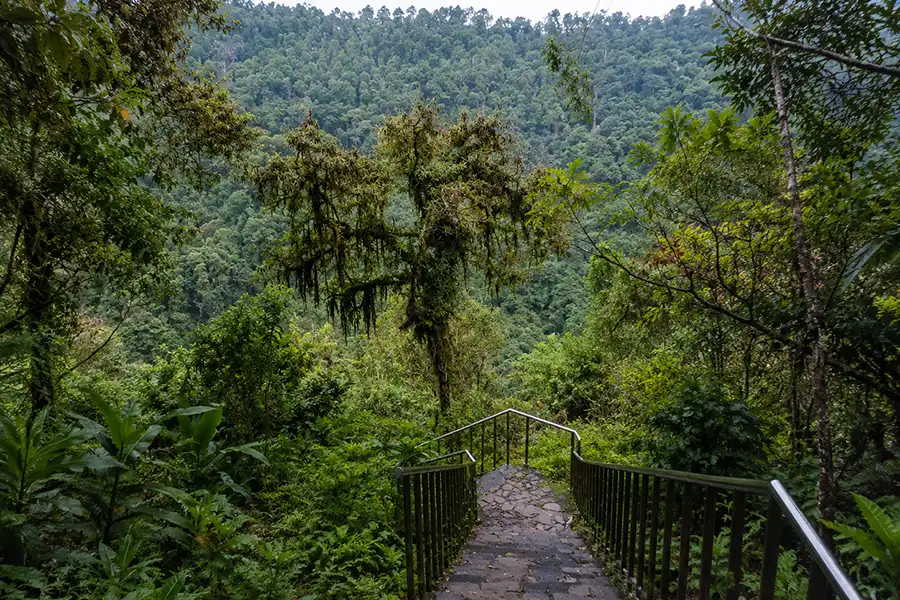
The final stretch of road climbs steadily through hilly terrain, so expect a winding and uphill drive as you approach Juwuk Manis Village. Once you arrive, park your vehicle at the local settlement and continue on foot along a trail that stretches for about 1 kilometer. Along the way, several visitors have counted somewhere between 800 and 875 stone steps leading down to the base of the falls, so pace yourself and take breaks if needed. The path winds through coffee and clove plantations, giving you scenic views before you even reach the water.
Look out for a small temple like structure near the parking area as your landmark, since this waterfall is pinned in more than one spot on Google Maps and the wrong pin can lead you astray. If you prefer not to navigate alone, hiring a local guide at the entrance is a simple way to avoid getting lost on the way down.
Near the waterfall stands a sacred temple, so women who are menstruating are asked not to enter the area out of respect for local customs. Beyond the physical journey, the reward is a calm, secluded atmosphere that makes it easy to relax and unwind by the water.
If you want to pair the trip with another highland stop, Blahmantung Waterfall sits just across the regency border in neighboring Tabanan and makes for a rewarding combined day trip through West Bali’s quieter hills.
How many steps lead to Juwuk Manis Waterfall
Most travelers who have made the trip report between 800 and 875 stone steps down to the falls, following a path that takes roughly 15 to 20 minutes each way. The steps are manageable for most fitness levels, though the descent can feel steep in a few sections. Since you will need to climb back up afterward, bring water and pace yourself, especially if you are visiting during the heat of midday.
Operating Hours, Admission, and Facilities
Juwuk Manis Waterfall welcomes visitors every day from 08:00 to 20:00 WITA, so you can plan your trip around either a morning hike or a quieter afternoon visit.
Entry is donation based rather than a fixed ticket price, and most visitors report paying somewhere between IDR 5,000 and 20,000 per person. Because there is no official counter, it helps to bring small bills in cash.
As one of Bali’s newer hidden waterfall Bali spots, facilities here remain limited. It is worth bringing your own food and water, since nearby stalls can be inconsistent. Please carry your rubbish back with you to help keep the site clean for future visitors.
Best time to visit Juwuk Manis Waterfall
The dry season, roughly June through October, offers the safest and most comfortable trekking conditions, since the trail stays firmer and less slippery. Visiting during the rainy season is still possible, but the water flow becomes much heavier and the steps can turn slick, so extra caution is needed.
Attractions That Make You Must Visit
Juwuk Manis Waterfall offers more than just its twin cascade, and a few details make the trip worth the walk.
- Twin Cascades and Natural Pool: At just 5 meters tall, the waterfall splits into two separate streams that fall side by side into a natural pool below, perfect for a refreshing dip after the trek down.
- Community Water Source: The same pool that refreshes visitors also serves as a water source for nearby residents, so the site carries both natural and practical importance for the local community.
- Basic Supporting Facilities: Although still developing, the area offers simple bathrooms, a few homestays, and small food stalls run by locals.
- Scenic Plantation Views: The walk to the falls passes through coffee and clove plantations framed by lush forest, giving you plenty to see even before you reach the water.
Important Tips Before Visiting Juwuk Manis Waterfall
- Wear Comfortable Clothes and Shoes: Since the trail is long and includes several hundred stone steps, comfortable shoes or river sandals with good grip work best for the descent and climb back up.
- Bring Swimwear and a Towel: Pack a swimsuit, towel, and a change of clothes if you plan to swim in the natural pool at the base.
- Keep the Area Clean: Carry your rubbish out with you so this Jembrana waterfall stays pristine for the next visitor.
- Visit During the Dry Season: For the safest trail conditions, plan your trip between June and October whenever possible.
With its unique twin cascade and secluded setting, Juwuk Manis Waterfall stands out among the Jembrana Interesting Places to Visit. Because it still receives relatively few visitors, you can spend as much time as you like soaking in the natural pool without feeling rushed.
Ready to Explore Juwuk Manis Waterfall?
Planning a trip to Juwuk Manis Waterfall is easier with a private vehicle, since the final stretch of road is steep and winding, and public transport barely reaches this part of Jembrana. Our bali tour package can help you combine this hidden gem with other West Bali stops, so you get a full day of exploring without worrying about the drive.
If you would rather set your own pace and stop wherever you like along the way, hiring a Bali Rent a Car with Driver gives you that flexibility. A local driver who already knows the winding roads to Pekutatan can also help you avoid the confusing Google Maps pins mentioned earlier, so you spend less time navigating and more time enjoying the waterfall.
Explore More Hidden Waterfalls in Bali
If Juwuk Manis left you wanting to see more of what Bali’s countryside has to offer, these five destinations are worth adding to your list, each with its own take on the twin waterfall Bali experience or something entirely different.
1. Tukad Cepung Waterfall
Tucked inside a dramatic cave gorge in Tembuku Village, Bangli, Tukad Cepung Waterfall drops through a narrow crack in the cave ceiling rather than an open cliff face, standing around 15 meters tall. Between 8:00 and 10:30 in the morning, sunlight beams directly through the opening and lights up the falling water like a glowing curtain, which is why it has earned the nickname waterfall from the sky. The site also holds sacred value for the local community, who have long used it for melukat purification rituals, adding a layer of cultural meaning to what is already one of the most photographed waterfalls on the island.
2. Banyumala Waterfall
Banyumala Waterfall sits in the cool highlands of Wanagiri Village, Buleleng, and shares the same twin stream formation as Juwuk Manis, but on a much larger scale. Two parallel cascades drop about 20 meters into a natural pool with water so clear it takes on a sapphire tint under direct sunlight. The name itself carries local meaning, combining the Balinese words for water and bad influence, and many visitors still come here to swim, meditate, or simply enjoy the sense of renewal the spring water is believed to bring.
3. Blahmantung Waterfall
Just across the regency border in Pujungan Village, Tabanan, Blahmantung Waterfall plunges more than 50 meters through dense coffee plantations and jungle, making it one of the tallest and quietest waterfalls in West Bali. The final approach involves a 30 to 45 minute walk through narrow jungle paths and small rivers, and it is common to pass local farmers along the way who are happy to point you in the right direction. Because it sits in the same western half of the island as Juwuk Manis, it pairs naturally into the same highland road trip.
4. Aan Secret Waterfall
True to its name, Aan Secret Waterfall hides within a green valley in Klungkung and remains one of the least visited spots on the eastern side of the island. Its remote setting means you will likely have the pool almost entirely to yourself, making it a strong choice for travelers who found the quiet of Juwuk Manis appealing and want more of the same low key, off the beaten path experience.
5. Langgahan Waterfall
Located near Kintamani in the Bangli highlands, Langgahan Waterfall features multiple tiers cascading into separate natural pools, all well off the main tourist trail. The cooler mountain air here makes for a refreshing change of pace, and because so few tour groups make the detour, the atmosphere stays peaceful in a way that closely echoes what makes Juwuk Manis Waterfall worth the trip in the first place.

Frequently Asked Questions About Juwuk Manis Waterfall
Are the waterfalls in Bali worth the visit?
Bali’s waterfalls are genuinely popular attractions, and while many are accessible through short, well maintained paths, others take more planning to reach through jungle walkways and steep steps. This one falls into the second category, offering a more adventurous and rewarding experience for those willing to make the journey.
Is it safe to visit Juwuk Manis Waterfall?
The site is accessible year round, though safety depends heavily on the weather. During or after heavy rain, the trek down can become very slippery, especially on the steep and winding stretch through the hills. Visiting during the dry season is generally safer and more enjoyable.
What should I wear when visiting?
Since the walk involves a long descent along a sometimes challenging path, comfortable hiking shoes or water resistant sandals with good grip are strongly advised. You will also need to wade through shallow pools near the base, so water shoes are a smart addition. Avoid flip-flops, since the terrain can be slippery.
What makes this waterfall special compared to others in Bali?
The twin cascades that split across a cliff face set it apart from the tall, single stream waterfalls found elsewhere on the island. Combined with its calm, secluded atmosphere and 5 meter height, it offers a rare visual effect and a refreshing dip away from the crowds.
How can I visit conveniently?
The site sits in a remote part of Jembrana, about 72 km from Denpasar, with the last stretch of road being steep and winding. The most comfortable way to visit is by private vehicle, ideally with a driver who already knows the route. This also makes it easy to combine your trip with nearby attractions like Medewi Beach or Rambut Siwi Temple in a single day.