
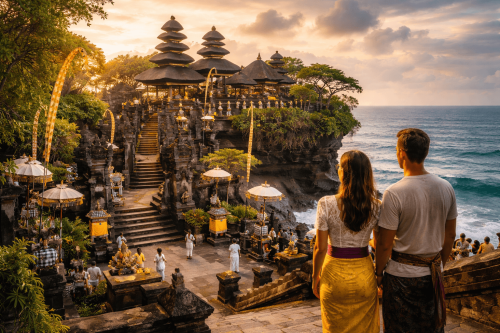
Rambut Siwi Temple is one of Bali’s most sacred sea temples, perched dramatically on a clifftop overlooking the Indian Ocean in Jembrana Regency. Known locally as Pura Luhur Rambut Siwi, it belongs to the prestigious Dang Kahyangan Jagat series, a group of sacred sites believed to spiritually protect the entire island. Some traditions even cite it as one of the six sanctuaries of the world, a distinction that sets it apart from other temples in Bali.
Positioned along the main Denpasar-Gilimanuk road, Rambut Siwi is a natural stop for travelers heading west across the island. Beyond its spiritual significance, the temple offers a combination of rugged coastal scenery, dense tropical forests, and a genuinely peaceful atmosphere that feels far removed from the busier temple sites in southern Bali. Visitors are welcome to witness Hindu ceremonies in progress, and the clifftop setting provides one of the most memorable sunset views in the entire region.

Rambut Siwi Temple Visitor Information
Quick Facts
📍
Yeh Embang Kangin, Mendoyo, Jembrana — about 70 km from Denpasar (approx. 2 hours by car)
🕐
Daily, 08:00 – 18:00 WIB
💰
IDR 5,000 per person · Sarong rental IDR 10,000 (available at the gate)
🅿️
Available on the west side, separate from the temple complex
⏱️
1–2 hours
📸
Arrive before 10:00 AM for soft morning light, or visit at sunset for the most dramatic clifftop views over the Indian Ocean
🌐
Year-round; dry season (April–October) for the clearest skies and best coastal scenery
One of the Dang Kahyangan Jagat Temples
The name Rambut Siwi comes from two Balinese words: rambut, meaning hair, and siwi, meaning worshipped. Together, they refer to the sacred strand of hair left behind by the revered Hindu priest Dang Hyang Dwijendra, which became the spiritual foundation of this temple. As one of the largest temples in Bali, Rambut Siwi holds a place in the Dang Kahyangan Jagat series, a network of temples dedicated to honoring holy teachers including priests, Maha Rsi, and spiritual masters.
The temple carries a deep connection to the sacred journey of Mpu Dang Hyang Dwijendra, also known as Pedanda Sakti Wawu Rawuh. His spiritual legacy across Bali is significant, and Rambut Siwi stands as one of the most tangible expressions of that legacy. Many visitors come specifically to meditate and absorb the temple’s powerful spiritual atmosphere. The ocean backdrop adds a sense of natural grandeur that makes this one of the most visually striking sacred sites in West Bali.
Brief History of Rambut Siwi Temple
According to local mythology, Rambut Siwi Temple’s origins are tied to the arrival of Mpu Dang Hyang Dwijendra from East Java to Bali. As recounted by Mpu Bhaskara Murti of Geria Madu Sudana in Kota Negara, Dang Hyang Dwijendra stopped at this site during his journey across the island. The temple guard demanded that he pray at the temple, threatening that a tiger would attack him if he refused. Reluctantly, he obliged. The moment he finished praying, however, the temple mysteriously collapsed.
Shocked and remorseful, the temple guard immediately apologized and begged Dang Hyang Dwijendra to restore the temple to its original state. He agreed, using his spiritual power to rebuild it. Before continuing his journey, he left a strand of his hair to be enshrined within the temple as an object of worship. From that moment, the site became known as Rambut Siwi, and the name has endured to this day.
Structure of Rambut Siwi Temple and Ceremony Days
The Luhur Rambut Siwi Temple is not a single structure but a complex of nine sacred temples. The main Rambut Siwi Temple stands majestically on the clifftop with a direct view of the beach, while Taman Temple sits directly in front as a companion temple. Along the same cliff are Melanting Temple, Penataran Temple, Gading Wani Temple, and Dalem Ped Temple.
At the foot of the cliff, running parallel to the shoreline, are Goa Dasar Temple, Segara Temple, and Goa Tirta Temple. Goa Tirta serves as the site for collecting holy water, known in Balinese Hindu tradition as tirta. A separate Pesanggrahan Temple stands beside the main road as the entry point into the complex.
Within the main courtyard, several sacred structures serve as focal points of worship, including:
- Padmasana
- Meru Tumpang Tiga (dedicated to Ida Bhatara Pedanda Sakti Wawu Rawuh / Dang Hyang Nirartha / Dang Hyang Dwijendra)
- Meru Tumpang Dua (dedicated to Bhatari Dewa Ayu Ulun Danu)
- Pengayeng Bhatara Gunung Agung
- Gedong, Pelinggih Rambut Sedana, Taksu, Peselang, and additional sacred structures
Ceremony Days
The main ceremony at Rambut Siwi Temple follows the Balinese 210-day Pawukon calendar, falling on Buda Umanis in the week of Wuku Prangbakat. When this date aligns with a full moon (purnama) or new moon (tilem), the ceremony is elevated to Odalan Nadi, the highest and most spiritually significant level of odalan. These alignments draw especially large gatherings of Balinese Hindu worshippers from across Jembrana and beyond.
Location of the Largest Temple in Jembrana Regency
Rambut Siwi Temple is located in Yeh Embang Kangin Village, Mendoyo District, Jembrana Regency, on the western side of Bali. The temple sits on a clifftop slightly set back from the main highway, reached by a short path from the Denpasar-Gilimanuk road. Its position along this key route means many Hindu worshippers and road travelers stop here to pray for safety before continuing their journey west.
There are three access routes into the complex, from the north, east, and west sides. The main entrance uses the western approach, leading through a separate parking area. A short walk from the parking lot brings you to a river crossing via a wooden bridge, after which steep stone stairs climb up to the main temple gate. Flat, comfortable footwear is advisable for the climb.
Visiting Rambut Siwi Temple
Rambut Siwi Temple is one of the best temples in Bali for travelers seeking a genuine spiritual experience away from the tourist crowds. If you are traveling west across the island toward Gilimanuk or the ferry to Java, this is an easy and rewarding stop along the route.

The entrance fee is IDR 5,000 per person, and sarong rental is available at the gate for IDR 10,000. Wearing a sarong is required to enter the inner temple areas, and modest clothing covering the shoulders and knees is strongly encouraged. The temple grounds are generally open from 8 AM to 6 PM daily, though ceremonial days may affect access for non-worshippers.
The best time to visit is in the morning between 8 AM and 11 AM, when the light over the ocean is at its most beautiful and the complex is at its quietest. Sunset from the clifftop is equally spectacular, as the temple catches the last golden light before it drops over the Indian Ocean. Because Rambut Siwi is located roughly 70 kilometers from Seminyak and has no reliable public transport connection, the most practical way to arrive is by renting a car with a driver. This gives you the freedom to time your visit around the morning light or the sunset without being tied to a fixed group schedule.
Plan Your Journey with Bali Touristic
Rambut Siwi Temple sits along the quieter western corridor of Bali, making it an ideal stop on a longer cross-island journey. Bali Touristic has designed a Bali tour package that combines Rambut Siwi with other compelling destinations across the island, from the rice terraces of Jatiluwih to the black sand beaches of Medewi, giving you a well-rounded picture of Bali beyond the tourist crowds.
Our drivers know the west Bali route well and can help you build the perfect day trip, combining the temple with scenic coastal stops and a comfortable return journey at your own pace. The peace that radiates from Rambut Siwi, combined with its clifftop position and ocean panorama, makes it one of the most rewarding stops on any West Bali itinerary.
Frequently Asked Questions About Rambut Siwi Temple
What makes Rambut Siwi Temple spiritually significant?
Rambut Siwi Temple is one of the Dang Kahyangan Jagat temples, a series of sacred sites believed to spiritually protect Bali as a whole. It is also sometimes cited as one of the six sanctuaries of the world in Balinese Hindu tradition. The temple enshrines a sacred strand of hair from the revered 16th-century priest Dang Hyang Nirartha, giving it a direct connection to one of Bali’s most important spiritual figures.
Where exactly is Rambut Siwi Temple, and how do I get there?
The temple is in Yeh Embang Kangin Village, Mendoyo District, Jembrana Regency, on the west coast of Bali, about 70 kilometers from Denpasar. It sits on a clifftop just off the main Denpasar-Gilimanuk road. There is no reliable public transport to the site, so hiring a private car with driver or joining a guided tour is the most practical option.
What should visitors wear at Rambut Siwi Temple?
A sarong and sash around the waist are required inside the temple complex. If you do not bring your own, you can rent both at the entrance for IDR 10,000. Modest clothing covering the shoulders and knees is also expected, and visitors should remain respectful and avoid entering areas reserved for active worship.
What is the entrance fee and when is the best time to visit?
The entrance fee is IDR 5,000 per person, with an additional charge for sarong rental if needed. Morning visits between 8 AM and 11 AM are ideal for good light and smaller crowds. Sunset visits are equally rewarding for the dramatic views from the clifftop over the Indian Ocean.
What other attractions can I combine with a visit to Rambut Siwi?
The western route pairs well with the UNESCO-listed Jatiluwih rice terraces, the surf beach at Medewi, and Taman Nasional Bali Barat, Bali’s only national park. Together, these stops make for a rewarding full day away from the busier southern resorts.
Can tourists visit Rambut Siwi Temple during a ceremony?
Yes, tourists are generally welcome to observe ongoing Hindu ceremonies, though certain inner areas may be restricted for non-worshippers during active rituals. The main odalan ceremony follows the Balinese Pawukon calendar and falls every 210 days on Buda Umanis in Wuku Prangbakat. Attending during this time offers a rare opportunity to witness an authentic Balinese Hindu gathering at one of the island’s most sacred sea temples.