
Blanjong Temple is one of Bali’s most historically significant sacred sites. It sits in Intaran Village, in the southern part of Sanur.
Most visitors come to Bali for its beaches and rice terraces. However, Blanjong Temple offers something rare. It gives you a direct connection to the island’s earliest recorded history.
Inside the temple grounds, you will find the Blanjong Pillar. This ancient stone inscription dates back to 913 CE. It is the oldest written record ever discovered in Bali. So, if you enjoy history, culture, and quiet temples, this is a stop you should not miss.

History of Blanjong Temple
Blanjong Temple dates back to 914 CE. Historians link it to King Sri Kesari Warmadewa, a ruler of the ancient Warmadewa dynasty in Bali.
During his reign, Bali was heavily influenced by Indian culture and Hinduism. King Sri Kesari Warmadewa built the temple to honor the Hindu gods. He also erected a stone pillar to commemorate his military victories.
Furthermore, researchers believe Blanjong was once an important port in southern Bali during the early 10th century. Archaeologists have found Chinese ceramics, Ganesha statues, and ancient potsherds at the site. Most of these artifacts are now stored at the Bali Museum in Denpasar.
The temple is also classified as a Dang Kahyangan temple. This means it was built to honor a revered holy figure, known as a Maharsi. That classification makes Pura Blanjong one of the most spiritually significant temples on the island.
What Does the Name Blanjong Mean?
The name Blanjong comes from two words in the local dialect. Belahan means ‘pieces,’ and Ngejung refers to a traditional fishboat.
According to local legend, a large fishboat once ran aground on the nearby beach. The people named the area after this event. That is how Blanjong Temple and the surrounding village got their name.
The Blanjong Pillar and Its Ancient Inscription
The most important feature of Blanjong Temple is the Blanjong Pillar, also known locally as Prasasti Blanjong. This stone pillar stands 177 cm tall and measures 62 cm in diameter. It has a lotus flower crown at the top.
Researchers discovered the pillar in 1932. It carries inscriptions written in two languages and two scripts. One side uses Old Balinese written in Nagari script. The other side uses Sanskrit written in Kawi script.
The inscription is a victory monument known as a Jaya Sthamba. It celebrates King Sri Kesari Warmadewa‘s victory over his enemies in Gurun and Swal. It also mentions the word Walidwipa, which is one of the earliest recorded names for the island of Bali.
Today, the pillar sits inside a glass enclosure near the temple. It is located down a small lane to the left of the main temple building on Jalan Danau Poso. Look for the sign at the entrance of the lane, as the pillar is easy to miss.
Also inside the temple grounds, you will find a Ganesha statue and small bull statues. These artifacts give archaeologists important clues about social and religious life in ancient Bali.
Architecture and Design of Blanjong Temple
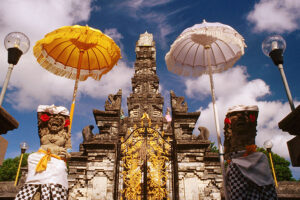
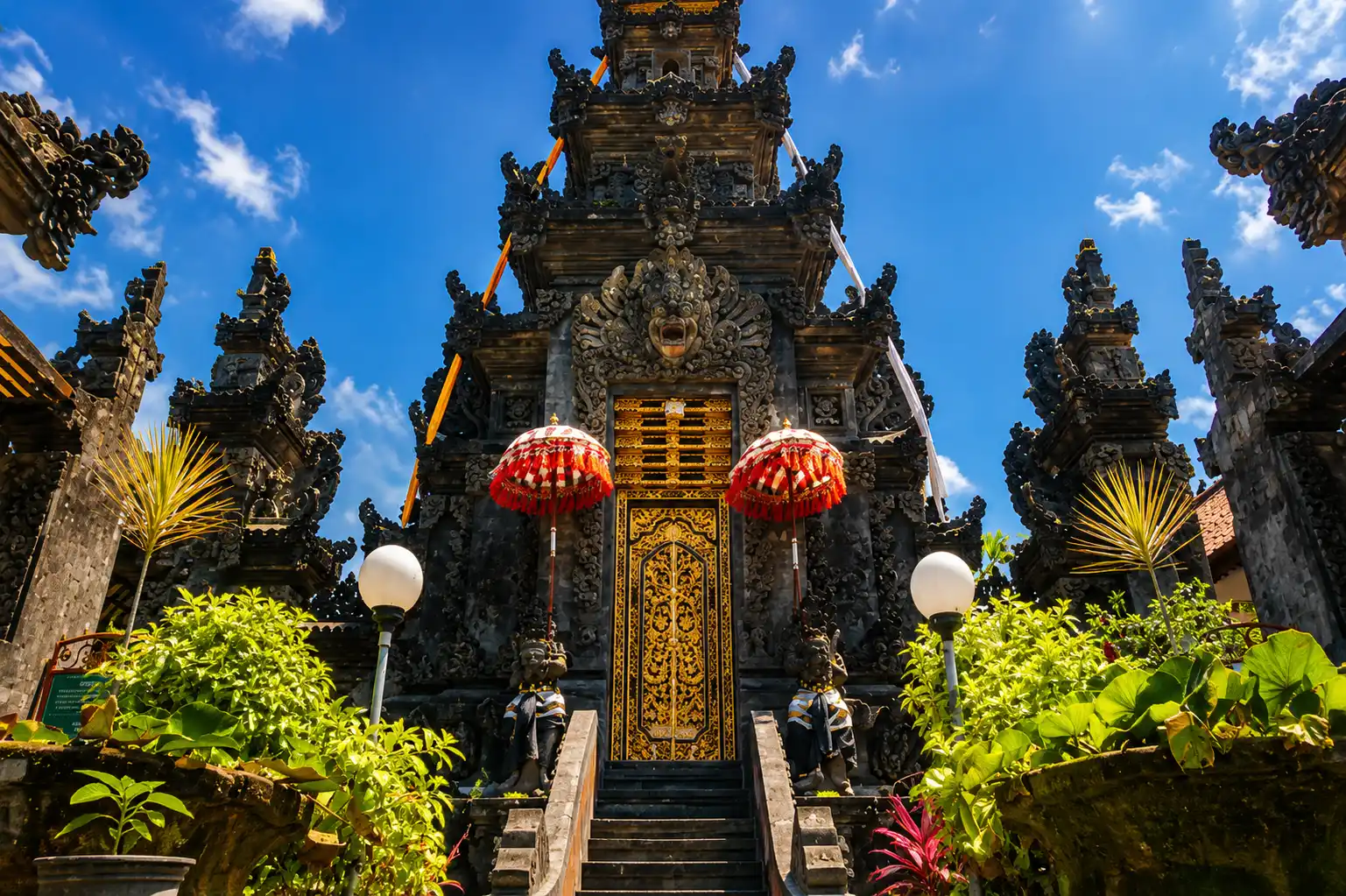
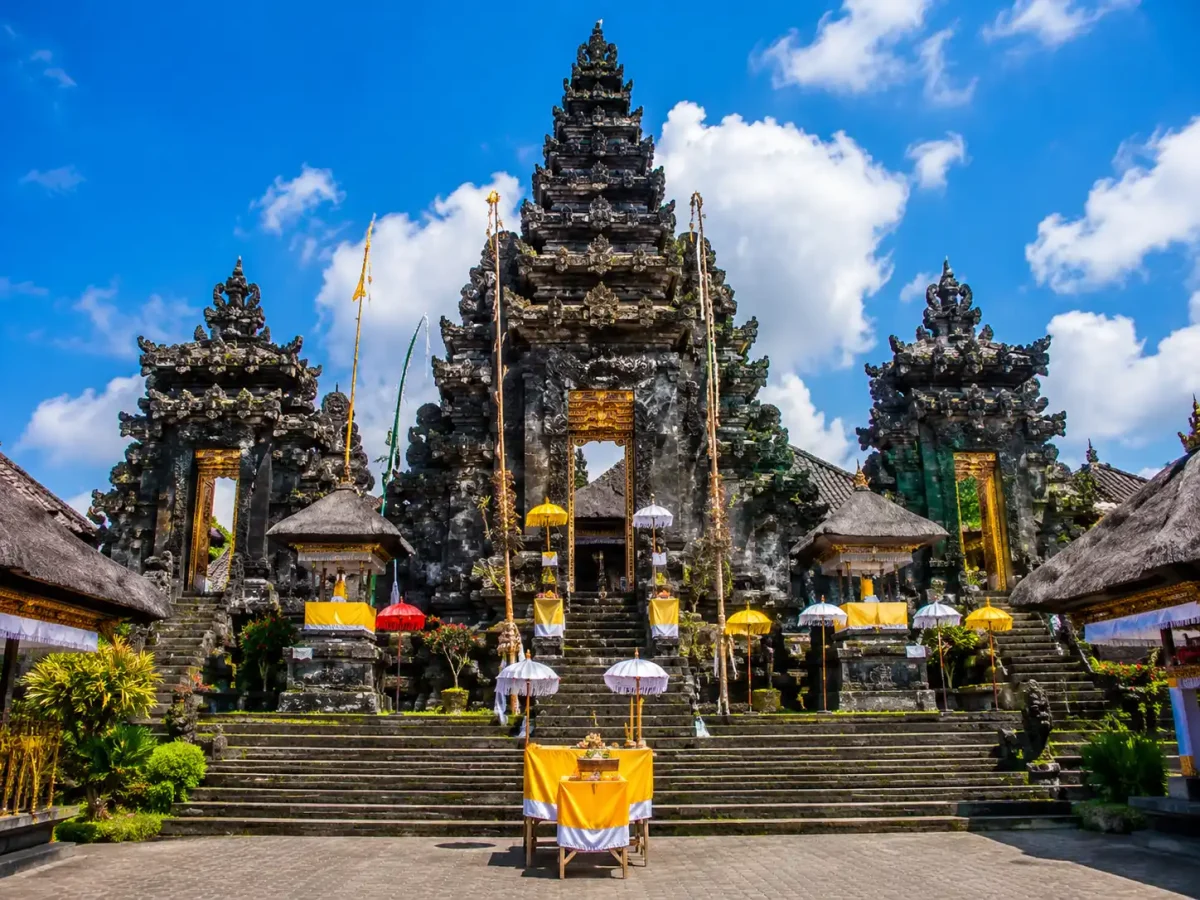
Blanjong Temple features traditional Balinese temple architecture. You will notice intricately carved stone structures and detailed sculptures throughout the complex.
The design reflects the Sanur style, which blends classical Balinese craftsmanship with the coastal character of the surrounding area. Moss-covered stone gates frame the entrance. Finely carved shrines line the inner courtyard.
Compared to larger temples in Bali, Pura Blanjong is small and intimate. However, every corner tells a story. The architecture is a quiet and honest reflection of Bali’s early Hindu heritage.
Cultural and Spiritual Significance of Blanjong Temple
Local Balinese people still use Blanjong Temple as an active place of worship. They visit regularly to pray and make offerings to the gods.
During major celebrations like Galungan and Kuningan, the temple becomes a busy center of community activity. These ceremonies honor the triumph of good over evil and are among the most important in the Balinese Hindu calendar.
Therefore, when you visit, treat the space with genuine respect. The community here has kept these traditions alive for over a thousand years. As a result, dressing appropriately and speaking quietly is more than just a rule. It is a sign of real appreciation.
How to Get to Blanjong Temple
Blanjong Temple is easy to reach from most tourist areas in southern Bali. The temple sits in Intaran Village, about a 10-minute drive from Sanur Beach and 20 minutes from central Denpasar.
If you are staying in Kuta or Seminyak, expect a drive of around 30 to 45 minutes depending on traffic.
The surrounding streets are narrow. So, arriving by motorbike or a small car is more practical than a large vehicle. For a comfortable and flexible trip, you can book a Bali car rental with driver and explore the Sanur area at your own pace.
Location and address
Pura Blanjong is at Jalan Danau Poso, Sanur Kauh, Denpasar Selatan, Bali. Search ‘Pura Blanjong’ on Google Maps for directions.
Note that the Blanjong Pillar is not inside the main temple building. It is in a separate enclosure accessed through a small lane to the left of the temple when facing the entrance from Jalan Danau Poso.
Entrance fee and opening hours
Blanjong Temple is generally open to visitors during daylight hours. There is no formal entrance fee. However, a small donation to support the upkeep of the site is always appreciated.
Sarongs and sashes are usually available to borrow near the entrance. You must wear them before entering the temple grounds.
Tips for Visiting Blanjong Temple
- Best time to visit: Come early in the morning, ideally before 9 AM. The temple is quieter and cooler at this time. Avoid midday when the heat peaks.
- Dress modestly: Cover your shoulders and knees before entering. A sarong is required. Many are available to borrow near the entrance.
- Respect local customs: The temple is an active place of worship. Speak quietly, do not climb on sacred structures, and avoid disturbing ongoing ceremonies.
- Bring water and sunscreen: The temple is in an open area, so sun protection is important.
- Photography: Feel free to photograph the carvings, the Blanjong Pillar, and the greenery. Always ask before photographing worshippers.
- Finding the pillar: Look for a small lane to the left of the main temple entrance on Jalan Danau Poso. Follow the sign. The glass enclosure is at the end of the lane.
Nearby Attractions in Sanur
Blanjong Temple sits in the Sanur area. So, you have several great spots to combine in a single day trip.
- Sanur Beach: A short drive from the temple. Perfect for a morning stroll, swimming, or watching a peaceful sunrise.
- Le Mayeur Museum: The former home of Belgian artist Adrien-Jean Le Mayeur. This museum showcases Bali’s early art scene through his paintings and personal collection.
- Bali Museum, Denpasar: Many of the artifacts originally found at the Blanjong site are now displayed here. It is a great complement to your temple visit.
- Serangan Island: Known for its turtle conservation efforts. A great stop for anyone interested in marine life and local environmental projects.
- Sea Turtle Village: Inside the Hyatt Regency Bali in Sanur, this sanctuary runs a turtle hatchery, education programs, and seasonal hatchling releases — see the Sea Turtle Village guide for details.
- Margot Riverside Restaurant: For a scenic lunch stop, this riverside dining spot in central Denpasar serves Balinese and international dishes — see the Margot Riverside Restaurant guide for details.
Additionally, you can pair your Sanur visit with a Bali temple day trip to explore more of the island’s sacred sites in one go.
What to Do at Blanjong Temple
There is more to do here than just sightseeing. A visit to Blanjong Temple offers several ways to engage with Bali’s culture and history.
- Explore the Blanjong Pillar: Read about the inscription and learn about King Sri Kesari Warmadewa’s legacy. It is a rare and tangible piece of ancient Balinese history.
- Cultural immersion: If your visit coincides with a ceremony, observe quietly from a respectful distance. Watching offerings and rituals gives you a genuine glimpse into everyday Balinese life.
- Photography: The stone carvings, lotus motifs, and surrounding greenery make excellent subjects for travel photos.
- Combine with a heritage tour: Blanjong Temple pairs well with other cultural sites in the area. Consider booking a cultural tour Bali temple village for a fuller experience.
Why Visit Blanjong Temple?
- Historical importance: The Blanjong Pillar is one of the oldest artifacts in Bali. It gives you direct access to the island’s earliest recorded history.
- Peaceful atmosphere: The temple is quiet and far less crowded than major temples like Tanah Lot or Uluwatu. It is ideal for reflection and slow exploration.
- Cultural depth: The site connects Bali’s Hindu-Balinese spiritual traditions, ancient kingships, and archaeological heritage in one small but powerful location.
- Easy to combine: Because it is in the Sanur area, you can pair it with a beach visit, museum trip, or a full hidden temples in Bali itinerary.
Explore Bali with Bali Touristic
Want to visit Pura Blanjong on your own itinerary? While Bali Touristic doesn’t offer a fixed tour package to Blanjong Temple, our car rental with driver service lets you build your own flexible trip around it. We offer comfortable transportation and a knowledgeable local driver, so you can decide exactly where to go and how long to stay.
Browse our Bali tour packages for day trips, temple tours, and full-day excursions across the island. You can also arrange a smooth Bali airport transfer to start or end your journey in comfort.
If you prefer flexibility, a Bali car rental with driver is the most practical option. You get a knowledgeable driver and a comfortable vehicle, without a fixed schedule. Book directly through our WhatsApp.
Questions About Blanjong Temple
Does Bali Touristic offer a tour package to Blanjong Temple?
Bali Touristic doesn’t currently offer a tour package specifically to Blanjong Temple. If you’d still like to visit, you can book our car rental with driver service and explore the temple at your own pace.
What is special about blanjong temple?
Blanjong Temple, or Pura Blanjong, is home to the Blanjong Pillar. This stone inscription dates back to 913 CE. It is the oldest written record found in Bali and one of the island’s most historically significant sites.
Where is blanjong temple located?
Blanjong Temple is in Intaran Village, southern Sanur, Bali. The address is Jalan Danau Poso, Sanur Kauh, Denpasar Selatan. It is about 10 minutes from Sanur Beach and 20 minutes from central Denpasar.
What is the Blanjong Pillar?
The Blanjong Pillar, also called Prasasti Blanjong, is a cylindrical stone pillar standing 177 cm tall. It was erected in 913 CE by King Sri Kesari Warmadewa. The pillar carries inscriptions in Sanskrit and Old Balinese and is considered the oldest inscription discovered in Bali.
What is the best time to visit blanjong temple?
The best time to visit is early in the morning, before 9 AM. The temple is quieter, cooler, and more peaceful at that time. Avoid midday visits when temperatures are at their highest.
Do I need to wear a sarong at blanjong temple?
Yes. Wearing a sarong is required at all active temples in Bali, including Blanjong Temple. Sarongs and sashes are usually available near the entrance if you do not bring your own.
Is blanjong temple free to enter?
There is no formal entrance fee for Pura Blanjong. However, a small voluntary donation to help maintain the site is always appreciated by the local community.
How far is blanjong temple from Sanur Beach?
Blanjong Temple is roughly 5 to 10 minutes by car from Sanur Beach. If you are already in the Sanur area, it is very easy to combine both stops in a single half-day outing.
Can I combine blanjong temple with other Bali temple visits?
Absolutely. Blanjong Temple works well as part of a wider temple itinerary. You can explore more enchanting Bali temples for sunset watching or plan an east Bali tour for a full cultural day. Alternatively, check out our Bali Instagram tour itinerary for a mix of temples and scenic spots across the island.