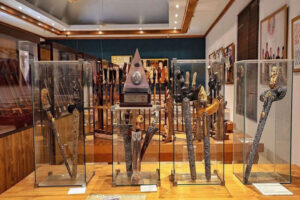


Balinese wood carving is one of the oldest and most revered art forms in Bali, practiced for over a thousand years and still very much alive today. Every piece, from a temple guardian statue to a delicately carved mask, carries meaning rooted in Hindu mythology, ancestral tradition, and a deep sense of the spiritual. What makes this craft remarkable is not just its visual beauty but the stories and beliefs woven into every cut of the chisel.
Mas Village near Ubud is the heartbeat of this tradition, where multi-generational family workshops keep the craft going in the same way it has been passed down for centuries. The types of wood used, the motifs chosen, and even the rituals performed before carving begins all reflect a worldview where art and spirit are inseparable. Whether you are traveling to Bali and want to visit a carving workshop, looking for an authentic piece to bring home, or simply curious about this iconic craft, this guide covers everything worth knowing.
Read on to explore the full history, cultural meaning, techniques, and practical tips for experiencing Balinese wood carving during your trip.

Quick View: Balinese Wood Carving at a Glance
| Topic | Key Info |
| Origin | Dates back to the first century CE; flourished during the Majapahit era (14th century) |
| Main center | Mas Village, Ubud (Gianyar Regency) |
| Common materials | Teak, sandalwood, crocodile wood, hibiscus wood, suar wood |
| Popular motifs | Hindu deities, mythological creatures, floral patterns, Barong, Garuda |
| Spiritual role | Carvings are used in temples, ceremonies, and homes as protective and sacred objects |
| Best places to buy | Mas Village workshops, Ubud Art Market, Sukawati Art Market, Tegallalang craft shops |
| Workshop for tourists | Available in Mas Village and Ubud; most sessions last 2 to 4 hours |
The Historical Roots of Wood Carvings in Bali
The history of wood carvings in Bali dates back centuries and is deeply intertwined with the island’s spiritual and cultural development. Early Balinese woodcarvers were commissioned to create sacred objects for temples and palaces. These carvings were not mere decorations; they were imbued with spiritual significance, believed to house deities and protect against malevolent forces.
The arrival of Hinduism and Buddhism in Bali around the first century CE significantly influenced the development of wood carvings. Balinese artisans began incorporating motifs and styles inspired by Indian epics such as the Mahabharata and Ramayana. Mythical creatures, gods, and celestial beings became common subjects, demonstrating the syncretic blend of indigenous animism and imported religious beliefs.
During the Majapahit era in the 14th century, the art of wood carving flourished further. The Majapahit influence introduced intricate patterns, stylized flora and fauna, and narrative storytelling through carvings. This era also saw an increase in patronage of the arts, with kings and nobles commissioning elaborate wooden sculptures for ceremonial purposes and palace adornment.

Cultural Influences on Balinese Wood Carvings
Balinese wood carvings are a testament to the island’s ability to absorb and adapt external influences while maintaining its unique identity. The Hindu and Buddhist traditions brought intricate iconography and storytelling elements, while later interactions with Chinese and Islamic cultures introduced new patterns and techniques.
One distinguishing feature of Balinese wood carvings is their dual purpose: functional and spiritual. While some carvings serve as practical objects such as doors, furniture, or tools, others are deeply spiritual, embodying the Balinese concept of “Rwa Bhineda,” the balance of opposites. Guardian statues carved from wood are placed at temple entrances to ward off negative energies, embodying both protection and harmony.
Where to See Balinese Wood Carving in Bali
No place in Bali is more closely associated with Balinese wood carving than Mas Village, located in the Gianyar Regency just a short drive south of Ubud. This village has been a center of the craft for generations, and walking its main road means passing workshop after workshop where you can watch artisans carving directly from raw timber. Many of the most celebrated woodcarvers in Balinese history came from Mas, and their family traditions continue today.
Visitors are welcome to enter the workshops, observe the carving process up close, ask questions, and purchase pieces directly from the craftsmen. There is no entrance fee to the village, and it is easily reached by private car or driver. If you are flying into Bali and heading straight to the Ubud area, booking a Bali airport transfer in advance makes the journey seamless, especially if Mas Village is among your first stops.
For those who want to explore multiple art villages around Ubud at their own pace, using a Bali car rental with driver gives you the flexibility to move between Mas, Celuk, Batuan, and other craft villages without being tied to a fixed schedule.
Beyond Mas Village, the following locations are also well worth visiting for anyone interested in Balinese woodwork:
- Ubud Art Market: A busy open market near the Ubud Palace with a wide selection of carvings at negotiable prices
- Sukawati Art Market: Slightly south of Ubud, known for affordable and diverse handicrafts including wooden masks and figurines
- Tegallalang: Famous for its rice terraces but also home to craft shops selling both traditional and contemporary carving styles
If you would rather have these stops arranged for you, our Sacred Monkey Forest and Ubud Tour pairs central Ubud sightseeing with easy access to nearby art villages like Mas.
Wood Carving Workshops and Classes for Visitors
One of the most memorable ways to engage with Balinese wood carving is to try it yourself. Several workshops in Mas Village and Ubud offer hands-on carving classes for complete beginners. A typical session lasts between two and four hours, and you leave with a finished piece to take home. Instructors are usually local artisans who walk you through selecting wood, using the tools safely, and applying basic carving techniques.
These classes are a popular addition to cultural day tours around Ubud. If you want to combine a carving workshop with visits to temples, rice terraces, and other art villages in the area, exploring the options available through a Bali tour package is a practical way to plan the day without the hassle of organizing transport independently. You can also find a full guide to Bali art workshops covering painting, sculpting, and carving options across Ubud and beyond.
Usage of Wood Carvings: From Ancient Times to Today
In ancient times, wood carvings in Bali were primarily used in religious and ceremonial contexts. Temples across the island are adorned with intricately carved doors, altars, and panels depicting scenes from Hindu mythology. These carvings were not only artistic but also served as offerings to the gods, enhancing the sanctity of the temple spaces.
Apart from temples, palaces also showcased the grandeur of Balinese wood carvings. Elaborate carvings adorned royal residences, reflecting the power and prestige of the ruling elite. The designs often included intricate depictions of nature, such as floral patterns and animal motifs, symbolizing the close relationship between humans and the environment.
Over time, the scope of wood carvings expanded beyond religious and royal contexts. In the 20th century, as Bali became a hub for tourism, artisans began creating carvings for commercial purposes. Tourists were drawn to the beauty and craftsmanship of Balinese woodwork, leading to the production of decorative sculptures, masks, and household items. Despite this commercialization, traditional themes and techniques remain prevalent, ensuring that the essence of Balinese artistry is preserved.
What Makes Balinese Wood Carvings Stand Out
Several characteristics make Balinese wood carvings distinct from other forms of woodwork around the world. Balinese artisans are known for their meticulous attention to detail, often spending weeks or months on a single piece. The precision and finesse of their work are unparalleled, reflecting deep devotion and skill passed down through generations.
Another unique aspect of Balinese wood carvings is their thematic diversity. From mythical creatures and deities to natural elements and abstract patterns, the subjects are vast and varied. Each carving tells a story, often inspired by folklore, religious teachings, or the artisan’s personal interpretation of the world.
Types of wood used in Balinese carving
The choice of wood plays a significant role in both the look and the durability of the finished piece. Here is a quick overview of the most commonly used materials:
| Wood Type | Characteristics | Typical Use |
| Teak | Dense, durable, rich grain | Large sculptures, furniture, architectural elements |
| Sandalwood | Fragrant, fine-grained, light | Small decorative pieces, religious items |
| Crocodile wood (Pule) | Sacred in Bali, soft texture | Ritual masks, ceremonial objects |
| Hibiscus wood | Lightweight, easy to carve | Beginner carvings, smaller figurines |
| Suar wood | Wide natural grain, bold look | Statement sculptures, tabletops |
The Spiritual Connection of Wood Carvings
For Balinese artisans, wood carving is more than a craft; it is a form of spiritual practice. The process of creating a carving is often accompanied by rituals and prayers to invoke blessings and guidance. Artisans believe that their work serves as a bridge between the physical and spiritual realms, a way to communicate with the divine.
This spiritual connection is evident in the themes and motifs of Balinese wood carvings. Guardian statues are imbued with protective energy and are often placed at the entrance of temples or homes. Similarly, ceremonial masks carved from wood play a crucial role in traditional dances and rituals, embodying spirits and ancestral forces.
The Modern Renaissance of Balinese Wood Carvings
In recent decades, there has been a renewed appreciation for traditional Balinese wood carvings, both locally and internationally. Efforts to preserve and promote this art form have led to the establishment of workshops, galleries, and cultural centers dedicated to showcasing the craftsmanship of Balinese artisans.
Tourists visiting Bali often seek out wood carvings as souvenirs, drawn to their beauty and cultural significance. This demand has provided economic opportunities for local artisans, ensuring the continuity of their craft. At the same time, there is a growing emphasis on sustainability, with artisans adopting eco-friendly practices such as using reclaimed wood and natural finishes.
Contemporary Balinese artists are also exploring new ways to innovate within the tradition of wood carvings. By blending traditional techniques with modern designs, they are creating works that appeal to a global audience while staying rooted in Balinese culture.
How to Buy Authentic Balinese Wood Carvings
Buying an authentic Balinese wood carving is a rewarding experience, but knowing what to look for helps you avoid mass-produced imitations. Genuine pieces are always hand-carved, which means you will notice slight irregularities in the surface that machine-cut products do not have. Run your fingers along the carved edges and look for tool marks, which are a sign of handwork rather than factory production.
Weight is another useful indicator. Authentic carvings made from quality woods like teak or suar are noticeably heavier than cheap alternatives made from compressed sawdust or resin. If a piece feels surprisingly light for its size, inspect it more carefully. Buying directly from workshops in Mas Village or from artisan markets in Ubud gives you the best chance of finding genuine pieces at fair prices. For a deeper guide to spotting authentic work and the best places to find it, the article on authentic Bali wood sculptures covers this in detail.
Prices vary widely depending on size, wood type, complexity, and where you buy. Bargaining is standard practice at markets, though workshops often have fixed prices for their more intricate pieces. Always ask about the wood type before purchasing, as this affects both the longevity of the piece and its cultural significance.
Preserving the Legacy of Wood Carvings in Bali
The legacy of Balinese wood carvings is a testament to the island’s rich cultural heritage and artistic ingenuity. As this craft continues to evolve, it remains a vital part of Balinese identity, connecting the past with the present and inspiring future generations.
Efforts to preserve this legacy include government initiatives, educational programs, and collaborations with international organizations. By teaching the younger generation the techniques and traditions of wood carvings, Balinese communities are ensuring that this art form will continue to thrive for years to come.
Balinese wood carvings are more than just an art form; they are a reflection of the island’s soul. With their intricate designs, spiritual significance, and rich history, they capture the essence of Bali’s cultural and artistic heritage. From ancient temples to modern galleries, wood carvings continue to enchant and inspire, serving as a bridge between tradition and innovation.
Experience Balinese Wood Carving on Your Bali Adventure
Balinese wood carving is more than a souvenir; it is a living piece of cultural heritage that connects you directly to the island’s spiritual soul. Visiting artisan villages, galleries, and workshops throughout Bali offers a chance to watch master craftsmen at work and learn the stories behind each piece. Whether you are drawn to intricate temple sculptures or hand-carved masks to display at home, the world of Balinese wood carving has something extraordinary to offer every traveler interested in art and culture.
Ready to explore it in person? Check out our Bali tour package to plan a cultural day that includes Mas Village, Ubud’s art markets, and more, all with a knowledgeable local driver to guide you.

Frequently Asked Questions About Balinese Wood Carving
What is Balinese wood carving?
Balinese wood carving refers to the traditional craft of creating intricate artworks from wood using hand tools and techniques passed down through generations. Artisans depict scenes from Hindu mythology, Balinese folklore, natural elements, and abstract patterns. These carvings serve both decorative and spiritual purposes, ranging from temple sculptures and guardian statues to masks and decorative pieces sold to collectors and travelers worldwide.
What are the three types of wood carving practiced in Bali?
The three main types practiced in Bali include relief carving (designs are carved to project from a flat background), round carving (free-standing three-dimensional sculptures), and chip carving (decorative patterns created by removing small chips of wood from the surface). Each technique requires different skills and tools, and many Balinese artisans specialize in one or more of these methods.
What is the easiest thing to carve for beginners?
For beginners, a simple wooden bird or leaf is often the recommended starting point. These designs feature smooth curves and basic shapes that allow new carvers to practice fundamental techniques like shaping and detailing without the complexity of anatomical proportions or intricate motifs. Once comfortable with basic forms, aspiring carvers can move on to geometric patterns and more elaborate figurative sculptures.
What is the most difficult wood to carve?
Hardwoods such as ebony and teak are among the most difficult to carve due to their density and resistance to tools. While these materials produce incredibly durable and visually striking finished pieces, they require significant strength, patience, and sharp tools to work effectively. Softer woods like cedar and basswood are more forgiving for beginners while still allowing for beautiful finished work.
What should beginners try carving first?
Beginners should start with simple projects like spoons, small animals, or basic relief designs. Many wood carving patterns for beginners include geometric designs, animal figures, and floral motifs that teach essential skills like control, sharpening, and design interpretation. Joining a workshop in Bali with an experienced instructor is a great way to learn these techniques while immersed in the living tradition of the craft.
Can I visit wood carving villages and workshops in Bali?
Yes, you can visit wood carving villages and workshops throughout Bali, with Mas Village near Ubud being the most famous center for this craft. Many artisan workshops welcome visitors to watch demonstrations, learn about the carving process, and purchase authentic pieces directly from the craftsmen. Hiring a private driver is the most convenient way to get there, as it lets you combine Mas Village with other art communities like Celuk and Batuan in a single day.
Where is the best place to buy authentic Balinese wood carvings?
The best places to buy authentic Balinese wood carvings are directly from artisan workshops in Mas Village, where you can see the work being made and speak with the craftsmen. The Ubud Art Market and Sukawati Art Market are also reliable options, offering a wide range of styles and price points. Always look for hand-carved details, appropriate weight for the wood type, and ask the seller about the material before purchasing.