

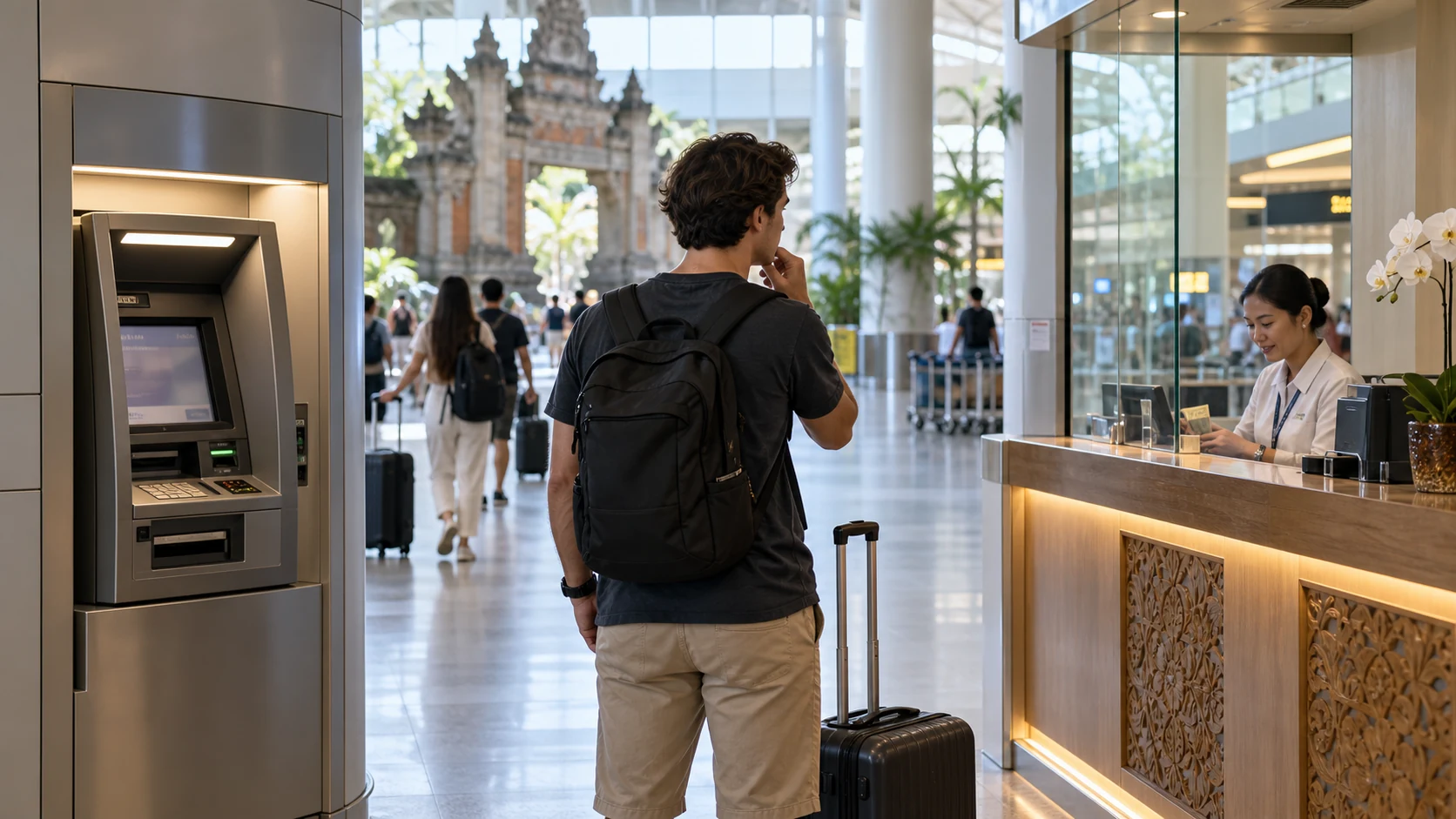
If you arrive at Bali’s I Gusti Ngurah Rai International Airport (DPS) without Indonesian rupiah, you can generally look for an airport ATM or currency exchange counter before continuing your journey. Official tourism information places currency exchange and ATMs for international passengers on the Level 1 arrivals area, and the airport’s service directory lists money changer operators serving international arrivals. However, the exact outlet, operating hours, fees and availability can change, so check the current airport signs and the terms shown at the machine or counter before proceeding.
The practical goal is to have enough of the local currency for any immediate expense that cannot be paid by card, while avoiding an unnecessary large withdrawal or exchange. If your transport is already arranged, confirm how the fare will be settled before you leave the terminal. A pre-booked airport transfer in Bali can reduce uncertainty at the end of a flight because you can clarify the payment arrangement with the provider in advance.

Where to find cash at Bali Airport
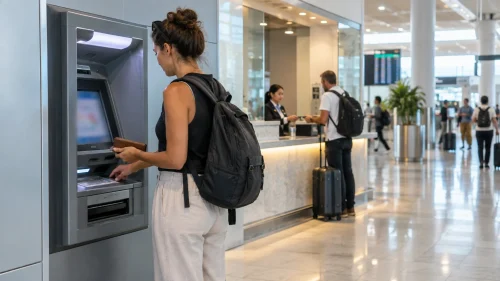
For international arrivals, official tourism information describes the arrivals area on Level 1, with baggage reclaim, customs and currency exchange, and notes that ATMs for international passengers are on the same level after customs. The airport’s service directory also lists money changer operators, including counters in the international arrivals area. These sources establish that such services are part of the airport offering, but they should not be treated as a guarantee that a particular counter or machine will be open when you land.
After collecting your bags, follow the public signs for arrivals, ATM/banks or money changer. If you cannot see a facility, ask an airport information desk or staff member rather than following an unsolicited offer from someone approaching you. Passengers arriving on domestic flights should check the signage and directory for their own terminal; do not assume that the international arrivals layout applies to every passenger.
Before joining a queue, decide whether you need cash immediately. If your hotel or driver has confirmed that a card or another agreed method is accepted, you may be able to postpone changing money until you have compared options outside the airport.
ATM basics: what to check before withdrawing
An ATM can be a convenient way to obtain Indonesian rupiah, but the total cost depends on both the local ATM operator and the terms of your own bank or card issuer. The amount offered, available denominations, withdrawal limits and fees can differ by machine and card.
A simple withdrawal routine
- Use a machine in a clearly identified, public airport location. Check for signs of tampering and avoid a machine that looks damaged or has an unusual attachment.
- Read every screen before confirming. Check the withdrawal amount, any operator fee and the exchange rate or conversion option presented.
- If the screen offers conversion into your home currency, compare the choice carefully. A conversion offered by the ATM may use a different rate from the rate applied by your card network or bank. Do not accept a conversion simply because it displays a familiar currency.
- Choose an amount based on immediate needs and your bank’s limits. A smaller first withdrawal can be sensible if you are unsure what payment methods your next stop accepts.
- Take your card, cash and receipt if you need it, and put them away before moving from the machine.
Your own bank may charge an overseas use fee, a foreign currency transaction fee or interest on certain card transactions. Check its current terms before travelling. If a withdrawal fails, do not repeatedly retry without checking whether your account was charged; use the bank’s official support channel if the transaction status is unclear.
Money changer considerations
A Bali airport money changer can be useful when you arrive with cash in another currency and need rupiah. Before handing over notes, compare the displayed rate and any commission or service charge, and calculate the amount you expect to receive. Ask the staff to confirm the final amount before the transaction is completed.
Do not choose a counter solely because a board advertises a rate. Check whether the rate applies to your currency and transaction size, whether any fee is deducted, and whether the notes you present are accepted. Rates and terms can vary between providers and change over time; this guide does not recommend a specific rate or claim that airport exchange is always better or worse than exchange elsewhere.
Count the rupiah at the counter before leaving, keep the receipt, and make sure you receive the amount agreed. If the displayed information is unclear or you feel pressured to proceed, pause and use another provider or wait until you can compare options.
Card or cash: what should you prepare?
Cards are useful for many travel payments, but acceptance varies by business, payment terminal and transaction. Cash remains practical for small purchases and situations where a card terminal is unavailable or a provider requests cash. The right balance depends on your itinerary and what your accommodation and transport providers have confirmed.
| Payment method | Useful for | Check before relying on it |
| Cash in rupiah | Small purchases and providers that require cash | Keep notes secure; confirm the amount and whether change is available. |
| Debit card / ATM | Obtaining local cash and eligible card payments | Overseas fees, withdrawal limits, card network and ATM availability. |
| Credit or travel card | Businesses that accept the card and transactions permitted by your issuer | Acceptance, foreign transaction fees, conversion choice and any cash advance rules. |
Carry a backup payment method separately from your main card, and avoid keeping all your cash and cards in one wallet. Before departure, notify your bank if required by its policies and make sure you can access its support and card locking functions while overseas.
Transport payment: settle the details before leaving
Your first payment decision may be the journey from DPS to your accommodation. Do not assume every taxi, ride hailing service, hotel driver or private transfer accepts the same payment methods. Confirm the price basis, currency, payment timing and accepted methods directly with the provider before you travel or before entering the vehicle.
If you are comparing options, review the service details and Bali airport transfer costs alongside the payment terms for the specific service you intend to use. A quoted transfer price does not, by itself, confirm whether payment is due in advance, on arrival, in cash or by card.
For a pre-arranged pickup, keep the booking confirmation accessible offline or in a saved message. Check the agreed meeting instructions, contact method and payment arrangement. If you need to withdraw cash first, allow time to find a working ATM and complete the transaction; do not assume that a driver can wait indefinitely unless the provider has explicitly confirmed its waiting policy.
If you have not arranged transport, use clearly identified official airport information and transport facilities. Confirm the fare and payment method before starting the journey, and avoid accepting unsolicited transport offers from people whose service and terms you cannot verify.
Safety checklist before you leave DPS
- Withdraw or exchange only what you reasonably need for immediate expenses.
- Check the amount, fees and conversion option on the ATM screen before authorising a transaction.
- At a money changer, confirm the rate, any charge and final rupiah amount before handing over your money.
- Count cash at the counter and keep the receipt until you have checked the transaction.
- Keep your PIN covered, never share it, and do not accept help from strangers at an ATM.
- Put cash, cards and your passport away securely before walking through the terminal or pickup area.
- Keep a backup card or payment option separate from your main wallet.
- Confirm transport payment terms, pickup instructions and the provider’s contact details.
- If a card is retained, lost or used unexpectedly, contact your bank through its official number or app as soon as possible.
Be payment ready, not over prepared
The Bali airport ATM and money exchange decision is mainly about covering your first practical expenses without rushing into an unclear transaction. Check the current airport signs, compare the terms shown by the ATM or counter, and keep a secure backup payment method. Most importantly, confirm how you will pay for transport before leaving the terminal. If you have booked a transfer, review the provider’s instructions and payment terms in advance so you can focus on reaching your accommodation.
Planning your arrival? Review BaliTouristic’s pre-booked airport transfer in Bali information and confirm the details of your own booking before travelling.

Frequently asked questions
Are there ATMs at Bali Airport?
Yes. Official tourism information places ATMs for international passengers on the Level 1 arrivals area, after customs. Exact machine locations and availability can change, so follow current terminal signs or ask airport staff.
Can I exchange foreign currency at DPS?
The airport’s service directory lists money changer operators, including counters at international arrivals. Check the counter’s current rate, accepted currency and any charges before exchanging.
Should I withdraw cash or exchange notes?
It depends on your card’s overseas fees, the ATM’s displayed terms, the currency you carry and the exchange counter’s offer. Compare the actual amount you will receive rather than assuming one method is always cheaper.
Do I need rupiah to pay for my airport transfer?
It depends on the provider and your booking. Some transfers are settled in advance and others on arrival, so check your booking confirmation or ask the provider before you land whether payment is due in cash, by card or online, and in which currency.
How much cash should I get at the airport?
There is no single amount that suits every traveller. Start with the immediate expenses you expect and the payments your accommodation and transport providers require. Avoid withdrawing more than you need until you understand your options.
What should I do if an ATM does not dispense cash?
Keep any receipt or transaction details, check your account through your bank’s official app or support channel, and contact the bank if a debit appears without cash being dispensed. Avoid repeated attempts until you understand the transaction status.