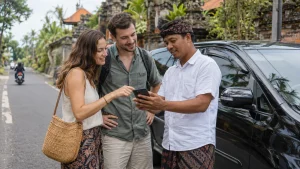

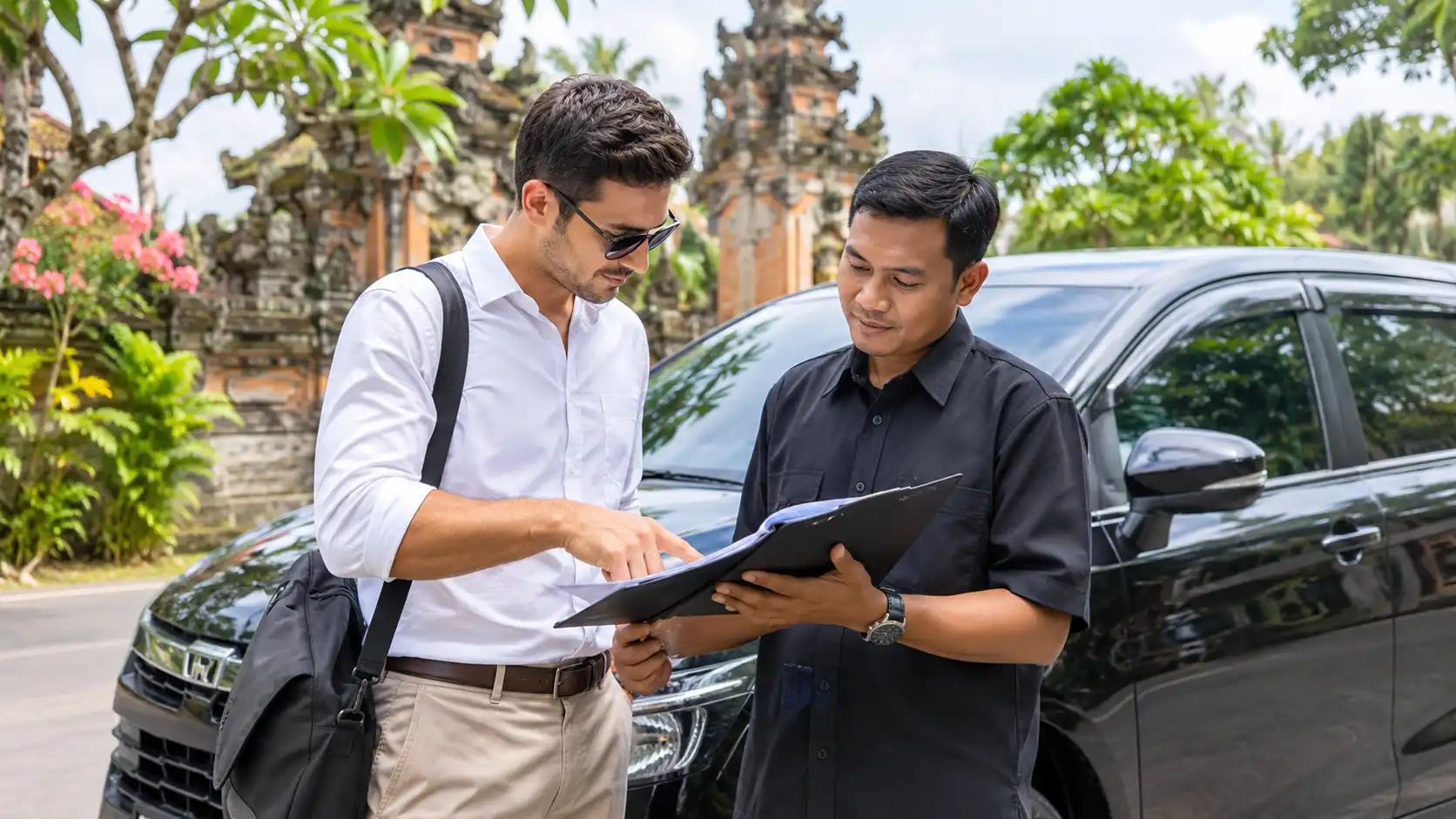
A Bali car with driver for business travellers can make a working day easier to coordinate by keeping transport, waiting time and several meeting stops within one planned arrangement. It can be a practical option when you need to move between a hotel, office, conference venue, restaurant or site visit without arranging a new ride at every stop. The important details are the schedule, vehicle capacity, waiting arrangements, communication and payment documentation, not an assumption that every private driver service operates as a corporate chauffeur service.
If you are comparing private transport for a work trip, start by mapping your appointments and asking the operator to confirm the vehicle, service hours, route plan and full cost in writing. Bali car rental with driver can be a useful starting point for understanding the general service arrangement before you confirm business-specific requirements.

Use cases: when a private car and driver makes sense
A pre-arranged vehicle is most useful when the day involves several destinations, equipment or documents to carry, or appointments that are difficult to coordinate around separate ride bookings. It gives you one transport contact and a clearer plan for the vehicle’s movements during the agreed service period. It does not remove Bali traffic or guarantee that every journey will run to the minute.
Multiple meetings in different areas
A schedule might include a morning meeting in Denpasar, a working lunch in Sanur and an afternoon appointment in Nusa Dua. In this situation, ask the operator to review the full sequence rather than quote each leg in isolation. Confirm whether the driver remains with the vehicle, where waiting is permitted and what happens if a meeting runs late.
Site visits and business errands
A private vehicle can also help with visits to project locations, suppliers, venues or retail sites. Share the exact addresses or map pins in advance, especially if a destination is inside a complex, on a narrow road or has a separate visitor entrance.
Addresses in Bali can be hard to follow, especially for offices inside complexes, villas or venues down narrow lanes. Besides the map pin, share the venue name as it is commonly known locally and a contact number at the venue who can direct the driver at the entrance. If you need to carry samples, presentation materials or other equipment, describe their size and quantity so the operator can assess the luggage area.
Small teams travelling together
For colleagues attending the same meetings, travelling in one vehicle may simplify coordination. Check the number of passengers and bags together: a vehicle with enough seats may not have enough usable cargo space once everyone boards. If colleagues have different hotel pickups or separate schedules, compare the extra time and cost of collecting everyone with the option of arranging separate transport.
Build a realistic schedule and allow a buffer
The most important planning step for business transport in Bali is to avoid treating map estimates as guaranteed arrival times. Travel time can change with traffic, weather, roadworks, local ceremonies, pickup location and the number of stops. A journey that looks straightforward on a map may take longer during busy periods, and a multi-stop itinerary adds uncertainty at every handover.
Give the operator your appointment times—not just the time you hope to leave—and ask for a suggested departure plan. Build a buffer before important meetings, presentations or events. For a high priority appointment, consider arriving in the area early and using a nearby cafe, hotel lobby or other suitable place to prepare, rather than scheduling the vehicle to arrive at the venue at the exact start time.
For a day with several meetings, allow time for:
- boarding and loading bags or presentation materials at the first pickup;
- traffic delays and finding the correct entrance or drop-off point;
- parking, security checks or visitor registration at each venue;
- meetings that overrun and the time needed to reach the next pickup point; and
- a final return journey that may coincide with a busier traffic period.
Religious ceremonies are part of everyday life in Bali, and processions can slow or briefly stop traffic, especially near temples and in village areas. Many ceremony dates follow Bali’s own calendars, so they shift from year to year. If your route passes through a village area on a busy day, ask the operator whether an alternative road is realistic, and allow extra time before fixed appointments.
Send the operator the itinerary in chronological order and identify any appointment that cannot be moved. Ask whether the quoted service period includes waiting between stops, and what charges or arrangements apply if the day runs beyond the agreed finish time. Do not assume that a driver can extend the booking automatically; confirm the process and any additional cost before the day.
Choose a vehicle for the workday, not the label
The right vehicle depends on passenger numbers, luggage, equipment, journey length and the impression appropriate to your meetings. Terms such as “executive”, “premium” or “corporate” can mean different things between operators, so ask for the actual vehicle category or model being offered and confirm what is included. A label alone does not establish a particular specification, comfort feature or service standard.
Solo traveller or one colleague
A standard private car may be sufficient for one or two people travelling with light bags. If you will be working on a laptop between appointments, ask about cabin space and whether the seating arrangement is suitable. Do not assume that a vehicle has a desk, charging ports or other business amenities unless these are explicitly confirmed.
Small team or additional equipment
A larger MPV or passenger van may be more suitable for a team, but compare passenger capacity with the space remaining for luggage, product samples or event materials. Share approximate bag dimensions or photographs if the items are unusually bulky. If the group needs to arrive together, confirm that everyone and all equipment can travel in the same vehicle.
Before confirming, ask for a written summary of the vehicle category, passenger capacity, luggage allowance, pickup details and any agreed special requirements. If the exact vehicle matters, clarify whether the operator is confirming a specific model or only a vehicle class, and what happens if a substitution is needed.
Connectivity, confidentiality and privacy expectations
A private vehicle can provide a more controlled setting than changing between public transport options, but it should not be treated as a guaranteed confidential meeting room or mobile office. Avoid discussing sensitive commercial information within hearing distance of others unless you are comfortable with the setting. For confidential calls, use headphones where appropriate and consider taking the call from a private location instead.
Mobile coverage and data performance vary by area, network and building. Do not assume that the vehicle includes Wi-Fi, a hotspot, charging cables or a power supply. If you need to work while travelling, ask the operator whether any connectivity or charging facilities are available and bring your own mobile data and power bank as a backup.
You can also make the journey easier by preparing offline copies of meeting addresses, contact details and essential documents. Share only the information the driver needs to complete the transport arrangement. If you have privacy requirements related to passenger names, itinerary details, invoices or company information, ask the operator how those details are collected, used and retained before sending them.
Receipts, invoices and expense records
Business travellers may need transport documents for reimbursement or company accounting. Do not assume that every driver or booking channel can issue a tax invoice, itemised receipt or document that meets your employer’s requirements. Confirm the available documentation before paying, especially if the booking is being made on behalf of a company.
Ask these questions in advance:
- Will you receive a receipt, invoice or booking confirmation after payment?
- Can the document show the service date, amount, currency and payment method?
- Can the company name or billing details be included, if required?
- Will any deposit and balance payments be recorded separately?
- What payment methods are accepted, and are any bank or card fees additional?
Keep the booking confirmation, payment evidence and any final receipt together. Check that the amount and currency match what was agreed. If your employer requires a specific invoice format or tax information, provide those requirements before booking, so the operator can confirm whether it can meet them. Do not rely on verbal assurance when documentation is essential for reimbursement.
Booking information to prepare before you contact an operator
A clear brief helps the operator assess whether the requested day is practical and provide a more useful quotation. Include:
- the date, preferred pickup time and expected finish time;
- the pickup address and every meeting or stop, in the correct order;
- the number of passengers and the number, size and type of bags or equipment;
- any fixed appointment times, access instructions or venue contact details;
- whether the driver is expected to wait, return later or move between stops;
- your preferred vehicle category and any specific requirements that matter;
- the company or traveller name for the booking and required payment documents; and
- the preferred contact method for schedule changes on the day.
When comparing options, read the service period, waiting policy, included distance or area (if any), overtime terms, cancellation conditions and payment schedule. Ask what is excluded as well as what is included. For a broader explanation of the booking process and the details worth confirming, see our guide on how to arrange a private driver in Bali. Use the information there as general planning guidance, then confirm the terms that apply to your specific business itinerary.
Bali Touristic can be contacted to discuss a private transport arrangement for a work itinerary. Share the complete schedule and documentation requirements so the team can confirm what can be provided before you make a booking. Availability, inclusions, operating hours, payment methods and invoice arrangements should be confirmed for your dates.
Questions to confirm before the day
Before paying a deposit or finalising the booking, request written confirmation of the following:
- the agreed pickup time, meeting point and end time;
- the vehicle category, passenger capacity and luggage space;
- the full price, currency, deposit, balance due date and any possible extra charges;
- the waiting and overtime arrangements if meetings run late;
- the cancellation or amendment policy;
- the driver contact and the process for communicating schedule changes; and
- the type of receipt or invoice that can be issued.
A short written confirmation reduces the risk of different expectations on the day. Keep a copy accessible offline, and send any itinerary changes as soon as they are known.
Plan your Bali business transport before you book
A Bali car with driver for business travellers is best planned as a complete workday transport arrangement: a realistic route, enough time between appointments, a suitable vehicle, clear waiting terms and payment documentation agreed in advance. It can simplify movement between meetings, but it cannot remove traffic uncertainty or guarantee corporate amenities that have not been confirmed.
Before you book, send the operator your itinerary, passenger and luggage details, preferred vehicle category and receipt requirements. If you are planning business transport with Bali Touristic, contact the team with those details and ask for written confirmation of availability, inclusions, total cost and documentation for your travel dates.

FAQs
Is a private driver suitable for a full day of business meetings in Bali?
It can be suitable when the route, service hours, waiting arrangements and vehicle are agreed in advance. Share every stop and fixed appointment time so the operator can assess the schedule.
Can the driver wait while I attend meetings?
Waiting may be possible, but it must be confirmed as part of the booking. Ask where the vehicle can wait, whether waiting time is included and what happens if a meeting runs beyond schedule.
Will the vehicle have Wi-Fi or charging facilities?
Do not assume so. Ask the operator about the specific vehicle and bring mobile data, a charging cable and a power bank as backups.
Can I get a receipt or company invoice?
Ask before booking. The available document, billing details and tax information can vary, so confirm that the operator can provide what your employer requires.
Which vehicle is best for a business traveller?
Choose according to passenger numbers, luggage, equipment and journey length. Confirm the actual vehicle category and usable luggage space rather than relying on labels such as “executive”.
How much travel time should I allow between meetings?
There is no single reliable allowance for every route. Ask for a route review and build a buffer around fixed appointments because traffic, weather, road conditions and venue access can affect arrival times.
 for car rental in Bali, featuring comfortable cars and SUVs ready for island tours, airport transfers, and flexible travel across Bali.](https://www.balitouristic.com/wp-content/uploads/2025/02/Hotel-1-300x200.png)