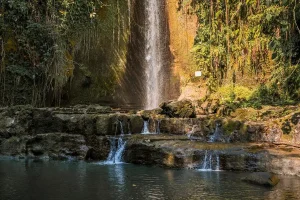


Tucked in the green highlands of Tegallalang, Gunung Kawi Sebatu Temple is one of Bali’s most peaceful sacred water temples. Known locally as Pura Tirta Dawa Gunung Kawi Sebatu, this ancient site is dedicated to the Hindu god Vishnu. Thousands of Balinese Hindus and curious travelers visit every year to take part in the melukat purification ritual, surrounded by natural spring pools, lotus ponds, and lush tropical gardens.
The temple sits within Sebatu Village in Gianyar Regency and dates back to the 11th century. Its blend of traditional Balinese architecture, sacred spring water, and calm atmosphere makes it a meaningful stop on any Bali temple tour. Whether you are here for spiritual cleansing or simply to absorb the beauty of the place, Gunung Kawi Sebatu delivers an experience that stays with you.


Gunung Kawi Sebatu Temple vs Gunung Kawi Tampaksiring: Are They the Same?
No, they are not the same. Many visitors confuse these two sites because they share similar names. However, they are entirely different temples with different purposes, locations, and atmospheres.
Gunung Kawi Sebatu (this article) is a sacred water temple in Sebatu Village, Tegallalang. It is known for its natural spring pools, koi fish ponds, and the melukat purification ritual. The grounds are flat, well-maintained, and easy to walk around.
Gunung Kawi Tampaksiring, on the other hand, is a rock-cut archaeological complex located in Tampaksiring. It features ancient stone shrines carved directly into cliffsides and requires descending hundreds of steep steps to reach the valley floor.
If you are looking for a holy water purification experience in a serene garden setting, Gunung Kawi Sebatu is the right destination. Make sure your driver or navigation app is set to the correct location before you go.
As a Sacred Temple for the Worship of Holy Water
Gunung Kawi Sebatu Temple carries a rich history rooted in Balinese Hinduism. The temple is dedicated to the god Vishnu and has been a place of purification and worship since the 11th century. It is also classified as a Dhang Kahyangan Temple, which means it is open to all Balinese Hindus for religious practice, including the melukat self-cleansing ritual.
According to local legend, the temple’s sacred spring was created by the sage Rsi Markandeya during a long spiritual journey through Bali. Traveling from Taro Village toward Mount Agung with hundreds of followers, the group grew exhausted and thirsty in the heat. Rsi Markandeya prayed for relief, and a holy spring appeared in the Pangkung Dawa valley. This spring became the source of the temple’s sacred water, which the Balinese call Tirta Dawa.
Today, the spring irrigates approximately 100 hectares of rice paddies across three traditional Balinese subak irrigation systems. The temple remains closely tied to the agricultural and spiritual life of Sebatu Village, where around 200 local families participate in maintaining the temple and its ceremonies.
Location and Getting to Gunung Kawi Sebatu Temple
Gunung Kawi Sebatu Temple is located in Banjar Sebatu, Sebatu Village, Tegallalang, Gianyar Regency. The temple sits along Pakudui Road and covers an area of approximately 5,000 square meters, surrounded by forest and natural water sources.
From Ngurah Rai International Airport, the drive takes around 1 hour and 30 minutes by car, covering about 56 km. From central Ubud, the journey is much shorter at roughly 30 minutes by car. The road passes through scenic rice terraces and hilly countryside, making the drive itself a pleasant part of the experience.
Upon arrival, visitors descend a well-maintained stone stairway into the temple grounds. The path is scenic and shaded, and the sound of flowing water greets you as you approach the site.
The Uniqueness of the Architecture and Environment at Gunung Kawi Sebatu Temple
Traditional Balinese architecture
Gunung Kawi Sebatu Temple showcases classic Balinese temple design with intricate stone carvings and a layout that blends naturally into the surrounding landscape. The temple is divided into three main courtyards: Jaba Pura (outer), Jaba Tengah (middle), and Jeroan (inner), reflecting the spiritual hierarchy common to Balinese Hindu architecture.
One of the most striking features is a large, crystal-clear sacred pool at the center of the grounds. Surrounded by tropical gardens and ancient shrines, the pool creates a meditative atmosphere that encourages quiet reflection.
Sacred pool and purification ritual
The heart of Gunung Kawi Sebatu is its sacred spring-fed pool, believed to carry powerful spiritual cleansing properties. Balinese Hindus visit regularly to bathe their faces and bodies in the holy water as part of the melukat ritual. The pool is adorned with aquatic plants and constantly replenished by natural mountain springs, giving the water a purity and clarity that adds to the spiritual experience.
Spacious and natural setting
Covering around 5,000 square meters, the temple grounds are embraced by forest, cliffs, and flowing spring water. The layout is open and easy to navigate, making it suitable for visitors of all ages, including families and senior travelers. Compared to busier temples like Tirta Empul, Gunung Kawi Sebatu feels quieter and more intimate, especially in the early morning hours.
Koi fish pond
Near the entrance, visitors will find a serene koi fish pond that adds a peaceful, garden-like quality to the complex. Fish food is available on-site, and feeding the koi is a relaxing activity that appeals to both children and adults. While visitors are welcome to interact with the fish, taking them is strictly prohibited.
Attractions and Activities at Gunung Kawi Sebatu Temple
Visiting Gunung Kawi Sebatu Temple offers a mix of spiritual, cultural, and natural experiences. The temple’s calm setting makes it ideal for both mindful exploration and peaceful relaxation.
Spiritual peace and soothing nature
The combination of flowing spring water, lush greenery, and sacred architecture creates a naturally calming environment at Gunung Kawi Sebatu. Many visitors come simply to sit, breathe, and let the atmosphere wash over them. The temple offers a genuine sense of stillness that is increasingly rare in Bali’s more tourist-heavy areas.
Religious ceremonies and Balinese Hindu traditions
Throughout the year, the temple hosts important Hindu ceremonies, including the annual Tawur Agung ritual. During these events, Balinese Hindus gather to present offerings of flowers and incense, accompanied by prayers and traditional performances. Visitors who attend respectfully can witness these ceremonies firsthand and gain a deeper appreciation of Balinese spiritual life.
How to Participate in the Melukat Ritual at Gunung Kawi Sebatu Temple
The melukat ritual is a traditional Balinese water purification ceremony believed to cleanse the body, mind, and soul of negative energy. Gunung Kawi Sebatu is one of the most accessible and peaceful places in Bali to experience it.
Here is what to expect when you participate:
- Arrive and purchase your entrance ticket. The fee includes sarong rental, which you will wear throughout your visit.
- Explore the temple grounds. Take time to walk through the courtyards, observe the koi pond, and absorb the atmosphere before the ritual.
- Change into your bathing attire. If you plan to do the full melukat, bring a change of clothes or wear swimwear underneath your sarong. A changing area is available on-site.
- Enter the sacred pool area. You will stand under or near the spring-fed fountains and allow the holy water to flow over you while you pray or reflect.
- Follow local guidance. A local guide or priest can lead you through the spiritual steps of the ritual if you prefer a more structured experience. Guided melukat sessions are available and can be arranged at the temple or booked in advance.
Important notes: Women who are menstruating are traditionally asked not to enter the temple or participate in the melukat ceremony, in accordance with Balinese Hindu custom. This is a long-standing tradition, and signs at the entrance explain this in both English and Indonesian. Additionally, no soap or shampoo should be used in the sacred pool, as this is a spiritual ritual rather than a bathing facility.
Interesting Facts About Gunung Kawi Sebatu Temple
A religious site full of history
Gunung Kawi Sebatu Temple is believed to date back to the 11th century, during the reign of King Anak Wungsu. The temple was constructed as a place of worship dedicated to Vishnu, and its legacy as a center of spiritual life in Tegallalang has remained unbroken for nearly a thousand years. This long-standing history adds depth and significance to every visit.
A temple surrounded by mesmerizing nature
Nestled among mountains, terraced rice fields, and lush tropical forest, Gunung Kawi Sebatu offers a natural backdrop that feels genuinely untouched. The cool highland climate and the sound of running water from natural springs make the setting refreshing and restorative. For travelers seeking calm away from busier tourist spots, this temple is a standout destination.
Facilities, Ticket Prices, and Operating Hours at Gunung Kawi Sebatu Temple
Facilities
The temple provides clean restrooms, a spacious parking area, food and beverage stalls, and kiosks selling Balinese souvenirs. Sarong and sash rental is included with the entrance ticket, and a changing area is available for visitors doing the melukat ritual.
Ticket price
The entrance fee is approximately IDR 50,000 for adults and includes sarong rental. Additional parking fees apply, around IDR 5,000 for cars and IDR 10,000 for motorcycles. Prices are subject to change, so it is a good idea to carry sufficient cash when visiting.
Operating hours
Gunung Kawi Sebatu Temple is open daily from 08:00 AM to 06:00 PM (WITA). Early morning visits are highly recommended for a quieter and cooler experience. Note that operating hours may change during major Hindu religious holidays.
Visiting Tips
A few practical tips will help you make the most of your time at Gunung Kawi Sebatu Temple.
- Wear modest clothing. A sarong and sash are required to enter the sacred areas and are included with your ticket.
- Visit early in the morning. Arriving before 9:00 AM gives you the best chance of a quiet, crowd-free experience.
- Bring a change of clothes. If you plan to join the melukat ritual, pack a dry set of clothes or wear swimwear underneath.
- Bring drinking water and a hat. Bali’s highland weather can still be warm, and staying hydrated will keep you comfortable throughout the visit.
- Respect ongoing ceremonies. If a religious ritual is in progress, observe quietly and ask before taking photographs.
- Carry cash. Entrance fees, parking, and food stalls are all cash-based, so bring sufficient local currency.
Nearby Attractions to Combine with Your Visit
Gunung Kawi Sebatu Temple is ideally situated for a full day trip through the Tegallalang and Tampaksiring area. Because several excellent attractions are within easy driving distance, it is well worth combining your visit with some of the sites listed below. The most comfortable way to explore the area is by booking a Bali car rental with driver, which lets you move between spots at your own pace without worrying about navigation or parking.
- Tirta Empul Temple (approx. 15 minutes by car). Bali’s most famous purification temple, known for its long sacred spring pools. It tends to be busier than Gunung Kawi Sebatu, so visiting one in the morning and one in the afternoon works well.
- Tegallalang Rice Terrace (approx. 10 minutes by car). Bali’s most iconic terraced rice fields, with stunning views across the valley. A great stop for photos and a short walk.
- Pura Mengening (approx. 4 km). A quieter water temple near Tirta Empul with a more local, intimate feel. Ideal for visitors who want another melukat experience away from the crowds.
- Ulu Petanu Waterfall (approx. 2 km). A hidden waterfall with an easy, short walk down. A refreshing nature stop to pair with your temple visit.
- Bali Pulina Coffee Plantation (approx. 3 km). A popular coffee spot with panoramic rice terrace views. A relaxed way to end the day.
Plan a peaceful and meaningful visit to Gunung Kawi Sebatu Temple with ease by exploring Bali’s spiritual and cultural highlights through a customized Bali tour package tailored to your travel preferences.

Frequently Asked Questions About Gunung Kawi Sebatu Temple
What is special about Gunung Kawi Sebatu Temple?
Gunung Kawi Sebatu Temple is known for its natural spring pools, sacred koi ponds, and tranquil garden setting. It is one of the few places in Bali where visitors can experience the melukat purification ritual in a calm, uncrowded environment.
Is Gunung Kawi Sebatu Temple the same as Gunung Kawi in Tampaksiring?
No. These are two completely different temples. Gunung Kawi Sebatu is a water temple in Tegallalang used for purification rituals. Gunung Kawi Tampaksiring is an ancient rock-cut shrine complex carved into a clifftop in Tampaksiring. Make sure to set the correct location when using navigation apps.
Can tourists participate in the melukat purification ritual?
Yes. Visitors are welcome to participate in the melukat ritual at Gunung Kawi Sebatu. You can join independently or arrange a guided session with a local guide or priest for a more structured spiritual experience.
What should visitors bring for the melukat ritual?
Bring a change of clothes or swimwear to wear underneath your sarong. The entrance ticket includes sarong rental. Avoid bringing soap or shampoo, as the sacred pool is for spiritual cleansing only.
Are women on their period allowed to enter the temple?
According to Balinese Hindu tradition, women who are menstruating are respectfully asked not to enter the temple grounds or participate in the melukat ceremony. Signs at the entrance explain this custom in English and Indonesian.
How far is Gunung Kawi Sebatu Temple from Ubud?
The temple is approximately 12 km from central Ubud and can be reached in around 30 minutes by car, depending on traffic. It is a convenient day trip stop when combined with other nearby attractions in the Tegallalang area.
What should visitors wear when entering?
Modest attire is required. A sarong and sash must be worn inside the temple area. Both are included with your entrance ticket. Comfortable sandals or closed shoes are recommended, as you will be walking on stone paths around water areas.
When is the best time to visit?
Early morning, between 8:00 AM and 10:00 AM, is the best time to visit Gunung Kawi Sebatu Temple. The grounds are quieter, the air is cooler, and you are less likely to encounter large tour groups. Late afternoon is also pleasant once the midday heat has passed.
What other temples are nearby?
Tirta Empul Temple and Pura Mengening are both within 15 minutes by car. Gunung Kawi Tampaksiring is also close by. Combining two or three of these sites in one day is a popular option among visitors exploring Bali’s sacred water temples.