


How to Join a Real Balinese Ceremony Respectfully
Balinese ceremony and Balinese dancing are central to the cultural and spiritual life of Bali, attracting thousands of tourists eager to witness and sometimes participate in these vibrant traditions. Whether you are exploring Bali for the first time or returning for another Bali touristic experience, understanding how to respectfully join a real Balinese ceremony is essential to truly appreciate the depth of Balinese culture. From intricate Balinese ceremony rituals to the captivating movements of Balinese dancing, this guide will walk you through the essential tips, customs, and etiquette you need to know.

Introduction: The Heart of Balinese Ceremony and Balinese Dancing
The term Balinese ceremony encompasses a wide range of religious and cultural rituals held in Bali, from temple festivals to rites of passage. These ceremonies often feature traditional Balinese dancing, which is not only an art form but also a spiritual offering. To fully experience these events, one must understand the significance of the ceremony and the role that Balinese dancing plays within it. Visitors interested in Bali touristic adventures often turn to platforms like TripAdvisor to find authentic cultural experiences that include witnessing or respectfully joining Balinese ceremonies and enjoying mesmerizing Balinese dancing performances.
Understanding the Significance of a Balinese Ceremony
Balinese ceremonies are deeply rooted in Hindu beliefs and customs unique to Bali. These events mark important occasions such as temple anniversaries, weddings, cremations, and full moon celebrations. Each ceremony has a purpose, often connected to balancing the spiritual forces of the universe.
- Key elements of a Balinese ceremony: offerings, prayers, music, and dance.
- The role of community: ceremonies are communal events involving extended family and neighbors.
- Sacred spaces: ceremonies usually take place in temples or family compounds, which are considered holy ground.
Why Respect Matters When Joining a Balinese Ceremony
Joining a Balinese ceremony respectfully means acknowledging its sacredness and the spiritual beliefs involved. Visitors should remember that these are not tourist shows but genuine religious events.
- Respect local customs: dress modestly, usually wearing a sarong and sash.
- Seek permission: always ask the local host or temple priest before joining.
- Observe quietly: avoid interrupting prayers or dances.
Dress Code and Behavior: What to Wear and How to Act
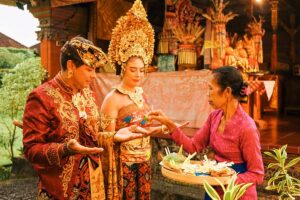
Proper attire is crucial when attending a Balinese ceremony. Traditional Balinese clothing includes:
- Sarong and sash (kamen and selendang): mandatory for both men and women.
- Avoid revealing clothes: shoulders and knees should be covered.
- Remove footwear: often required before entering temple grounds.
Behavioral etiquette includes:
- No loud talking or disruptive behavior.
- Avoid touching sacred objects or offerings.
- Follow the crowd’s lead during ritual movements and prayer gestures.
Balinese Dancing: A Key Part of the Ceremony
Balinese dancing is an essential element of many ceremonies, serving both as a form of storytelling and spiritual expression. These dances are highly symbolic, often depicting stories from Hindu epics such as the Ramayana.
- Types of Balinese dances you might see: Legong, Barong, Kecak, and Topeng.
- Role of the dancers: not just performers but spiritual intermediaries.
- Interaction with the audience: usually limited to observation, though in some ceremonies, guests may be invited to join simple dance steps.
How to Participate Without Offending
If invited to participate in a Balinese ceremony, here are some tips to do so respectfully:
- Follow the host’s instructions carefully.
- Avoid taking photos during sacred moments unless permitted.
- Join in with reverence, not playfulness.
- Learn basic dance movements or prayer gestures beforehand if possible.
The Spiritual Meaning Behind Offerings and Rituals
In every Balinese ceremony, offerings (called canang sari) play a vital role. These small baskets made from palm leaves filled with flowers, rice, and incense are offerings to the gods and spirits.
- Offerings symbolize gratitude and balance.
- Visitors may be offered a small canang sari to place themselves, which should be done respectfully.
Tips for Tourists: Balinese Ceremony and Balinese Dancing Etiquette
- Book a local guide: someone knowledgeable can explain the ceremony’s significance.
- Respect privacy: avoid intruding into family ceremonies without invitation.
- Be patient: ceremonies can be lengthy; take the time to observe and learn.
- Use TripAdvisor or local Bali touristic services to find authentic experiences.
Types of Balinese Ceremonies You Might Encounter
Detail various ceremonies such as:
- Odalan (Temple Anniversary Ceremony)
- Ngaben (Balinese Cremation)
- Melasti (Purification Ceremony)
- Galungan and Kuningan (Victory of Good over Evil Celebrations)
- Nyepi (Balinese Day of Silence)
Explain the significance and what visitors should expect during these ceremonies.
Common Balinese Ceremony Rituals and Their Meanings
Explore the core rituals like:
- The preparation of offerings (canang sari)
- The procession to the temple
- The chanting and music by the gamelan orchestra
- The symbolic gestures used during prayer and dance
How Balinese Dancing Enhances the Ceremony
Discuss how Balinese dancing isn’t just entertainment but serves spiritual and narrative purposes:
- Dance as a form of prayer and offering
- Different dances for different ceremonies
- The connection between dance movements and Balinese mythology
Photography Etiquette During Balinese Ceremonies
Important do’s and don’ts regarding:
- Asking permission before taking photos
- Respecting moments that are private or sacred
- Using cameras discreetly and not disrupting rituals
Balinese Ceremony Music: The Role of Gamelan
Explain the significance of gamelan music, which accompanies most ceremonies and dances, creating the atmosphere and guiding the rhythm of the rituals.
Local Beliefs About Spirit and Ceremony Participation
Insight into Balinese Hindu beliefs about spirits and how participating in ceremonies can be seen as entering a sacred spiritual space. What this means for tourists joining in.
Practical Tips for Visitors
- Best times of year to witness ceremonies
- How to find ceremonies open to visitors
- Importance of hiring a local guide
- Dos and don’ts of ceremony participation for foreign guests
Impact of Tourism on Balinese Ceremony Traditions
Discuss how tourism affects the authenticity of ceremonies and how visitors can contribute to preserving cultural integrity.
Where to Watch or Join Authentic Balinese Dancing Performances
Mention some well-known locations or cultural centers in Bali where visitors can see or participate respectfully in Balinese dancing and ceremonies.
Conclusion: Experiencing Bali with Respect and Understanding
Joining a real Balinese ceremony is a unique opportunity to connect deeply with Balinese culture through the combination of sacred ritual and artistic expression like Balinese dancing. Approaching these ceremonies with respect for traditions, local customs, and spiritual significance ensures that your experience is meaningful and appreciated by the Balinese community. Whether you are a cultural enthusiast, a Bali touristic traveler, or someone seeking spiritual insight, the respectful participation in Balinese ceremonies offers an unforgettable glimpse into Bali’s rich heritage. (JS)