

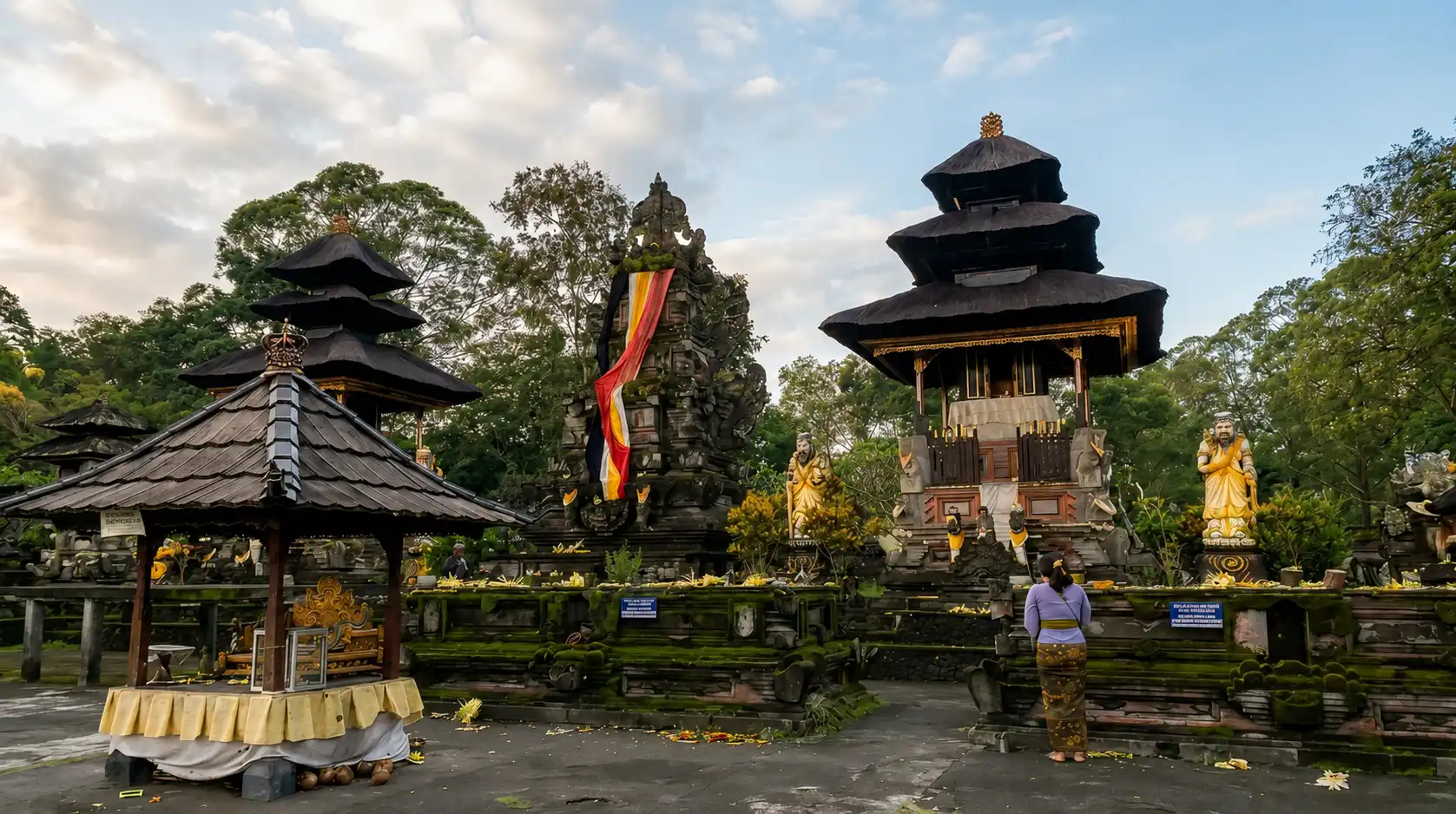
Jati Batur Temple stands on the western shore of Lake Batur, a sacred lakeshore complex in the Kintamani highlands where two spiritually significant temples share the same volcanic ground. The name “Jati” comes from the Balinese word pejati, meaning “to perform a duty with sincerity and proper ritual procedure” — a fitting name for a temple that anchors one of Bali’s most important island-wide Hindu ceremonies.
Together with the adjacent Segara Ulun Danu Batur Temple, this complex holds the status of Kahyangan Panyungsungan Jagat: a cosmic temple serving the whole island. Before major ceremonies such as Mahayu Bhatara, the sacred Kamandalu holy water must be invoked here first. The setting adds to its power — lush forest, volcanic ridgelines, and the calm expanse of Lake Batur frame a highland sanctuary unlike anywhere else in Bali.

Jati Batur Temple at a Glance
Both temples are open to respectful visitors, making this one of Bali’s most accessible highland sacred sites. There is no entrance fee, though donations are welcomed and a sarong is required to enter. Here is what to know before you visit.
Visitor Information
📍
Jl. Pendakian Gn. Batur, Batur Tengah, Kintamani, Bangli, Bali 80652. About 3 hours’ drive from Kuta.
🕐
Open daily. Best visited 7:00 AM – 11:00 AM for cooler highland temperatures and morning mist over the lake.
💰
No admission fee. Donations are welcomed. Sarong required (available to borrow at Segara Ulun Danu Batur).
🅿️
Available on-site. IDR 2,000 for motorcycles, IDR 5,000 for cars.
⏱️
1 to 2 hours, including time to explore both Pura Jati and Segara Ulun Danu Batur.
📸
Arrive early morning for dramatic lake mist. The floating Segara Ulun Danu Batur with Mount Batur behind it is the most photographed view in the complex.
History of Jati Batur Temple
Jati Batur Temple is one of the prominent Kahyangan Panyungsungan Jagat temples, dedicated to Ida Sang Hyang Widhi Wasa in the manifestation of Bhatara Hyang Gangga. This sacred temple serves as a site for invoking Kamandalu, the holy water that plays a vital role in Hindu rituals across Bali. The temple dates back to before the 16th century and was once overseen by Buddhist priests. Its guardianship was later transferred to Dang Hyang Nirartha, the revered Brahmana sage credited with reforming Balinese Hinduism. The temple’s origins are documented through two distinct sources: one recorded in the sacred chronicles of Tejakula, Buleleng, and another preserved through oral traditions within the local community.
Historical version according to the Book of History of the Construction of Temples in Bali
According to the book authored by Ketut Soebandi, Jati Batur Temple was constructed by Mpu Jayamaireng alongside his relatives, following the ancestral mandate. Mpu Jayamaireng is regarded as a key ancestor of the Pasek Kayu Selem community, which includes lineages such as Kayu Selem, Celagi, Tarunyan, and Kayuan.
Historical version based on Babad Kayu Selem
The Babad Kayu Selem, written in Isaka Warsa 1840 by Jero Mangku Ulun Suwi in Tejakula Village, Buleleng, narrates that the temple was established by Mpu Genijaya Kayu Ireng, a son of Hyang Kamareka. While the chronicle does not specify who resides in the temple, it states that the site is dedicated to ngelinggihang Ida Bhatara Bujangga Sakti — a deity revered for assisting in the completion of Hindu religious ceremonies, including rituals for the Balinese Mula community.
Before conducting significant religious ceremonies like Mahayu Bhatara, several essential preparatory steps must be undertaken. These include the invocation of the sacred water known as “Kamandalu” and the performance of the Widhi Widana ceremony, which involves worshiping Bhatara Gangga, who is enshrined in Jati Batur Temple.
Location of Jati Batur Temple
Jati Batur Temple is located in Bangli Regency, in Kintamani District, Batur Tengah Village. The complex sits directly on the western edge of Lake Batur, about 3 hours’ drive from Kuta through the winding roads of the Kintamani highlands. The full address is Jl. Pendakian Gn. Batur, Batur Tengah, Kec. Kintamani, Bangli, Bali 80652. There is no public transportation to this area, so a private car with driver is the practical choice for most visitors. The scenic highland drive through Kintamani offers beautiful views of volcanic ridges and terraced farmland along the way.
Segara Ulun Danu Batur near Jati Batur Temple
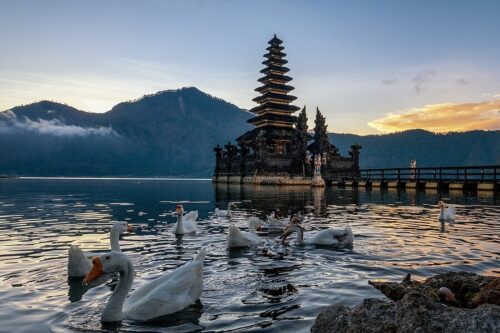
Right next to Jati Batur Temple, Pura Segara Ulun Danu Batur sits directly on the surface of Lake Batur, built on solid rock beneath the water and connected to shore by a small wooden bridge. The name “Segara” is Sanskrit for “ocean,” reflecting how Lake Batur is conceived in Balinese cosmology as an inner sea, the source from which water flows through underground channels to nourish the island’s rivers and rice fields. This temple is the waterside shrine of Pura Jati, dedicated to Dewi Danu, the goddess of the lake.
The visual centerpiece is the 11-tiered meru tower, one of the highest tiers reserved for only the most sacred shrines in Bali. Its reflection in the lake, framed by Mount Batur in the background, makes this one of the most photographed highland scenes on the island. As a symbol of respect to Dewi Danu, the temple is accessed via a small wooden bridge over the lake, creating a mesmerizing atmosphere that draws visitors and worshippers alike.
History of Segara Ulun Danu Batur
Segara Ulun Danu Batur was established in 1917 on the western slope of Mount Batur, during the time of Empu Kuturan. The temple faced significant challenges when Mount Batur erupted, causing widespread destruction to the temple grounds — the eruption left only the main pelinggih standing. In 1926, another eruption further damaged the temple structures, though the pelinggih again remained intact. To prevent future destruction, the local community relocated the entire complex to its current position on the lake, where it stands today as one of Bali’s most recognizable spiritual and scenic destinations. The base of Segara Ulun Danu Batur was constructed using black lava stones from Mount Batur’s own eruptions — a quiet testament to Bali’s enduring relationship with volcanic force.
Sacred Ceremonies at Jati Batur Temple
Jati Batur Temple remains an active center of Balinese Hindu ceremony throughout the year. Priests and devotees regularly gather here to invoke tirta (holy water) for purification rites preceding major ceremonies. The water is believed to ensure fertile growth and protect fields from pests, connecting ritual practice directly to agricultural life across the island.
During the Pakelem di Danu ceremony, members of subaks (traditional Balinese irrigation cooperatives) from a wide area bring offerings to the lake goddess. Every five years, this ceremony includes the offering of a water buffalo. Before major events such as Mahayu Bhatara, devotees visit Pura Jati to request the sacred Kamandalu water and perform the Widhi Widana ceremony in honor of Bhatara Ganga. The biannual Ngusaba Melasih Karo ceremony brings the gamelan orchestra and sacred objects of Pura Ulun Danu Batur here for several days of ceremony at the lakeside complex.
Historically, Pura Jati also played the role of announcing the beginning of the new Saka year, linking it to agricultural cycles and fertility rituals throughout northern Bali — a function that underlines how deeply this temple is woven into the rhythm of Balinese life.
What to Experience When Visiting Jati Batur Temple
Jati Batur Temple and Segara Ulun Danu Batur offer visitors a rare combination of spiritual depth and natural spectacle. Three experiences make this highland complex stand out:
- Temple views: The architectural beauty of both temples can be experienced in a single visit. The layered courtyards of Pura Jati and its carved split gate (candi bentar) convey the sacred hierarchy of Balinese temple design. Entering the grounds carries a tangible sense of religious reverence and cultural depth.
- Lake Batur: The vast, shimmering surface of Lake Batur is one of the main draws. Early mornings often bring soft mist over the water, creating a scene that feels far removed from Bali’s tourist hubs. This view is especially recommended for nature and landscape lovers.
- Mount Batur: The active volcano creates a dramatic natural backdrop to the entire complex. The panoramic view of Mount Batur from within the temple grounds is one of the most memorable highland sights in Kintamani. Visitors who have completed a Mount Batur sunrise trek often stop here on the return journey.
Close to the complex, the dark lava fields formed during Mount Batur’s 1965–1974 eruptions are visible along the lakeshore. These jagged formations, sitting beside the cool water of the lake, are a striking reminder of the volcanic forces that have shaped both the landscape and the temple’s own history.
Visitor Tips and How to Get There
There is no public transportation to Jati Batur Temple, so a private car with driver is the practical choice for most visitors. The drive from Kuta takes approximately 3 hours through the scenic mountain roads of Kintamani. From Ubud, the journey is closer to 90 minutes. A local driver familiar with the area can also suggest nearby stops, including the Toya Bungkah hot springs a short distance along the lakeshore.
Dress modestly when visiting: shoulders and knees should be covered. Sarongs are required to enter the temple grounds and can be borrowed at Pura Segara Ulun Danu Batur. Parking is available on-site (IDR 2,000 for motorcycles, IDR 5,000 for cars). Small food stalls and toilet facilities are available near the parking area. The complex is not heavily crowded compared to Bali’s more commercial temple destinations, which makes for a more peaceful and authentic experience.
Nearby Attractions
The Kintamani area around Jati Batur Temple offers several worthwhile stops to combine on the same visit. Toya Bungkah hot springs sit just a short drive along the lakeshore and are a popular spot to relax after the temple visit. Further along the shore, Trunyan is a traditional Bali Aga village with its own lakeside shrines. The caldera rim viewpoint at Penelokan offers sweeping panoramas of the entire Batur caldera and is a natural stop on the drive up from Ubud. For visitors interested in adventure, the Mount Batur sunrise hike begins near the lake and is commonly paired with a temple stop on the same day.
Plan Your Visit to Jati Batur Temple
Jati Batur Temple and Segara Ulun Danu Batur form one of Bali’s most spiritually significant highland complexes, where centuries-old Hindu traditions meet the dramatic scenery of Lake Batur and Mount Batur. Whether you are drawn to the deep religious history, the sacred Kamandalu rituals, or the rare highland atmosphere, a visit here offers a genuinely meaningful cultural experience well beyond the typical Bali itinerary.
Our Bali tour packages include an experienced local guide who can explain the ceremonies and history of both temples, with comfortable private transportation from your hotel. If you prefer to explore at your own pace, our Bali car rental with driver service covers the Kintamani highlands with a flexible itinerary tailored to your schedule.
Frequently Asked Questions about Jati Batur Temple
What is the entrance fee for Jati Batur Temple?
There is no entrance fee to visit Jati Batur Temple or Segara Ulun Danu Batur. Donations are welcomed, and a sarong is required to enter the temple grounds. If you do not bring your own, sarongs are available to borrow at Pura Segara Ulun Danu Batur. Parking fees apply: IDR 2,000 for motorcycles and IDR 5,000 for cars.
Why is Jati Batur Temple considered one of Bali’s most sacred sites?
Jati Batur Temple holds the status of Kahyangan Panyungsungan Jagat, one of Bali’s cosmic temples serving the entire island. It is the site where the sacred Kamandalu water is invoked — holy water required before major Hindu ceremonies such as Mahayu Bhatara. This makes Jati Batur an indispensable part of Balinese ritual life, drawing priests and worshippers from across the island throughout the year.
Is Jati Batur Temple the same as Pura Ulun Danu Batur?
No. Pura Jati Batur and Pura Ulun Danu Batur are two different temples. Pura Ulun Danu Batur is the large mother temple of Lake Batur, located on the caldera rim above Penelokan. Jati Batur Temple sits directly on the lakeshore below, adjacent to the floating Segara Ulun Danu Batur shrine. Both temples are spiritually connected and dedicated to Dewi Danu, but they are separate complexes in different locations.
What should I wear when visiting Jati Batur Temple?
Visitors should dress modestly, covering the knees and shoulders. A sarong is required at the temple grounds. If you don’t bring one, they can be borrowed at Pura Segara Ulun Danu Batur. Following this dress code shows respect for the sacred nature of the site and ensures smooth entry for all visitors.
What is the best time to visit Jati Batur Temple?
The best time to visit is early morning, between 7:00 AM and 10:00 AM, when morning mist over Lake Batur creates a dramatic atmosphere and the highland temperature is still cool. The dry season from April to October generally offers clearer skies and better views of Mount Batur. Weekday mornings tend to be quieter, allowing for a more peaceful and spiritual experience.
How do I get to Jati Batur Temple from Kuta?
The drive from Kuta to Jati Batur Temple takes approximately 3 hours through the winding mountain roads of Kintamani. There is no public transportation to the area, so a private car with driver is the most convenient option. A knowledgeable local driver can also recommend nearby stops such as the Toya Bungkah hot springs and the Penelokan caldera viewpoint along the route.
Can I visit Jati Batur Temple with a private car and driver?
Yes. Jati Batur Temple is located in the Kintamani highlands of Bangli Regency — scenic but remote, with no public transport options. Booking a Bali car rental with driver is the most convenient way to visit this temple complex alongside nearby attractions, with a flexible itinerary tailored to your schedule.