


If you have already ticked off Kuta, Seminyak, and Ubud from your Bali bucket list, you might be wondering where to go next. That is where Pecatu comes in. Tucked into the southwestern tip of the Bukit Peninsula, this corner of Bali trades busy streets for dramatic limestone cliffs, quiet beaches, and one of the island’s most sacred temples. Whether you are chasing waves, hunting for a stunning sunset, or simply looking for a slower pace, the Pecatu Bali tourist attractions on this list cover some of the best things to do in Pecatu, enough to build a single day trip or a whole itinerary around.

Why Pecatu Deserves a Spot on Your Bali Itinerary
Pecatu sits on the western side of the Bukit Peninsula, a hilly stretch of land in southern Bali known for its limestone cliffs and secluded coves. Unlike the flatter, resort heavy Nusa Dua on the other side of the peninsula, Pecatu still feels a little raw, with narrow roads winding past warungs, surf camps, and cliffside villas.
The area has also become one of the most visited corners of Bali for international travelers. According to BPS-Statistics Indonesia Bali Province, Australian tourists made up roughly a quarter of all foreign arrivals to Bali in early to mid 2026, and many of them head straight for the surf breaks and beach clubs that Pecatu is known for.
Uluwatu Temple: Pecatu’s Most Iconic Landmark
Ask any local guide why Uluwatu Temple tops nearly every list of Pecatu attractions, and the answer usually comes down to setting. Few temples in Bali are built directly into a cliff edge with open ocean on three sides, and that combination of spiritual significance and dramatic scenery is what separates it from the countless smaller temples scattered across the island. It sits roughly 30 to 35 kilometers from Denpasar, which typically works out to a 1 to 1.5 hour drive depending on traffic, making it an easy half day trip rather than a full excursion on its own.
A sea temple perched 70 meters above the ocean
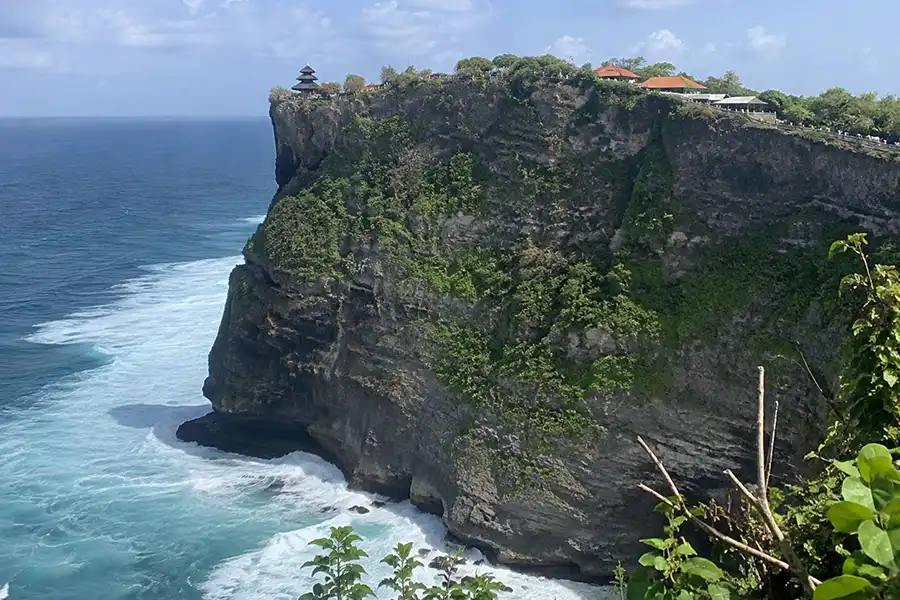
Known locally as Pura Luhur Uluwatu, the temple is one of Bali’s six key directional temples and dates back to the 11th century, when it is believed to have been built by the Javanese priest Empu Kuturan. What makes it stand apart is the setting itself, a shrine built right at the edge of a cliff roughly 70 meters above the Indian Ocean, so the views alone are worth the entrance fee. Before heading in, you will be asked to wear a sarong, which is usually provided or rented at the entrance, and it is worth keeping sunglasses, hats, and loose belongings zipped away since the resident long tailed macaques are notorious for snatching anything left within reach.
Watching the sunset Kecak fire dance
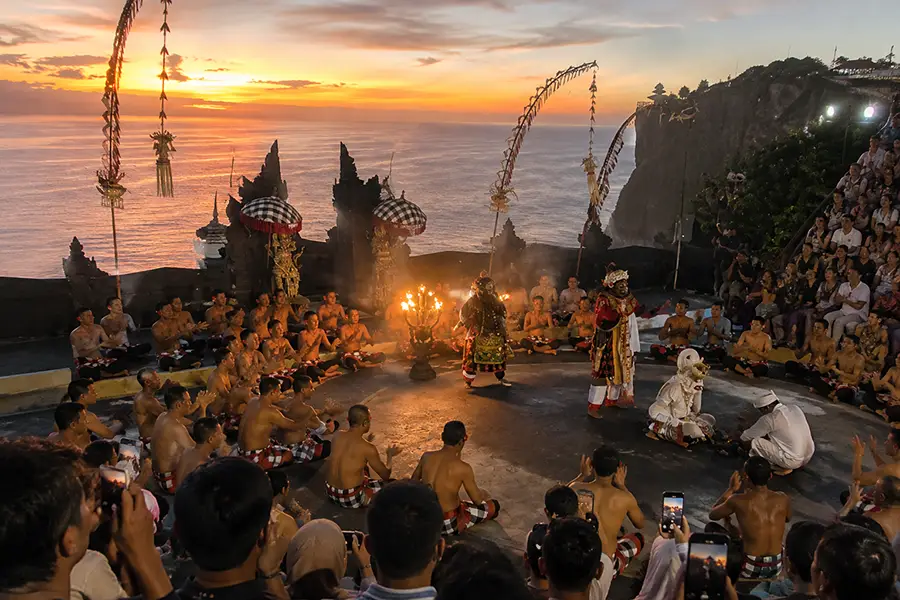
The other reason people plan their visit around late afternoon is the Kecak fire dance, performed daily at the temple’s cliffside amphitheater. Based on current listings, the show usually runs from around 6 PM to 7 PM, with tickets priced separately from temple entry, so budget a little extra if you want to catch it. Dozens of bare chested performers chant in unison while dancers act out scenes from the Ramayana, all set against a darkening sky and crashing waves below. Arriving by 4:30 or 5 PM gives you enough time to explore the temple grounds, grab a good seat, and settle in before the performance starts.
Best time to visit and how to avoid the crowds
Uluwatu Temple gets busiest in the hour before the Kecak performance, when tour buses from Kuta and Nusa Dua arrive in waves, so if you want a quieter walk around the cliffside paths, go in the morning instead. Arriving between 9 and 11 AM means cooler weather, softer light for photos, and a temple that feels far less crowded than it does at golden hour. If sunset is non negotiable for you, the trade off is worth it, but plan to arrive at least 90 minutes early to beat the rush for parking and seating.
Best Beaches in Pecatu
What separates Pecatu’s beaches from most other stretches of coastline in southern Bali is the setting, since nearly every one of them is tucked beneath towering limestone cliffs and reached by a staircase or footpath rather than a straight walk from the parking lot. That extra effort is exactly why they still feel less commercial than the beaches around Kuta or Seminyak. From world famous stretches like Padang Padang to quieter alternatives, Pecatu’s coastline covers some of the best beaches in Pecatu you will find anywhere on the peninsula, including Suluban Beach, known for the dramatic sea cave you walk through to reach the sand and the surfers who launch straight from its rocky point.
Padang Padang Beach, the Eat Pray Love spot
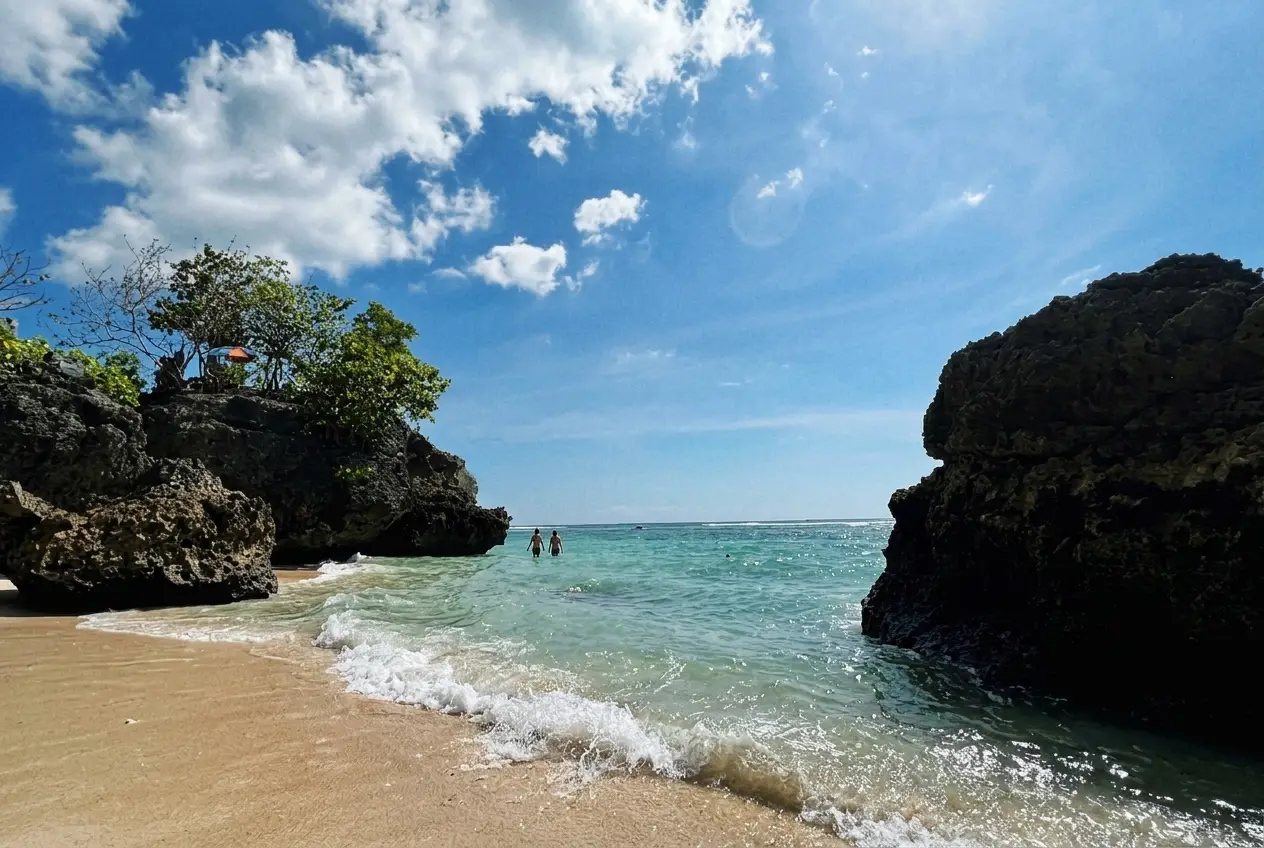
Padang Padang Beach is probably the most photographed stretch of sand in Pecatu, thanks to its brief cameo in the film Eat Pray Love, and its status as a top rated surf break keeps it firmly on every visitor’s list. What makes it unique is the entrance itself, a narrow gap between two boulders that opens onto a small cove, so the beach feels hidden even though it sits right off the main road. It is about 32 kilometers from Denpasar, roughly an hour by car, and there is a small entrance fee at the gate, usually somewhere around Rp 15,000. Getting there means walking down a staircase carved into the rock, which only adds to the sense of discovery once the beach opens up in front of you. The sand is soft and white, the water turns a deep turquoise on a clear day, and the surf break here, nicknamed the Balinese Pipeline, draws serious surfers when the swell is right. The beach is at its busiest between 11 AM and 3 PM, especially on weekends, so arriving before 9 AM or after 4 PM gives you a noticeably calmer stretch of sand. If you want more detail on this specific beach, including tide conditions and what to expect at the entrance, our full guide to Padang Padang Beach covers it in depth.
Bingin Beach for surfers and cliffside cafes
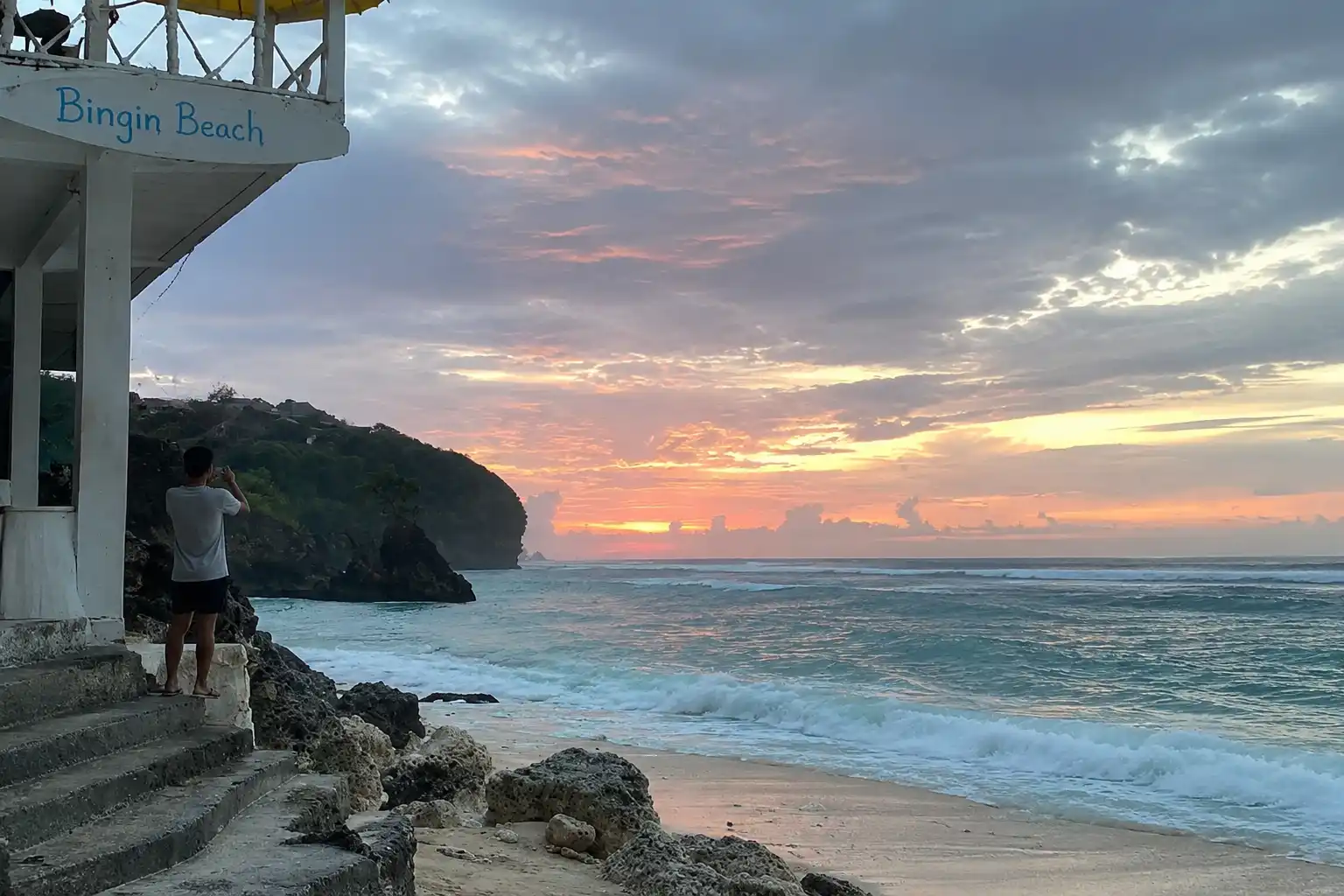
A short five to ten minute drive from Padang Padang, Bingin Beach has built its reputation on consistent waves and a laid back cafe scene perched directly on the cliff face, which is what sets it apart from the more open, sandy layout at Padang Padang. Surfers favor it for the reliable left hand reef break, while everyone else comes for sunset drinks at eye level with the horizon from one of the warungs built into the rock. Getting down to the sand involves a fairly steep staircase, so comfortable shoes are worth packing, and unlike Padang Padang there is no entrance fee, just a small charge for parking. Crowds tend to build from mid afternoon onward as the cafes fill up for sunset, so a mid morning visit is your best bet if you want the beach mostly to yourself.
Nyang Nyang Beach for a quiet escape
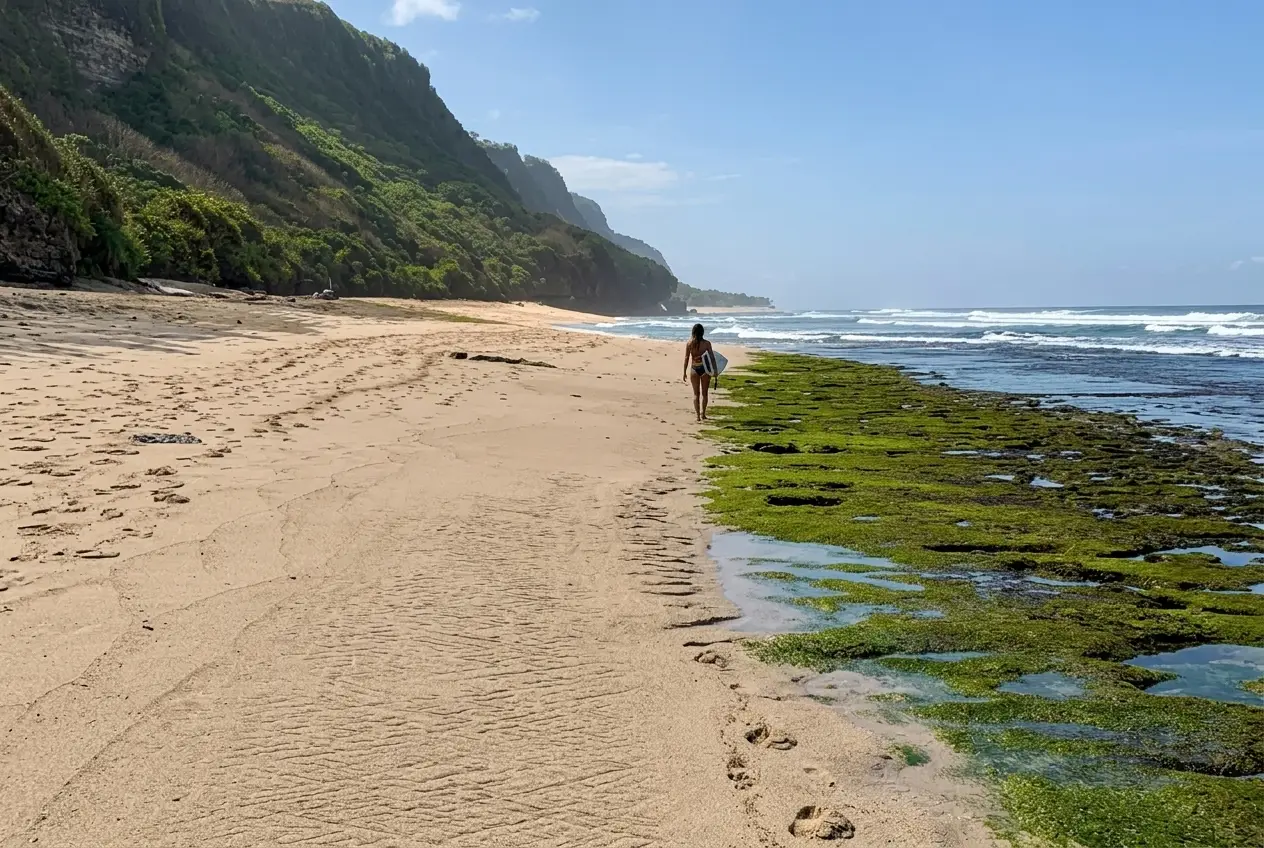
If Padang Padang and Bingin sound a little too popular for your taste, Nyang Nyang Beach is the quieter alternative, and it stays that way largely because of the effort required to reach it. It takes a ten to fifteen minute walk down a fairly steep, unpaved path from the car park, which keeps the crowds thin even in peak season since not every visitor is willing to make the climb back up in the heat. What you get in return is close to a kilometer of untouched white sand backed by cliffs, with far more room to spread out than at the more famous spots nearby, and only a couple of simple warungs, so it is worth bringing your own water and sun protection. Weekday mornings are the quietest window of all, while weekends after midday see a modest uptick in visitors, though it never feels crowded the way Padang Padang can. Our dedicated guide to Nyang Nyang Beach has the full walkthrough on how to get there and what to bring.
Surfing in Pecatu: Waves for Every Level
Pecatu has long been considered one of Bali’s premier surf destinations, and what makes it stand out from other surf areas on the island is how many quality breaks sit within a few kilometers of each other, so surfers can chase different conditions without a long drive. The lineup here caters to a wide range of skill levels, and each break has its own personality once you get to know the area.
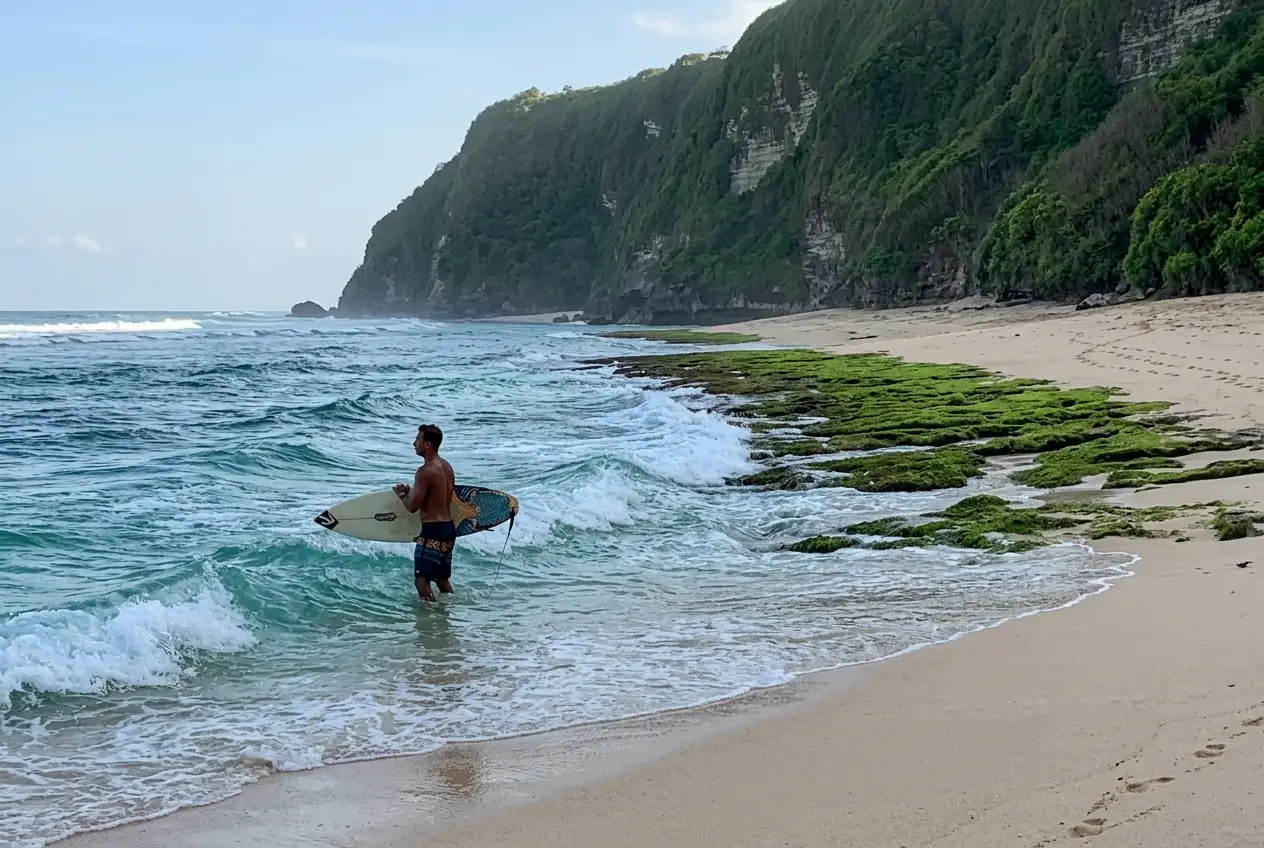
Uluwatu, Bingin, and Impossibles all offer fast, powerful reef breaks that reward experience, drawing surfers from around the world during the dry season swells between May and September, when the waves are typically at their most consistent. If you are still building confidence, the gentler stretch known as Padang Padang Right is a friendlier option to practice on before working up to the more advanced breaks nearby. Mornings tend to bring cleaner, less crowded conditions across all of these spots, since local wind patterns often pick up and roughen the water by early afternoon. Even if you are not surfing yourself, watching the lineup from one of the clifftop warungs along the Uluwatu cliffs is a way to spend an afternoon that never really gets old.
Hidden Gems Beyond the Beaches
Beyond the temple and the well known beaches, Pecatu still has a few spots that many visitors walk right past simply because they do not show up on the standard tour itinerary, which is exactly what makes them worth seeking out.
Batu Jaran Hill is one of them, a lesser known cliff area named for a large rock formation shaped like a horse, offering wide, uninterrupted ocean views without the crowds you would find at more established lookout points. It sits a short drive from both Uluwatu Temple and Padang Padang Beach, making it easy to fold into the same afternoon loop, and unlike the temple grounds it rarely sees more than a handful of visitors at a time, even during peak season. It works well as a sunset spot if you want something quieter than the amphitheater at Uluwatu Temple, or simply as a five to ten minute stop on the way between beaches. Our full write up on Batu Jaran Hill covers directions and what to expect once you arrive.
Practical Tips for Visiting Pecatu
Knowing what to see in Pecatu is only half the picture. The rest comes down to timing your visit right, figuring out the smartest way to get around, and knowing whether you can realistically fit everything into one trip. These are the details that usually separate a rushed, half planned visit from one where everything falls into place.
Best time to visit
The dry season, running roughly from April to October, is the most reliable window for exploring Pecatu. Expect sunnier days, calmer conditions for beach hopping, and better odds that the outdoor Kecak performance at Uluwatu Temple will go ahead as scheduled, since heavy rain between November and March can occasionally force cancellations or a change of venue. Within the day, mornings from around 8 to 11 AM are consistently the quietest window across the temple, beaches, and surf breaks alike, while the stretch from late afternoon into sunset is when Pecatu is at its most crowded, since that is when both the Kecak performance and the beach club scene peak at the same time.
Getting to Pecatu from the airport and from Denpasar
Pecatu sits about 40 to 45 minutes from Ngurah Rai International Airport by car, and roughly 1 to 1.5 hours from central Denpasar, depending on traffic and which part of Pecatu you are headed to. The roads leading into the area can be narrow and hilly once you get closer to the coast, especially around the cliffside stretches near Bingin and Padang Padang. Renting a scooter is common among younger travelers, but if you would rather not navigate unfamiliar roads yourself, arranging a Bali car rental with driver takes that stress off your plate entirely. It also makes it easier to string together several stops in one day, since taxis are not always easy to flag down once you are away from the main road.
Can you combine all of these attractions into one day?
Yes, and it is one of the more appealing things about Pecatu compared to other parts of Bali, since most of the attractions covered here sit within a 10 to 15 minute drive of each other. A realistic one day route starts with Uluwatu Temple in the morning while it is quiet, followed by lunch and a stop at Padang Padang Beach or Bingin Beach in the early afternoon, a short detour to Batu Jaran Hill for photos, and then back to Uluwatu Temple or a nearby clifftop spot in time for sunset and the Kecak performance. Trying to add Nyang Nyang Beach into the same day is possible but tight, since the walk down and back adds close to an hour, so it works best either as a half day on its own or as a swap for one of the busier beaches if a quiet stretch of sand matters more to you than ticking off every stop.
Plan Your Pecatu Adventure with Bali Touristic
With its spread out beaches, winding roads, and a temple worth timing your visit around, Pecatu is easier to enjoy with reliable transportation sorted out in advance. Bali Touristic offers airport pickups and drop offs that take the guesswork out of getting to this side of the island, so you can spend more time at Uluwatu Temple or your beach of choice and less time figuring out logistics. Whether you are flying in for a few days or building Pecatu into a longer Bali itinerary, a Bali airport transfer booked ahead of time means someone is already waiting for you at arrivals.
Reach out to us on WhatsApp and we will help you plan the smoothest way into Pecatu.

Frequently Asked Questions About Pecatu Bali Tourist Attractions
What is Pecatu known for?
Pecatu is known for its dramatic limestone cliffs, some of Bali’s best surf breaks, and Uluwatu Temple, one of the island’s most sacred sea temples. It also has a growing reputation for cliffside beach clubs, quiet hidden beaches, and a slower pace than the busier parts of southern Bali.
How do I get to Pecatu from the airport?
Pecatu is roughly 40 to 45 minutes from Ngurah Rai International Airport by car. Many travelers arrange a private transfer or car rental with a driver in advance, since the roads become narrower and hillier as you approach the coast.
Is Uluwatu Temple worth visiting?
Yes. Uluwatu Temple offers one of the most dramatic settings of any temple in Bali, perched 70 meters above the Indian Ocean, and the sunset Kecak fire dance performed there is one of the more memorable cultural experiences on the island.
Which beaches in Pecatu are best for beginners?
Padang Padang Right offers gentler waves that are more forgiving for surfers still building confidence, while Bingin and Nyang Nyang Beach are better suited to swimming and relaxing rather than serious surfing. For a broader look at beaches across the island, our guide to the best beaches in Bali is a useful starting point.
How many days do I need to explore Pecatu?
A single day is enough to cover the highlights, such as Uluwatu Temple and one or two beaches, but two to three days gives you room to explore hidden spots like Batu Jaran Hill or Nyang Nyang Beach without rushing, and to fit in a surf lesson or a sunset beach club visit.