About the East Bali Exploration Trip
East Bali moves at a different pace. While most visitors head to Ubud or the surf beaches of the south, the eastern side of the island holds some of Bali’s most significant cultural and natural landmarks, and far fewer crowds. This east bali tour covers the ground that most itineraries skip: royal water gardens, the island’s holiest temple, a working fishing village, and views of Mount Agung that stay with you long after the drive home.
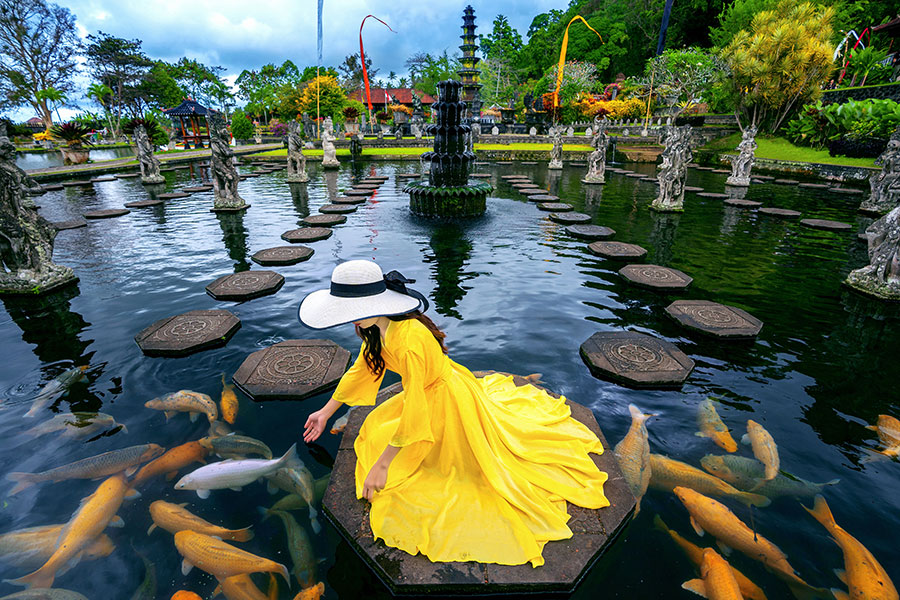
Your day begins at Tirta Gangga, the water palace built by the last King of Karangasem in 1948. The gardens are laid out across a hillside, fountains, lotus ponds, and a series of stepping stones crossing the central pool. It’s a calm, unhurried place to start the morning before the heat sets in.
From there, the route climbs toward Besakih, the largest and most sacred Hindu temple complex on the island, sitting at roughly 1,000 metres on the southwestern slope of Mount Agung. The scale of the site is hard to prepare for. Pura Besakih is not a single temple but a network of more than 20 sanctuaries, each tied to a different Balinese clan and tradition.
The day ends with a stop at Lempuyang Temple, home to the famous split gates framing Mount Agung, and a visit to Amed, a coastal village where traditional fishing boats (jukung) are pulled up on black sand beaches and salt-making is still done by hand.
What Makes East Bali Different
The drive east is part of the experience. Mount Agung sits on the horizon for most of the route, a broad, near-perfect volcanic cone that shapes the landscape and the culture of everyone who lives in its shadow. Balinese Hinduism orients itself toward this mountain, and that orientation shows in every temple you visit along the way.
Tirta Gangga is the most complete royal water garden surviving in Bali. The stepping stones across the main pool are one of those rare spots where the photo and the reality match, though arriving early keeps the scene from getting crowded.
Besakih rewards visitors who take time to walk the complex rather than stopping at the lower gates. The view from the upper terraces, Agung directly behind the main shrine, is the kind of perspective that makes the two-to-three hour drive from the south feel entirely worth it. Your guide will help you navigate the local guide situation at the entrance, which catches many first-time visitors off guard.
Amed provides a natural contrast to close the day: a stretch of coastline where fishing is still the main livelihood, the boats are hand-painted, and the pace has nothing to do with tourism.
What to Know Before You Go
East Bali is a long day from most parts of the island, allowing two and a half to three hours from Seminyak or Kuta, and around one and a half hours from Ubud. A 7 AM hotel pickup is recommended to reach Tirta Gangga before the midday heat and give the itinerary enough breathing room.
A sarong is required at Besakih and Lempuyang, these are active places of worship, not monuments. Sarongs are available at the entrance of each site.
Entrance fees are not included in the tour price and are paid on the day. Tirta Gangga charges IDR 90,000 per adult for foreign visitors (IDR 45,000 for children aged 5–12). Besakih and Lempuyang fees apply separately.