About the Ubud Eco Cycling Tour
The Ubud Eco Cycling Tour is a downhill ride through the heart of Bali’s countryside, no steep climbs, no prior fitness required. Gravity does most of the work.
Your morning starts with a van pickup from your hotel. The driver takes you up to the starting point at higher elevation, where your guide meets the group, runs through a quick safety briefing, and you’re off. From there, the route drops gently downhill for approximately 15–20 km through rice terraces, traditional Balinese villages, and shaded jungle roads, finishing at a local café or market where breakfast is served.
This is not a race or a workout. The pace is slow by design. You stop when something catches your eye, your guide explains what you’re looking at, and you move on when you’re ready. Most guests cycle the full route without breaking a sweat.
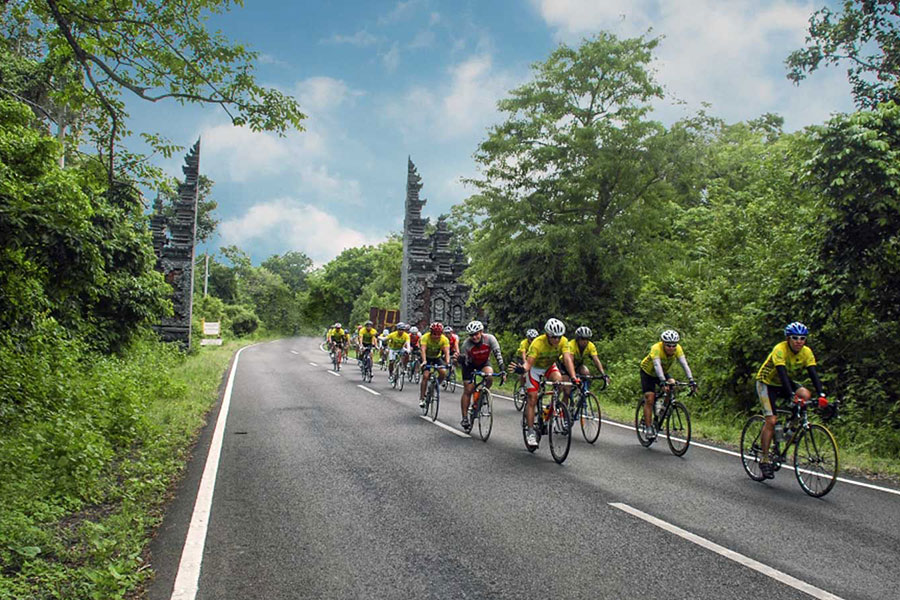
The tour runs in small groups and follows existing village paths rather than main roads, low traffic, low noise, low environmental impact. You interact with the landscape and the people in it at ground level, not through a car window.
Total riding time is roughly 3–4 hours including stops. Hotel pickup and dropoff, a guide, bike, and helmet are included in the price.
What the Route Looks Like
The route covers three distinct types of terrain, and each one looks different.
Rice terraces
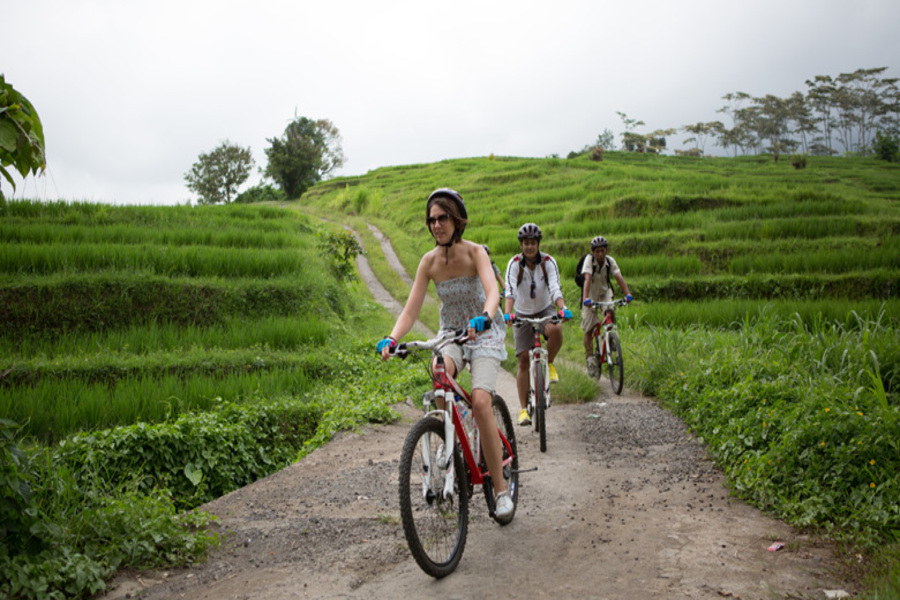
The most-photographed section. You ride narrow paths between terrace walls with open fields dropping away on either side. Early morning light hits the paddies at a low angle, this is when most guests stop for photos. The paths are wide enough for a bike, not a car.
Balinese villages
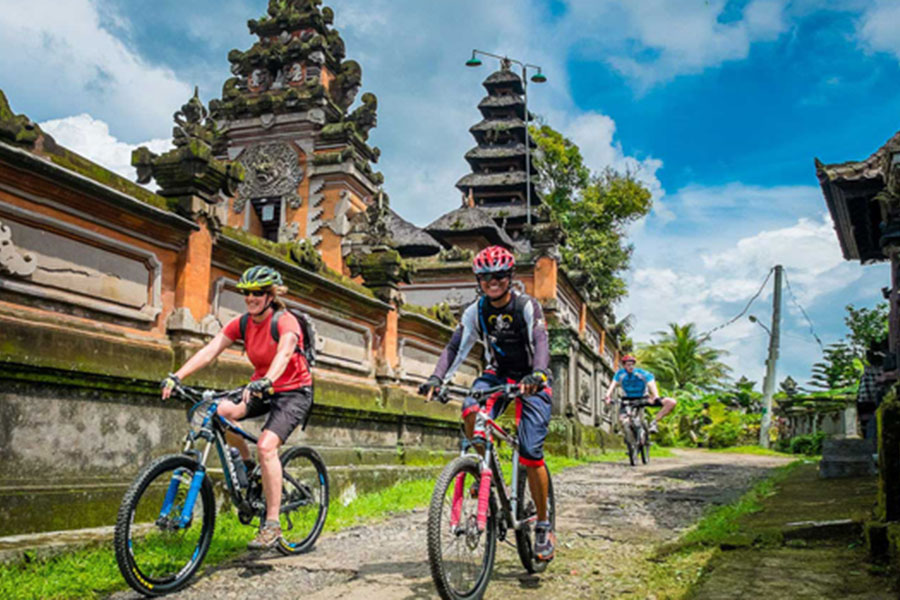
The route passes through working villages, not tourist areas. You’ll see offerings being set out on doorsteps, locals heading to the morning market, kids cycling to school. Your guide points out what’s happening and why. This is the part of the cycling tour that’s hardest to replicate any other way.
Temple and plantation stops
Most routes include a brief pause at a local water temple or village temple, where your guide explains its role in daily Balinese life. Depending on the route, you may also pass through or stop at a coffee plantation, a good chance to try local Arabica before the final descent.
The route finishes at a café or traditional market, where breakfast is waiting.
What to Know Before You Ride
Gear and equipment
A bike and helmet are provided. You do not need cycling-specific clothing, comfortable, breathable clothes work fine. Long trousers or leggings are recommended for village sections out of respect for local dress norms. Closed-toe shoes, sunglasses, and sunscreen are worth bringing.
What to pack
Travel light. A small backpack for your phone, water, and valuables is enough. Breakfast is included at the end of the route.
Best time to go
Early morning departures keep the temperature down, the light better for photos, and the village paths quieter.
Who it suits
The downhill format works for most fitness levels and age groups. It is not recommended for guests with significant mobility limitations. Confirm minimum age requirements at booking.
Frequently Asked Questions