
Last updated: June 2026
Pulaki Temple is one of Bali’s most sacred sea temples, tucked along the dramatic north coast of the island. Also known as Pura Agung Pulaki or Pura Pulaki, this temple forms part of Bali’s spiritual “chain of protection”, a series of coastal shrines believed to guard the island from negative spiritual forces.
What makes this temple stand out is its combination of spiritual depth, striking architecture, and wildlife. Resident long-tailed macaque monkeys roam freely through the grounds. The rare Balinese starling (Jalak Bali) has also been spotted in the surrounding area. Set against solid rock outcrops with the Bali Sea stretching out in front, Pulaki Temple offers a genuinely unique experience for visitors willing to make the journey north.

History and Origin of Pulaki Temple
The Pulaki Temple area carries deep historical significance. In 1987, archaeologists discovered stone tools near the adjacent Melanting Temple, including stone axes and picisan-shaped implements. These findings suggest that this site served as a prehistoric worship center long before formal Hindu traditions arrived in Bali.
The bay’s natural freshwater springs made it a vital stop for trading boats travelling between Java and Maluku. Barter trading is thought to have taken place here, with sugar from lontar palm sap as a key commodity. Evidence of lontar plants stretching from Gilimanuk to Pulaki supports this.
As a formally recognized Hindu temple in Bali, the site gained new significance in the 15th century when the high priest Dang Hyang Nirartha arrived and re-established it as a sacred place. According to legend, he was guided to the location by a pack of gray macaque monkeys, who then took up permanent residence as the temple’s guardians. As a spiritual symbol, Dang Hyang Nirartha is said to have plucked three lotus flowers, in red, black, and white, from a pond inside the belly of a dragon at Pulaki. This symbol remains an important part of worship at the temple today.
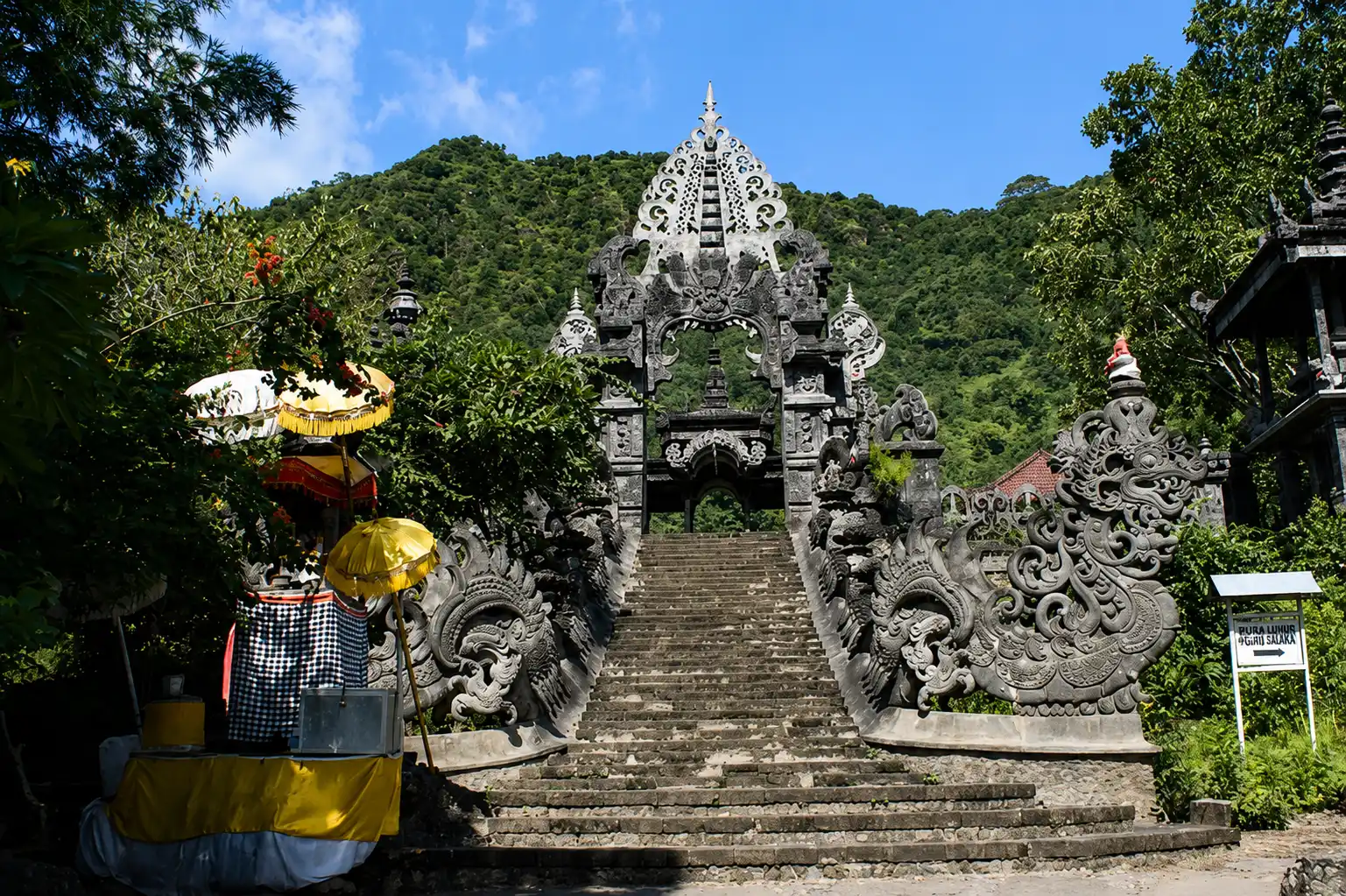
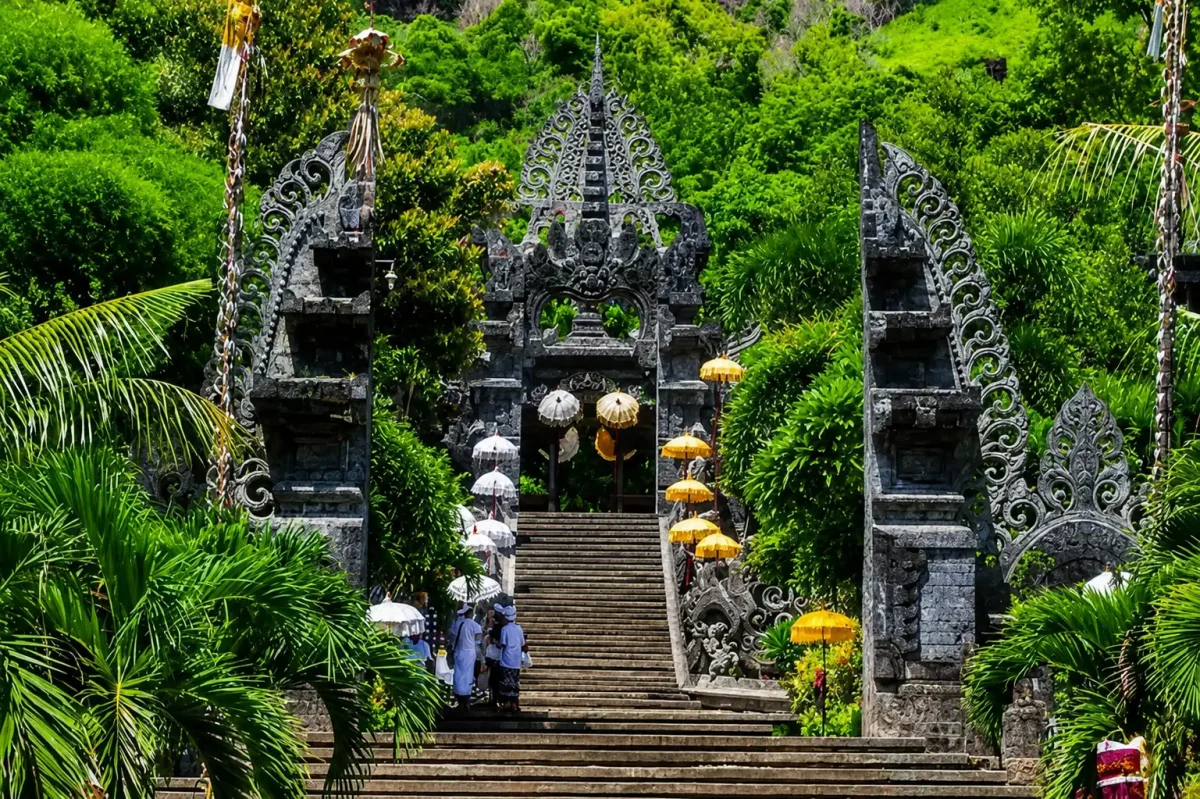
After the pralinaka event (a spiritual withdrawal or disappearance from the physical realm), Pulaki Temple lay dormant for around 431 years, from 1489 to 1920. It was rediscovered and restored in the early 20th century. The distinctive black volcanic rock gates that visitors see today were built in 1983.
Location and Route to Pulaki Temple
Pulaki Temple is located in Banyupoh Village, Gerokgak District, Buleleng Regency, along the Singaraja-Gilimanuk coastal road in North Bali. The address puts it approximately 1.5 km east of Pemuteran village, making it a natural stop on any North Bali itinerary.
From Denpasar, Kuta, or Seminyak, the drive takes around 3 to 4 hours. The road is fully paved and accessible by motorbike or car. Along the way, the scenery shifts from rice terraces to mountain highlands and eventually opens up to stunning views of the north coast.
Because Pulaki Temple is one of the few “drive-through” temples in Bali, you may even spot a small roadside shrine just outside the main gates where local priests offer a quick water blessing to passing vehicles. It’s a charming and unexpected ritual that adds to the temple’s welcoming character.
What to See and Experience at Pulaki Temple
Visitors to Pulaki Temple are greeted by a grand gateway adorned with intricate Balinese carvings and statues. Inside, the complex opens into a middle court where the view suddenly frames the Bali Sea between two green hillsides. It’s one of the more dramatic natural compositions you’ll find at any North Bali temple.
Beyond the architecture, the spiritual atmosphere is palpable. Non-Hindu visitors are welcome to enter, observe ceremonies, and explore the pavilions and altars inside, as long as they follow dress and conduct guidelines. Many Balinese also come here specifically to pray for business success, as Pulaki Temple is considered particularly auspicious for those opening new ventures.
The sacred macaques of Pulaki Temple
The macaque monkeys at Pulaki Temple are not just a tourist attraction. They are believed to be the spiritual descendants of the original monkey guardians that led Dang Hyang Nirartha to this site centuries ago. This sacred status means they are respected and protected within the temple grounds.
These long-tailed macaques (Macaca fascicularis) roam freely and are accustomed to visitors. However, they are opportunistic and mischievous. Keep your bags closed, avoid carrying visible snacks, and remove loose accessories before entering. In some areas, temple caretakers with sticks help keep the monkeys from interfering with offerings or visitors.
The Balinese starling (Jalak Bali)
The area around Pulaki Temple is one of the known habitats of the Balinese starling, or Jalak Bali, one of the rarest birds in the world. With its striking white plumage and bright blue eye patches, spotting one is genuinely special. Conservation efforts in the West Bali National Park nearby have helped stabilize the population, and patient visitors may be rewarded with a sighting in the shrubs and trees surrounding the temple complex.
Facilities, Opening Hours, and Entrance Fees
- Opening hours: Open daily, 24 hours. However, tourist access may be restricted during active Hindu ceremonies. Check the Balinese calendar in advance if you want to time your visit around or away from ceremony days.
- Entrance fee: IDR 30,000 for domestic visitors; IDR 50,000 for international visitors. A sarong is required for entry and can be rented at the gate for a small additional fee.
- Facilities: The temple complex includes a large parking area, food and drink stalls, Balinese souvenir shops, clean public toilets, walking paths, and information boards. Local guides are available for hire and can significantly deepen your understanding of the temple’s history and rituals.
Visiting Tips
- Dress modestly: Cover shoulders and knees before entering. Sarongs and sashes are mandatory inside the temple area and can be rented at the entrance counter.
- Arrive early or at sunset: Early morning offers the freshest air, soft light, and fewer visitors. Late afternoon and sunset are also beautiful, with the warm light reflecting off the sea.
- Be strategic about the monkeys: Do not carry food, wear loose jewelry, or display electronics near the monkey areas. Keep bags securely zipped at all times.
- Mind the seasonal scenery: The hills surrounding Pulaki Temple shift dramatically between seasons. In the dry season they appear brown and arid. During the rainy season they turn a vivid green, creating a completely different backdrop for photography.
- Respect local traditions: Maintain a quiet, respectful presence inside the complex. Avoid loud conversations, and follow any instructions from temple caretakers, especially during prayer or offering ceremonies.
Nearby Attractions: What to Combine with Your Visit
Because Pulaki Temple sits on the main Singaraja-Gilimanuk coastal road, it fits naturally into a longer North Bali itinerary. Here are the best options to pair with your visit.
Pura Melanting sits just a short walk from Pulaki Temple and is closely linked to it historically. This smaller temple is dedicated to Dewi Melanting, the goddess of markets and prosperity. The 1987 stone tool discovery was made here, connecting it to the same prehistoric worship tradition as Pulaki. Visiting both in the same stop takes less than an hour total.
Pemuteran village is only about 1.5 km from Pulaki Temple and is known for its black sand beaches and Biorock coral restoration project. It’s a good base if you plan to stay overnight in the area.
Menjangan Island, part of the West Bali National Park, is one of Bali’s premier snorkeling and diving destinations and can be reached from the Labuan Lalang harbor about 30 minutes further west. If you’re making the drive to Pulaki Temple from South Bali, combining it with a day at Menjangan Island makes the long journey well worth the trip.
A private driver is strongly recommended for this route. The distance from South Bali is significant, and having someone who knows the road means you can relax and take in the scenery. Our Bali car rental with driver service makes it easy to combine Pulaki Temple, Pemuteran, Menjangan Island, and Lovina into a single well-paced North Bali day trip.
Plan Your Visit to Pulaki Temple
Pulaki Temple is one of North Bali’s most rewarding stops. Its ancient spiritual history, dramatic coastal setting, sacred monkeys, and rare wildlife make it unlike any other temple on the island. Whether you’re visiting for spiritual reflection, photography, or simply the experience of a quieter Bali, this temple delivers.
If you’re planning a North Bali trip and want help putting together a comfortable itinerary, explore our Bali tour packages to see what we can arrange for you.

Frequently Asked Questions About Pulaki Temple
Why is Pura Pulaki a sacred site?
Pura Pulaki has been a place of worship since prehistoric times, with stone tool discoveries nearby dating back thousands of years. It became a formally recognized Hindu temple after Dang Hyang Nirartha re-established it as a holy site in the 15th century. As one of Bali’s key sea temples, it forms part of a protective chain of coastal shrines believed to guard the island from negative spiritual forces. Its sacred freshwater springs also made it an important stop for ancient trading vessels crossing the Bali Sea.
What is the most photographed temple in Bali?
Tanah Lot Temple is widely considered the most photographed temple in Bali because of its dramatic setting on a rocky outcrop surrounded by ocean. Other popular photography spots include Pura Luhur Uluwatu for its clifftop sunsets and the Gates of Heaven at Pura Luhur Lempuyang. Pulaki Temple, while less well-known, offers equally compelling photography opportunities with its coastal backdrop, macaque inhabitants, and traditional Balinese architecture.
Why did Bali remain Hindu?
Bali maintained its Hindu identity through a combination of geographic isolation, strong royal commitment to Hindu traditions, and the influence of priests like Dang Hyang Nirartha who reinforced and reorganized Balinese Hindu practice. Unlike other parts of the Indonesian archipelago, which gradually converted to Islam through political pressure, Bali’s mountainous geography, dense temple networks, and priestly lineages helped preserve its distinct spiritual identity. Majapahit influence and subsequent cultural traditions cemented Hinduism as the island’s defining practice.
Is Pura Besakih worth visiting?
Yes, Pura Besakih, known as the Mother Temple of Bali, is absolutely worth visiting. It is the largest and most sacred temple complex on the island, comprising 23 separate temples on the slopes of Mount Agung. The complex dates back over 1,000 years. The panoramic views of the volcano and surrounding rice terraces are spectacular. Visitors should come prepared with appropriate temple attire, expect higher entrance fees, and consider hiring a knowledgeable local guide to navigate the complex layout and understand its deep spiritual significance.
Are there monkeys at Pulaki Temple?
Yes, Pulaki Temple is well known for its resident long-tailed macaque monkeys, which roam freely throughout the grounds. According to local belief, these monkeys are sacred guardians of the temple, descendants of the monkey pack that guided Dang Hyang Nirartha to the site. Visitors should avoid carrying food, wearing loose jewelry, or displaying valuables, as the monkeys may grab them. Maintain a respectful distance and follow guidance from local caretakers who understand the animals’ behavior.
How do I visit Pulaki Temple from South Bali?
Pulaki Temple is located on the north coast of Bali near Banyupoh village, around 3 to 4 hours’ drive from Kuta or Seminyak. The most scenic route passes through the central highlands and the Lovina area. The temple sits on the main Singaraja-Gilimanuk road, making it a convenient stop on a North Bali day trip. You can combine it with nearby Pura Melanting, Pemuteran beach, and Menjangan Island for a full day in the northwest. Our Bali car rental with driver service makes the journey comfortable and allows you to visit multiple North Bali attractions in one trip.
What is the best time to visit Pulaki Temple?
Early morning is the best time to visit Pulaki Temple. The air is cooler, the light is soft and ideal for photography, and the crowds are thinner. Late afternoon just before sunset is also beautiful, with warm light reflecting off the sea. In terms of season, the dry season (April to October) offers clearer skies and easier road conditions. During the rainy season (November to March), the surrounding hills turn lush and green, which creates a dramatically different and equally beautiful backdrop for the temple.
What other temples are near Pulaki Temple?
Pura Melanting is the closest, sitting just adjacent to Pulaki Temple. It is dedicated to Dewi Melanting, the goddess of prosperity and markets, and shares the same prehistoric worship origins as Pura Pulaki. Further east along the north coast, Pura Batu Bolong near Lovina and Pura Ponjok Batu are also worth visiting if you are exploring the Buleleng area. For a more significant detour, Pura Besakih on the slopes of Mount Agung is one of Bali’s most important pilgrimage sites.