

Tegalalang Rice Terrace is one of the most iconic and photographed landscapes in Bali, a sweeping cascade of emerald-green paddies carved into the hillside valleys approximately 10 kilometers north of Ubud. What makes this site truly remarkable is not just the visual spectacle, but the ancient agricultural intelligence behind it. The terraces are sustained by the subak irrigation system that Balinese farmers have used since the 9th century, a cooperative water-sharing network so culturally significant that UNESCO inscribed it as a World Heritage Site in 2012. As you walk the narrow paths between the paddies, you are stepping into a living agricultural tradition that has shaped the Balinese landscape and spiritual life for over a thousand years.
Today, Tegalalang Rice Terrace offers visitors a rich combination of natural beauty, cultural depth, and photogenic adventure. Whether you come to walk quietly through the fields at sunrise, soar above the valley on one of the famous Bali swings, sip Balinese coffee at a clifftop cafe, or simply stand and absorb one of Bali’s most spectacular views, this destination delivers an experience that goes well beyond a quick photo stop.
This guide covers everything you need to know before visiting Tegalalang Rice Terrace, from the history of the subak system and the best time to visit, to practical information, activities, and what to combine it with on a full Ubud day.

Tegalalang Rice Terrace Experience
Nothing quite prepares you for the moment you first look down into the valley at Tegalalang Rice Terrace. Photographs do the scene justice in terms of color and composition, but the scale and the aliveness of the place are something you have to experience in person.
Visitor Information
📍
Jl. Raya Tegallalang, Tegallalang, Gianyar Regency, Bali — approximately 10 km north of central Ubud (20-minute drive)
🕐
Daily, 7:00 AM – 6:00 PM
💰
IDR 25,000 per person · Path donation IDR 10,000–20,000 · Parking IDR 5,000 (motorbike) / IDR 10,000 (car)
⏱️
1–3 hours (2–3 hours recommended for a full experience)
📸
Arrive before 8:00 AM for soft golden light and fewer crowds. Clifftop cafes offer wide valley shots; terrace paths give intimate ground-level views.
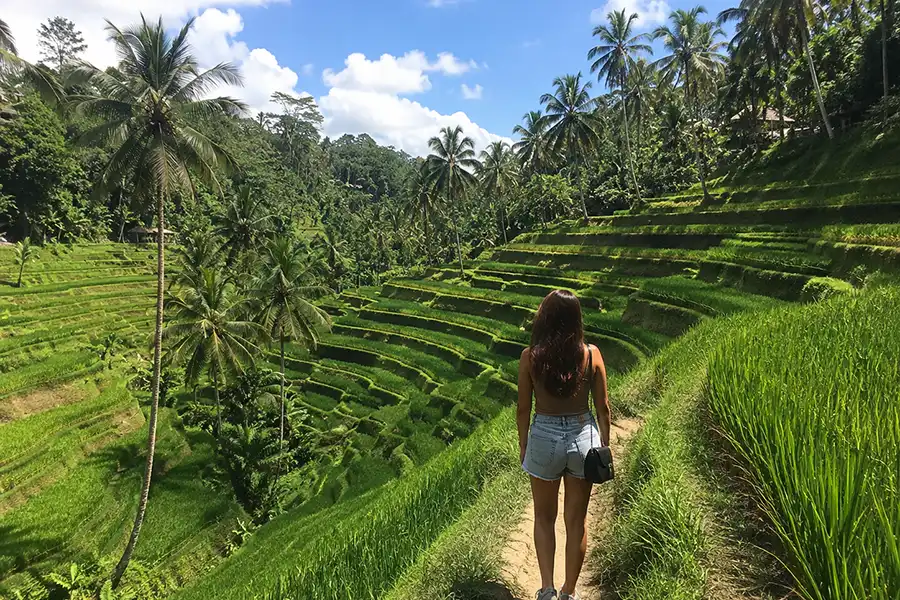
Standing at the edge of the terraces, you are immediately struck by the intensity of the green. The paddies step down the hillside in perfectly curved layers that follow the natural contours of the valley, creating a visual rhythm that feels almost impossibly beautiful. The color shifts depending on the season and the stage of the rice cycle, ranging from the vivid bright green of newly planted fields to the warm gold of harvest time. Early morning light is particularly transformative, casting long shadows across the stepped paddies and filling the valley with a soft, golden glow.
Walking through it is where the real connection happens. The paths between the paddies are narrow and intimate. You may pass a farmer tending the fields in a traditional conical hat, hear water trickling through bamboo irrigation channels, or catch the scent of clove and jasmine from the gardens of nearby homes. Small cafes and swing operators are dotted throughout the terrace area, creating a relaxed and unhurried atmosphere that invites you to slow down and stay longer than planned.
The Beauty of Tegalalang Rice Terrace
The visual character of Tegalalang Rice Terrace is unlike any other landscape in Bali. While the island has many rice field areas, Tegalalang stands out for the dramatic steepness of its terraces and the compact, layered way the paddies have been cut into the valley walls.
The terraces here sit in the cool, green highlands north of Ubud, Bali’s cultural center. The valley is fed by natural springs that keep the paddies lush throughout the year. The irrigation channels that carry this water from one level to the next are themselves a work of engineering, carved out of the hillside and maintained cooperatively by the farming community for generations.
The best photography positions are from the clifftop cafes and restaurants that line the road above the terraces, where you can frame the entire valley in a single shot. But the most rewarding views come from inside the terraces themselves, where the paddies surround you on all sides and the scale of the landscape becomes fully apparent. The terraces change color throughout the year, making every visit visually distinct depending on the agricultural cycle in progress.
History and Cultural Importance
Understanding the history behind Tegalalang Rice Terrace transforms a visit from a sightseeing stop into a genuine cultural experience. The landscape you are looking at is not simply scenic. It is the product of over a thousand years of collaborative human effort and spiritual philosophy.
The subak irrigation system that sustains Tegalalang has been operating since the 9th century. It is not a government-managed infrastructure system but a community-led cooperative, where groups of farmers jointly manage the distribution of water from sacred springs through an intricate network of canals, tunnels, and bamboo pipes. Each farmer receives their share of water according to agreements made and maintained at the local water temple, known as a pura subak.
The philosophy underlying the subak system is Tri Hita Karana, a core principle of Balinese Hinduism that emphasizes harmony between three realms: the divine, the human, and the natural world. Water is considered sacred, and the management of irrigation is therefore not purely agricultural but deeply spiritual. Farmers perform regular offerings and prayers at the water temples as part of the farming cycle, seeking blessings for a good harvest and expressing gratitude for the water that sustains their livelihood.
In 2012, UNESCO recognized the subak system as a World Heritage cultural landscape, acknowledging it as a remarkable example of how a living agricultural tradition can embody spiritual values and communal cooperation. This designation applies to four sites across Bali, with Tegalalang being the most visited of them.

Best Time to Visit Tegalalang Rice Terrace
Timing your visit to Tegalalang Rice Terrace makes a significant difference to both the quality of the experience and the quality of your photographs. The terrace changes dramatically across the seasons, the time of day, and even the stage of the rice growing cycle.
The best time of day to visit is early morning, between 7:00 and 8:30 AM. At this time the air is noticeably cooler, the light is soft and golden, the crowds have not yet arrived, and the valley feels genuinely peaceful. The terraces are most vibrant in color during the wet season from November to March, when the paddies are freshly planted and intensely green. The dry season from April to October brings clearer skies and more predictable weather, making it the most popular time to visit overall.
Many visitors combine an early morning Mount Batur Sunrise trek with a mid-morning stop at Tegalalang on the way back to Ubud. The routes complement each other naturally, with Mount Batur sitting northeast of Ubud and Tegalalang just north. After the physical challenge of the volcano, the peaceful walk through the terraces at a relaxed pace makes for a deeply satisfying full day in the Ubud highlands.
Harvest time, typically in April and October, is a particularly special period to visit when the paddies turn golden and you may witness farmers harvesting by hand. Avoid midday if possible, as the combination of direct sun and growing crowds between 9:00 AM and 2:00 PM significantly reduces the quality of the experience.
Activities at Tegalalang Rice Terrace
A visit to Tegalalang Rice Terrace offers far more than passive sightseeing. The site has developed a rich range of activities that cater to different types of visitors, from photographers and culture enthusiasts to thrill-seekers.
- Walking through the terraces: The most rewarding way to experience Tegalalang is on foot. Narrow paths wind through the paddies at multiple levels, giving you an intimate view of the farming landscape and the chance to observe the subak irrigation channels up close. Entry with access to nests and the terrace walk costs around IDR 50,000.
- Photography: Every corner of the terraces offers compelling compositions. The clifftop cafes and restaurants provide elevated views across the whole valley, while the paths inside the terraces offer ground-level intimacy with the paddies and the people who work them.
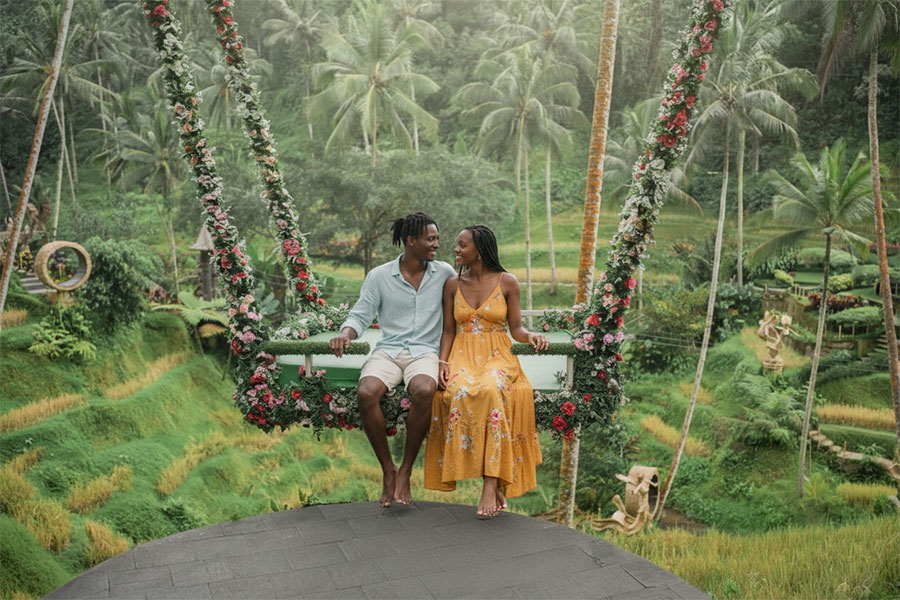
- Swing rides: The famous Bali swings at Tegalalang are positioned at various points along the terraces to give riders a panoramic view over the valley. A single swing with entrance starts from IDR 200,000, while full packages including multiple swings and extras run around IDR 300,000 per person. A tandem swing is also available at most operators.
- Zipline and Sky Bike: For more adrenaline, a zipline (IDR 350,000) and an aerial Sky Bike (IDR 450,000) are available at some locations within the terrace area, giving you a thrilling aerial perspective of the rice fields below.
- Cafes with a view: Several clifftop cafes and restaurants overlook the terraces. These are ideal for slowing down over a Balinese coffee or fresh coconut while taking in the panorama. Many charge a minimum spend rather than an entry fee.
- Shopping for local crafts: Artisan shops and market stalls line the roads around the terrace area, selling wood carvings, paintings, jewelry, and other traditional Balinese crafts made in the surrounding villages.
Exploring Local Villages Around Tegalalang
The area surrounding Tegalalang Rice Terrace is home to a number of small Balinese villages that reward those who take a little time to wander beyond the main terrace viewpoints. The villages around Tegalalang are particularly well known for their skilled artisans, especially in wood carving, painting, and traditional crafts that reflect the spiritual and natural themes central to Balinese culture.
Walking through these villages, you encounter the textures of everyday Balinese life. Farmers return from the fields in the morning carrying tools and harvested crops. Small family compounds are arranged around central courtyards with shrines decorated with fresh offerings. Artisan workshops are often open-fronted, allowing you to watch craftspeople at work.
If you have time, look for small family-run workshops where local artisans produce wood carvings and traditional Balinese paintings. Purchasing directly from these workshops is one of the most meaningful ways to support the local community, and the pieces you find here often have more character and authenticity than mass-produced souvenirs sold in Ubud’s commercial markets.
Tegalalang Rice Terrace and Balinese Spirituality
The spiritual dimension of Tegalalang Rice Terrace is inseparable from its agricultural identity. To the Balinese, farming is not a purely economic activity but a spiritual practice rooted in gratitude, reciprocity, and the philosophy of Tri Hita Karana.
As you walk through the terraces, you will notice small shrines and offerings tucked at the edges of the fields. These are placed by farmers before and after planting, at the water temple, and at significant points in the agricultural calendar. Each offering is an act of communication with the divine, seeking protection for the crops and expressing thanks for the water, the soil, and the harvest. The sound of water moving through the irrigation channels, the sight of incense smoke rising from a roadside shrine, and the rhythm of farm work carried out in reverent silence all contribute to an atmosphere that feels distinctly spiritual.
If the spiritual character of Tegalalang speaks to you, a visit to Tirta Empul Temple in nearby Tampaksiring is a natural and deeply rewarding complement. This sacred water temple, founded in 962 AD, is built around a holy spring whose waters feed into purification pools where Balinese Hindus perform the melukat cleansing ritual. It is one of the most spiritually significant sites in Bali and is located approximately 20 minutes from Tegalalang, making it an excellent pairing for a morning dedicated to Balinese culture and spirituality.
Practical Information
Before visiting Tegalalang Rice Terrace, it helps to know the key practical details to ensure your visit is smooth, affordable, and well-timed.
Entrance fee
The entrance fee to Tegalalang Rice Terrace is IDR 25,000 per person, paid in cash at the main gate. You will also encounter donation booths along the walking paths, managed by local farmers who maintain the trails. These donations typically range from IDR 10,000 to IDR 20,000 per person. Parking costs IDR 5,000 for motorbikes and IDR 10,000 for cars. Activity add-ons such as the swing package (from IDR 200,000), zipline (IDR 350,000), and Sky Bike (IDR 450,000) are paid separately at each operator. Bring cash, as card payments are not accepted on site.
| Visitor Type | Entrance Fee |
| Adults | IDR 25,000 |
| Children (under 5) | Free |
| Path donation (per person) | IDR 10,000–20,000 |
| Parking (motorbike) | IDR 5,000 |
| Parking (car) | IDR 10,000 |
Opening hours
Tegalalang Rice Terrace is open daily from 7:00 AM to 6:00 PM. The swing operators and activity providers typically operate from 8:00 AM to 5:00 PM. For the best experience, arrive as early as 7:00 AM to catch the soft morning light and beat the tour buses that arrive from around 9:00 AM onwards.
| Day | Opening Hours |
| Every day | 7:00 AM – 6:00 PM |
Getting there
Tegalalang Rice Terrace is located approximately 10 km north of central Ubud, about a 20-minute drive along Jalan Raya Tegalalang. The easiest and most flexible way to get there is by hiring a private driver or joining a guided Ubud day tour that includes Tegalalang as a stop. Renting a scooter is also possible for those comfortable with Bali’s roads.
Combining Tegalalang Rice Terrace with Other Attractions
Tegalalang sits at the heart of Bali’s most culturally rich region, making it an ideal anchor for a full day of exploration in and around Ubud. Its location north of the town center places it conveniently close to several of the island’s most visited natural and cultural attractions.
Tegalalang Rice Terrace is close to several other must-visit sites in Ubud, including the Sacred Monkey Forest, Goa Gajah Temple, and Tirta Empul holy spring. A well-planned itinerary often combines these attractions into a rewarding full-day Ubud trip.
A particularly popular combination is Tegalalang Rice Terrace in the morning followed by the Sacred Monkey Forest in the early afternoon. Located in the heart of Ubud, the Monkey Forest spans 12.5 hectares of protected tropical forest home to over 1,200 long-tailed macaques and three ancient 14th-century Hindu temples. The contrast between the open agricultural landscape of Tegalalang and the dense, shaded spiritual forest of the sanctuary makes the two sites a deeply complementary pairing for any Ubud day.
Tegalalang Rice Terrace also pairs naturally with a stop at Goa Gajah (the Elephant Cave), one of Bali’s most significant archaeological and spiritual sites, located about 15 minutes south toward Ubud. The subak system you encounter at Tegalalang, the water temple at Tirta Empul, and the ancient carvings at Goa Gajah together form a coherent cultural narrative about Bali’s Hindu heritage that makes a full Ubud day genuinely enriching rather than simply scenic.
Tegalalang Rice Terrace is also featured among the 15 instagrammable destinations you must visit in Bali, a comprehensive guide to the island’s most visually spectacular locations. If you are building a Bali photography itinerary beyond Ubud, that guide is the perfect starting point.
Plan Your Visit with Bali Touristic
Getting to and around Tegalalang Rice Terrace is straightforward, but having a knowledgeable local team behind your visit makes the difference between a rushed tourist stop and a genuinely memorable experience.
Bali Touristic offers Bali car rental with driver and fully customized private tours that allow you to explore Tegalalang and surrounding Ubud attractions at the right pace, with the right context. Local guides provide cultural and historical insight into the subak system and Balinese village life that significantly enriches the visit beyond what you can discover independently.
Whether you are visiting Tegalalang as part of a broader Bali tour package or building a custom photography itinerary across the island’s most iconic locations, Bali Touristic handles the logistics so you can focus entirely on the experience. If you are also planning to explore beyond Ubud, destinations like Kelingking Beach Bali on Nusa Penida are easy to add to a multi-day Bali itinerary with flexible tour packages.
Frequently Asked Questions About Tegalalang Rice Terrace
Is the Tegalalang Rice Terrace worth visiting?
Yes, Tegalalang Rice Terrace is absolutely worth visiting and is consistently rated among the top attractions in Bali. The combination of dramatic landscape, cultural depth, and diverse activities makes it one of the most rewarding stops in the Ubud area. While it does attract significant tourist numbers, arriving early in the morning largely solves the crowd issue and gives you the terraces at their most peaceful and photogenic. Beyond the views, the connection to the ancient subak irrigation system and Balinese spiritual culture adds a layer of meaning that distinguishes Tegalalang from a purely visual attraction.
What to wear to Tegalalang Rice Terrace?
Tegalalang Rice Terrace is not a temple complex, so there is no sarong requirement. Dress for comfort and practicality: light, breathable clothing is ideal for the tropical heat, and comfortable closed-toe shoes or sturdy sandals with a back strap are strongly recommended for walking the narrow paths through the terraces, which can be muddy after rain. If you are planning to try the swing, avoid very loose or flowing clothing. A hat and sunscreen are essential, especially if you are visiting during mid-morning or afternoon. Bring a small bag that leaves your hands free for walking and photography.
How long does it take to visit Tegalalang Rice Terrace?
Most visitors spend between 1 and 2 hours at Tegalalang Rice Terrace for a standard visit that includes walking the terrace paths, taking photographs, and enjoying a coffee or drink at one of the clifftop cafes. If you plan to try activities such as the swing, zipline, or sky bike, add another 30 to 60 minutes. Those who want a more immersive walk through the lower terraces and surrounding village area often spend up to 3 hours. A half-day visit of 2 to 3 hours is generally considered ideal for a balanced and unhurried experience.
What is special about the rice in Tegalalang?
The rice grown at Tegalalang Rice Terrace is cultivated using the traditional subak irrigation system that Balinese farmers have maintained since the 9th century. What makes this remarkable is not the variety of rice itself, but the system that sustains it: a community-managed cooperative network of canals, bamboo pipes, and water temples that distributes spring water equitably among all the farmers working the terraces. The system embodies the Balinese philosophy of Tri Hita Karana, harmony between the divine, human, and natural realms, and was inscribed by UNESCO as a World Heritage cultural landscape in 2012. The farmers who tend these paddies continue to perform spiritual offerings and rituals as part of the agricultural cycle, making the rice at Tegalalang a product of both agricultural and spiritual labor.
Is Tegalalang better than Jatiluwih Rice Terrace?
Both Tegalalang and Jatiluwih are exceptional, but they offer very different experiences. Tegalalang is compact, dramatic, and activity-rich. It is closer to Ubud (about 10 km), easier to reach, and packed with swings, ziplines, cafes, and walking paths. Jatiluwih, on the other hand, covers over 600 hectares and offers a far quieter, more expansive landscape with mountain views and trekking trails. Jatiluwih also carries its own UNESCO World Heritage designation and has a higher entrance fee (IDR 75,000 for adults). If you are short on time and want activities alongside the scenery, Tegalalang is the natural choice. If you want a peaceful, immersive experience with fewer crowds and more dramatic scale, Jatiluwih is worth the extra effort.
Do I need to book Tegalalang Rice Terrace in advance?
No advance booking is required to visit Tegalalang Rice Terrace itself. You simply pay the entrance fee at the gate on arrival. However, if you plan to include the swing, zipline, or sky bike, some operators accept walk-ins while others benefit from pre-booking during peak season (July, August, and December). If you are visiting as part of a guided Bali tour, your driver or tour operator will handle all the logistics for you.