
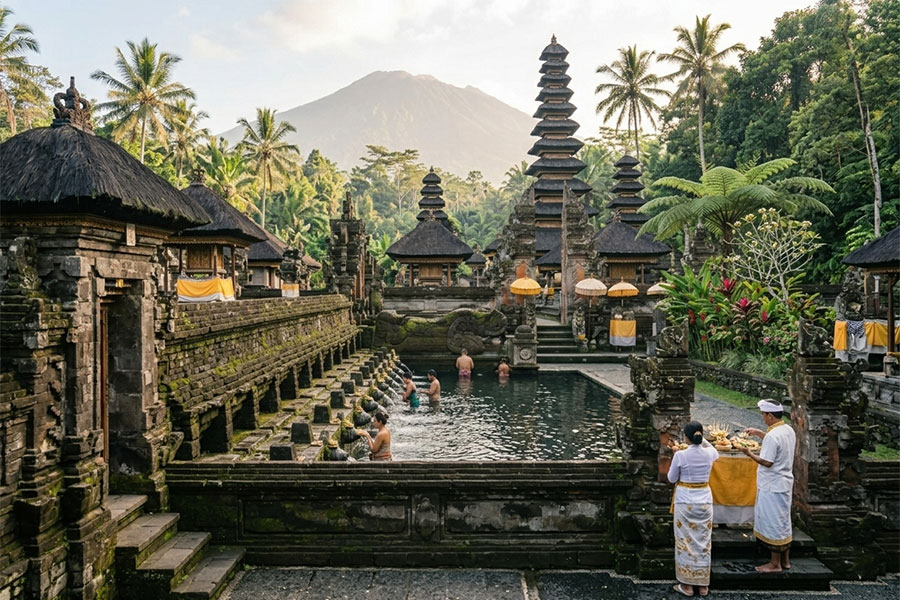
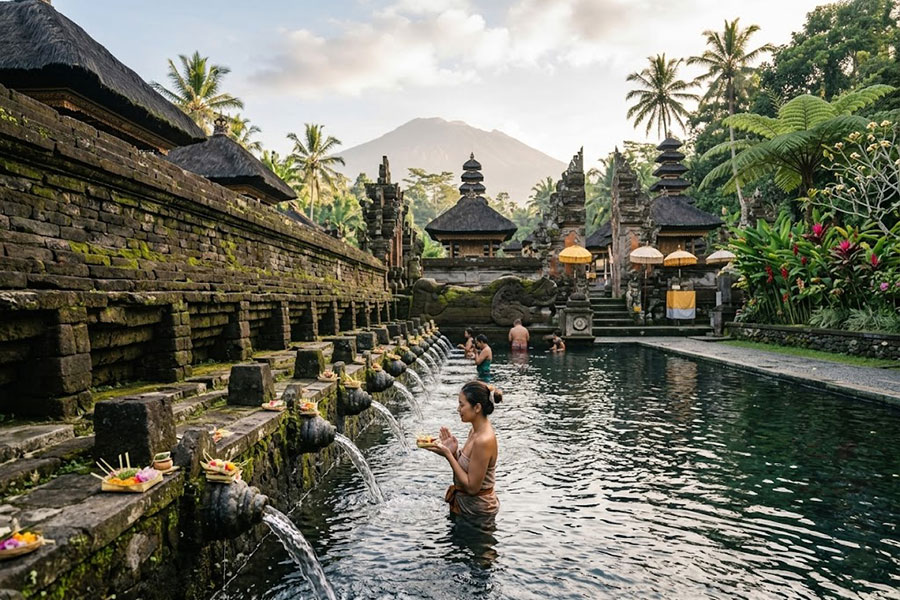
Tirta Empul Holy Spring is one of the most spiritually significant and visually captivating destinations in all of Bali, a sacred Hindu water temple located in Desa Manukaya, Kecamatan Tampaksiring, Gianyar Regency, at the heart of the island’s cultural highland region. Formally known as Tirta Empul Temple, the complex is dedicated to the Hindu deity Vishnu and is renowned for its extraordinary natural spring that has been flowing continuously since 926 AD, feeding 30 individual stone waterspouts into two large purification pools where both Balinese Hindus and international visitors come to perform the traditional melukat ritual Bali, a spiritual cleansing ceremony believed to purify the body and soul from negative energies.
The name Tirta Empul translates to “holy spring” in Balinese, and the site earns that name fully. The crystal-clear water that rises from the ground below the temple complex is considered among the most sacred water sources on the island, and the serene atmosphere of the bathing courtyards, surrounding stone carvings, fish ponds, and lush tropical gardens makes this one of the most complete and moving temple experiences that Bali has to offer. As one of the most iconic instagrammable destinations in Bali, it balances spiritual depth with visual beauty in a way that few places on the island can match.
Read on to discover everything you need to know before visiting Tirta Empul Holy Spring, from the meaning of the melukat ritual and how to participate, to ticket prices, opening hours, and practical tips for making the most of your visit.

Why Travelers Start Their Day with a Tirta Empul Tour
Among all the sacred sites in Bali, Tirta Empul Temple holds a special place for morning visitors. The atmosphere in the early hours is unlike anything you will encounter later in the day, and understanding why makes it easy to see why so many experienced Bali travelers plan their visit here as their first stop.
Many visitors choose to begin their morning with a Tirta Empul Holy Spring visit because the air is cool and fresh, the crowds are minimal, and the soft early light creates a warm, golden glow across the stone courtyards and purification pools. Early mornings also offer the best opportunity to observe the melukat ritual in a more intimate setting, with local Balinese worshippers moving through the fountains in traditional dress before the larger tour groups arrive.
The gentle sound of water flowing through the 30 stone spouts into the purification pools creates a natural rhythm that immediately sets a calm, reflective tone. For visitors who come to Pura Tirta Empul Temple in the early morning, the experience often becomes the most memorable and meaningful of their entire Bali trip.
Spiritual Pools and Holy Spring at Tirta Empul Temple
At the heart of the Tirta Empul Holy Spring experience are the two sacred purification pools, each lined with stone waterspouts through which the holy water flows continuously from the natural spring below. Understanding the layout and meaning of these pools transforms a visit from a simple sightseeing stop into a genuinely profound experience.
The holy spring Bali at Tirta Empul Temple feeds 30 individual stone waterspouts that are arranged across two main bathing courtyards. Each spout carries a specific name and spiritual function within the Balinese Hindu purification tradition. The correct sequence for the melukat ritual runs from left to right through the fountains, with participants immersing themselves beneath each spout in order. The water is remarkably clear and consistently cool, drawn directly from a natural spring that has flowed uninterrupted since the temple was founded in 926 AD.
Even visitors who choose not to participate in the melukat ritual find the pools deeply atmospheric. The sight of worshippers in traditional white garments moving slowly through the fountains, the sound of falling water, and the scent of incense and flower offerings placed at the small shrines throughout the complex create a sensory experience that is genuinely unlike anywhere else in Bali.
The Melukat Ritual: How to Participate
The melukat ritual Bali performed at Tirta Empul Temple is one of the most meaningful cultural experiences available to visitors anywhere on the island. Participating is straightforward and open to people of all backgrounds, but knowing what to expect beforehand will help you approach it with appropriate respect and understanding.
To participate in the melukat ritual Bali at Tirta Empul Holy Spring, you must first change into a sarong and sash, which are available for rent at the temple entrance. You will then enter the bathing courtyard and follow the sequence of 30 waterspouts from left to right, immersing yourself beneath each fountain while offering a prayer or moment of intention. Certain spouts are reserved exclusively for Balinese Hindus during active ceremonies and should not be used by visitors. These are clearly marked.
If you prefer to observe rather than participate, you are welcome to watch from the surrounding pathways. Photography of the ritual is permitted, but should always be done respectfully and with sensitivity to the worshippers present.
Cultural Experience at Tirta Empul Temple
A visit to Tirta Empul Temple offers far more than a visual experience. The site is a living, active place of Balinese Hindu worship that has served its community for over a thousand years, and every element of the complex, from the stone carvings and fish ponds to the flower offerings and incense-filled courtyards, reflects the rich spiritual traditions that make Bali’s cultural landscape so extraordinary.
The sacred water temple Bali complex is structured across several interconnected courtyards, each with its own character and purpose. Beyond the bathing pools, visitors can explore beautifully maintained gardens, fish ponds filled with large carp, intricate stone-carved temple gates, and several smaller shrines dedicated to different aspects of the Balinese Hindu cosmology. A local guide can explain the specific significance of each area and bring the stories and legends of the temple to life in a way that independent visitors often miss.
For visitors who are drawn to Bali’s sacred water traditions, Tirta Gangga Water Palace in Karangasem offers a complementary experience that showcases a completely different expression of Bali’s deep reverence for holy water. Built by the last King of Karangasem as a royal retreat, its ornamental koi ponds, stone fountains, and stepping stone paths make it one of the most visually distinctive sacred water temple Bali destinations on the island.
What Makes a Tirta Empul Tour Special
There are many sacred temples across Bali, but few manage to combine historical depth, living spiritual practice, and natural beauty in the way that Tirta Empul Holy Spring does. Understanding what sets it apart helps you appreciate every moment of your visit more fully.
What makes Tirta Empul Temple uniquely special is the unbroken continuity of the spring itself. The same water that flows through the 30 purification spouts today has been flowing from the same source since 926 AD, used in the same melukat ritual for over a thousand years without interruption. This continuity gives the site an authenticity and spiritual weight that is difficult to find elsewhere in Bali’s increasingly commercialized tourist landscape.
The complex is also one of the few temple sites in Bali where visitors are genuinely invited to participate in an active ritual rather than simply observe from a distance, making it an unusually accessible and personal cultural encounter for travelers from any background.
For another of Bali’s most iconic and spiritually significant Hindu temple experiences, Uluwatu Temple sunset on the Bukit Peninsula offers a completely different setting but an equally powerful sense of sacred atmosphere. Perched 70 meters above the Indian Ocean and staging the famous Kecak Fire Dance at sunset, Uluwatu represents the dramatic, clifftop face of Balinese Hindu spirituality that perfectly complements the serene, water-centered experience of Tirta Empul Holy Spring.
Location and Visitor Information
Planning your visit to Tirta Empul Holy Spring is straightforward once you have the essential details confirmed. Here is everything you need to know before you go.
Location
Tirta Empul Temple is located in Desa Manukaya, Kecamatan Tampaksiring, Kabupaten Gianyar, Bali. It is approximately 15 kilometers north of central Ubud and is easily accessible by private car or rented motorbike. The drive from Ubud takes around 20 to 30 minutes through scenic highland roads.
If you are spending the day in the Gianyar highlands,Tegallalang Rice Terraces is located just a short drive south of Tirta Empul Temple and makes for an excellent visual complement to your morning temple visit. The iconic stepped terraces offer sweeping green valley views and can comfortably be combined with Tirta Empul into a rewarding half-day Gianyar cultural and nature itinerary.
Entrance Fee
The entrance fee to Tirta Empul Holy Spring is IDR 75,000 for international adult visitors and IDR 50,000 for children aged 5 to 12. Children under 5 enter free. Domestic Indonesian visitors pay IDR 15,000 for adults. Parking fees apply separately at approximately IDR 3,000 for motorbikes and IDR 5,000 for cars. It is recommended to bring cash as card payments are not always available at the entrance.
Opening Hours
Tirta Empul Temple is open daily from 07:00 to 18:00 WITA. Early morning visits before 9:00 AM are strongly recommended for a quieter and more reflective experience.
Dress Code
A sarong and sash are mandatory for all visitors entering Tirta Empul Holy Spring. These are available for rent at the entrance for a small additional fee. If you plan to participate in the melukat purification ritual, bring a change of clothes and a towel, as you will get wet.
Important Tips Before Visiting Tirta Empul Temple
A few practical preparations will make your visit to Tirta Empul Holy Spring significantly more comfortable and meaningful. Keep these tips in mind before you go.
- Arrive early, ideally before 9:00 AM, to enjoy the temple before the large tour groups arrive and to experience the morning light at its most beautiful.
- Wear or bring a sarong and sash. If you plan to enter the bathing pools for the melukat ritual, wear a swimsuit underneath your clothes and bring a towel and a dry change of clothing.
- Move slowly and speak quietly throughout the temple grounds. The atmosphere is one of active spiritual practice and deserves genuine respect from all visitors.
- A local guide is highly recommended for first-time visitors. The stories and spiritual context they provide make the experience substantially richer and help you navigate the ritual pools correctly.
- Do not use the spouts marked for Balinese Hindu worshippers only. These sections are clearly indicated and should always be respected.
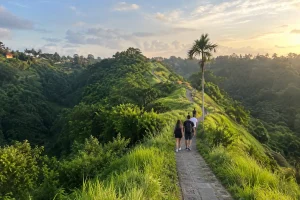
If you want to balance your Tirta Empul Holy Spring temple visit with a gentler outdoor experience, Campuhan Ridge Walk in central Ubud is just 20 to 30 minutes away and offers a free, peaceful 2-kilometer nature trail above the Ubud valley. The two make a natural and rewarding pairing for a complete Gianyar morning, beginning with spiritual reflection at the temple and ending with a quiet walk through some of Bali’s most beautiful highland scenery.
Why Tirta Empul Temple Tour Belongs in Your Bali Itinerary
Of all the cultural and spiritual experiences available in Bali, a visit to Tirta Empul Holy Spring is one of the few that genuinely lives up to every expectation. It is not just a beautiful place to photograph, it is a living, breathing part of Balinese spiritual life that has remained largely unchanged for over a thousand years.
A Tirta Empul Temple visit offers something different from the beaches, rice terraces, and cliff temples that fill most Bali itineraries. It provides a quiet, unhurried encounter with the deeper spiritual life of the island, and for many travelers it becomes the single most meaningful experience of their entire Bali trip. Whether you choose to participate in the melukat ritual or simply walk the grounds and absorb the atmosphere, Tirta Empul Holy Spring will leave a lasting impression.
Plan Your Tirta Empul Holy Spring Visit
Whether you are a first-time visitor to Bali or a returning traveler looking to experience the island’s deeper spiritual side, Tirta Empul Holy Spring is a destination that belongs on every serious Bali itinerary. The combination of ancient history, living ritual practice, natural beauty, and peaceful atmosphere makes it one of the most complete and genuinely moving cultural experiences the island has to offer. Tirta Empul is also featured among the 15 instagrammable destinations you must visit in Bali, a curated guide to the most visually stunning and culturally rich locations across the island.
Ready to plan your Tirta Empul Temple visit? Bali Touristic offers personalized guided tours to Tirta Empul and other iconic destinations across Bali, with experienced local guides, comfortable private transport, and flexible scheduling designed to make the most of your time on the island. Whether you want a dedicated spiritual morning tour, a combined Gianyar day trip, or a full Bali cultural itinerary, Bali Touristic can help you create the perfect experience.
Contact Bali Touristic via WhatsApp or browse our Bali tour packages to start planning your Bali adventure today.

Frequently Asked Questions About Tirta Empul Holy Spring
How long does a Tirta Empul tour typically take?
Most visits to Tirta Empul Holy Spring take around 1.5 to 2 hours, though visitors who choose to participate in the melukat purification ritual or spend extended time exploring the gardens, fish ponds, and secondary courtyards often stay for 2.5 to 3 hours. If you are joining a guided tour that combines Tirta Empul with other nearby destinations such as Tegallalang Rice Terraces, your overall day may extend to 4 to 5 hours.
Can children visit Tirta Empul Temple?
Yes, children are welcome at Tirta Empul Temple and the site is generally very family-friendly. The pathways are wide, the grounds are open and easy to navigate, and the calm atmosphere makes it a comfortable environment for young visitors. Children under 5 enter free of charge, while those aged 5 to 12 pay the reduced children’s entrance fee of IDR 50,000 for international visitors. Children who want to participate in the melukat ritual may do so with appropriate supervision.
Do I need special clothing for the temple?
Yes, a sarong and sash are mandatory for all visitors entering Tirta Empul Holy Spring. These are available for rent at the entrance for a small fee if you do not have your own. Modest clothing that covers the shoulders and knees is also expected out of respect for the sacred nature of the site. If you plan to participate in the melukat purification ritual in the bathing pools, bring a swimsuit to wear underneath your clothing and pack a towel and a dry change of clothes.
Is the holy spring water cold?
Yes, the holy spring Bali water at Tirta Empul Temple is noticeably cool and refreshing, drawn directly from a natural underground spring that maintains a consistent temperature year-round regardless of the outside weather. Many participants in the melukat ritual describe the cool water as part of what makes the purification experience feel particularly cleansing and invigorating, especially after the warmth of the tropical sun outside the bathing courtyards.
What is the best time to visit Tirta Empul Temple?
The best time to visit Tirta Empul Holy Spring is early morning between 7:00 AM and 9:00 AM. At this time the temple is at its quietest, the light is soft and beautiful, and you have the best chance of experiencing the morning ritual atmosphere with local worshippers before the larger tour groups arrive. The site opens daily at 07:00 WITA. If you cannot come in the morning, late afternoon after 3:00 PM is the next best option, as the midday period between 11:00 AM and 2:00 PM tends to be the busiest and hottest time of day.