
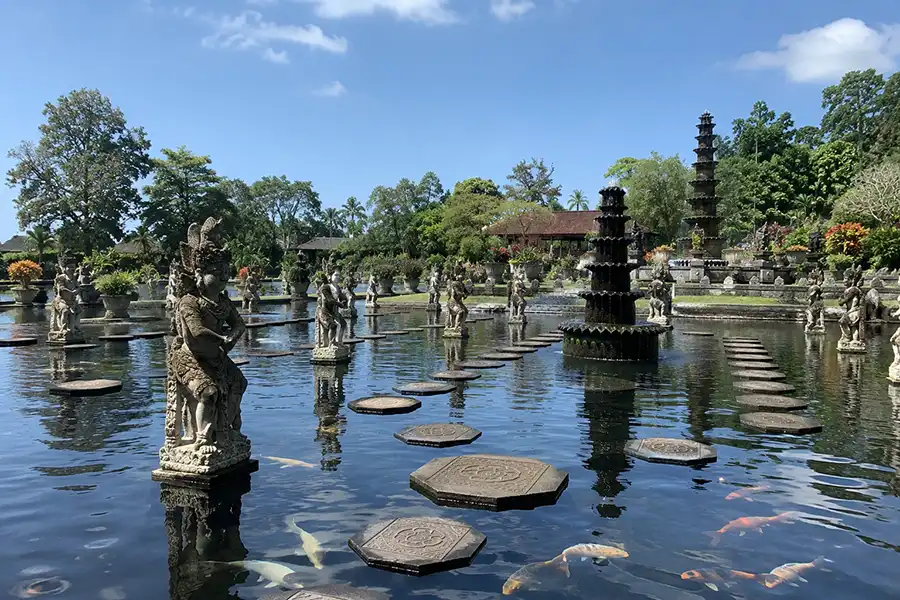
Tirta Gangga Water Palace is one of the most enchanting East Bali attraction destinations on the island, a former royal retreat built around 1946 by I Gusti Bagus Jelantik, the last King of Karangasem, as a place of peace, spiritual reflection, and royal leisure. Translating to “Water of the Ganges” in reference to Hinduism’s most sacred river, the palace is a beautifully layered complex of ornamental koi ponds, multi-tiered stone fountains, stepping stone paths, and manicured gardens spread across three ascending levels. The design blends traditional Balinese Hindu symbolism with subtle Chinese architectural influences, creating a visual language that feels unlike anywhere else in Bali.
Despite being partially destroyed by the eruption of Mount Agung in 1963, Tirta Gangga Water Palace was lovingly restored and continues to serve as both a living cultural landmark and a working spiritual site. The natural spring that feeds the palace pools is considered sacred by the local Balinese community, and the water is used in traditional Hindu ceremonies throughout the region. Today, the palace welcomes visitors from around the world who come to walk its stepping stone paths, swim in its spring-fed pools, photograph its dramatic fountains, and absorb the timeless atmosphere of one of Bali’s most distinctive royal water garden Bali destinations.
Read on to discover everything you need to know before visiting Tirta Gangga Water Palace, from its rich history and things to do, to practical visitor information, photography tips, and nearby attractions.
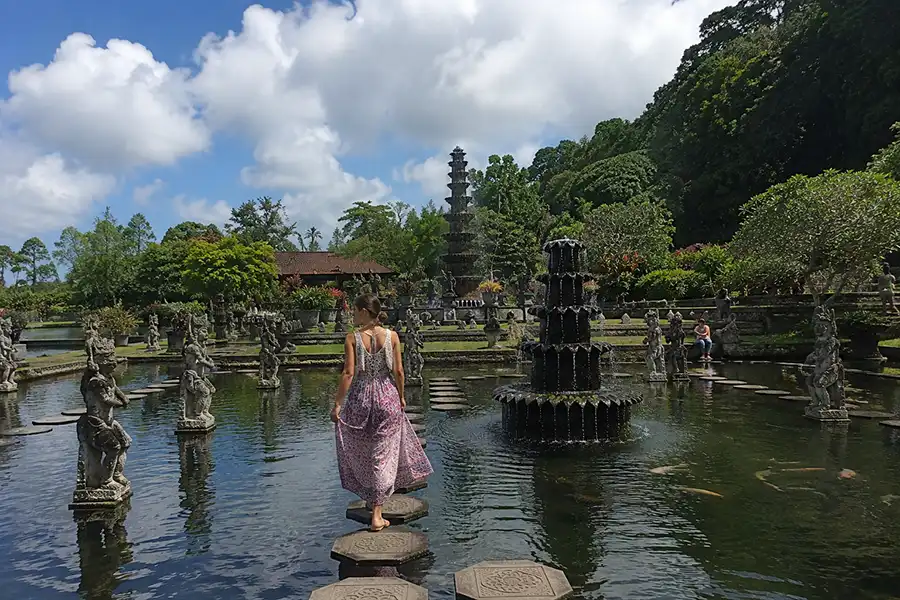

What Is Tirta Gangga Water Palace?
Before diving into the details of your visit, it is worth understanding what makes Tirta Gangga Water Palace so special and why it continues to captivate visitors from across the world.
As a matter of fact, Tirta Gangga Water Palace is a former royal water garden Bali located in Ababi Village, Abang District, Karangasem Regency, in the eastern highlands of Bali. The complex spans approximately 1.2 hectares and is arranged across three distinct levels, each featuring its own network of pools, fountains, and ornamental gardens. The name comes from two Balinese words: Tirta, meaning holy water, and Gangga, referring to India’s sacred Ganges River, reflecting the deep spiritual significance that water holds in Balinese Hindu culture.
Furthermore, the palace complex features a series of ornamental koi ponds filled with colorful fish, multi-tiered stone fountains, intricate Balinese statues, and iconic stepping stone paths that zigzag across the reflecting pools. The natural spring that feeds the entire complex is believed to have purifying and healing properties, and the water is still used today in local religious ceremonies. A new addition opened in December 2024 is the Asta Gangga Museum, which offers visitors a deeper understanding of the history and royal heritage of the site.
A Short History of Tirta Gangga Water Palace
Understanding the history behind Tirta Gangga Water Palace adds a meaningful layer to any visit and transforms what might otherwise seem like a beautiful garden into a window into Bali’s royal heritage and spiritual traditions.
Tirta Gangga Water Palace was built around 1946 by I Gusti Bagus Jelantik, also known as Anak Agung Anglurah Ketut Karangasem, the last ruling King of Karangasem. He envisioned the palace as a royal retreat and meditation sanctuary inspired by Hindu mythology and the sacred symbolism of water in Balinese spirituality. The pools and fountains were designed to represent balance, harmony, and spiritual purity, and the natural spring at the heart of the complex was chosen deliberately for its sacred qualities.
Destruction and Restoration After Mount Agung Eruption
In 1963, the catastrophic eruption of Mount Agung caused significant damage to the palace and surrounding region. However, the community rebuilt the complex, and today the restored grounds stand as a testament to the resilience and dedication of the Karangasem people. The site remains an active cultural and spiritual landmark, with the sacred spring water continuing to be used in traditional Balinese Hindu ceremonies to this day.
A Related Sacred Water Temple in Bali
For visitors interested in experiencing another of Bali’s most sacred water sites, Tirta Empul Temple near Tampaksiring in Gianyar is a natural complement to Tirta Gangga Bali. Founded in 962 AD, Tirta Empul is one of Bali’s oldest and most spiritually significant temples, where both locals and visitors are invited to participate in the traditional melukat purification ritual in its sacred spring-fed bathing pools.
Understanding the history behind Tirta Gangga Water Palace adds a meaningful layer to any visit and transforms what might otherwise seem like a beautiful garden into a window into Bali’s royal heritage and spiritual traditions.
Things to Do at Tirta Gangga Water Palace
A visit to Tirta Gangga Water Palace offers far more than simply admiring the scenery. The complex is designed to be explored at a leisurely pace, with a variety of activities that reward both the curious and the contemplative visitor.
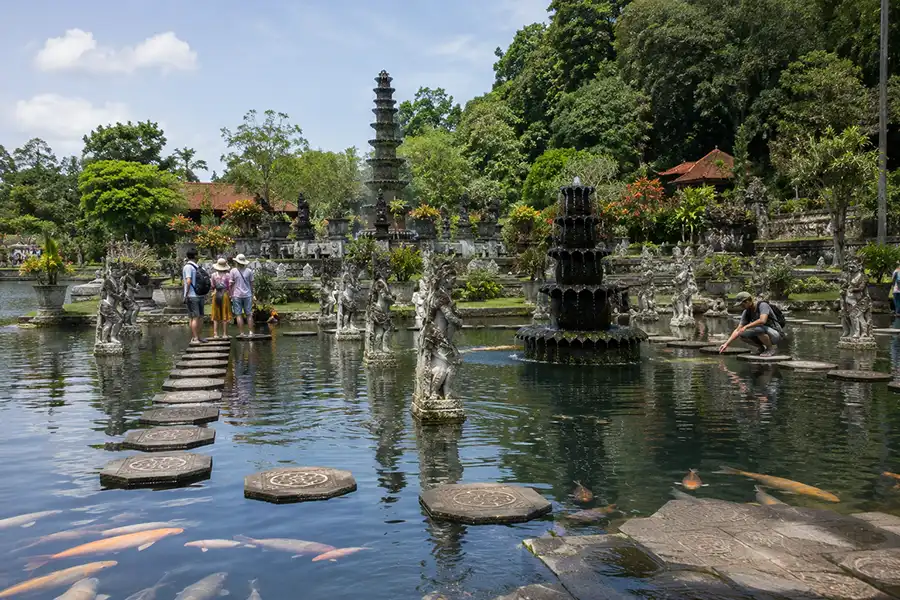
Walk the Stepping Stones
The iconic stepping stone paths that zigzag across the reflecting ponds are the most photographed feature of the palace. Crossing them offers a unique perspective of the fountains and statues, and a perfect foreground for photos with the mountain scenery behind.
Swim in the Royal Pools
The palace has three spring-fed swimming pools at different levels and sizes. The largest pool, known as Abang, offers stunning views of the surrounding rice terraces and mountains. In addition, swimming fees are IDR 10,000 for the lower pool and IDR 20,000 for the upper pool, payable separately from the entrance fee.
Feed the Koi Fish
Bags of fish food are available at the entrance for IDR 5,000. The ornamental koi ponds are home to dozens of colorful fish that gather eagerly around visitors, making it a popular and delightful activity for all ages.
Ride a Traditional Jukung Boat
Moreover, for a different perspective of the water gardens, visitors can rent a traditional Jukung wooden boat for IDR 20,000 and glide slowly across the larger ponds.
Visit the Asta Gangga Museum
Opened in December 2024, this new on-site museum provides a fascinating insight into the royal history of Karangasem and the cultural heritage of the Tirta Gangga complex.
Explore the Gardens and Shrines
The terraced gardens are dotted with small shrines, tropical plants, and intricate stone carvings. Take time to walk the upper levels for the best views across the complex and the valley beyond.
Visit the Meditation Centre
Located at the western end of the complex, the meditation centre features a quiet circular arrangement of statues and offers a genuinely peaceful escape from the busier sections near the entrance.
How to Get to Tirta Gangga from Ubud
Tirta Gangga Water Palace is located in the eastern highlands of Bali, and while the journey requires some time, the scenic route through rice terraces, volcanic landscapes, and traditional villages makes the drive a rewarding experience in itself.
Travel Time from Ubud and Other Areas
From Ubud, the drive to Tirta Gangga Water Palace takes approximately 1.5 to 2 hours by private car, covering around 60 kilometers through some of Bali’s most scenic eastern landscapes. The recommended approach is to hire a private car with driver or join a guided day tour, as the winding roads and limited signage in some sections can make navigation challenging for first-time visitors.
From Denpasar or the airport, the journey takes approximately 2 to 2.5 hours, while from the coastal town of Amed, the palace is only about 30 minutes away.
Best Transportation Options
The most convenient transportation options are a private car with driver, a car hire through services such as Grab or GoJek, or a rented motorbike for experienced riders comfortable with Bali’s winding mountain roads. Public transport options are very limited in this part of eastern Bali, so arranging private transport in advance is strongly recommended.
Combine Your Visit with Lempuyang Temple
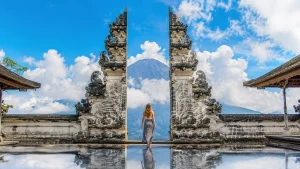
While you are in the eastern highlands, Pura Lempuyang is an essential addition to your East Bali itinerary. Located in the Karangasem Regency and home to the iconic Gate of Heaven that perfectly frames Mount Agung, Lempuyang is one of Bali’s nine directional temples and is considered one of the most spiritually significant and visually spectacular sites on the island. Therefore, the two destinations pair naturally as a full-day East Bali cultural route.
Best Time to Visit Tirta Gangga
Timing your visit to Tirta Gangga Water Palace thoughtfully can make a significant difference to your experience, both in terms of the atmosphere you encounter and the quality of photographs you are able to take.
Tirta Gangga Water Palace is open daily from 07:00 to 18:00 WITA.
Best Time of Day to Visit
Early morning visits, ideally arriving before 9 AM, are strongly recommended for several reasons. The crowds are minimal, the air is cooler and fresher, and the soft morning light creates beautiful reflections across the ponds and fountains that are ideal for photography.
The complex tends to be busiest between 12:00 and 15:00, when tour groups typically arrive from Ubud and the southern resort areas.
Best Season to Visit Tirta Gangga
The dry season between April and October generally offers the most reliable weather for a visit, with clearer skies and lower chances of afternoon rain.
That said, Tirta Gangga Water Palace is a year-round destination and remains beautiful even during the rainy season, when the surrounding vegetation is at its most intensely green.
Tirta Gangga Photography Tips
As one of the most visually distinctive instagrammable destinations in Bali, Tirta Gangga Water Palace rewards visitors who take the time to explore beyond the most obvious angles. Here are some tips to help you capture the palace at its best.
- Arrive early for the softest light and the stillest water reflections, which create the most striking mirror images in the ponds.
- Use a wide angle lens or setting to capture the full scale of the garden layout, including the layered levels, fountains, and mountain backdrop in a single frame.
- The stepping stone paths across the main ponds offer one of the most iconic compositions at the palace. Position yourself low for a dynamic foreground with the water and statues behind.
- The upper levels of the complex offer elevated panoramic views over the entire garden and the surrounding rice terraces and valley, making them worth the climb for landscape shots.
- Include the stone statues and fountain sculptures as foreground elements to add depth and cultural context to your compositions.
- On overcast days, the soft, diffused light eliminates harsh shadows and brings out the texture of the stone carvings and the color of the koi fish in the ponds.
Suggested Tour Route Including Tirta Gangga Water Palace
Combining Tirta Gangga Water Palace with other nearby East Bali destinations makes for an exceptionally rewarding full-day itinerary. Here is a suggested route that takes in the best of the region.
Morning: East Bali Cultural and Temple Route
Depart from Ubud early and drive east through the scenic rice terraces and volcanic foothills. Arrive at Tirta Gangga Water Palace by 8 AM to enjoy the complex in the cool morning light before the crowds arrive. Spend approximately one to two hours exploring the gardens, stepping stones, and ponds. From Tirta Gangga, continue to Pura Lempuyang for the famous Gate of Heaven photograph, ideally arriving before 10 AM for the clearest views of Mount Agung.
If time and energy allow, Besakih Temple on the slopes of Mount Agung is another spectacular East Bali destination that complements a Tirta Gangga Bali day trip beautifully. As the largest and most sacred temple complex in Bali, comprising more than 80 individual temples, Besakih offers a cultural and spiritual experience that is unmatched anywhere else on the island.
Afternoon: North Bali Extension
For travelers who want to extend the day further, heading north from East Bali toward the Kintamani highlands offers another iconic experience. Mount Batur Sunrise Trek can be planned as a pre-dawn activity on the same trip, departing at around 4 AM from the base for the two-hour ascent to the summit crater. The panoramic views of the caldera lake and surrounding volcanoes at sunrise make it one of the most memorable outdoor experiences in all of Bali, and its location makes it a logical pairing with a Tirta Gangga Water Palace afternoon visit.
What to Bring to Tirta Gangga Water Palace
Packing the right items for your visit to Tirta Gangga Water Palace will ensure you are comfortable throughout and ready to make the most of everything the complex has to offer.
- Water and light snacks to stay hydrated, particularly if visiting during the middle of the day.
- Non-slip walking shoes, as the stepping stone paths and poolside areas can be wet and slippery.
- Camera or smartphone for photography, with extra battery or a power bank if needed.
- Swimwear and a towel if you plan to swim in the spring-fed pools.
- A hat and sunscreen, as sections of the upper gardens are open to direct sunlight.
- Light, modest clothing that covers the shoulders and knees out of respect for the sacred nature of the site.
- Cash in Indonesian Rupiah, as digital payment options are not reliably available for tickets, fish food, or boat rides.
Safety Tips When Visiting Tirta Gangga
While Tirta Gangga Water Palace is a welcoming and well-maintained destination, keeping a few sensible precautions in mind will help ensure a safe and enjoyable visit for everyone.
- Take care on wet stepping stones and poolside pathways, as the surfaces can become slippery when wet.
- Respect local rules and sacred areas within the complex. Some sections near the inner shrines may be restricted during active prayer ceremonies.
- Do not jump or dive into the decorative ponds, which are reserved for ornamental fish and are not intended for swimming.
- Stay on marked pathways and follow directional signs throughout the complex.
- Supervise children carefully near the open pools and along the stepping stone paths.
- If visiting during the rainy season, be aware that the upper terraced levels can become muddy and require extra caution when walking.
Although Tirta Gangga Water Palace is known by many, it still feels like a hidden gem compared to busy beaches. You get a mix of famous sites and quieter gems that most tourists never find on their own. If you want to explore more hidden corners of Bali beyond Tirta Gangga, using a reliable Bali tour service can help you build a complete east Bali itinerary with ease. Tirta Gangga Water Palace offers calm, beauty, and culture.
A Visitor Experience at Tirta Gangga Water Palace
One of the most memorable ways to understand what Tirta Gangga Water Palace truly feels like is through the experience of someone who has been there.
A Peaceful Morning at Tirta Gangga
A traveler who visited Tirta Gangga Water Palace early one morning described the experience this way: arriving just after the gates opened, the complex was still quiet, with mist drifting across the ponds and the first light catching the stone fountains at a low angle. She walked slowly across the stepping stones, pausing to watch the koi fish circle beneath her feet, before climbing to the upper gardens where the full scale of the palace came into view against the backdrop of the surrounding valley.
The Lasting Impression of Stillness
What stayed with her most was not the photographs, but the stillness. The sound of water flowing through the channels, the distant call of a bird from the gardens, and the sense of being in a place that has held meaning for generations of Balinese people. She described Tirta Gangga Water Palace simply as the most peaceful place she visited in all of Bali.
For those who want to capture every iconic moment on their trip, she also highly recommends combining a visit here with a Bali Instagram tour for a curated experience of the island’s most photogenic destinations.
Plan Your Tirta Gangga Water Palace Visit
With its extraordinary combination of royal history, sacred water features, and serene highland setting, Tirta Gangga Water Palace is one of the most rewarding and visually distinctive destinations in all of East Bali. Whether you come for the photography, the swimming, the cultural heritage, or simply the atmosphere, this remarkable water palace Bali experience is sure to be one of the most memorable stops on your Bali itinerary. Whether you are planning ahead or still exploring options, browsing available Bali day trips from Seminyak is a great way to find an experience that matches your pace and interests.
Tirta Gangga Water Palace is open daily from 07:00 to 18:00 WITA. The entrance fee for international adult visitors is IDR 90,000 as of March 2025, with reduced rates for seniors and children. Bali Touristic offers customized guided tours in Bali including Tirta Gangga Bali and the surrounding East Bali region, ensuring you experience not only the beauty of the palace but also the hidden cultural gems in the surrounding landscape.
Tirta Gangga Water Palace is also featured among the 15 instagrammable destinations you must visit in Bali, a curated guide to the most visually stunning and photogenic locations across the island.

Frequently Asked Questions About Tirta Gangga Water Palace
What can you do at Tirta Gangga Water Palace?
There is plenty to keep visitors engaged at Tirta Gangga Water Palace beyond simply admiring the view. The most popular activities include walking the iconic stepping stone paths across the koi ponds, swimming in the sacred spring-fed pools (at an additional fee), feeding the colorful koi fish, riding a traditional Jukung boat across the ponds, and exploring the tiered gardens and stone shrines on the upper levels.
The newly opened Asta Gangga Museum is also worth a visit for those interested in the history of the Karangasem royal family and the heritage of the palace.
How much is the entrance fee to Tirta Gangga?
As of March 2025, the entrance fees to Tirta Gangga Water Palace are as follows. For international tourists: adults IDR 90,000, seniors over 65 IDR 70,000, and children aged 5 to 12 IDR 45,000. For domestic tourists: adults IDR 45,000, Bali ID card holders IDR 35,000, and children IDR 25,000. Swimming in the pools costs an additional IDR 10,000 for the lower pool and IDR 20,000 for the upper pool.
Moreover, Fish food is available at the entrance for IDR 5,000, and traditional boat rides cost IDR 20,000. Parking is IDR 5,000 for motorbikes and IDR 10,000 for cars. Therefore, it is recommended to bring cash as digital payment may not always be available.
Who owns Tirta Gangga Water Palace?
Tirta Gangga Water Palace was built by I Gusti Bagus Jelantik, also known as Anak Agung Anglurah Ketut Karangasem, the last ruling King of Karangasem Regency in East Bali. Construction began around 1946 as a royal retreat and meditation sanctuary.
In fact, after the palace was partially destroyed by the eruption of Mount Agung in 1963, it was rebuilt by the local community and descendants of the royal family. Today, the palace and its grounds are maintained as a public cultural heritage site and remain closely associated with the Karangasem royal lineage.
What is Karangasem known as?
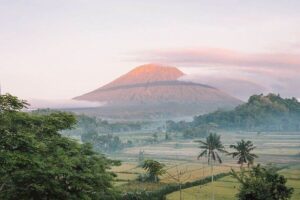
Certainly, Karangasem Regency in East Bali carries several well-known titles that reflect its unique character and history. It is commonly referred to as Gumi Lahar, meaning Land of Lava, because the regency has historically been the most affected by eruptions of Mount Agung, the island’s highest and most sacred volcano. It is also known as Gumi Megibung, a reference to the traditional Karangasem communal eating tradition called Megibung that dates back to the 17th century.
Beyond these local titles, Karangasem is also promoted as The Spirit of Bali for its deeply preserved spiritual traditions, and as the Pearl of East Bali for its outstanding natural and cultural heritage, which includes Tirta Gangga Water Palace, Pura Lempuyang, Besakih Temple, and the black sand beaches of Amed and Tulamben.