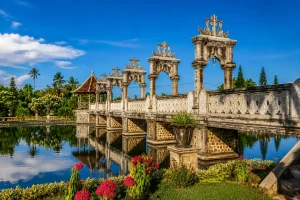

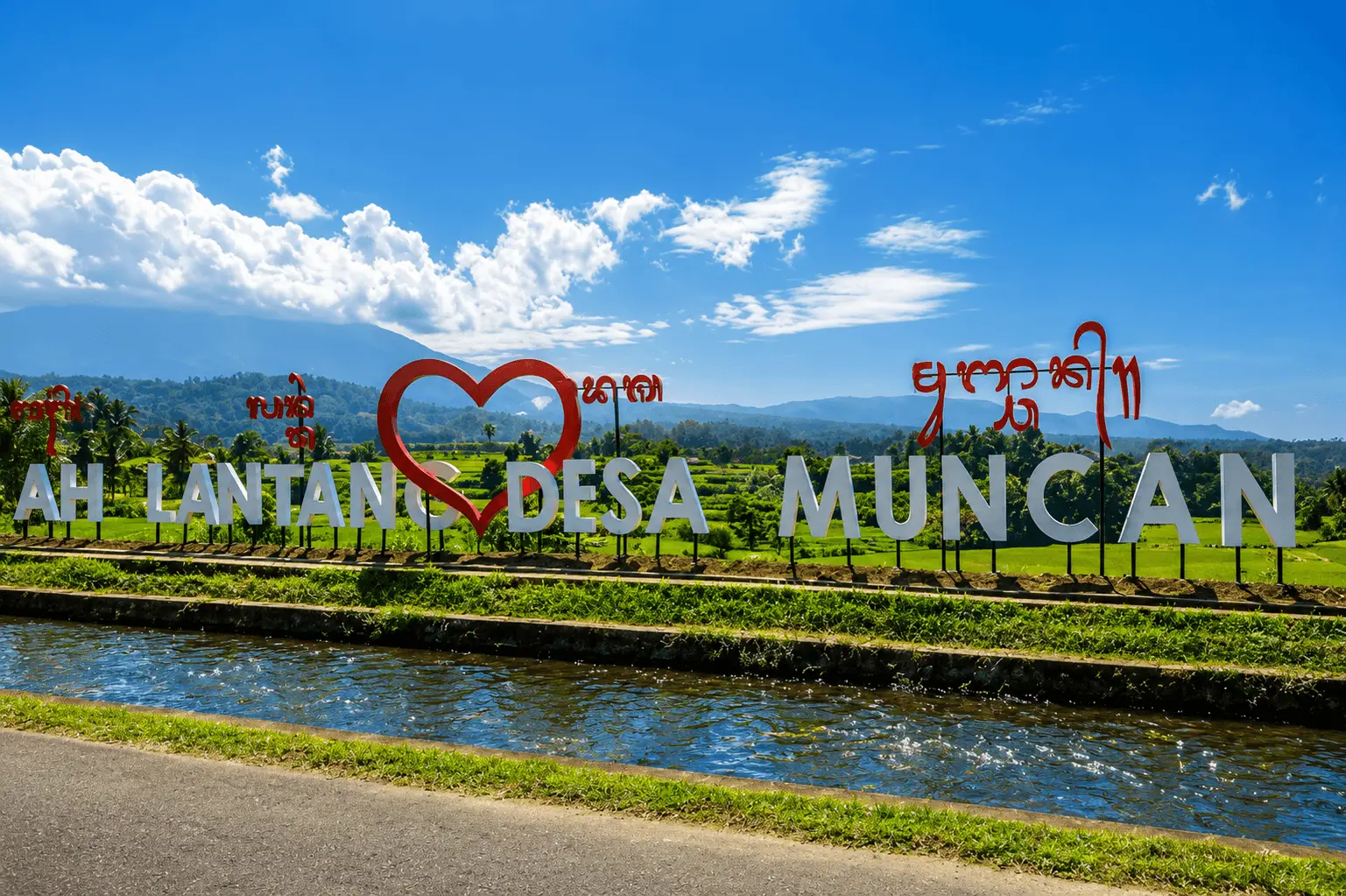
Tucked away in the highlands of Karangasem, Telabah Lantang in Muncan Village is one of Bali’s best-kept secrets. It sits in the shadow of the majestic Mount Agung, far from the busy tourist crowds.
The area offers lush terraced rice fields, a scenic riverside road, and a sacred natural spring. Whether you seek tranquility, cultural experiences, or a stunning photo spot, this hidden gem delivers it all.

Telabah Lantang at a Glance
| Detail | Information |
| Location | Jl. Pura Dalem, Muncan, Kec. Selat, Karangasem, Bali 80862 |
| Opening Hours | Open year-round (best visited during the day) |
| Entrance Fee | No official fee — small donation appreciated |
| Distance from Denpasar | Approx. 2 hours by car |
| Distance from Ubud | Approx. 1.5 hours by car |
| Distance from Amlapura | Approx. 1.5 hours by car |
| Best For | Photography, nature walks, melukat ritual, cultural immersion |
What Is Telabah Lantang?
Telabah Lantang is a natural water spring and bathing spot that the local community holds dear. The name breaks down simply: “telabah” means a pool or water basin, and “lantang” means elongated or spacious. Together, they describe the shape and size of the spring itself.
The spring’s water is clear, cool, and refreshing. It invites both locals and visitors to slow down and recharge. Towering trees surround the area, and tropical plants line the banks. The gentle sound of flowing water fills the air. It all creates a deeply peaceful atmosphere that is hard to find elsewhere in Bali.
Beyond the spring, the village sits within a rich Karangasem hidden gem landscape. Traditional Balinese farming practices are still very much alive here. The area also supports diverse flora and fauna. As a result, it appeals equally to nature lovers, photographers, and cultural travelers.
Flora: A Lush Green Haven
The forest around Telabah Lantang creates ideal conditions for tropical plant life. Here are some of the most notable species you will find:
- Bamboo Groves – Towering bamboo grows near the water source. It provides natural shade and helps prevent soil erosion.
- Ferns and Mosses – The cool, damp environment supports various fern species and moss-covered rocks, giving the area its lush, green look.
- Coconut and Banana Trees – Locals cultivate these widely. They are essential to both the ecosystem and traditional Balinese agriculture.
- Medicinal Plants – Indigenous plants such as ginger, turmeric, and pandan grow here. Locals use them in traditional Balinese healing practices.
- Fragrant Flowers – Frangipani and jasmine bloom throughout the area. Both flowers play an important role in Balinese religious offerings.
Fauna: A Hidden Wildlife Sanctuary
The remote and undisturbed environment at Telabah Lantang supports a variety of wildlife. Here is what you might encounter:
- Birds – Kingfishers, herons, and Balinese drongos are commonly spotted near the water. Their calls add to the area’s peaceful atmosphere.
- Butterflies and Insects – Diverse plant life attracts colorful butterflies, bees, and dragonflies. Together, they create a vibrant, living ecosystem.
- Reptiles and Amphibians – Geckos, lizards, and tree frogs thrive in the humid surroundings. Look for them hiding among the foliage near the water.
- Small Mammals – Civets and squirrels inhabit the nearby forested areas. They are less frequently seen but play an essential role in the ecosystem.
- Freshwater Fish – Small fish and aquatic organisms live in the clear spring water. They contribute to the overall health of the water system.
The importance of conservation
The biodiversity here is fragile and worth protecting. Local communities actively practice sustainable farming and traditional water management. They also support responsible tourism. Therefore, visitors are encouraged to avoid littering, minimize disturbances to wildlife, and participate in conservation efforts when possible.
Why Telabah Lantang Is a Top Photo Spot in Bali
In recent years, Telabah Lantang has quickly earned a reputation as one of the most beautiful and newest Instagrammable photo spots in Bali. So what makes it so photogenic?
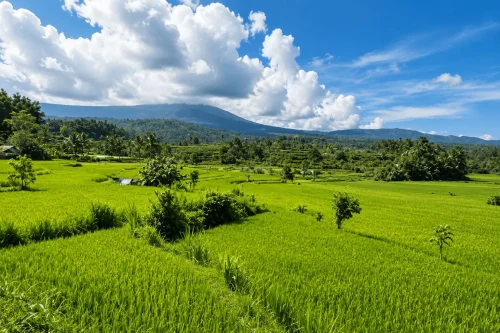
First, a scenic road winds right alongside a picturesque river as you approach the village. The combination of flowing water, rice terraces, and mountain backdrop creates stunning natural frames at almost every turn. Second, the morning light filters through the bamboo and tree canopy in a way that produces soft, golden tones which is perfect for photography.
Additionally, the spring pool itself reflects the surrounding greenery beautifully. If you visit early in the morning, you will often find the area misty and quiet. That makes for a truly magical shot. For best results, arrive before 8 AM or in the late afternoon around 4 PM when the light is most flattering.
Things to Do at Telabah Lantang
Unlike the crowded beaches or busy tourist towns, Telabah Lantang Muncan offers a more intimate experience. Here is what you can do when you visit:
Soak in the refreshing spring water
The natural pool is the highlight of the visit. The water comes from underground springs, so it stays cool and pure even on hot days. After a long drive through the highlands, a dip here feels incredibly refreshing.
Experience a traditional Balinese melukat ritual
Many locals visit Telabah Lantang specifically for the melukat Bali ritual for a sacred cleansing ceremony performed with the sacred spring water. The ritual is believed to purify the body and soul, remove negative energy, and restore harmony in one’s life.
If you want to experience this, approach the local community or a Balinese priest for guidance. The village also has traditional temples nearby, including a pura that serves as a spiritual center. These temples offer a quiet window into Balinese Hinduism and its daily practices.
Walk through the terraced rice fields
Surrounding the village are lush terraced rice fields that stretch across the hillside. These fields use the traditional irrigation system known as subak. It is a UNESCO World Heritage-recognized method. You can watch local farmers work the land and get a real glimpse of traditional Balinese agricultural life.
Capture stunning photos
Every corner of Telabah Lantang offers something worth photographing. From the rippling spring water to the vibrant green rice terraces and traditional ceremonies, the visual variety is remarkable. Moreover, the natural lighting conditions here are consistently beautiful throughout the day.
Meet local artisans
The people of Muncan Village are skilled in traditional handicrafts. You can find unique souvenirs made from natural materials, including woven textiles, wood carvings, and bamboo crafts. Buying directly from local artisans also supports the community.
How to Get to Telabah Lantang Muncan
Telabah Lantang is located at Jl. Pura Dalem, Muncan, Kec. Selat, Karangasem (Google Maps Plus Code: HC8X+V5G). The road is paved throughout, though some sections are narrow and winding. Drive carefully, especially if you are not familiar with mountain roads.
By private car or motorbike
From Denpasar, the drive takes approximately 2 hours. From Amlapura (the capital of Karangasem Regency), expect about 1.5 hours. Head toward Muncan Village via Klungkung or Sidemen, then follow signs to Telabah Lantang. A motorbike works well for navigating the narrower roads near the village.
By guided tour or private driver
Because of the distance and winding roads, many visitors find it easier to hire a private driver. Renting a car with a driver in Bali gives you the flexibility to explore at your own pace without the stress of navigating unfamiliar roads. Your driver can also recommend other stops along the way, such as Sidemen or Tirta Gangga.
Visitor Information
Best time to visit
Telabah Lantang is open year-round. However, the dry season from April to October is generally the best time to visit. Roads are easier to navigate, and the skies are clearer for photography. If you visit during the wet season, be prepared for slippery paths and reduced visibility. For the most peaceful experience, visit on a weekday morning between 7 and 10 AM.
Entrance fee
There is currently no official entrance fee to visit Telabah Lantang Muncan Village. However, a small donation to the village temples or the purchase of local handicrafts is always appreciated. This helps support the community and preserve the site for future visitors.
What to bring
- Comfortable clothing – Wear light, breathable clothes for walking and exploring.
- A sarong or shawl – Required for temple visits. Some locals may lend one, but it is best to bring your own.
- Camera or smartphone – The scenery is exceptional. Do not leave without capturing some photos.
- Sunscreen and hat – The tropical sun can be intense, especially during the midday hours.
- Water and snacks – Local shops are limited. Bring your own to stay comfortable on longer walks.
- Cash – For donations, handicraft purchases, or small local refreshments.
Important guidelines for visitors
- Dress modestly when visiting temples or interacting with locals.
- Dispose of waste responsibly. This is a pristine, natural environment.
- Keep your voice low during temple ceremonies or spiritual activities.
- Avoid picking plants or disturbing wildlife.
Nearby Attractions
Telabah Lantang pairs well with several other destinations in the Karangasem and Klungkung area. Consider combining your visit with one or more of the following:
- Sidemen Valley – Just a short drive away, Sidemen offers stunning rice terrace views, traditional weaving workshops, and a peaceful riverside atmosphere. It makes a perfect half-day addition to your Telabah Lantang visit.
- Tirta Gangga Water Palace – This historical water palace is about 40 minutes away. It features beautiful fountains, ponds, and sculptures in a tranquil royal garden setting.
- Pura Besakih – Known as Bali’s Mother Temple, Pura Besakih sits on the slopes of Mount Agung about an hour’s drive away. It is the most important Hindu temple complex on the island.
- Mount Agung – Bali’s tallest mountain looms nearby and rewards those who hike it with breathtaking sunrise views. A local guide is required for the summit hike.
Explore Telabah Lantang with Bali Touristic
Telabah Lantang Muncan is the kind of place that stays with you long after you leave. The sacred spring, the sweeping rice fields, the quiet village life, it all adds up to an experience that is genuinely rare in Bali.
If you want to visit without the hassle of planning transport and navigation, Bali Touristic can help. We offer personalized Bali tour packages that include off-the-beaten-path destinations like Telabah Lantang, guided by experienced local drivers who know the roads and the stories behind every stop.
You can also read reviews from our previous guests on Tripadvisor to see what others say about traveling with us.

Questions About Telabah Lantang
How much is the entrance fee for Telabah Lantang?
There is no official entrance fee. However, visitors are encouraged to leave a small donation at the village temple or purchase local handicrafts. This goes directly toward community upkeep and site preservation.
Is Telabah Lantang good for photography and Instagram?
Absolutely. Telabah Lantang has become one of the most talked-about photo spots in East Bali. The scenic road alongside the river, the lush rice terraces, the spring pool, and the mountain backdrop all offer exceptional photographic opportunities. Early morning visits give you the best light and the fewest crowds.
What is the best time to visit Telabah Lantang Muncan?
The best time to visit Telabah Lantang Muncan is during the dry season, from April to October. For the quietest and most atmospheric experience, aim for early morning on a weekday. The light is beautiful, the air is fresh, and the site is not yet busy.
Can I combine Telabah Lantang with a Sidemen day trip?
Yes, and it is highly recommended. Telabah Lantang sits along the route toward Sidemen, making them a natural pairing. You can spend the morning at the spring and rice fields in Muncan, then drive to Sidemen for lunch and an afternoon walk through the valley. Both destinations are uncrowded and offer a genuine East Bali experience.
How do I get to Telabah Lantang from Ubud or Denpasar?
From Ubud, the drive takes around 1.5 hours heading east via Klungkung toward Muncan Village. From Denpasar, allow about 2 hours. Because the roads near the village are narrow and winding, many visitors prefer to travel with a local driver. Hiring a car with a driver in Bali is a practical and comfortable option, especially if you plan to visit multiple spots in the same day.
Is there parking available at Telabah Lantang?
Basic parking is available near the village entrance. Space is limited, so arriving early is advisable. If you visit during a local ceremony or on a weekend, the area can get slightly busier and parking may be more limited than usual.