


Introduction
Bali is not just temples and rice terraces. For travelers who crave adrenaline, this island is one of Southeast Asia’s most exciting adventure playgrounds. From cliff jumping to white water rafting, extreme sports in Bali span the ocean, jungle, cliffs, rivers, and sky.
Whether you are a first-timer looking for a manageable thrill or a seasoned adventure junkie hunting your next challenge, Bali delivers. From flyboarding above turquoise water in Tanjung Benoa to bungee jumping over a jungle gorge, cliff jumping off Nusa Ceningan, or canyoning through hidden waterfalls in the highlands — the options are extraordinary.
In this guide, we cover the 12 best extreme sports in Bali, each with estimated prices, difficulty levels, the best locations, and practical booking tips. To get between multiple activity locations in one day, consider a private driver Bali or Bali car hire — most operators are spread across different parts of the island.
Quick Comparison Table
| # | Sport | Price (est.) | Difficulty | Best Location |
|---|---|---|---|---|
| 1 | Surfing | IDR 150K–400K/lesson | Beginner–Expert | Uluwatu, Canggu, Padang Padang |
| 2 | White Water Rafting | IDR 350K–600K/person | Beginner–Intermediate | Ayung River, Telaga Waja |
| 3 | ATV / Quad Biking | IDR 350K–700K/person | Beginner | Ubud, Payangan |
| 4 | Paragliding | IDR 900K–1.5M/person | Beginner (tandem) | Uluwatu / Timbis Beach |
| 5 | Bungee Jumping | IDR 650K–1.2M/person | Beginner (guided) | Seminyak, Ubud |
| 6 | Flyboarding | IDR 400K–700K/30min | Beginner–Intermediate | Tanjung Benoa |
| 7 | Cliff Jumping | IDR 50K–150K | Intermediate | Mahana Point, Nusa Ceningan |
| 8 | Canyoning | IDR 500K–900K/person | Intermediate | Gitgit, Aling Gorge, Beji Guwang |
| 9 | Skydiving | IDR 4M–6M/tandem jump | Beginner (tandem) | Skydive Bali, Tanah Lot drop zone |
| 10 | Kite Surfing | IDR 500K–1.5M/lesson | Intermediate | Sanur, Nusa Dua |
| 11 | Wakeboarding | IDR 200K–400K/session | Beginner–Intermediate | Bali Wake Park, Nusa Dua |
| 12 | Mount Batur Sunrise Hike | IDR 350K–600K/person | Intermediate | Kintamani |

1. Surfing — Bali’s Most Iconic Extreme Sport
Difficulty: Beginner to Expert
Price: IDR 150,000–400,000 for a surf lesson; board rental from IDR 80,000/hour
Best locations: Uluwatu, Padang Padang, Canggu (Echo Beach), Seminyak, Keramas
Best season: April–October (dry season, consistent swells)
Surfing is the heartbeat of Bali’s adventure culture. The island has world-class breaks for every level — from the gentle beach breaks of Seminyak and Kuta for total beginners, to the powerful reef breaks at Uluwatu and Padang Padang that attract professional surfers from around the world.
For beginners: Kuta and Seminyak beaches offer the most forgiving conditions, with plenty of surf schools providing 2-hour starter lessons including board and instructor. Padang Padang has a calmer inner section suitable for progressing beginners.
For advanced surfers: Uluwatu is the crown jewel — a long left-hand reef break that can produce walls of up to 6 meters on large swells. Keramas on the east coast offers powerful, fast waves that regularly host international competitions.
Tips:
- Book lessons in the early morning (7–9 AM) for calmer wind conditions
- Always check surf reports (Surfline, Magic Seaweed) before heading to reef breaks
- Respect local surf etiquette — Bali’s breaks can be very crowded and locals have priority
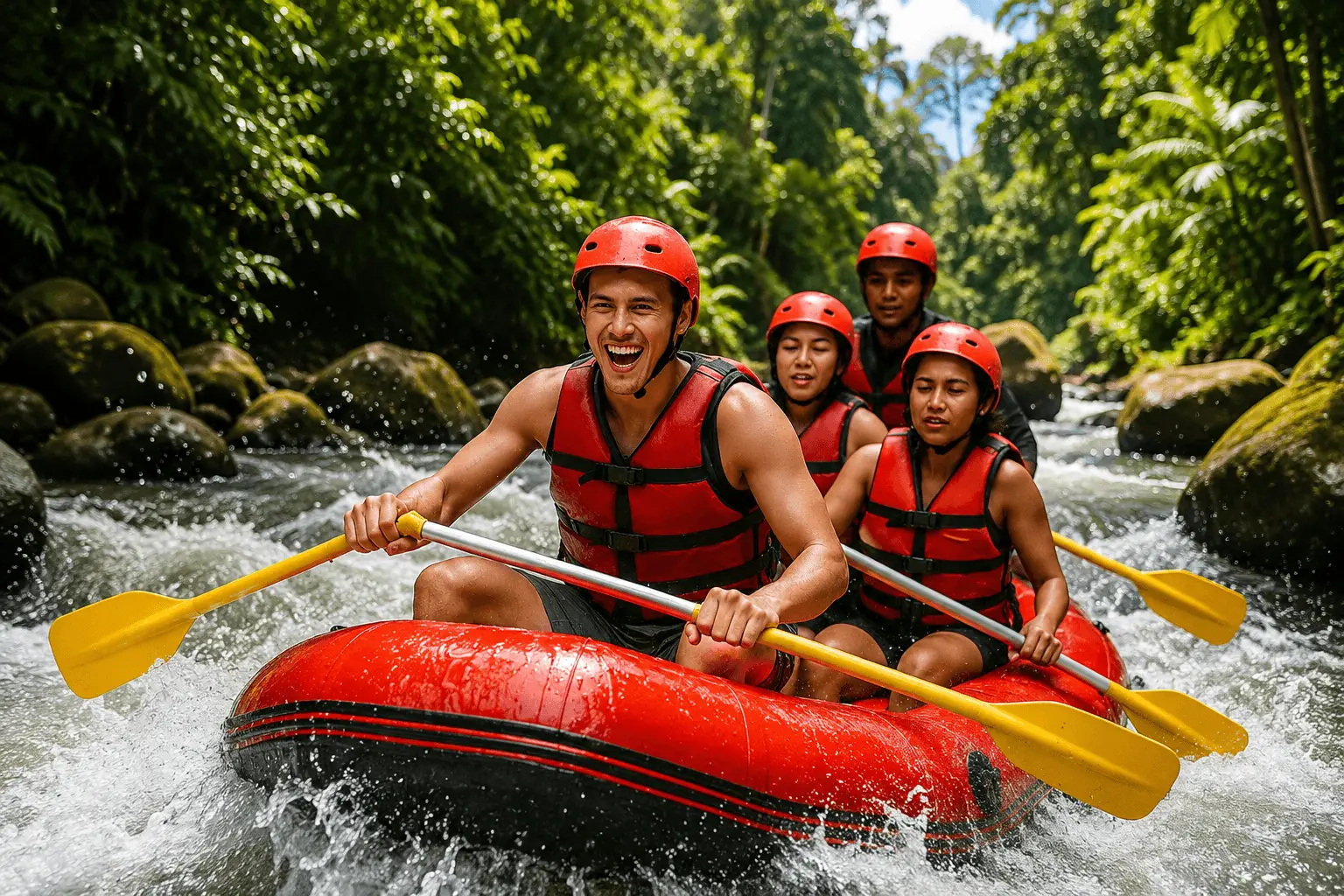
2. White Water Rafting — Jungle Rapids & Waterfalls
Difficulty: Beginner to Intermediate
Price: IDR 350,000–600,000/person (usually includes transport, equipment, lunch)
Best locations: Ayung River (Ubud), Telaga Waja River (Karangasem)
Best season: November–March for intense rapids; April–October for scenic flow
White water rafting on the Ayung River is one of Bali’s most popular adventure activities — and for good reason. The 10-kilometer route winds through a lush jungle gorge, passing ancient stone carvings, cascading waterfalls, and dramatic cliff walls. The rapids are class II–III, making it accessible for almost anyone including families.
For a more intense experience, the Telaga Waja River in East Bali is significantly wilder. It features class III–IV rapids, a 4-meter drop, and a longer route through remote landscapes — a serious step up from Ayung.
Tips:
- Minimum age is typically 7–12 years old depending on operator and river
- Bring a change of clothes and waterproof bag for your valuables
- Morning departures (8–9 AM) are cooler and less crowded
- Book as a package with tours in Bali for transport from your hotel
3. ATV / Quad Biking — Off-Road Through Rice Fields & Caves
Difficulty: Beginner
Price: IDR 350,000–700,000/person (solo or tandem; most include transport & lunch)
Best locations: Ubud (Payangan), Abiansemal (Badung), Gianyar
Best season: Year-round; mud after rain adds to the fun
ATV quad biking is one of Bali’s most beginner-friendly extreme activities — no experience required. You ride a powerful quad bike through muddy tracks, river crossings, rice paddies, jungle trails, and sometimes through caves and past waterfalls. Most operators give a 15-minute training session before departure.
Standout operators like Kuber ATV in Payangan include access to a 700-meter natural cave and multiple waterfalls in a single 90-minute circuit — excellent value for money.
Tips:
- Wear clothes you don’t mind getting completely filthy
- Closed-toe shoes are mandatory — sandals will not be accepted
- Tandem options available for couples or parent-child pairs
- Most operators provide GoPro footage packages for an additional fee
4. Paragliding — Soaring Above Bali’s Cliffs
Difficulty: Beginner (tandem with certified pilot)
Price: IDR 900,000–1,500,000/person for a tandem flight
Best locations: Timbis Beach / Uluwatu (South Bali)
Best season: April–October (stable winds, clear skies)
Furthermore, Paragliding over Bali’s southern cliffs is one of the most breathtaking experiences on the island. You take off from a hill above Timbis Beach or near Uluwatu, soar up to 150 meters above sea level, and glide along the coastline with panoramic views of the Indian Ocean, white-sand beaches, and the Bukit peninsula’s dramatic limestone cliffs.
All tandem flights are operated by licensed pilots — no experience needed. Flights typically last 20–40 minutes depending on wind conditions.
Recommended operators: RIUG Paragliding Bali (rated 9.8 on Traveloka), Timbis Paragliding Bali
Best time of day: Afternoon (2–5 PM) when thermal winds are most consistent for longer flights
Tips:
- Sunset flights (available April–October) offer spectacular golden light — book well in advance
- Weight limit typically 100–110 kg depending on the operator
- Wear comfortable, non-loose clothing — scarves or open tops are a safety hazard at altitude
- Combine with Uluwatu Temple visit for a full South Bali afternoon
5. Bungee Jumping — The Classic Freefall
Difficulty: Beginner (courage required, not skill)
Price: IDR 650,000–1,200,000/jump
Best locations: AJ Hackett Bali (Seminyak), Bali Bungy (various mobile platforms)
Best season: Year-round
Bali bungee jumping is short, sharp, and absolutely unforgettable. The most established operator is AJ Hackett Bali in Seminyak, offering jumps from a 45-meter platform. The jump itself lasts only a few seconds but the experience — standing on the edge, the countdown, and the freefall — stays with you forever.
For something more theatrical, AJ Hackett’s Canyon Swing sends you off a 78-meter platform in a soaring pendulum arc over a jungle gorge — arguably more exciting than a straight bungee jump.
Tips:
- Minimum weight ~35 kg, maximum ~130 kg
- Do not eat a heavy meal within 2 hours before jumping
- Most platforms include a photo/video package — worth adding
- Arrive early in the morning to avoid heat and queues
6. Flyboarding — Iron Man Over the Ocean
Difficulty: Beginner to Intermediate
Price: IDR 400,000–700,000 for a 30-minute session
Best location: Tanjung Benoa Beach, South Bali
Best season: Year-round (calmer water May–October)
Flyboarding is Bali’s most visually spectacular water sport. You strap into a board connected by a hose to a jet ski, and water pressure propels you up to 15 meters above the ocean surface. Expert flyboarders can perform dolphin dives, rolls, and full inversions — beginners can expect to hover, wobble, and fall spectacularly before getting the hang of it.
Invented by French jet-ski world champion Franky Zapata, flyboarding is now widely available at Tanjung Benoa Beach, where the calm, sheltered water makes learning far easier than open ocean.
Tips:
- Expect to spend your first 10–15 minutes falling — it takes time to find balance
- Sessions include an instructor in the water for safety and guidance
- Combine with other Tanjung Benoa watersports (parasailing, banana boat, jet ski) for a full-day package
- Morning sessions have calmer water and better visibility
7. Cliff Jumping — The Raw Adrenaline Hit
Difficulty: Intermediate
Price: Free to IDR 150,000 (access/bar spend at Mahana Point)
Best location: Mahana Point, Nusa Ceningan (Lembongan area)
Best season: April–October (safer ocean conditions)
To challenge yourself, Cliff jumping in Bali is not an organized activity with safety harnesses and instructors — it is the real thing. Mahana Point on Nusa Ceningan is the most famous spot: a small cliff bar perched above a rocky inlet where the ocean surges below. The jump platform sits roughly 7 meters above the water.
The rules are simple: watch the waves, wait for the right moment, and jump. A small bar on the cliff provides a place to watch, drink, and summon courage.
Important safety notes:
- Jump only when the water below is clearly deep and the surge is consistent — do not jump during big swells or choppy conditions
- Do not jump if you cannot swim confidently
- The platform has no safety equipment or rescue staff — this is an entirely self-assessed risk activity
- Nusa Ceningan is reached by a short road bridge from Nusa Lembongan; combine with snorkeling or island exploration
8. Canyoning — Rappelling Through Hidden Waterfalls
Difficulty: Intermediate
Price: IDR 500,000–900,000/person (guided, full-day)
Best locations: Gitgit (Singaraja), Aling Gorge (Sambangan), Hidden Canyon Beji Guwang (Gianyar)
Best season: April–October (drier canyons, safer water levels)
Moreover, Canyoning — also called canyoneering — combines rappelling, jumping, swimming, and scrambling as you navigate Bali’s hidden river gorges and waterfall systems. You descend under cascading waterfalls, rappel down 10–35 meter vertical rock faces, and swim through emerald pools deep inside jungle canyons that most tourists never see.
Top routes:
- Kerenkali Canyon (Gitgit): Most beginner-friendly; part of the Gitgit Waterfall system. Ideal for first-timers.
- Aling Gorge (Sambangan, North Bali): More technical with longer rappels. Suitable for those with some physical confidence.
- Hidden Canyon Beji Guwang (Gianyar, near Ubud): A popular, shorter option accessible from South/Central Bali. Less vertical, more swimming.
- Maya Dewa Canyon (Mengandang Valley): Advanced — 5 vertical rappels up to 35 meters and a 50-meter waterfall zip line.
Tips:
- All reputable operators provide full equipment, wetsuits, helmets, and certified guides
- Choose operators with guides certified in canyoning rescue and first aid
- North Bali canyons require an early morning start and a private driver Bali for the 2+ hour drive from South Bali
9. Skydiving — Freefall Over Paradise
Difficulty: Beginner (tandem with instructor)
Price: IDR 4,000,000–6,000,000/tandem jump
Best operator: Skydive Bali
Best season: April–October (clear skies, stable conditions)
Skydiving in Bali offers something that nowhere else can match — a 60-second freefall from 10,000–15,000 feet, followed by a parachute glide over rice terraces, volcanic mountains, and the Indian Ocean coastline. It is the most expensive activity on this list but also the most transformative.
Skydive Bali operates tandem jumps where you are harnessed to an experienced instructor for the entire jump — no prior experience needed. The full experience from briefing to landing takes approximately 3–4 hours.
Tips:
- Book well in advance — jump slots are limited and the best conditions are during dry season
- Do not eat a heavy meal before jumping
- Jumps can be cancelled due to cloud cover or wind — operators typically offer rescheduling at no charge
- The views on a clear day are genuinely once-in-a-lifetime
10. Kite Surfing — Wind, Speed & Water
Difficulty: Intermediate (significant learning curve)
Price: IDR 500,000–1,500,000 for a beginner lesson; equipment rental varies
Best locations: Sanur Beach, Nusa Dua
Best season: June–September (strongest, most consistent winds)
Kite surfing combines a large controllable kite with a small board to harness wind power and fly across the water surface. At higher levels, riders can launch themselves meters into the air, hold inverted positions, and perform loops. Bali is not the world’s top kite surfing destination, but Sanur and Nusa Dua offer reliable conditions with several dedicated schools.
Tips:
- Expect a genuine learning curve — most beginners need 6–12 hours of instruction before riding independently
- Start with a certified IKO (International Kiteboarding Organization) school
- June–September offers the most consistent winds; outside these months conditions are variable
- Progress to advanced riding at nearby Lombok or Sumbawa once your skills develop
11. Wakeboarding — Cable Park Tricks
Difficulty: Beginner to Intermediate
Price: IDR 200,000–400,000/session
Best location: Bali Wake Park, Nusa Dua
Best season: Year-round (indoor lagoon circuit)
Bali Wake Park in Nusa Dua is a cable-operated wakeboarding lagoon — instead of being towed by a boat, an overhead cable system pulls you around a course with ramps, rails, and obstacles. This setup makes it safer and more affordable than boat-tow wakeboarding, and the consistent speed is ideal for learning tricks.
Tips:
- Beginners can usually stand and ride within 1–2 sessions
- Helmets, life jackets, and impact vests are provided
- The park has a viewing deck and café — great for groups where not everyone is on the water
- Combine with Tanjung Benoa watersports for a full South Bali water day
12. Mount Batur Sunrise Hike — Volcano Under the Stars
Difficulty: Intermediate
Price: IDR 350,000–600,000/person (guide fee mandatory)
Location: Kintamani, North-East Bali
Best season: April–October (clearest summit views)
Hiking Mount Batur before dawn and watching the sunrise from an active volcano at 1,717 meters is one of Bali’s most profound adventure experiences. The 2-hour ascent begins at 2–3 AM, guided by headlamp through volcanic rock and loose scree, culminating at the crater rim just as the sun rises over Mount Agung and Lake Batur below.
The hike is challenging but accessible to anyone with reasonable fitness — no technical climbing or special gear required. The descent takes 1.5–2 hours.
Tips:
- Guides are mandatory (regulated by local authority) — do not attempt without one
- Bring a warm fleece or jacket — the summit at 4 AM is genuinely cold (12–15°C)
- Wear trail shoes or hiking boots — the volcanic rock is uneven and sharp
- Book accommodation in Kintamani the night before to avoid a 2–3 AM departure from South Bali
- Combine with the Black Lava Fields at the base for a daytime photography session after the hike
Practical Tips for Extreme Sports in Bali
Travel insurance: Essential. Make sure your policy includes an extreme sports rider, as standard travel insurance often does not cover activity-related injuries. Check specifically for emergency evacuation, personal accident coverage, and medical expenses before your trip. For activity booking assistance and more travel information, feel free to contact Bali Touristic directly.
Best season: April–October (dry season) is optimal for most activities. Water sports are better with calmer seas; paragliding and skydiving need clear skies; canyoning is safer at lower water levels.
Getting around: Most extreme sport locations are spread across different parts of Bali. A private driver Bali or Bali car hire is the most efficient way to combine multiple activities in one trip.
Booking: Book popular activities 1–3 days in advance, especially during peak season (July–August). Paragliding, skydiving, and ATV tours fill up quickly.
Safety: Always check that operators use certified guides, maintained equipment, and carry appropriate liability insurance. For self-guided activities like cliff jumping, assess conditions yourself before committing.

Frequently Asked Questions
What is the best extreme sport in Bali for beginners?
White water rafting on the Ayung River and ATV quad biking are the most beginner-friendly options — both require zero prior experience and offer guided safety briefings. Tandem paragliding and bungee jumping are also accessible for complete beginners, as a certified professional handles the technical side.
How much does bungee jumping cost in Bali?
A standard bungee jump at AJ Hackett Bali costs approximately IDR 650,000–1,200,000 depending on the package (jump only vs. jump with photo/video). The Canyon Swing is typically priced slightly higher at IDR 900,000–1,500,000.
Is paragliding in Bali safe?
Yes — when booked through a reputable operator with licensed pilots. All tandem flights in Bali are operated by certified professionals and use internationally standard equipment. The best operators are registered with the Indonesian Aviation Authority and carry full liability insurance. Avoid unlicensed operators offering unusually low prices.
What is the best time of year for extreme sports in Bali?
April to October (dry season) is the best overall window. Surfing peaks with consistent swells, skies are clear for paragliding and skydiving, and water levels in canyons and rivers are safer. The rainy season (November–March) can still be excellent for rafting (higher rapids) but is less reliable for air-based activities.
Do I need experience for canyoning in Bali?
No prior experience is needed for beginner canyoning routes like Kerenkali Canyon or Hidden Canyon Beji Guwang. A reasonable level of physical fitness and comfort in water is sufficient. More technical routes like Aling Gorge or Maya Dewa Canyon are better suited for those with some outdoor or adventure experience.
Ready to book your Bali adventure? Explore our Bali tours, private driver packages, and Bali car hire to get between locations safely and comfortably.


