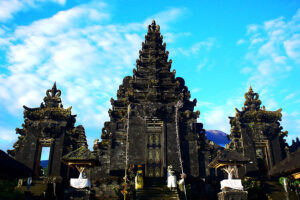


Kehen Temple, also known as Hyang Api Temple, is one of the sacred Hindu temples located in Bangli Regency. Dating back to 804 Saka, this temple is among the largest and oldest temples in Bali. Its beauty and rich culture make it one of Bangli Interesting Places to Visit. Kehen Temple is characterized by a Candi Bentar with Balinese carvings that decorate the entrance. Resembling Kahyangan Jagat Temple in general. However, what distinguishes it is the presence of Candi Kurung at the gate. It is a rare architectural element that adds to the uniqueness and attractiveness of this temple. This uniqueness is often used as a stunning photo background for visitors.
For travelers who want to enjoy cultural tourism, Kehen Temple offers an unforgettable experience. The view of the green and beautiful Bangli hills to the north of the temple is the perfect background for taking pictures. This will refresh the eyes with its natural beauty. This temple is also classified as an ancient temple in Bali. The discovery of a number of inscriptions in Kehen Temple proves that this place has a high historical value. One of the inscriptions found shows that this temple has existed since the Gelgel Kingdom era. Then making it one of the oldest temples in Bali.
Kehen Temple is not only a place of worship. But it is also a cultural tourist destination that offers a spiritual experience and mesmerizing natural scenery. Don’t miss the opportunity to visit this historic temple while in Bangli!

Kehen Temple Location
For those of you who want to visit Kehen Temple, both for worship and cultural tourism. This temple is located in Cempaga Village, Bangli Regency. The location is in the highlands of Bangli at an altitude of 483 meters above sea level (masl). So it offers a cool atmosphere with green scenery from the forest and surrounding nature. If you depart from Denpasar, the journey to Kehen Temple will cover a distance of about 43 kilometers. With an estimated travel time of about 2 hours by vehicle. To make the trip easier, you can use the Google Maps application as a direction guide. Either by private vehicle or public transportation.
This destination is very accessible and is the right choice for tourists who want to enjoy the beauty of nature as well as the richness of Balinese culture in the midst of a soothing atmosphere.

History of Kehen Temple
Kehen Temple was originally known as Hyang Kehen Temple, as recorded in three copper inscriptions found in the temple. The three inscriptions date back to the 9th, 11th, and 13th centuries AD, and have been researched by Dr. P.V. Van Stein Callenfels, who documented the contents of the inscriptions in his book Epigraphica in 1926.
The first inscription, thought to date from the 9th century, mentions names such as Hyang Api, Hyang Tanda, and Hyang Karinama, as well as several other priests or monks. It is written in Sanskrit with 18 lines using Old Balinese script and is classified by Dr. R. Goris as one of the relics of the Saka 804-836 (882-914 AD) period.
The second inscription, dating from the 11th century, is written in Old Javanese and names Senapati Kuturan, Saphata, and a number of royal officials. It consists of 10 lines and is classified by Dr. R. Goris as belonging to the Saka 938-971 (1016-1049 AD) period.
Meanwhile, the third inscription records the reign of Bhatara Guru Sri Adhikunti Ketana in Saka 1126 (1204 AD). This inscription also mentions the organization of a large ceremony involving Prabu Sri Dhanadhiraja and his consort, Bhatara Sri Dhanadewi.
The three inscriptions not only show the importance of Kehen Temple as a sacred place but also reflect its role in the long spiritual and cultural history of Balinese Hindu society since ancient times.
Sacred Ceremonies Performed at Kehen Temple
As with other temples in Bali, Kehen Temple also has sacred ceremonies that are held on certain months based on the Balinese calendar.
One of the regular ceremonies held is the Piodalan Ceremony, which takes place once every six months in the Balinese calendar, coinciding with Buda Kliwon Wuku Sinta or Pagerwesi Day. This ceremony usually lasts for five days, during which the surrounding banjars take turns offering devotion in an event known as mepeed.
In addition, the Karya Agung Bhatara Turun Kabeh Ceremony or also known as Ngusaba Dewa is one of the main ceremonies at Kehen Temple. This ceremony is held every three years, precisely in the fifth month of the Balinese calendar (fifth sasih). During the procession of this ceremony, the surrounding villages will participate by presenting sacred dances such as Rejang Dance, Baris Dadap, Baris Gowak, Baris Perasi, to Pendet Dance, which symbolizes devotion and respect to the gods. These ceremonies not only embody the spirituality of the local community but also enrich the Balinese cultural traditions that are full of meaning and beauty.
The Uniqueness of Kehen Temple
When visiting Kehen Temple, you will be mesmerized by its beauty and uniqueness. With a long history and rich cultural values, Kehen Temple is one of the destinations that attracts tourists to visit and enjoy its charm.
The temple features classic Balinese architecture with intricate carvings and a majestic entrance gate. Its peaceful atmosphere, surrounded by lush trees, creates a spiritual experience for every visitor.
Traditional Ceremony
Kehen Temple holds a Piodalan Ceremony once every six months (210 days) based on the Balinese calendar, which coincides with Pagerwesi Day on Buda Kliwon Wuku Sinta. The ceremony lasts for five days with a mepeed or procession procession carried out alternately by the local community in a unit called Gebog Domas.
During this time, the temple becomes lively with colorful offerings and traditional attire. Visitors can witness authentic Balinese rituals that reflect deep spiritual devotion.
Kulkul (Kentongan) on a Tree
One of the unique attractions of Kehen Temple is the traditional kulkul or kentungan located on top of a hundred-year-old banyan tree. To hit the kulkul, the pemangku (Hindu holy man) must climb the roots of the banyan tree. Furthermore, only certain people are allowed to hit this kulkul, making it a sacred and special symbol.
The presence of this kulkul adds a mystical and historical value to the temple. It also represents the traditional communication system used in Balinese culture.
Gebog Domas
Gebog Domas is a group of banjar or village communities around Kehen Temple who are responsible for the care and preservation of the temple. This group is also known as pengemong temple or Bebanuan Kehen Temple.
Their role is essential in maintaining the temple’s cleanliness and spiritual activities. They also ensure that all ceremonies are conducted according to tradition.
Beautiful Candi Kurung
Kehen Temple has a bracketed temple at its entrance, as do other Kahyangan Jagat temples in Bali. This temple is decorated with beautiful Balinese carvings, making it a stunning photo background as well as full of cultural values.
The detailed ornaments reflect the high level of Balinese craftsmanship. Visitors often stop here to admire the artistic beauty before entering the main temple area.
Cultural Splendor of Kehen Temple
Kehen Temple has a bracketed temple at its entrance, as do other Kahyangan Jagat temples in Bali. This bracketed temple is adorned with beautiful Balinese carvings, making it a stunning photo backdrop as well as full of cultural value. Kehen Temple, like other temples in Bali, adopts the Tri Mandala concept, which divides the temple area into three courtyards: jeroan (inner courtyard), jaba tengah (middle courtyard), and jaba sisi (outer courtyard). Each of these courtyards is separated by a wall adorned with gates, creating sacred and beautiful boundaries.
The temple has a unique terraced structure, consisting of eight terraces. The first to fifth terraces serve as the outermost courtyard, the sixth terrace being the first central courtyard, the seventh terrace being the second central courtyard, and the eighth terrace serving as the innermost or viscera courtyard.
From this arrangement, Kehen Temple reflects a magical religious value with a touch of local wisdom. The terraced structure that resembles the tradition of the megalithic era (stepped) adds to the historical and spiritual impression. With a beautiful atmosphere and stunning architecture, Bali Touristic recommends Kehen Temple as the perfect tourist destination to enjoy the beauty of nature as well as the richness of Balinese culture.
Plan Your Journey with Bali Touristic
To make the most of your visit to Kehen Temple and other cultural landmarks across Bali. Consider booking a bali tour package that covers highland destinations, traditional villages, and iconic temples in a seamless itinerary. A guided tour ensures you understand the deeper meaning behind each sacred space you enter.
Getting to Bangli from the southern resort areas requires navigating winding mountain roads. Then the journey itself is part of the experience. The most comfortable and flexible way to explore is to rent a car with driver, so you can travel at your own pace, stop for scenic views along the way, and arrive at Kehen Temple refreshed and ready to explore.
Kehen Temple is widely regarded as one of the best temples in Bali for travelers who appreciate ancient architecture and authentic Balinese cultural heritage off the beaten path.

Frequently Asked Questions About Kehen Temple
What is the best time of day to visit the Bangli state temple?
Early morning is the most recommended time to visit, ideally between 8 and 10 AM. At this hour the light is soft and flattering for photography, the air is cooler given Bangli’s highland elevation, and the temple grounds are less crowded. Visiting on a day without a major ceremony also allows you more freedom to explore the courtyards at a relaxed pace.
Is there a dress code required before entering the sacred site?
Yes. All visitors must wear a sarong and a sash around the waist before entering. These are considered a sign of respect toward the temple and its deities. If you arrive without one, sarongs are typically available for loan or purchase near the entrance gate at a modest cost.
How long does a typical visit to this Bangli highland temple take?
Most visitors spend between 45 minutes to one and a half hours exploring the complex. If you are particularly interested in the architectural details, the ceremonial spaces, or the panoramic views from the upper courtyard, you may find yourself staying closer to two hours. Combining the visit with the nearby Penglipuran Traditional Village makes for a well rounded half day trip.
Are there active ceremonies that tourists might encounter?
Kehen Temple is an active place of worship and ceremonies do take place regularly according to the Balinese Hindu calendar. On ceremony days, access to certain inner courtyards may be restricted out of respect for worshippers. Rather than viewing this as a setback, witnessing a ceremony from a respectful distance is considered one of the most authentic cultural experiences Bali has to offer.
What should visitors know before exploring the courtyard levels independently?
The temple is structured in ascending levels, with each courtyard representing a higher degree of spiritual sanctity. Visitors are generally welcome in the outer and middle courtyards but should refrain from entering restricted inner areas unless invited. Maintaining a quiet and respectful demeanor, avoiding pointing feet toward shrines, and not sitting higher than the priests or ongoing offerings are important customs to observe throughout your visit.