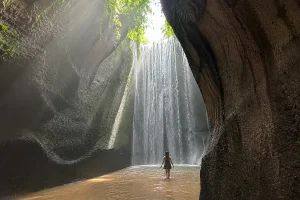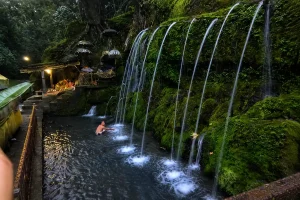

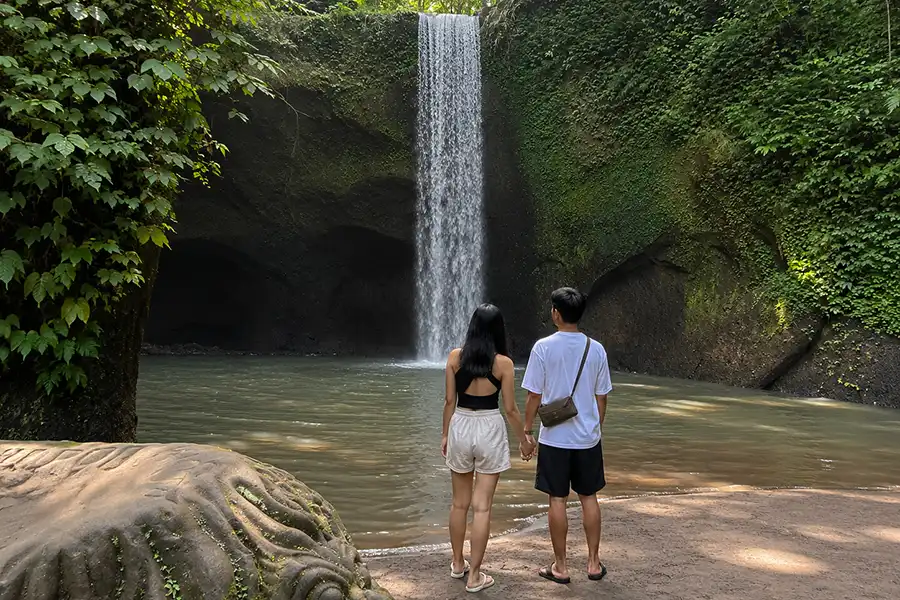
Tibumana Waterfall is one of Bangli’s most photogenic natural attractions, tucked inside a quiet forest just east of Ubud. The waterfall is best known for its elegant single drop cascade, though during the rainy season heavy river flow can occasionally split the water into two side by side streams that give it a brief twin falls appearance.
Surrounded by cool air, dense jungle, and the steady sound of falling water, Tibumana Waterfall offers a genuine escape from Bali’s busier beach areas. Because the site sees fewer visitors than nearby Tegenungan or Kanto Lampo, it remains one of the more peaceful examples of a hidden waterfall near Ubud, ideal for travelers who want a slower, quieter kind of adventure.

Location of Tibumana Waterfall
Tibumana Waterfall is located in Bangli Regency, inside Susut District’s Apuan Village on Setra Agung Road. The drive from Seminyak or Kuta takes around two hours, while Ubud is roughly 30 to 45 minutes away, making it a convenient stop for anyone exploring Bali’s central highlands.
You can use Google Maps to navigate directly to the parking area. Although the journey from South Bali is fairly long, the forest scenery, rice fields, and quiet village roads along the way make the drive part of the experience rather than a chore.
How to Get to Tibumana Waterfall
Most visitors reach Tibumana Waterfall by private car, scooter, or a Bali car rental with driver, since public transportation does not run directly to Apuan Village. From the village center, a short motorcycle taxi ride takes you the rest of the way to the main parking area.
There are two common routes into the area: via Prof. Dr. Ida Bagus Mantra Road for about 31 kilometers, or via WR Supratman Road for about 34 kilometers. Both roads are in good condition with clear signage, passing rice fields, shaded trees, and traditional Balinese houses along the way.
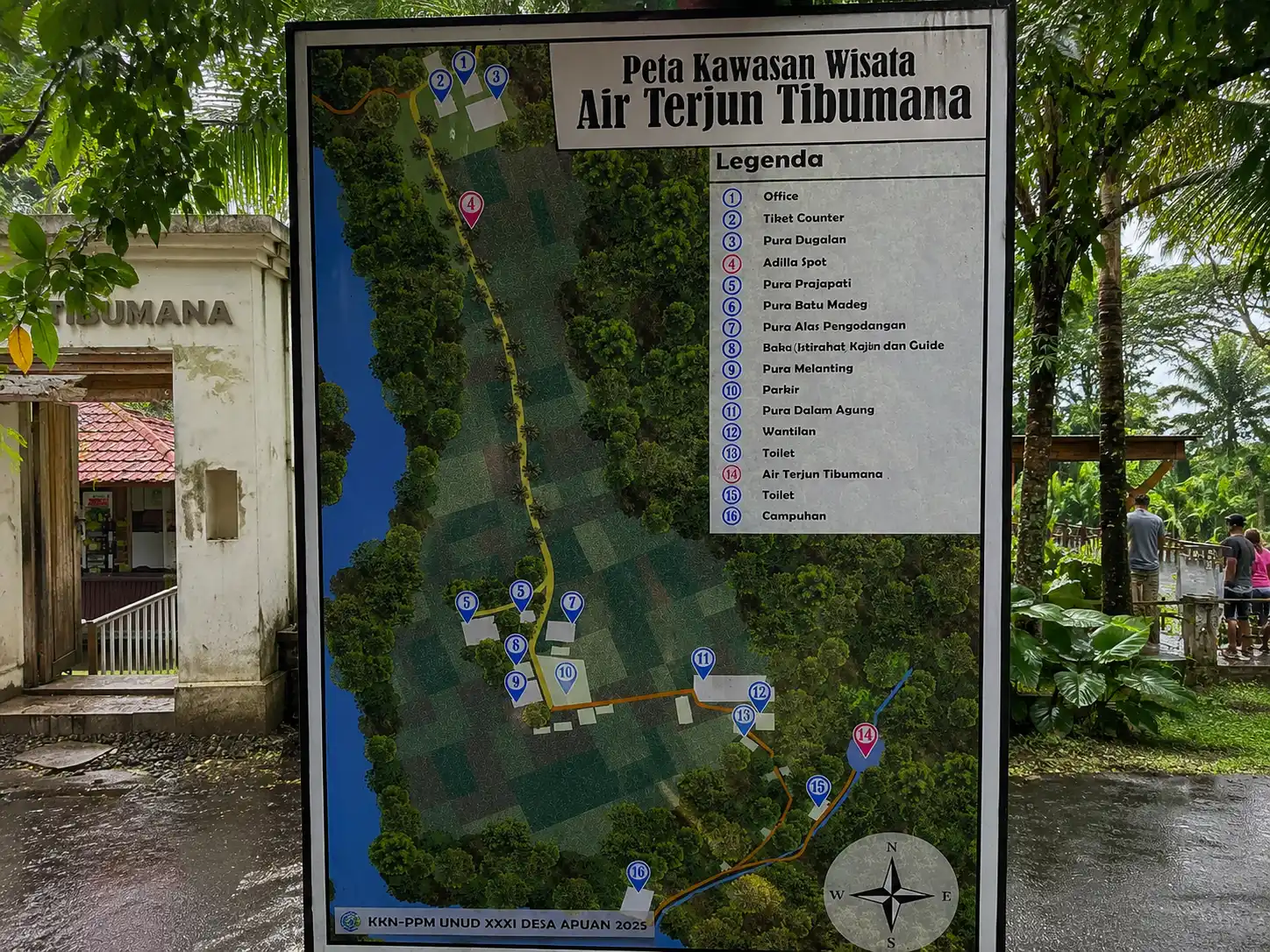
From the parking area, a well maintained path leads down to the waterfall, covering around 300 meters and roughly 140 stairs supported by iron railings for safety. Most visitors complete the walk in 10 to 15 minutes each way, and the trek is manageable even for beginners or families with older children.
History of Tibumana Waterfall
Tibumana Waterfall was once completely hidden, since no road led to the site and the surrounding trees were too dense for locals to see it directly. As waterfall tourism grew across Bali, residents of Apuan Village saw the opportunity to develop the area and share it with visitors.
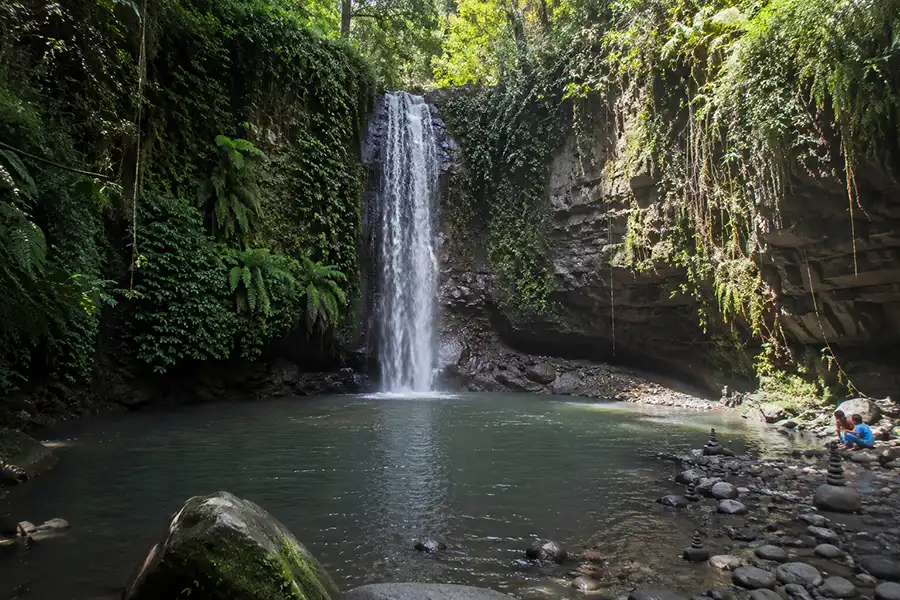
Through community effort, villagers built access roads, stairs, and railings that made the waterfall easier and safer to reach. Because of its previously hidden nature, many travelers still refer to it as Bali’s hidden waterfall, and it has since grown into a popular stop for visitors exploring the Bangli area.
Origin of the Name Tibumana
The original name of the waterfall was Tibu Tan Hana, given by residents of Bangun Lemah Kawan Traditional Village. In the local language, tibu refers to a large pool of water, while tan hana means invisible, reflecting how dense trees once let people hear the falling water without being able to see it.
Over time, Tibu Tan Hana evolved into the name Tibumana. The waterfall is known for a deep trough with a strong current directly beneath the falls, which is why local guidance encourages visitors to stay in the calmer poolside areas rather than swimming close to the cascade itself.
This history and local significance make Tibumana Waterfall one of the more meaningful tourist attractions in Bali for travelers who enjoy stories behind the scenery, not just the view itself.
Attractions of Tibumana Waterfall
Tibumana Waterfall has its own character that sets it apart from other waterfalls in Bali:
- Natural beauty: the waterfall stands about 20 meters tall with a clean, elegant single drop, occasionally appearing as twin cascades during periods of heavy rain, surrounded by lush forest that creates a deeply relaxing atmosphere.
- Natural pool: below the waterfall is a natural pool with calm, shallow areas suitable for a swim. Local guidance advises staying clear of the area directly beneath the falls, where the current is stronger, and respecting the site’s spiritual significance to the local community.
- Mysterious cave: behind the waterfall lies a vast, mysterious cave rumored to lead to the Goa Raja Temple in Besakih. To this day, no visitors are known to have explored inside.
- Photography spot: the combination of falling water, misty forest, and natural light filtering through the canopy makes this one of Bali’s most photogenic waterfall destinations.
- Forest adventure: the walk down to the valley feels like a mini forest adventure on its own, well before you even reach the waterfall itself.
Ticket Price, Facilities, and Opening Hours
Entrance tickets to Tibumana Waterfall cost around IDR 25,000 per person as of 2026, though prices can change without notice. Facilities on site include toilets, gazebos, and small food stalls for visitors’ convenience.
| Item | Price / Info |
| Entrance Fee | IDR 25,000 per person |
| Parking (Motorcycle) | IDR 5,000 |
| Parking (Car) | IDR 10,000 |
| Opening Hours | 06:00 to 18:00 WITA, daily |
Tips for Visiting Tibumana Waterfall
- Wear comfortable shoes or river sandals, since the trek passes through outdoor paths with some uneven sections.
- Check the weather forecast before visiting, since the waterfall looks most impressive during or just after the rainy season.
- Bring a change of clothes and a towel for a more comfortable visit after swimming or getting splashed.
- Carry food and drinks if you plan to stay longer, although small warungs are available near the entrance.
- Plan for around one to two hours on site, including the walk down and back up the stairs.
- Follow all rules posted at the location, keep the area clean, and avoid disturbing the natural surroundings.
Nearby Waterfalls to Combine With Tibumana
If you want to turn your visit into a fuller day trip, Tibumana Waterfall pairs naturally with a few other sites in the same Bangli and Gianyar area. Tegenungan Waterfall is one of the most popular combinations, offering a taller and more powerful cascade with a wider swimming area, and it sits close enough that both stops comfortably fit into a single morning.
For something more dramatic, Tukad Cepung Waterfall is worth the short detour. Hidden inside a narrow cave gorge, it is known for the beams of sunlight that pass through the rock ceiling in the late morning, offering a striking contrast to the calmer, open air setting at Tibumana.
Prefer a guided day out instead of self-driving between waterfalls? Our Bali Swing and Waterfall Day Tour combines waterfall stops with the popular Bali swing experience in one itinerary.
Ready for Your Tibumana Waterfall Adventure?
Tibumana Waterfall is one of Bangli’s most rewarding hidden gems, an elegant cascade surrounded by dense forest with a mysterious cave and rich local history that sets it apart from other waterfalls on the island. Pairing this visit with other Bangli and Kintamani highlights makes for a memorable day in Bali’s highlands.
Our Bali Tour Package includes comfortable transportation, a knowledgeable local driver, and a flexible itinerary that lets you pair Tibumana with nearby attractions like Kintamani volcano viewpoints and Tegalalang Rice Terrace.
Langgahan Waterfall in Kintamani is another worthwhile stop in the same highland area, offering a quieter, multi tiered alternative for travelers who want to see more than one waterfall in a day.
Frequently Asked Questions About Tibumana Waterfall
How difficult is the trek to the waterfall?
The trek is relatively easy and suitable for most visitors, including beginners. The path is well maintained with stairs and iron railings along the steeper sections, making the descent safe and manageable for the average traveler.
Is it safe to swim in the pool?
Swimming is generally allowed in the calmer, shallower areas around the pool, and it is one of the more popular activities on site. Visitors are advised to avoid the area directly beneath the falls, where the current is stronger, and to follow the safety guidance posted on location.
What should I bring for a comfortable visit?
Pack comfortable shoes or river sandals, a change of clothes, a towel, and a waterproof bag to protect your belongings from splashes. Sunscreen and insect repellent are also useful for the outdoor trek.
What facilities are available on site?
Basic facilities including restrooms, changing areas, gazebos, and small food stalls are available near the entrance. While simple, they are sufficient for a comfortable half day visit.
When is the best time to visit?
Early morning between 7 and 9 AM offers the best light for photography along with a quieter atmosphere, and weekday visits tend to be less crowded. The site looks most impressive during or shortly after the rainy season, from November to March, when water volume is at its highest.
Can I get here from Bali’s airport?
Yes, the site is about two hours from Ngurah Rai International Airport. Our Bali airport transfer service can be arranged to include a stop here on your way to accommodation in the Ubud or Bangli area, making your first day in Bali more memorable from the start.