
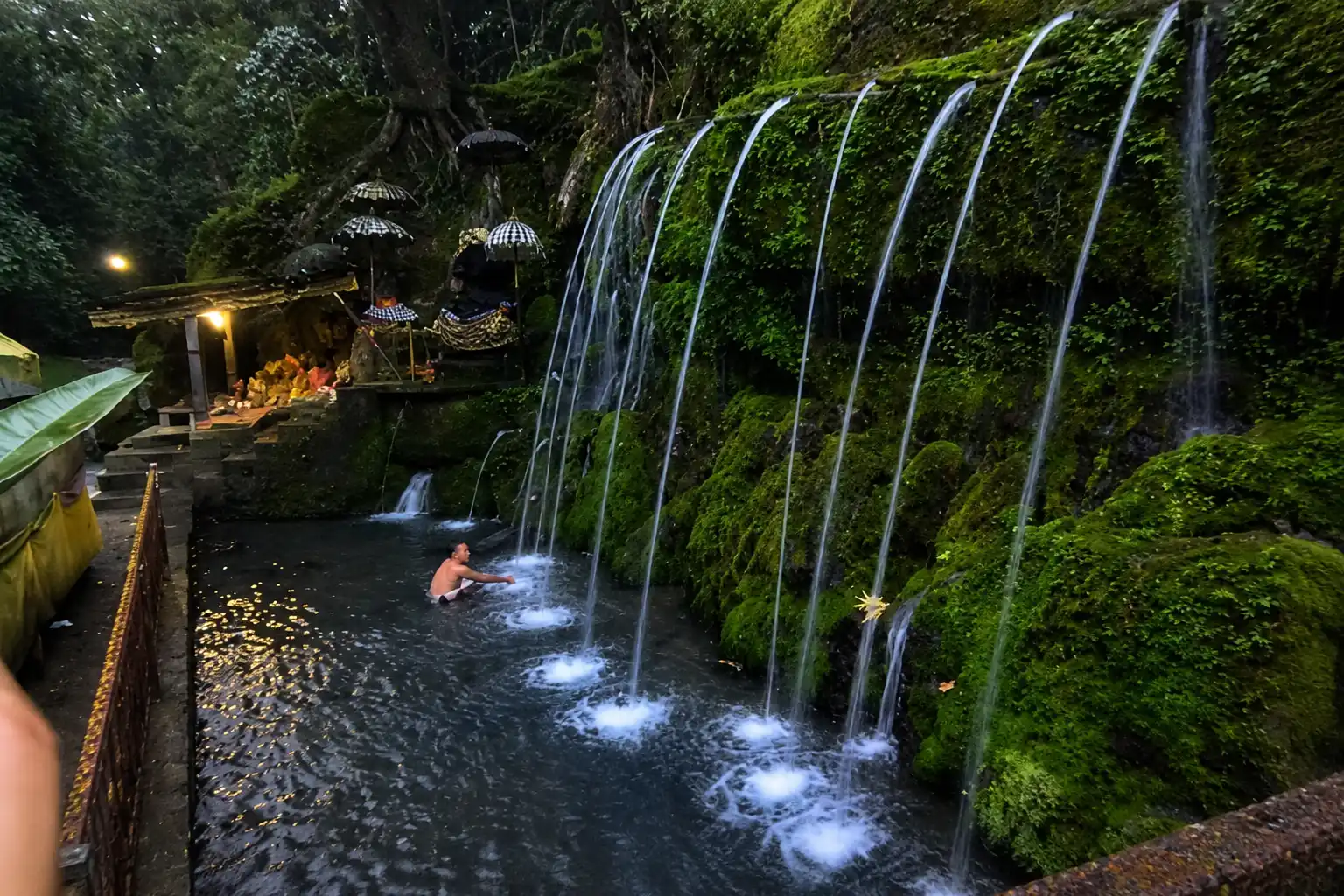
Tirta Sudamala Temple is one of Bali’s most serene holy water temples, tucked away in Br. Sedit, Bebalang Village, Bangli Regency. Unlike the crowded Tirta Empul Temple in Tampaksiring, this temple offers a quieter, more intimate setting where both Balinese Hindus and curious travelers can experience melukat, a traditional purification ritual believed to cleanse the mind, body, and soul from negative energy.
Designated as an official tourist attraction by Dinas Pariwisata Kabupaten Bangli in 2014, Tirta Sudamala Temple has steadily grown in popularity among those seeking a spiritual experience beyond the usual tourist circuit. The natural spring water flowing through its 9 sacred showers, the shady trees, and the unhurried atmosphere make it a genuinely peaceful escape from the bustle of southern Bali.
Read on to discover the temple’s history, how the melukat ritual works, what to expect on your visit, and how to get there from the most popular areas in Bali.

History and Spiritual Significance of Tirta Sudamala Temple
Tirta Sudamala Temple has deep roots in Balinese Hindu tradition. The name itself tells you everything: tirta means holy water, and sudamala means purification or liberation from sin and negative energy. According to local belief, the natural spring here has been blessed by the gods and carries purifying power that goes beyond ordinary water.
In 2014, the temple was officially designated as a tourist attraction by the Dinas Pariwisata Kabupaten Bangli, recognizing its cultural and spiritual importance for the region. Long before that recognition, however, the local community of Bebalang had been using this site for generations as a place for melukat purification, healing, and prayer.
At its core, Tirta Sudamala Temple reflects the Balinese Hindu understanding of water as a living force that connects humans, nature, and the divine. Bathing under the sacred showers is not merely a physical act — it is a spiritual practice meant to restore inner harmony and bring the practitioner closer to Sang Hyang Widhi Wasa (God Almighty).
| Quick Info | Details |
| Location | Br. Sedit, Bebalang Village, Bangli Regency, Bali |
| Opening Hours | 7:00 AM to 6:00 PM (WITA), daily |
| Entrance Fee | No official ticket — voluntary donation |
| Holy Water Showers | 9 sacred showers, each with different spiritual functions |
| Dress Code | Sarong and sash required (available for rent on-site) |
| Best Time to Visit | Early morning for a calmer, more sacred atmosphere |
| Distance from Ubud | Approx. 20 km, around 45 minutes by car |
Myths and Local Stories at Tirta Sudamala Temple
The sacred waters of this temple carry centuries of local belief and story. Here are some of the most enduring myths shared by the Bebalang community:
- Healing Water: The water flowing from the temple’s showers is believed to cure both physical and non-physical ailments, including the removal of negative spiritual energy.
- Sacred Showers with Distinct Functions: Local tradition holds that each of the 9 showers serves a different purpose, from cleansing the mind and body to dispelling bad luck and restoring balance.
- Longevity and Good Fortune: Many locals believe that regularly bathing under the sacred showers can prolong life and attract good fortune to those who approach the ritual with sincere intention.
These stories are part of what draws not just Balinese Hindus but also international visitors who are curious about the spiritual culture of Bali. The atmosphere here carries a weight of genuine tradition that is increasingly rare to find.
The Uniqueness and Attractiveness of Tirta Sudamala Temple
Iconic holy water showers
The centerpiece of Tirta Sudamala Temple is its row of 9 holy water showers, each flowing from a natural spring and each believed to carry a distinct spiritual function. Visitors who follow the melukat ritual move from one shower to the next in sequence, pausing to pray and receive the blessing of each spout. The sensation of the cool, clean spring water is said to bring an immediate feeling of freshness and inner calm.
Soothing natural beauty
The grounds of Tirta Sudamala Temple are surrounded by tall shady trees and lush greenery. A small stream runs nearby, and the constant sound of flowing water creates a meditative environment that feels genuinely removed from everyday life. Many visitors come simply to sit quietly, breathe, and absorb the calm atmosphere even without participating in the full purification ritual.
Traditional Balinese architecture
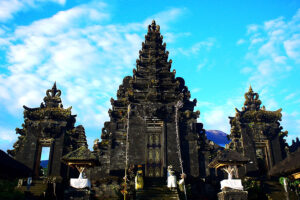
The temple structures blend hand-carved Balinese stonework with strong Hindu symbolic imagery. Ornate gates and shrines reflect the deep philosophical traditions of Balinese Hinduism, giving the temple a sacred yet artistically rich quality. For travelers who appreciate architecture and cultural detail, there is much to observe and appreciate here beyond the ritual itself.
Religious rituals and local traditions
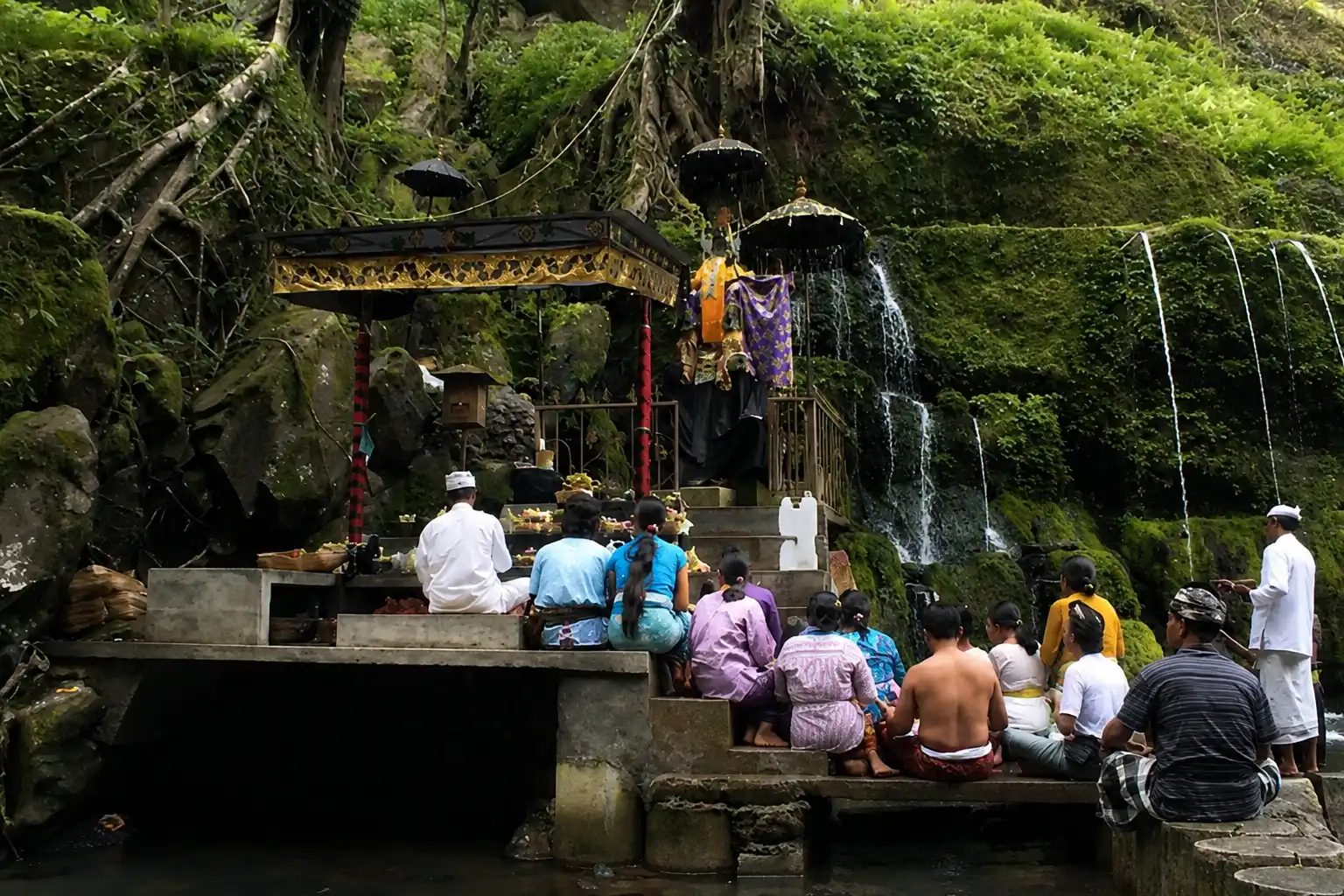
Beyond the melukat ceremony, Tirta Sudamala Temple is an active site for traditional Balinese Hindu ceremonies. Visiting on a regular day means you are likely to encounter locals performing their devotional practices, offering flowers and incense, and moving through the rituals with quiet focus. This authentic atmosphere provides a level of cultural immersion that staged experiences simply cannot replicate.
Things To Do at Tirta Sudamala Temple
- Melukat purification ritual: Participate in a melukat ceremony under the sacred showers. The ritual typically begins with a prayer at the main temple and is guided by the pemangku (temple priest). Allow at least 1 to 2 hours for the full experience.
- Photography: The temple’s stone carvings, tropical greenery, and flowing water create a naturally photogenic environment. Early morning light is particularly beautiful here.
- Reflection and meditation: The serene atmosphere makes this an ideal place to sit quietly, meditate, or simply spend time in peaceful surroundings away from the noise of popular tourist areas.
The Process of Purification Rituals at Tirta Sudamala Temple
The purification ritual at Tirta Sudamala Temple follows a structured sequence that has been practiced for generations. Understanding the steps in advance helps you approach the experience with the right intention and respect. If you want to learn more about the broader meaning and practice of melukat across Bali, you can read a dedicated guide on the melukat ceremony before your visit.
| Step | Stage | What Happens |
| 1 | Preparation | Change into traditional Balinese clothing or modest attire. A sarong and sash are required and can be rented on-site. |
| 2 | Opening prayer | Begin at the main temple shrine with a prayer led by or alongside the pemangku (temple priest). |
| 3 | Moving through the showers | Proceed to the 9 sacred showers in sequence. At each spout, pause to pray with hands clasped before stepping under the water. |
| 4 | Closing | After the final shower, spend a few quiet moments in reflection before changing into dry clothes. |
| 5 | Donation | Offer a voluntary donation (punia) to the temple and, if a pemangku guided your ritual, a separate donation for their service. |
The full ritual typically takes 45 minutes to 1.5 hours depending on crowd levels and how much time you spend in prayer. There is no fixed fee for the pemangku’s guidance, but a donation of IDR 50,000 to IDR 100,000 is considered appropriate and respectful.
Available facilities
Tirta Sudamala Temple is well set up for visitors who want to participate in the purification ritual. The site includes a large parking area, clean toilets, changing rooms, and sarong and sash rentals for those who arrive without appropriate attire. A small kiosk sells prayer offerings, snacks, and drinks.
Entrance fee and operating hours
There is no official entrance ticket at Tirta Sudamala Temple. Visitors make a voluntary donation at the gate, which goes toward the upkeep of the temple and its facilities. The temple is generally open daily from 7:00 AM to 6:00 PM (WITA), though the atmosphere is most peaceful in the early morning hours.
Access and Practical Information for Your Trip
Tirta Sudamala Temple is located in Br. Sedit, Bebalang Village, approximately 5 km from Bangli town center. The roads leading to the temple are accessible by private car or motorbike. Since the temple sits slightly off the main tourist trail, many visitors find it easiest to arrange private transport in advance rather than relying on taxis or rideshares.
| Departing From | Est. Distance | Est. Travel Time |
| Bangli Town Center | ~5 km | 15 to 20 minutes |
| Ubud | ~20 km | ~45 minutes |
| Denpasar | ~40 km | ~1.5 hours |
| Kuta / Seminyak | ~50 km | ~1.5 to 2 hours |
Entrance is free of charge. Visitors are encouraged to make a voluntary donation to support temple maintenance. There is no official parking fee, though a small donation at the parking area is customary. If you are planning to visit Tirta Sudamala as part of a longer Bangli itinerary, booking a Bali Car Rental with Driver gives you the flexibility to explore the region at your own pace without worrying about public transport or schedules.
Visiting Tips for the Best Spiritual Experience
- Time of visit: Early morning between 7:00 AM and 9:00 AM offers the calmest and most sacred atmosphere. Late afternoon is also a good option.
- Attire: Wear modest clothing with your upper body covered. A sarong and sash are required inside the temple precinct and are available for rent on-site.
- Bring a change of clothes: If you plan to participate in the melukat ritual, pack a dry change of clothes and a small towel.
- Getting here from the airport: If you are arriving directly from Ngurah Rai International Airport, arranging a Bali airport transfer in advance makes the journey to Bangli seamless, especially if you plan to head straight to Tirta Sudamala on your first day.
- Avoid religious holidays: During major Balinese Hindu celebrations, the temple tends to be crowded with local worshippers. Visit on a regular weekday for a quieter experience.
- Respect the rules: Follow the guidance of the pemangku and temple staff. Some areas of the temple may be restricted to worshippers only.
- Prepare a donation: Bring small bills in Indonesian Rupiah for your voluntary donation at the gate and, if applicable, for the pemangku who leads your ceremony.
Tirta Sudamala Temple is one of those rare destinations that offers something genuinely meaningful: a living spiritual tradition practiced in a beautiful natural setting, away from the crowds. Whether you come to participate in the melukat purification ritual or simply to experience the calm of the temple grounds, you are likely to leave with a deeper appreciation of Balinese Hindu culture and a sense of inner stillness that is hard to find elsewhere.
It sits quietly among the highlands of Bangli, waiting for visitors who are willing to look a little further than the well-worn tourist trail. For those who make the trip, it rarely disappoints.
Plan Your Visit to Tirta Sudamala Temple
Tirta Sudamala Temple pairs beautifully with other spiritual and cultural sites in the Bangli area, making it an ideal stop on a wider Bangli day trip. It also works well as part of a broader Bali highland itinerary that includes Kintamani, Lake Batur, or the forest areas nearby.
If you want to combine Tirta Sudamala with other Bangli highlights, booking a Bali tour package that covers the region gives you a local guide who understands the cultural context of the melukat ritual and can help you follow the proper customs during your visit.

Frequently Asked Questions About Tirta Sudamala Temple
What is Tirta Sudamala Temple?
Tirta Sudamala Temple is a sacred Hindu temple located in Br. Sedit, Bebalang Village, Bangli Regency, Bali. It is known for its natural holy water springs and its role as a site for melukat, a traditional Balinese purification ritual that cleanses the mind, body, and soul from negative energy. The temple was officially recognized as a tourist destination by Dinas Pariwisata Kabupaten Bangli in 2014.
What is the melukat ritual?
Melukat is a traditional Balinese Hindu purification ritual performed at holy water temples. At Tirta Sudamala, the ritual involves bathing sequentially under 9 sacred showers, each believed to carry a distinct spiritual function. The ceremony begins with a prayer at the main temple and is typically guided by the temple priest (pemangku). It is a genuine spiritual practice, not a tourist performance, so respectful participation is expected.
How many holy water showers are there at Tirta Sudamala?
Tirta Sudamala Temple has 9 holy water showers, each positioned at a slightly different height and each associated with a specific spiritual purpose, from cleansing negative energy to bringing inner peace and healing. Visitors move from one shower to the next as part of the sequential melukat ritual.
Can non-Hindus participate in the melukat ritual at Tirta Sudamala Temple?
Yes, non-Hindus are generally welcome to participate in the melukat purification ritual at Tirta Sudamala Temple, provided they approach the experience with genuine respect and follow all customary rules. This includes wearing a sarong and sash, following the guidance of the pemangku, and maintaining a quiet and reverent attitude throughout. The ritual is a sacred practice and not an entertainment activity, so visitors who come with sincere curiosity and respect are received warmly.
What are the rules for visiting Tirta Sudamala Temple?
Visitors must wear modest clothing and a sarong when entering the temple precinct. Both are available for rent on-site. Women who are menstruating or pregnant are traditionally advised not to participate in the melukat ritual. Visitors should bring a change of clothes if they plan to bathe under the showers, and should prepare a small donation for the temple and for the pemangku if one guides their ceremony.
What is the best way to visit Tirta Sudamala Temple?
The most convenient way to reach Tirta Sudamala Temple is by private car or with a local driver, as the temple is not easily accessible by public transport. Having your own transport also gives you the flexibility to combine this visit with other Bangli attractions such as the Kintamani caldera or nearby forest areas. A private car with driver is highly recommended for a comfortable and hassle-free experience visiting remote sites like this one.