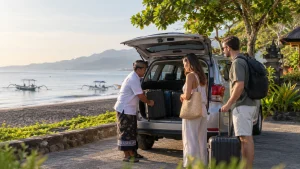

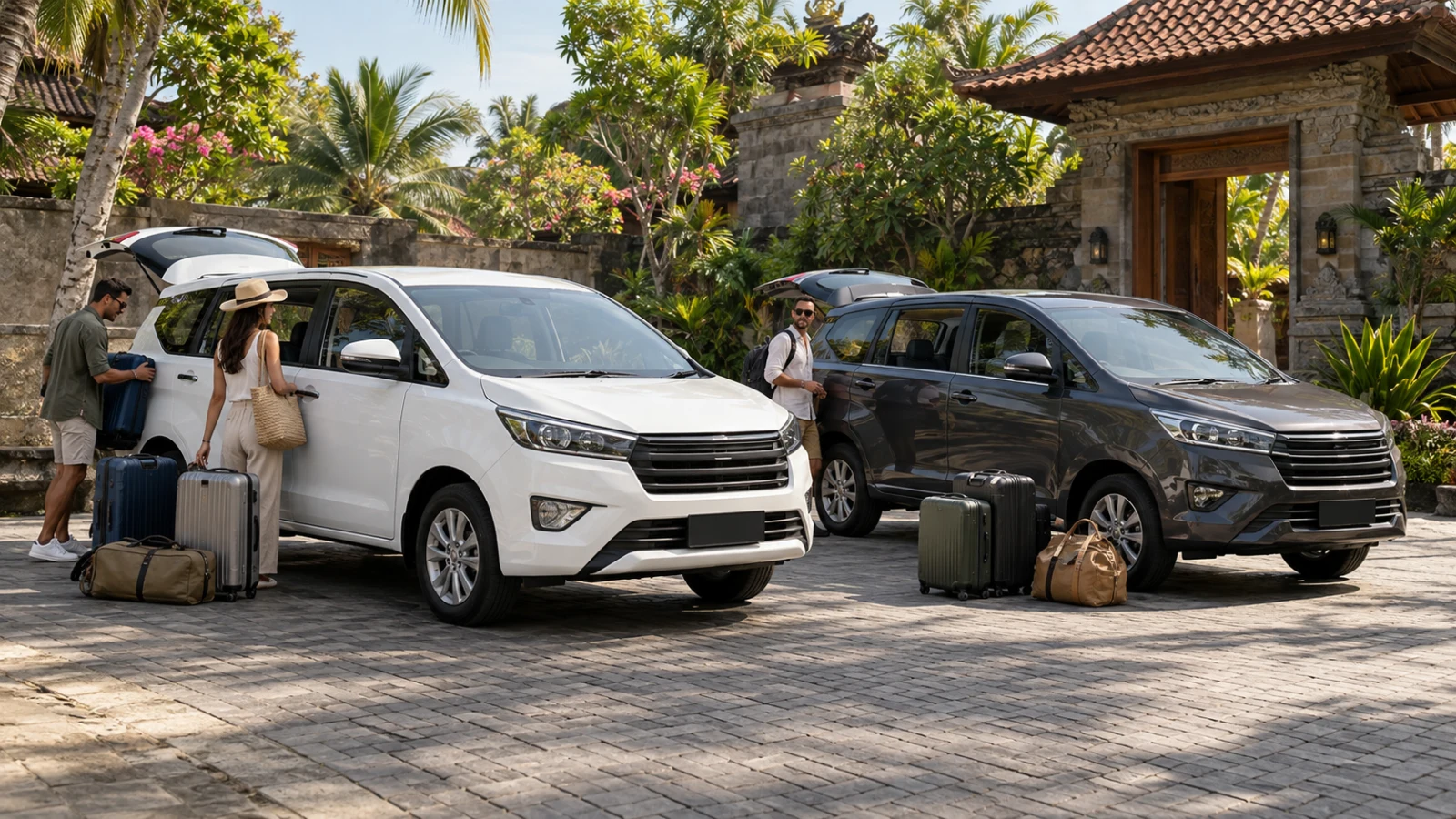
The right Bali car with driver passenger and luggage capacity depends on more than the number of seats listed for a vehicle. Your group’s size, suitcase dimensions, hand luggage, child seats and any equipment all affect how comfortably everyone can travel. A vehicle that technically seats your party may leave too little secure space for bags.
Use the guide below to narrow down the vehicle category, then confirm the exact vehicle, seat layout and luggage arrangement with the operator before booking. Capacity varies by model, variant and configuration, so treat the examples as planning guidance rather than a guarantee. If you are ready to discuss your itinerary and group requirements, start by sharing the passenger count, luggage list and any bulky items with the provider of a private driver and vehicle service.

Quick chart: start with people and bags
This conservative chart is a first filter, not a promise that a particular vehicle will fit. “Suitcase” sizes vary, and a soft duffel can fit differently from a rigid case of the same stated dimensions.
| Party and luggage (planning example) | Starting point to discuss | What to verify |
| 1–2 adults, light luggage (one or two medium cases plus day bags) | A smaller vehicle may be enough | Boot space with all seats in use; room for hand luggage |
| 2–3 adults, several cases | Ask the operator to confirm that all bags fit with every passenger seated; if not, ask about a larger vehicle or a second vehicle. | Case dimensions, rear-seat use and whether bags can be secured |
| 3–4 adults, multiple large cases | Ask the operator to confirm the exact vehicle and layout before booking; if the bags do not fit comfortably, ask about a larger vehicle or a second vehicle. | Whether all passengers and bags fit together without blocking access |
| Family with children, pushchair or child seats | Choose around child seats and equipment first | Child-seat installation, remaining seat space and pushchair dimensions |
| 5+ passengers or bulky equipment | Share the full passenger and luggage count with the operator and ask which vehicle, or combination of vehicles, can carry everyone and everything safely. | Usable seats, luggage area, loading plan and legal passenger limit |
Why seat counts differ from usable capacity
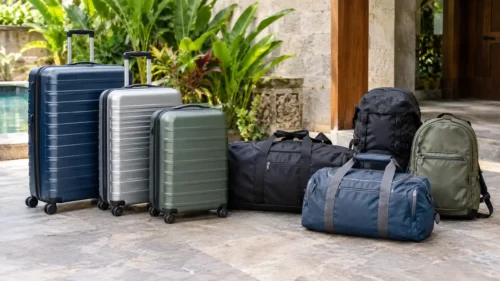
A manufacturer’s seat count tells you how many seating positions a vehicle is designed to have; it does not tell you how much luggage can travel at the same time. A third row may reduce the available cargo area when it is in use, and folding seats may not be an option if every passenger needs a seat.
The shape of the luggage matters too. Four large hard-shell suitcases can occupy a very different amount of space from several small backpacks. Cabin bags, shopping bags, camera cases and children’s equipment also need somewhere to go. Bags should not be stacked where they obstruct the driver’s view, interfere with passenger movement or become unsecured in the cabin.
For a realistic comparison, confirm the exact model and variant, the number of usable passenger seats, whether the luggage area is separate, and how the vehicle will be configured for your trip. The Bali Touristic vehicle options page can help you identify categories to ask about, but the operator should confirm the actual vehicle offered.
Couples and small groups: avoid paying for unused space
For one or two travellers with modest luggage, a smaller vehicle may be sufficient, particularly if you are carrying soft bags rather than several large suitcases. However, do not assume that every vehicle has the same luggage space.
For two or three adults, the deciding factor is often the combination of suitcase size and passenger comfort. If the rear seats are occupied, check whether luggage still fits in the cargo area. If you have several large cases or a longer itinerary with frequent stops, ask the operator whether the proposed vehicle can carry everything with all passengers seated. Before confirming, send the operator the number of adults and children, the number and approximate dimensions of each bag, and whether any item must remain accessible during the journey.
Families: allow for child seats and everyday gear
Families often need more room than the suitcase count suggests. A pushchair, nappy bag, spare clothes, snacks and child-seat requirements can use space quickly. A vehicle that fits the adults and children on paper may still be impractical once the child seats are installed and the pushchair is loaded.
Tell the operator each child’s age and the type of child seat needed, then ask whether the seat can be installed in the proposed vehicle and how much luggage room will remain. Do not assume a child seat is included or available unless this has been confirmed.
If you are travelling with grandparents or anyone who finds it difficult to climb into a high or low vehicle, mention this when choosing a model. Confirm the entry height and seat access rather than relying on a vehicle category name alone.
Large groups: count every person and every bag
For larger parties, the challenge is fitting passengers and luggage at the same time. A vehicle advertised with a high passenger capacity may have limited luggage room when every seat is occupied. In some cases, splitting the party between two vehicles may be more practical than squeezing bags into the passenger area.
Share a complete count before booking: adults, children, infants, suitcases, cabin bags, backpacks and any items that cannot be folded. Ask the operator to confirm the exact vehicle and seating arrangement, not only the model name or maximum seat count. If your itinerary includes several stops, consider whether bags will remain in the vehicle and whether you need access to them during the day.
Special equipment: sports gear, mobility aids and oversized bags
Golf bags, surfboards, bicycles, diving equipment, wheelchairs, mobility aids and large musical instruments need individual confirmation. Their length, shape and loading requirements can make them harder to accommodate than ordinary suitcases. Some items may need a dedicated carrier or a different vehicle configuration.
Send dimensions or a clear photo of unusual items before the operator confirms the booking. Ask whether the item can be loaded safely, whether it must be dismantled or folded, and whether it reduces the number of passenger seats available. Do not assume a roof rack, ramp, lift or specialist accessibility feature is available unless explicitly confirmed.
Questions to ask before you book
- What exact vehicle model and variant will be provided?
- How many passenger seats remain usable with the proposed luggage loaded?
- Can you confirm the luggage plan using my bag count and approximate dimensions?
- Are child seats or other requested equipment available, and are any extra arrangements required?
- If the luggage does not fit as described, what alternative vehicle or arrangement can be offered?
Plan for the whole load, not just the seats
The safest way to choose a Bali car with driver passenger and luggage capacity is to plan for the whole load, not just the advertised number of seats. Count every traveller, measure unusual bags and confirm the exact vehicle configuration before you commit.
For a more accurate recommendation, send Bali Touristic your group size, luggage list, child-seat needs and any special equipment, then ask which available vehicle can accommodate the full arrangement. Confirm the final vehicle and capacity directly before booking.

FAQs
Does a seven-seat vehicle fit seven passengers and seven suitcases?
Not necessarily. The number of seats does not show how much luggage space remains when every seat is occupied, so seven seats rarely mean seven passengers plus seven suitcases. Send the operator your passenger count and the size of each bag, and ask them to confirm the exact vehicle and layout. If everything does not fit comfortably, ask about a larger vehicle or a second vehicle.
Should I choose a vehicle based on passenger capacity or luggage capacity?
Consider both together. The correct choice must fit every passenger in a usable seat and accommodate the luggage securely at the same time.
Can soft bags fit where hard-shell suitcases do not?
Sometimes. Soft bags can be easier to arrange, but their final size and weight still matter. Share an accurate bag count and approximate dimensions before booking.
Can I bring a pushchair, wheelchair or sports equipment?
Possibly, but the item and vehicle must be checked individually. Provide dimensions or a photo and ask the operator to confirm loading space, access and any seat impact.
What should I send the operator to confirm capacity?
Send the passenger count by age where relevant, the number and size of each bag, bulky equipment details, and any child-seat or mobility requirements. Ask for confirmation of the actual vehicle configuration.