
A Bali private driver for senior travellers can make a day of sightseeing easier to organise by providing a private vehicle, planned pickup points and flexibility between stops. The important part is choosing transport and an itinerary around the individual traveller’s comfort: how easily they can get in and out of the car, how much walking they want to do, how they manage heat, and how often they prefer to rest. A private car does not automatically make every attraction accessible, so discuss practical needs before confirming a booking.
For families arranging a Bali driver for parents, start with the person who will use the service. Ask what feels comfortable rather than making assumptions based on age. Some older visitors are happy with long days and uneven paths; others prefer short outings, fewer steps and more time between destinations.
If private transport looks suitable, compare the vehicle and service details before settling on an itinerary. Bali Touristic’s car and driver service in Bali is one place to review the general service arrangement; confirm the specific vehicle and requirements directly before booking.

Planning priorities for a comfortable day
The best plan is usually built around the traveller’s actual mobility, stamina and preferences, not a checklist of famous places. A realistic schedule with fewer stops can be more enjoyable than trying to cover several distant attractions in one day.
Before choosing destinations, discuss:
- Mobility: Can the traveller manage a normal car step, or would a lower entry point and wider door opening be easier?
- Seating: Is it important to have room to sit without feeling cramped, or to keep a walking aid close at hand?
- Walking tolerance: How far is comfortable on level ground, and are slopes, steps or uneven surfaces difficult?
- Rest pattern: Would they prefer a short break every hour or two, a longer lunch stop, or the option to return to the accommodation?
- Daily timing: Are mornings more comfortable, or would a later start avoid rushing?
- Personal preferences: Would they rather visit one major attraction slowly or see several places from the vehicle with limited walking?
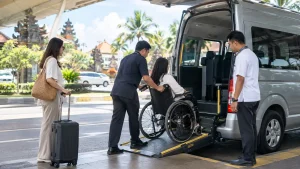
Share these details with the operator in plain language. If a traveller uses a wheelchair, rollator, walking stick or other mobility aid, describe its size and how it is used. Do not assume a standard MPV can carry a mobility device safely or that a vehicle is wheelchair accessible; request confirmation of the exact arrangement.
Vehicle access: check the step before the seat
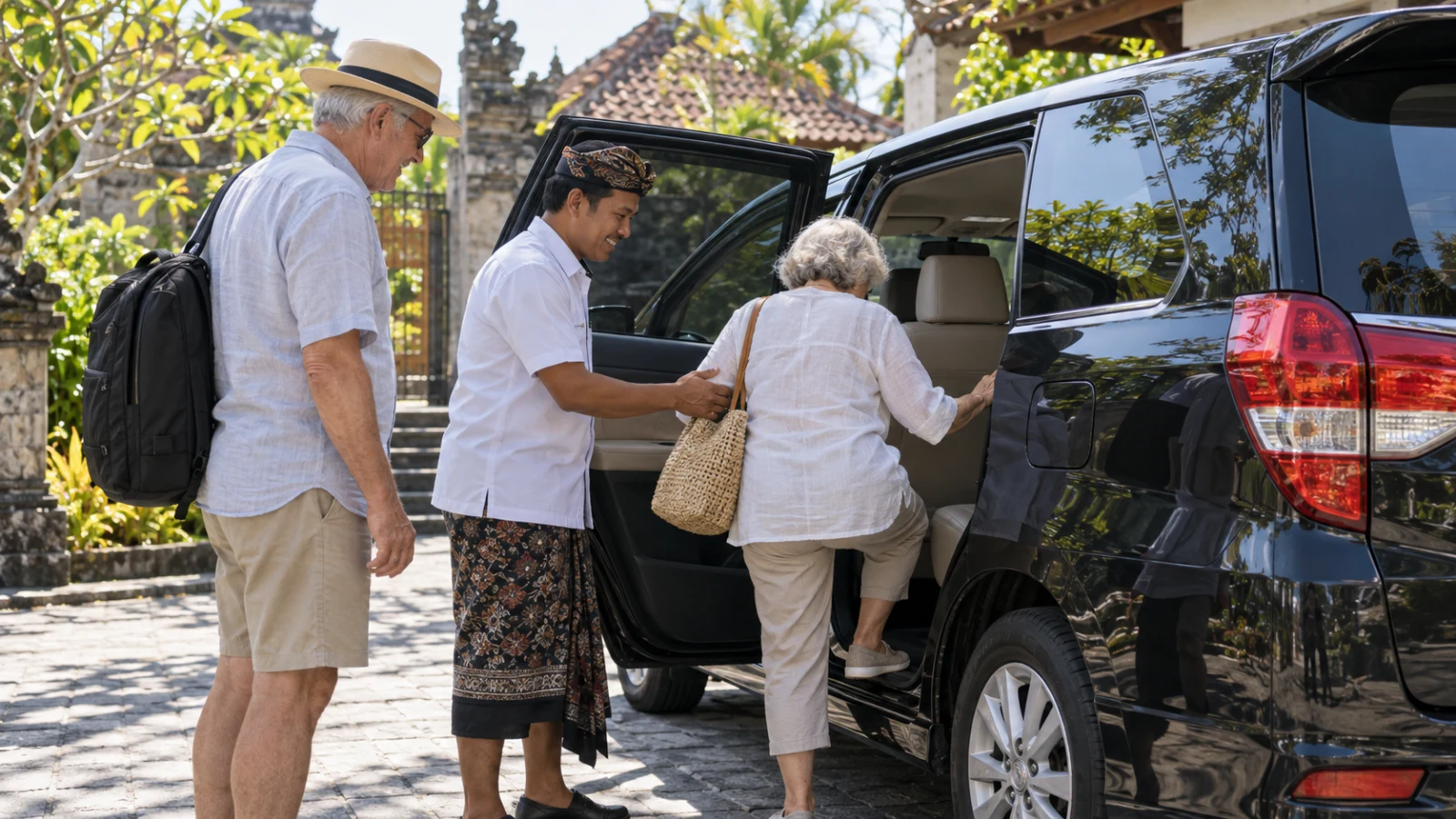
Getting into and out of the car is often the first practical hurdle for an older passenger, and it is easy to overlook when comparing vehicles. Before choosing a car, look at how the traveller will actually step in, sit down and get out again, and confirm these details for the specific vehicle rather than relying on its category or seat count.
Look beyond passenger capacity
A vehicle may have enough seats yet still be awkward for someone who finds climbing into a high cabin difficult. The height of the door sill, the distance from the ground to the seat, the width of the doorway and the space to turn around can matter more than the model name.
For a senior traveller, a lower step-in height may be easier than a tall SUV or high-roof vehicle, but vehicle designs differ and individual needs vary. A higher seat can help some people sit down and stand up; for others, it may mean a difficult climb. There is no single best vehicle category for every older passenger.
Questions to ask about the actual vehicle
- What exact vehicle model or type is proposed for the travel date?
- Can you provide a recent photo of the side door, step and rear seating area?
- Is there enough room for the traveller to enter without twisting or stepping over a high sill?
- Can the driver stop close to the entrance where local access and parking rules allow?
- Can a walking aid or folded mobility device be carried, and where would it be stored?
If possible, ask the operator to confirm the vehicle rather than relying on a generic fleet photo. Also confirm whether the same vehicle will be used throughout the booking. Vehicle allocation and availability can change, so ask the operator to confirm the agreed arrangement in writing where possible.
Pace and breaks: build flexibility into the itinerary
Bali traffic, road conditions and distances between regions can make a tightly timed itinerary tiring. A journey that looks short on a map may take longer when traffic is heavy, weather changes or a stop takes more time than expected. Avoid planning every hour around a fixed arrival time.
A practical senior-friendly day might include one main destination, a relaxed meal and one optional stop nearby. Keep an easy alternative in mind if the traveller feels tired. If the booking is time-limited, ask how waiting, additional stops or a later return affect the agreed service period and any extra charges.
Agree on breaks before departure and ask the operator to confirm that the driver can stop at suitable places along the route when practical. Restroom access, seating, shade and accessible facilities vary by location, so do not assume every roadside stop or attraction has suitable facilities.
| Planning point | More comfortable approach | What to confirm |
| Travel time | Allow a generous buffer between stops | Likely traffic and realistic drive-time range |
| Rest breaks | Schedule breaks rather than waiting until tired | Suitable stop options along the route |
| Sightseeing | Choose fewer places with manageable walking | Steps, slopes, surfaces and drop-off point |
| Return journey | Keep the final part of the day flexible | Booking end time and extra-hour terms |
Heat and hydration in Bali

Bali’s tropical conditions can feel demanding, particularly during the warmer part of the day or when walking in exposed areas. Plan outdoor visits for a time that suits the traveller, look for shaded places to pause and avoid leaving long walks until the hottest part of the afternoon.
Carry drinking water and allow time to sit down. Confirm with the operator that the vehicle has working air conditioning. If it does, it can provide a cooler place between destinations, but check the cabin temperature and comfort on the day. Ask the driver to adjust it if needed, and bring a light layer if the traveller prefers less direct cooling.
Hydration needs and heat tolerance differ from person to person. Follow the traveller’s usual advice from their healthcare professional where relevant; a driver or tour operator cannot assess medical needs. If someone becomes unwell, pause the outing and seek appropriate assistance rather than trying to continue the itinerary.
Attraction access: the car cannot remove every walking challenge
Many Bali attractions involve more walking than visitors expect. Temple compounds may have steps or uneven stone, viewpoints can require a walk from the parking area, and some scenic locations have sloping paths. Even when a vehicle can reach the entrance area, the final approach may still be on foot.
Check each stop individually instead of describing an entire destination as accessible. Ask about:
- The distance from the vehicle drop-off point to the place visitors actually want to see.
- Steps, steep sections, loose gravel, uneven paving or slippery surfaces.
- Places to sit and rest along the route.
- Toilet availability and whether facilities are close to the main visitor area.
- Whether a shorter visit or a viewpoint with less walking is possible.
For temples, also consider clothing requirements and the possibility that visitors may need to walk through a large compound. If the traveller would rather avoid steps or long paths, choose an alternative stop with a more manageable approach. Conditions can change after rain, maintenance or crowding, so confirm close to the visit.
The driver may be able to help with drop-off coordination and waiting arrangements, subject to local access and parking conditions. That is different from guaranteeing step-free entry, assistance inside an attraction or priority access.
Communication and booking information
Good communication starts before the travel date. Explain the practical requirements clearly and ask the operator to repeat the agreed details. If a family member is arranging the booking, include the senior traveller in the discussion wherever possible so their preferences are represented.
When comparing a senior travel Bali driver option, share the following information:
- Number of passengers and the exact mobility aids or luggage to be carried.
- Any difficulty with high steps, narrow doors, low seats or standing for long periods.
- Preferred pickup time, approximate return time and planned destinations.
- How frequently the traveller would like breaks and whether a rest stop is essential.
- Walking limits or attraction features to avoid, described in practical terms.
- A contact person for booking changes and the preferred communication method.
Ask who will confirm the vehicle, whether the driver can communicate in the language needed for the booking, and how itinerary changes should be handled. Do not assume language ability or special assistance is included unless the operator confirms it.
If you are comparing a private driver with other ways of getting around, review the booking steps and information to prepare in this guide on how to arrange a private driver in Bali. Use it for the general arrangement, then confirm the senior traveller’s specific vehicle and itinerary requirements directly.
Booking information to confirm before you pay
Before paying or confirming, make sure the arrangement is clear. A comfortable car hire Bali search should lead to a vehicle that suits the passenger, not simply a vehicle with a suitable-sounding label.
- Vehicle type or model and whether it is confirmed for the date.
- Pickup location, drop-off location, start time and expected finish time.
- The agreed route and whether additional stops can be added.
- What the quoted price includes and which costs may be extra.
- Waiting-time, overtime, cancellation and rescheduling terms.
- Whether a mobility aid can be carried and any limitations on storage.
- What happens if the vehicle needs to be changed before the trip.
Rates, inclusions, vehicle availability and policies can change. Check the current quote and terms directly with the operator; do not rely on an old screenshot, a general article or an assumption that a feature is standard. If a particular access arrangement is essential, ask whether the operator can confirm it in writing rather than treating a verbal possibility as a guarantee. If written confirmation is not possible, consider whether that arrangement is reliable enough for your plans.
Final tips for choosing a driver
A Bali private driver for senior travellers is most useful when the vehicle, pace and stops are planned around the person who will be travelling. Check step-in height and seating before choosing a car, keep the itinerary flexible, allow for shade and rest breaks, and verify the walking demands at every attraction. A private vehicle can make transfers between places more convenient, but it cannot guarantee accessible entrances or remove every physical demand.
If you are arranging transport for a parent or older family member, send the operator the practical details first and ask them to confirm the vehicle and service terms. You can contact Bali Touristic to ask about vehicle options and service terms for your travel date; treat any specific accessibility or assistance request as subject to direct confirmation.

FAQs
Is a private driver a good option for senior travellers in Bali?
A private driver can be useful when the traveller prefers a dedicated vehicle, planned pickups and flexibility between stops. Suitability depends on the person’s mobility, the vehicle’s entry height and the amount of walking at each destination. Confirm these details before booking.
Which vehicle is easiest for an elderly passenger to get into?
There is no universally easiest model. Compare the actual step height, door opening, seat height and room to turn. Ask the operator for photos or confirmation of the specific vehicle rather than choosing by passenger capacity or vehicle category alone.
Can a Bali private driver accommodate a wheelchair or walking frame?
Do not assume that a standard car can carry or accommodate a wheelchair or walking frame. Give the operator the device’s dimensions and explain whether the passenger transfers into a car seat. Ask for written confirmation of the vehicle and storage arrangement.
How many attractions should senior travellers visit in one day?
That depends on walking ability, heat tolerance, travel distances and personal preference. A day with one main attraction and a nearby optional stop may be more comfortable than a packed route. Leave room for breaks and traffic delays.
Can the driver help with walking or provide medical assistance?
Confirm the driver’s role directly. Do not assume that physical assistance, mobility support or medical care is included. If the traveller needs regular hands-on assistance, arrange an appropriate companion or support person separately.
What should I tell the operator when booking for my parents?
Explain any difficulty with high steps, long walks, slopes or standing, list mobility aids, and share preferred break times and destinations. Ask for the exact vehicle, pickup arrangements, service hours and any additional charges to be confirmed in writing.