

Bali offers travelers something few destinations can match, a living spiritual culture that welcomes visitors into its rituals rather than just its landmarks. A Bali spiritual tour typically combines water purification at holy springs, visits to sacred temples like Pura Besakih, and healing sessions with local practitioners who have practiced their craft for generations.
Whether you want to cleanse negative energy in a melukat ceremony, witness a temple anniversary festival, or simply sit quietly in a place that has held spiritual meaning for centuries, this guide walks you through the experiences that make up a genuine Bali spiritual tour and what to expect from each one.

What Is a Bali Spiritual Tour?
A Bali spiritual tour is a guided journey through the island’s sacred sites and healing traditions. Unlike a standard sightseeing tour, it focuses on participation rather than observation. You take part in water purification rituals, listen to priests explain temple ceremonies, and often meet traditional healers who offer massage, energy work, or blessing sessions.
Most itineraries center on a handful of destinations: Tirta Empul for water purification, Pura Besakih for its grand temple ceremonies, and smaller purification springs scattered across Gianyar and Tabanan regencies. Some tours also add a meditation session or a visit to a traditional healer, known locally as a balian.
Melukat, Bali’s Sacred Water Purification Ritual
Melukat is a Hindu-Balinese purification ceremony that uses holy spring water to cleanse the body, mind, and spirit. Local priests guide participants through prayers and offerings before they bathe under a row of stone fountains, each believed to carry a different blessing. Many travelers describe the ritual as calming and grounding, even without a deep understanding of Balinese Hinduism.
Tirta Empul temple, the most popular melukat site
Tirta Empul is the temple most associated with melukat, thanks to its natural spring that has fed the bathing pools for over a thousand years. The temple welcomes visitors daily, and its holy water fountains stay open even during religious ceremony days.
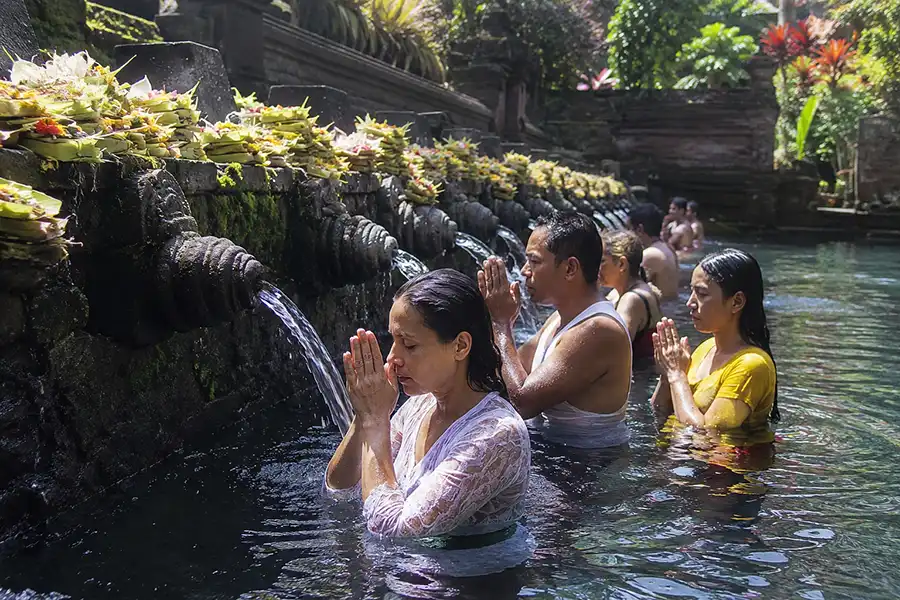
Entrance covers access to the temple grounds, but joining the melukat ritual itself usually requires a separate guided package that includes a ceremonial sarong, offerings, and locker access. For ticket prices, opening hours, and a full step-by-step walkthrough of the ritual, see our complete Tirta Empul visitor guide.
Other purification temples worth visiting
Beyond Tirta Empul, Bali has smaller purification springs that feel more private and far less crowded. Tirta Tadah Uwuk, tucked inside a river cave, lets visitors bathe under a natural trickling waterfall surrounded by stone goddess statues pouring holy water into the pool below.
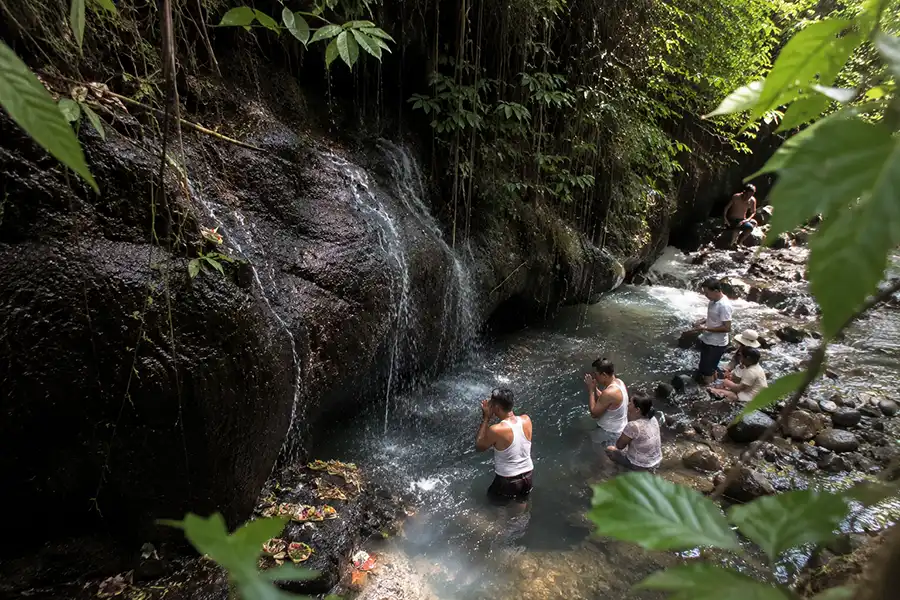
These lesser-known sites rarely appear on standard tourist maps, so a local guide familiar with the area makes a real difference. They can also explain the etiquette expected at each fountain, since the order and manner of bathing carries specific meaning.
Pura Besakih and Bali’s Sacred Temple Ceremonies
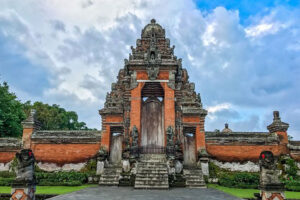
Pura Besakih is Bali’s largest and most important temple complex, set on the slopes of Mount Agung in the east of the island. Dedicated to the Hindu Trinity of Brahma, Vishnu, and Shiva, it hosts ceremonies that draw worshippers from across Bali throughout the year. It is one of more than 20,000 temples on the island, and if you want to explore further, our guide to the best temples in Bali covers 20 sacred sites worth adding to your itinerary.
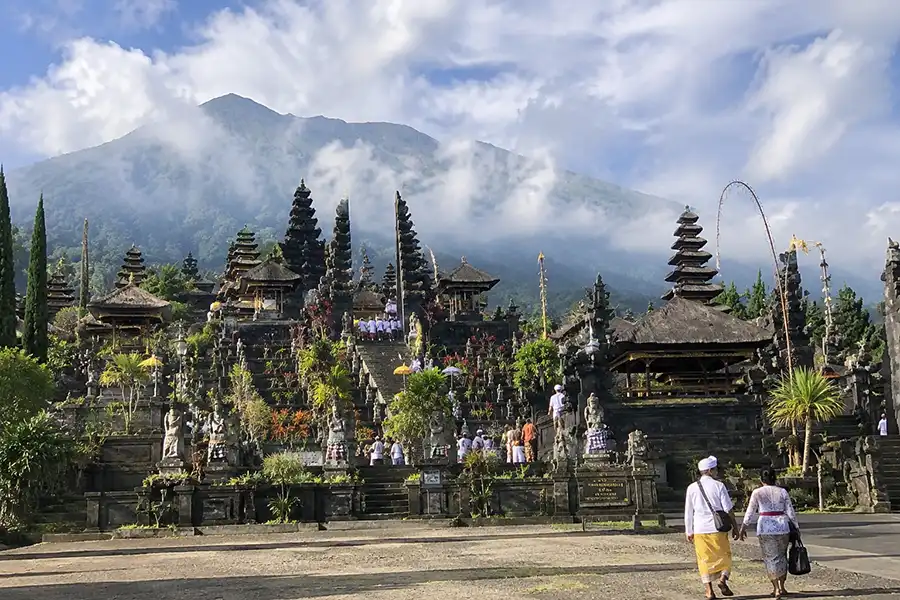
A guided visit gives context that independent travelers often miss, including which sub-temples are open to non-worshippers and how to dress and behave respectfully during an active ceremony.
| Item | Price |
| Entrance fee (includes local guide, sarong, and shuttle) | IDR 150,000 |
| Scooter parking | IDR 5,000 |
| Car parking | IDR 10,000 |
| Day | Opening Hours |
| Every day | 7:00 AM to 6:00 PM |
| Nyepi (Day of Silence) | Closed to all visitors |
Odalan, the temple anniversary ceremony
Odalan marks the anniversary of a temple’s consecration, based on the 210-day Pawukon calendar. Since this cycle is shorter than a solar year, each temple celebrates its anniversary roughly every six to seven months, with offerings, traditional dances, and chanting filling the courtyards. If your trip lines up with a temple festival, our guide to Bali ceremony days and how they affect travel plans explains what to expect and how to plan around it.
Ngaben, the Balinese cremation ceremony
Ngaben is the Balinese cremation ritual, marked by elaborate processions and towering ceremonial structures that carry the body to the cremation site. Balinese Hindus believe the ceremony releases the soul for its journey to the afterlife. It is not exclusive to Besakih, but travelers who happen to witness one describe it as a powerful, humbling experience rather than a somber one.
Shamanic Healing and Holistic Retreats
Alongside temple visits, many Bali spiritual tours include a session with a traditional healer, known as a balian, or a visit to a holistic retreat center. These sessions often combine massage, energy work, and traditional herbal remedies passed down through generations of Balinese healers.
Some retreats extend the experience into a full day, pairing a healing session with silent meditation or a guided sound bath. If deep relaxation matters more to you than temple sightseeing, look for a tour operator that can tailor the itinerary toward healing rather than a packed schedule of stops.
What to Expect on a Guided Bali Spiritual Tour
Most spiritual tours provide a sarong and sash at each temple, since covered shoulders and knees are required inside sacred grounds. Guides typically explain what offerings mean, when it is appropriate to take photos, and which areas remain closed to visitors during active ceremonies.
Private tours move at your own pace and allow more time at each stop, while group tours tend to be more affordable and easier to book on short notice. Either way, comfortable walking shoes and a change of clothes are worth packing if you plan to join a water purification ritual.
Best Time for a Spiritual Journey in Bali
Early morning visits, ideally before 9:00 AM, offer the most peaceful experience at both Tirta Empul and Pura Besakih, before larger tour groups arrive. The dry season from April to October also brings clearer skies, which makes for better views of Mount Agung from Besakih.
If witnessing a ceremony is your priority, ask your tour operator about upcoming Odalan dates, since these follow the Balinese calendar rather than the Gregorian one and shift each year.
Ready for Your Bali Spiritual Tour?
Pura Besakih, Tirta Empul, and Bali’s sacred ceremony calendar offer a genuinely different kind of travel experience, one built around living culture rather than a checklist of landmarks. We take care of the planning so you can focus on the experience. Our bali tour package includes expert local guides and transportation to Bali’s spiritual sites and other cultural highlights across the island.

Frequently Asked Questions about Bali Spiritual Tours
What does a typical Bali spiritual tour include?
Most itineraries combine a water purification ritual at Tirta Empul, a visit to a major temple such as Pura Besakih, and sometimes a session with a traditional healer or a guided meditation. A local guide accompanies each stop to explain the significance of what you are experiencing.
Do I need to participate in melukat, or can I just watch?
Participation is optional. You can observe the ritual respectfully from the temple grounds without entering the water. If you do want to join, book a guided package in advance so you have a sarong, offerings, and someone to walk you through the process.
What should I wear on a Bali spiritual tour?
Cover your shoulders and knees at every temple. Most sites provide a sarong and sash for rent or as part of the entrance fee, but bringing your own light, modest clothing keeps things simple. Pack a change of clothes if you plan to take part in a water purification ritual.
Is a guide necessary to visit Pura Besakih and Tirta Empul?
A guide is strongly recommended at both sites. Pura Besakih is a large complex with many sub-temples, and Tirta Empul’s melukat ritual involves a specific order and etiquette at each fountain. Guides help you navigate these details respectfully and answer questions along the way.
What is the best time of day to visit for a spiritual experience?
Arrive before 9:00 AM at either Tirta Empul or Pura Besakih for the quietest experience, before tour buses and larger groups arrive later in the morning. Early visits also tend to be cooler and more comfortable for walking between temple courtyards.
Do you offer Bali spiritual tours that include airport transfers?
Yes. Starting your Bali journey comfortably makes a difference. Our airport transfer service picks you up directly from the airport and takes you to your first destination without the stress of arranging transport on arrival.