

Curious about Indonesia’s journey to independence through the eyes of the man who declared it? The Bung Karno Museum in Denpasar invites you to step inside the life and legacy of Soekarno, Indonesia’s first president. Housed in a building tied to his story in Bali, the museum takes you through the chapters that shaped a nation, from his early years to the lasting mark he left on Indonesian history.

What Is the Bung Karno Museum?
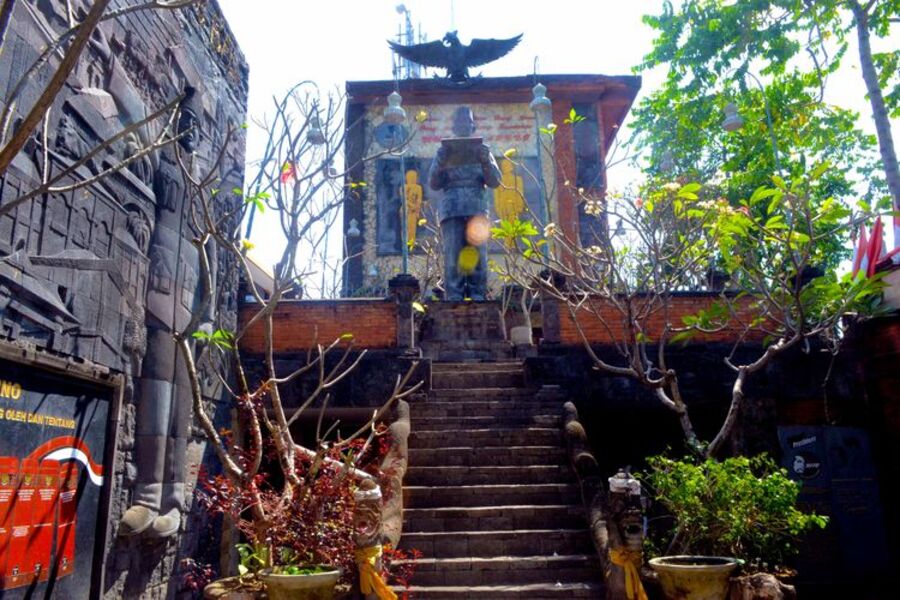
The Bung Karno Museum, also known as Museum Agung Bung Karno, is a heritage site managed by Yayasan Kepustakaan Bung Karno, the Bung Karno Library Foundation. The foundation was established on June 1, 1990, by Shri Wedastera Suyasa and later carried forward by Gus Marhaen, who envisioned a combined library and museum dedicated to Soekarno’s life and thinking. The building was officially inaugurated on November 22, 2015, by Soekarno’s daughter and former Indonesian president, Megawati Soekarnoputri. Since then, it has grown into one of Denpasar’s most meaningful cultural landmarks, blending traditional Balinese architecture with a deep record of Indonesia’s political history.
Visitor Information
📍
Jalan Raya Puputan No. 80, Renon, Denpasar, Bali. Around 20 to 30 minutes from Ngurah Rai International Airport, depending on traffic.
🕐
Every day, 9:00 AM to 5:00 PM WITA. Closed on national holidays.
💰
Rp 25,000 for domestic visitors, Rp 50,000 for foreign tourists.
⏱️
Around 45 minutes to 1 hour, depending on how many exhibits you explore.
📸
Photography is welcome throughout the museum. The ground floor library and the vintage RI-1 car near the entrance are popular photo spots.
If you enjoy learning about Soekarno’s presence in Bali, a few other sites add useful context. Margarana Memorial Park in Tabanan honors local heroes who fought for Indonesia’s independence, while the Gianyar Presidential Palace offers a look at another official state site on the island. For broader background on how Bali developed over time, our guide to the history of Bali is worth a read.
Inside the Museum: Four Floors of History
The Bung Karno Museum is spread across four floors, each dedicated to a different chapter of Soekarno’s life. As soon as you step through the entrance, you will notice a car bearing the RI-1 license plate, said to have once been used by Soekarno himself. From there, the museum unfolds level by level, guiding visitors through his personal world and his role in shaping Indonesia.
Ground floor library and personal archive
The first floor houses a library holding an estimated 1.4 million books, documents, and writings connected to Soekarno, including speeches and texts he once read. The walls are filled with photographs tracing his life, while paintings depict moments from his childhood through the independence struggle. A private area on this floor also includes a sacred room linked to Balinese spiritual tradition.
Second floor personal belongings and artifacts
Moving up to the second floor, visitors encounter a room designed like a living space, complete with rattan chairs, an old typewriter, a radio, and vintage photographs. A green PNI-style suit, complete with tie and hat, is also on display. One of the more unusual pieces here is a lontar manuscript titled Kakawin Bomantaka, an ancient palm-leaf text. The floor’s interior reflects traditional Balinese architecture, with detailed red brick patterns and natural materials throughout.
Third floor paintings and historic photographs
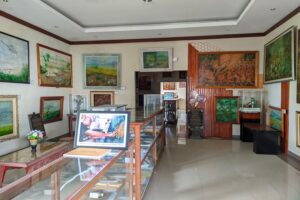
The third floor is dedicated to a collection of paintings and photographs documenting key moments of Soekarno’s public life, ranging from original black-and-white prints to restored color versions. This level offers a visual timeline of his role as Indonesia’s proclaimer and first president.
Fourth floor family quarters
The top floor recreates the bedrooms once used by Soekarno’s family during their stays in Bali. Visitors can see Fatmawati’s original dressing table and a miniature model of Tirta Empul. Much of the furniture on display, including beds, desks, and cabinets, are said to be authentic pieces once owned by the family.
What to Expect During Your Visit
Beyond the permanent exhibits, the museum offers a few extras that make a visit more engaging. Guided tours are available, with staff on hand to explain the background of each display in more depth. Audio guides can also be rented for a more self-paced experience, which is especially useful for international visitors.
The museum occasionally hosts lectures, cultural performances, and workshops centered on Indonesian history and Balinese culture, so it is worth checking ahead if you want to combine your visit with one of these events. A small souvenir shop near the exit sells books, postcards, and memorabilia related to Soekarno and Indonesia’s independence, which make for meaningful keepsakes.
Entrance Fee, Tickets, and Opening Hours
Tickets can be purchased directly at the museum entrance. Prices are kept low to make the site accessible to a wide range of visitors, from local students to international travelers.
| Visitor Type | Price |
| Domestic Visitors | Rp 25,000 |
| Foreign Tourists | Rp 50,000 |
| Day | Opening Hours |
| Every day (except national holidays) | 9:00 AM – 5:00 PM WITA |
How to Get There and What to Bring
The museum sits on Jalan Raya Puputan No. 80 in Renon, a central district of Denpasar. Since it is close to the city center, visitors can reach it by taxi, private car, or scooter from popular areas such as Kuta, Seminyak, or Ubud. A private driver is often the most convenient option, especially if you plan to combine the visit with other stops around Denpasar.
A few practical tips can help you get the most out of your visit. Comfortable footwear is recommended since the museum spans four floors with plenty of walking involved. Bring a camera to capture the exhibits and the RI-1 car at the entrance, and carry a bottle of water, as Bali’s climate can get warm even indoors.
Nearby Attractions Worth Exploring
Since the Bung Karno Museum sits in the heart of Renon, several other Denpasar landmarks are within easy reach, making it simple to build a fuller day of sightseeing around your visit.

- Bajra Sandhi Monument: This towering monument, also located in Renon, honors the struggle of the Balinese people and offers panoramic views of Denpasar from its upper platform.
- Puputan Badung Square: A short drive from the museum, this historic square commemorates a pivotal moment of Balinese resistance and now serves as a green public space in the city center.
- Pura Jagatnatha: A short drive away, this Hindu temple dedicated to the Supreme God is one of Denpasar’s most significant spiritual sites.
- Bali Museum: Located nearby in central Denpasar, this museum adds further context to Balinese culture and history alongside what you will see at the Bung Karno Museum.
- Bali Art Center: A cultural venue showcasing traditional and contemporary Balinese art and performances, ideal for travelers interested in the island’s creative side.
For a broader look at the capital, our complete guide to Denpasar’s tourist attractions covers even more places to explore beyond Renon.
Book Your Bali Tour with Bali Touristic
The Bung Karno Museum is a meaningful stop for anyone wanting to understand Indonesia’s political history and the life of its founding father. Its exhibits highlight Soekarno’s achievements within the story of Indonesia’s independence and national identity.
For a hassle-free visit, consider arranging your trip with Bali Touristic’s tour packages. Our local drivers can guide you through the museum’s history, handle transport to and from Renon, and build a custom itinerary that includes nearby cultural sites around Denpasar. If you are arriving fresh off a flight, our Bali airport transfer service makes it easy to head straight from Ngurah Rai International Airport to your first stop.
Frequently Asked Questions
What are the opening hours of the Bung Karno Museum?
The museum is open every day from 9:00 AM to 5:00 PM WITA, except on national holidays.
How much is the entrance fee?
Entrance costs Rp 25,000 for domestic visitors and Rp 50,000 for foreign tourists.
Where is the Bung Karno Museum located?
It is located at Jalan Raya Puputan No. 80, Renon, Denpasar, Bali, close to other landmarks in the Renon district.
How do I get to the museum from Kuta or Seminyak?
Taxis, private cars, and scooters all make the trip from Kuta or Seminyak in roughly 30 to 45 minutes depending on traffic. Booking a private tour with driver is often the easiest option if you want to pair the museum with other stops in Denpasar.
Is this the same museum as the one in Blitar, East Java?
No. The Bung Karno Museum in Denpasar is a separate site from the Bung Karno museum complex near his tomb in Blitar, East Java. The Denpasar museum focuses on his personal belongings and time connected to Bali, while the Blitar site is centered around his final resting place.