

Galungan and Kuningan are among the most significant ceremonies in Balinese Hinduism, symbolizing the perpetual struggle and ultimate victory of dharma, or virtue, over adharma, or vice. The festivals follow the 210 day Balinese Pawukon calendar, so they unfold roughly twice a year and stay deeply woven into the island’s cultural and spiritual life. Some visitors compare this period to Christmas or to Mexico’s Day of the Dead, since both involve family reunions and honoring ancestors, although the Balinese version feels quieter and more devotional. This guide explains what each ceremony means, when they fall next, and how travelers can experience them respectfully.

When Is Galungan and Kuningan
Galungan and Kuningan follow the 210 day Pawukon calendar rather than the standard Gregorian calendar, so the exact dates shift with each cycle. Because the cycle repeats every 210 days, the celebrations happen roughly twice a year. The most recent Kuningan fell on Saturday, 27 June 2026, closing that ten day period. The next Galungan is expected on 13 January 2027, followed by another cycle on 11 August 2027. Knowing the Galungan and Kuningan dates ahead of time helps travelers plan around temple crowds, road closures, and shorter business hours during the celebration.
Galungan: The Triumph of Virtue
Galungan marks the start of a ten day period when ancestral spirits are believed to descend to earth. This sacred time honors those spirits and reaffirms the victory of good over evil. The festival begins on a Wednesday known as Buda Kliwon Dungulan, and several days of preparation lead up to it.
In the days before Galungan, Balinese families follow a clear sequence of preparation. Three days ahead, during Penyekeban, families begin ripening bananas for offerings, symbolizing the gradual purification of human intention. Two days ahead, during Penyajaan, households prepare traditional rice cakes called jaja, representing unity and the sweetness of life. On the eve of Galungan, during Penampahan, families prepare livestock for the feast, a symbolic release of negative traits within oneself.
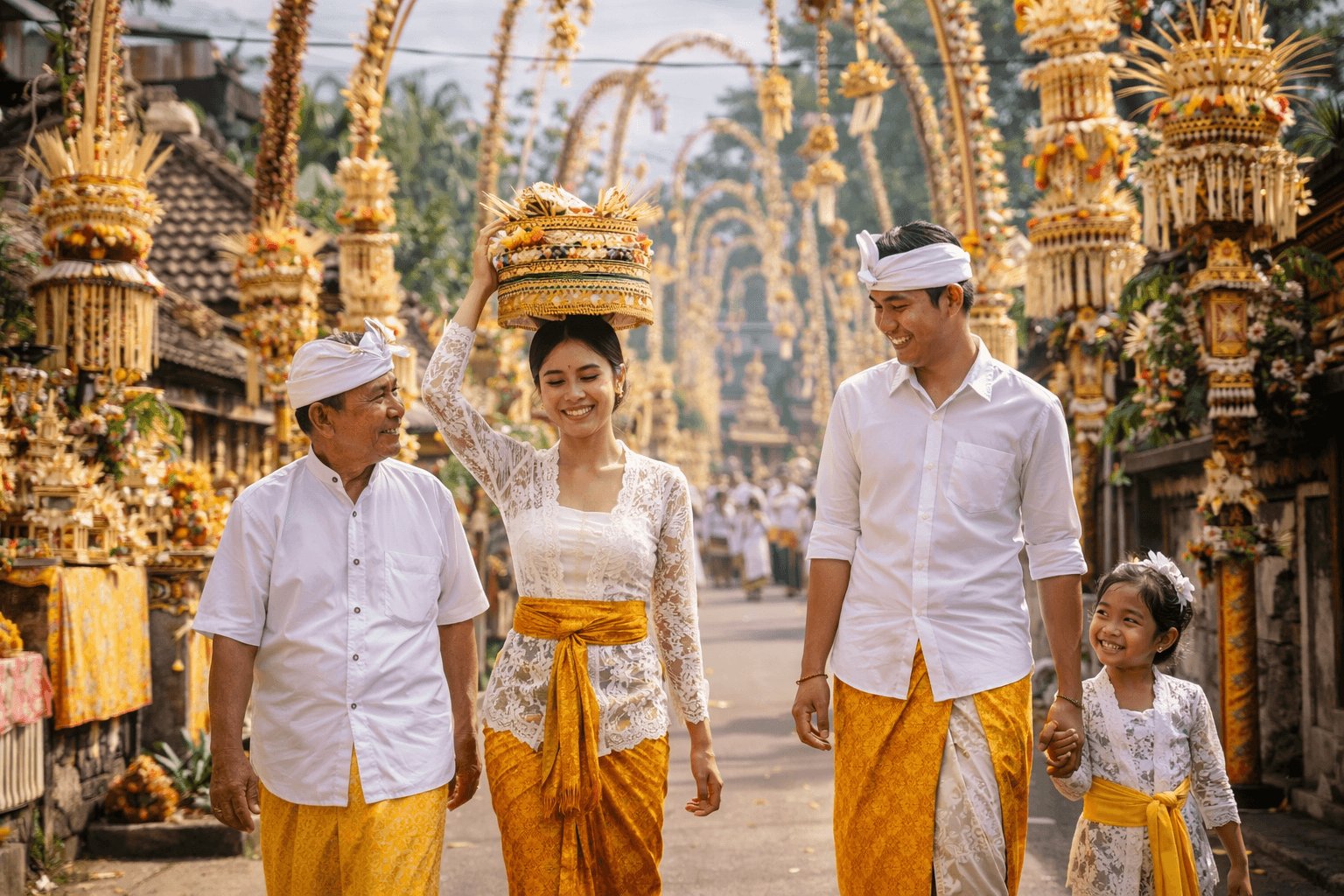
A defining feature of Galungan is the penjor, an elegantly decorated bamboo pole adorned with offerings, young coconut leaves, and other natural materials. Communities erect Penjor Bali poles in front of homes and along village roads to symbolize prosperity and gratitude toward the Creator. On Galungan day itself, families dress in traditional attire, visit temples to pray, and gather for long communal meals that reinforce family ties.
Kuningan: Farewell to Ancestral Spirits
Kuningan arrives ten days after Galungan, on a Saturday known as Saniscara Kliwon Kuningan, and marks the return of ancestral spirits to the spiritual realm. The name Kuningan comes from kuning, meaning yellow, since yellow rice forms the centerpiece of the day’s offerings and symbolizes prosperity and gratitude.
Two special offerings appear only on this day. Tamiang are circular ornaments woven from young coconut leaves that represent protection and the cyclical nature of life. Endongan symbolize provisions for life’s journey, reminding families of the importance of spiritual sustenance. Balinese Hindus believe the ancestral spirits depart by midday, so prayers and rituals on Kuningan are completed before noon, leaving the rest of the day calm and reflective.
Galungan and Kuningan: Cultural Significance and Community Involvement
Beyond spiritual observance, Galungan and Kuningan bring Balinese culture and community life into full view. Gamelan music accompanies many of the rituals, while traditional dance and shared feasts strengthen social bonds across villages.
Some villages add their own traditions to the period. In Munggu Village, the Mekotek ritual brings together hundreds of local men who carry long wooden poles and clash them together in pyramid formations, a practice believed to ward off bad luck and bring safety for the year ahead. Groups of children also perform Ngelawang, parading a barong bangkung through the streets with traditional music to help drive away evil spirits, a sight many visitors find both lively and memorable.
The preparation and installation of penjor is itself a communal effort, with neighbors often helping each other erect the bamboo poles. The result is a picturesque stretch of decorated streets that reflects the island’s shared devotion and aesthetic sensibility.
Philosophical Underpinnings of Galungan and Kuningan
At its core, Galungan and Kuningan embody the philosophical teachings of Balinese Hinduism. The festivals remind people of the constant inner battle between good and evil, encouraging virtue, self control, and mindfulness through self reflection and purification.
Balinese mythology traces the origin of this victory to a local legend involving Mayadenawa, an oppressive king who forbade his people from worshipping the Hindu gods. According to the Mayadenawa legend, the god Indra intervened and defeated him, restoring spiritual harmony and allowing ancestral spirits to visit their families in peace. Galungan commemorates that victory, while the cyclical 210 day rhythm of the celebration reinforces the idea of continuous spiritual growth through regular introspection.
The Galungan and Kuningan Rituals in Detail
The full sequence of rituals leading up to and following Galungan and Kuningan follows a consistent rhythm each cycle. The table below summarizes the key days for quick reference.
| Timing | Ritual Day | What Happens |
| 3 days before | Penyekeban | Families begin ripening bananas for offerings, symbolizing purification of intention. |
| 2 days before | Penyajaan | Households prepare traditional rice cakes, or jaja, representing unity and the sweetness of life. |
| 1 day before | Penampahan | Livestock is prepared for the feast, symbolizing the release of negative traits within oneself. |
| Day 1 | Galungan | Families dress in ceremonial attire and pray at temples to celebrate the victory of dharma. |
| Day 2 | Manis Galungan | A lighter day of family visits, travel, and shared meals across the island. |
| Day 10 | Kuningan | Ancestral spirits return to the heavens, marked by yellow rice offerings completed before noon. |
| Day 11 | Manis Kuningan | A relaxed closing day with no formal ceremonies, often spent with family and friends. |
Two earlier holy days also shape the preparations. Sugihan Jawa and Sugihan Bali occur six and five days before Galungan, with the first focused on purifying the environment and the second on purifying the self and mind. Tumpek Wariga, held 25 days before Galungan, honors trees and plants in recognition of their role in sustaining life and supplying ceremonial materials.
Symbolism of the Penjor
The penjor stands as the most recognizable symbol of Galungan, and each part carries its own meaning. The bamboo pole represents Mount Agung, the sacred volcano believed to be the abode of the gods. The decorations, including young coconut leaves and crops, signify prosperity and gratitude for the harvest. The woven ornament at the tip, called sanggah cucuk, symbolizes the connection between the earthly and the divine.
Erecting a penjor is a spiritual offering rather than a purely decorative act, acknowledging the blessings of nature and divine providence.
The Legacy of Galungan and Kuningan
Galungan and Kuningan are more than religious festivals. They serve as a living link to Bali’s ancestral traditions and reinforce values of gratitude, humility, and community solidarity that pass down through generations. For visitors, witnessing the celebration offers a rare glimpse into the spiritual heart of Bali, from the craftsmanship behind each offering to the harmony of traditional music and dance.
Tips for Tourists During Galungan and Kuningan
Visiting Bali during this period is rewarding, but a little planning goes a long way. Temples and village roads see heavier traffic in the early mornings, so it helps to avoid scheduling intercity travel or full day excursions before noon. Many local guides and drivers also take time off to attend their own family ceremonies, which means transport can book up quickly.
Because availability tightens during this period, it is worth arranging a Bali car rental with driver a few days in advance rather than waiting until the last minute.
A few etiquette notes also help travelers blend in respectfully. Dress modestly when visiting temples, ask permission before taking photographs during ceremonies, and keep a respectful distance from active rituals. Most ATMs and convenience stores in tourist areas stay open, though smaller money changers and family run shops may reduce their hours or close for part of the day.
Expressions of Balinese Spirituality and Cultural Identity
Galungan and Kuningan capture the essence of Balinese spirituality and cultural identity. Through elaborate rituals, communal activity, and philosophical reflection, the festivals express the island’s dedication to dharma and to honoring ancestral legacies.
As Bali continues to navigate modern life, the steady observance of these ceremonies shows the resilience of its cultural and spiritual heritage. If you find yourself on the island during this sacred window, a simple Selamat hari raya Galungan, meaning happy Galungan holiday, is a warm way to greet the people celebrating around you.
Plan Your Journey with Bali Touristic
Balitouristic.com helps travelers book activities and day trips across Bali with a seamless experience and a wide range of options. From cultural immersions to adventure activities and tranquil beach escapes, the platform makes exploring the island simple and enjoyable.
Experience the richness of Balinese culture during this celebration with a well planned itinerary through a Bali Tour Package tailored to your travel style, covering temples, village traditions, and festive decorations.
For a more flexible journey, a Bali car rental with driver lets you travel comfortably across the island while a professional driver helps you explore cultural highlights safely and at your own pace.

Frequently Asked Questions about Galungan and Kuningan
What is the meaning of Galungan and Kuningan?
They celebrate the victory of dharma over adharma and honor ancestral spirits who visit the earth for ten days.
When is the next Galungan and Kuningan?
The most recent Kuningan fell on 27 June 2026. The next Galungan is expected on 13 January 2027, followed by another cycle on 11 August 2027.
How long does the celebration last?
The full celebration lasts ten days, starting with Galungan and closing with Kuningan.
What are penjor and why are they important?
Penjor are decorated bamboo poles placed along streets and in front of homes as symbols of prosperity and gratitude toward the Creator.
Will traffic or transport be affected during this period?
Yes. Village roads and temple areas tend to see heavier traffic in the early mornings, and some drivers and guides take time off to observe the ceremonies with their own families.
Can tourists witness these ceremonies?
Yes, visitors can observe the celebrations respectfully, especially in villages and temples, while keeping a respectful distance from active rituals.
What should visitors prepare before attending?
Visitors should dress modestly, ask before taking photographs, and stay aware that some shops or services may have reduced hours.