

Last updated: June 2026
Tucked away in the highlands of Tabanan, Yeh Hoo Waterfall is one of Bali’s best-kept secrets. Unlike the more popular waterfalls on the island, this hidden gem sits just a short walk from the Jatiluwih Rice Terraces, a UNESCO World Heritage Site, yet it sees only a fraction of the visitors. The result is a peaceful, uncrowded spot that feels completely off the beaten path.
Whether you’re looking to cool off after exploring the rice terraces, spot some local wildlife, or simply sit beside a waterfall in the middle of the jungle, Yeh Hoo Waterfall delivers a genuine escape into Bali’s untouched nature. This guide covers everything you need to plan your visit.
| Detail | Info |
| Location | Senganan Village, Penebel, Tabanan Regency, Bali |
| Also known as | Air Terjun Yeh Hoo / Giri Kusuma Waterfall |
| Waterfall height | Approximately 8 to 10 meters |
| Trek from parking | 4 to 15 minutes (downhill path) |
| Entrance fee | IDR 10,000 (adult) / IDR 5,000 (child) |
| Opening hours | Approx. 8:00 AM to 6:00 PM (no official hours) |
| Best time to visit | February to April; arrive before 10:00 AM |
| Nearest landmark | Jatiluwih Rice Terraces (~2 km away) |

Local Legends and Mythology of Yeh Hoo Waterfall
Like many natural landmarks in Bali, Yeh Hoo Waterfall carries a sense of spiritual energy that goes beyond its scenic beauty. While specific documented legends about this waterfall are rare, it shares the sacred significance that Balinese culture attributes to waterfalls across the island.
Sacred waterfalls in Balinese culture
In Balinese Hinduism, waterfalls are often seen as sacred places where the gods reside. Local communities regard them as powerful natural sites that can cleanse and purify those who approach with reverence. Yeh Hoo is no different. Locals occasionally visit for melukat, a traditional Balinese purification ritual, particularly on holy days such as Purnama (full moon) and Tilem (new moon).
Water as a life-giving force
In Balinese mythology, water represents abundance, renewal, and the connection between the human world and the divine. The name Yeh Hoo itself comes from the Balinese language, where “yeh” means water. The waterfall is also sometimes referred to locally as Giri Kusuma Waterfall, an alternative name worth knowing when asking for directions.
Visitors often describe a calm, meditative quality to the place. If you’re interested in Bali’s spiritual heritage, spending time here offers a quiet moment to reflect on the deep relationship between Balinese culture and the natural world.
The Trekking Experience to Yeh Hoo Waterfall
One of the best things about visiting Yeh Hoo Waterfall is that the journey there is genuinely enjoyable. The trail from the parking area takes you through small rice terraces, bamboo groves, and lush tropical vegetation before revealing the waterfall at the bottom of a stairway descent.
Trail distance and difficulty
The trek to Yeh Hoo Waterfall is short and accessible for most fitness levels. From the parking area, it takes around 4 to 15 minutes on foot depending on your pace. The path goes downhill toward the waterfall, so the climb back up is where you’ll feel the burn. Parts of the trail include stairways with railings, which makes the descent manageable.
After about two minutes into the walk, you’ll start hearing the sound of cascading water. That’s your cue that the waterfall is close. The trail is not technical, so you don’t need hiking gear. However, sturdy footwear is strongly recommended, especially after rain when the dirt sections get slippery.
The waterfall itself
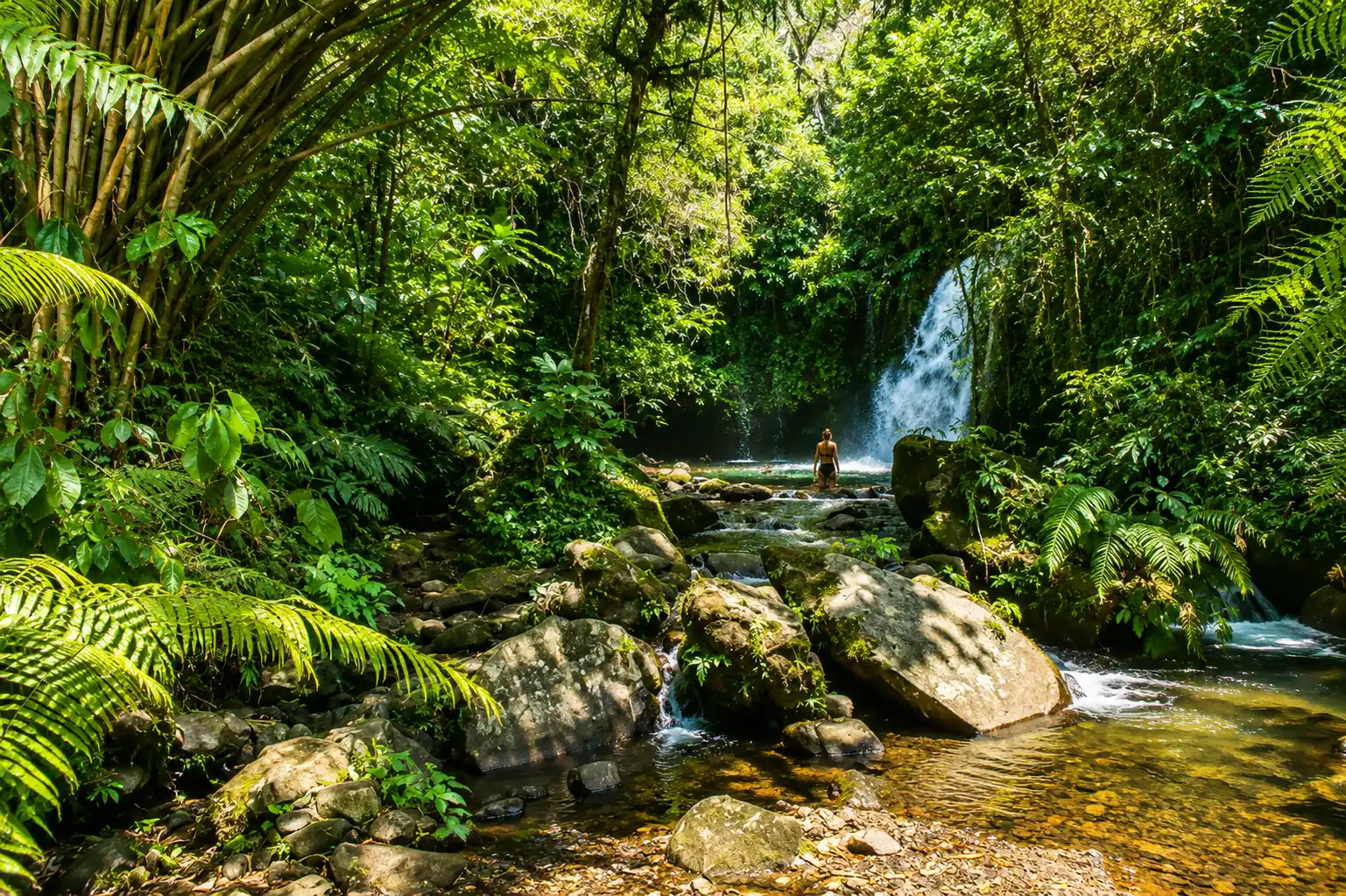
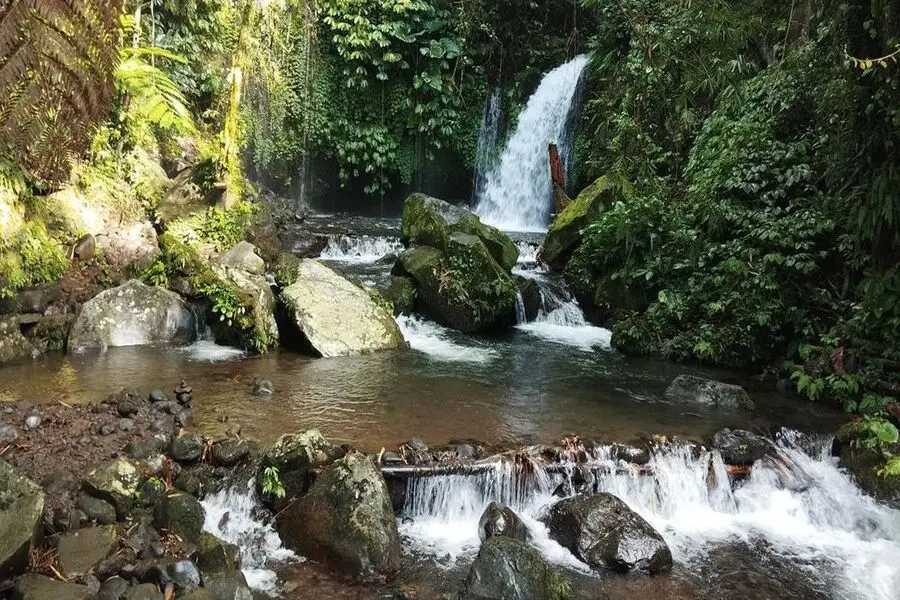
Upon arrival, Yeh Hoo Waterfall greets you with a cascade of clear mountain spring water flowing down a rocky cliff approximately 8 to 10 meters high. The water collects in a natural pool at the base, surrounded by mossy rocks, ferns, bamboo, and dense tropical forest. There is also a small shelter at the bottom where you can leave your belongings.
This waterfall is modest in scale compared to Bali’s famous multi-tiered falls. However, what it lacks in size it more than makes up for in atmosphere. The setting feels raw and unspoiled, and the sound of birds and running water creates a deeply calming environment.
Natural Beauty and Peaceful Atmosphere
Reaching Yeh Hoo Waterfall feels like stepping into a different world. The natural surroundings are largely untouched, and on most days you’ll have the place almost entirely to yourself. The sunlight filtering through the jungle canopy creates beautiful lighting conditions, especially in the morning.
The pool at the base of the waterfall is refreshing and inviting. The water flows directly from mountain springs, which keeps it cool and clear year-round. It’s a perfect spot to wade in and cool off after the walk down, or simply sit on the rocks and take in the surroundings.
Wildlife and flora at Yeh Hoo Waterfall
The area surrounding Yeh Hoo Waterfall is rich in tropical biodiversity. The forest is home to tall palms, bamboo, tropical hardwood trees, ferns, wildflowers, and various types of vines. Butterflies and dragonflies are common sights along the trail.
In terms of fauna, visitors frequently spot colorful birds, lizards, and small monkeys. The dense jungle also shelters tree frogs and other small forest creatures. If you’re a wildlife or nature photography enthusiast, bring a good camera because there is plenty to capture along the way.
Things to do at Yeh Hoo Waterfall
- Swimming and wading: The pool at the base is clean and refreshing. It’s on the shallow side in some areas, but it’s ideal for cooling off on a hot day. Bring swimwear and a towel.
- Photography: The waterfall, surrounding jungle, and trail through the rice terraces all offer excellent photo opportunities. Morning light is especially beautiful here.
- Nature walks: Explore the forest and rice terrace path at your own pace. The trail is short but full of interesting plant and animal life.
- Relaxing: There’s no rush here. Bring a snack, sit by the water, and enjoy the rare quiet that’s hard to find in Bali’s more popular spots.
Best Time to Visit Yeh Hoo Waterfall
Timing your visit well can make a big difference to your experience at Yeh Hoo Waterfall. Here are the key things to consider.
Best season
The ideal time to visit is between February and April. During this window, the dry season is ending or just beginning, meaning the surrounding landscape is at its most lush and green after the rains. The waterfall also tends to flow at its strongest during this period. That said, Bali’s weather is unpredictable year-round, so always check the forecast before heading out.
The dry season runs from April to October and is generally the safest time for outdoor activities. The trails are less slippery and conditions are more stable. The rainy season runs from November to March and can make the path muddy and the rocks significantly more slippery. If you visit during the wet months, take extra care on the trail.
Best time of day
Visiting early in the morning, ideally before 10:00 AM, gives you the best light for photography and the coolest temperatures for the walk. It also means fewer people around, which adds to the peaceful atmosphere. Midday can get warm, and the waterfall occasionally gets busier with local visitors on weekends.
How to Get to Yeh Hoo Waterfall
Yeh Hoo Waterfall is located in Senganan Village, Penebel District, Tabanan Regency, Bali. It sits in the Jatiluwih area, less than 2 km from the Jatiluwih Rice Terraces entrance. Once you reach Jatiluwih, finding the waterfall is straightforward as signage for “Air Terjun Yeh Hoo” appears along the road.
By car or motorcycle
From Denpasar, the drive takes approximately 1.5 to 2 hours depending on traffic. Take the Denpasar to Tabanan road, pass through Tabanan City, and continue toward the Jatiluwih area. The waterfall is well signposted once you enter the Jatiluwih tourism zone. The road leading to the parking area is narrow but accessible by motorbike and small sedan.
From Ubud, expect around 1.5 hours. From Seminyak or Kuta, allow approximately 2 hours. The drive itself is scenic and passes through quiet villages, rice fields, and mountain landscapes. If you want the flexibility to stop along the way and explore at your own pace, the easiest option is to hire a car with driver in Bali for the day.
By tour or private driver
Many visitors include Yeh Hoo Waterfall as part of a Jatiluwih day trip, combining it with the Jatiluwih Rice Terraces, Ulun Danu Beratan Temple, and other Tabanan attractions. If you’d prefer to leave the logistics to someone else, booking a private Bali day tour is a great option. A local driver will pick you up from your hotel, handle navigation, and can offer insights into the region’s history and culture along the way.
Visitor Information for Yeh Hoo Waterfall
Entrance fee
There is no formal ticketed entrance to Yeh Hoo Waterfall. Instead, visitors are asked for a small donation at the warung (local stall) near the parking area. The suggested donation is IDR 10,000 per adult and IDR 5,000 per child. This contribution goes toward maintaining the trail and surrounding area. A small parking fee may also apply.
Opening hours
There are no officially set opening hours for Yeh Hoo Waterfall. In general, the site follows the same informal hours as the Jatiluwih area: approximately 8:00 AM to 6:00 PM daily. For the best experience, plan to arrive between 8:00 AM and 10:00 AM.
Things to remember
- Respect the environment: keep the area clean, stay on the trail, and do not disturb wildlife or offerings.
- Watch your step near the water: the rocks at the base of the waterfall are extremely slippery. Take your time, especially when moving between wet rocks.
- Avoid visiting during or after heavy rain: the trail becomes muddy and the rocks get dangerously slick during the rainy season.
- There are no facilities inside: no restrooms, no food stalls, and no changing rooms beyond the basic shelter at the base. Stop at the warung at the entrance for drinks and snacks before heading down.
What to bring
- Sturdy, closed-toe shoes or sandals with good grip
- Swimwear and a towel if you plan to swim
- A camera or smartphone for photos
- Water and snacks (buy at the warung near the entrance)
- A change of clothes if you want to swim
- Sunscreen and insect repellent
Nearby Attractions to Explore
Visiting Yeh Hoo Waterfall pairs perfectly with other highlights in the Tabanan region. Here are the top spots to combine into a full day out.
- Jatiluwih Rice Terraces: Less than 2 km away, the Jatiluwih Rice Terraces are a UNESCO World Heritage Site known for their sweeping landscape and ancient subak irrigation system. Most visitors pair both attractions on the same day trip.
- Taman Ayun Temple: A majestic royal temple about 30 minutes from Yeh Hoo Waterfall, surrounded by beautiful gardens and a moat. It offers a deep look into Balinese architecture and spirituality.
- Pura Luhur Batukaru: One of Bali’s most important mountain temples, located about 20 minutes from Jatiluwih. Set within a lush jungle garden at the foot of Mount Batukaru, it’s a deeply spiritual and visually stunning destination.
- Sangeh Monkey Forest: About 45 minutes away in Badung Regency, Sangeh is home to hundreds of long-tailed macaques. The forest is dominated by tall nutmeg trees and has a calm, atmospheric feel.
Explore Tabanan with Bali Touristic
The Tabanan region is one of Bali’s most rewarding areas to explore, and Yeh Hoo Waterfall is just one reason to make the trip. Whether you want to combine it with the Jatiluwih Rice Terraces, visit Pura Luhur Batukaru, or simply enjoy a relaxed day in the highlands, Bali Touristic can help you put together a comfortable and memorable itinerary.
Our experienced local drivers know the Tabanan area well and can tailor the day around your interests. Getting around is easy and stress-free when you have someone who knows the roads, the best parking spots, and the local stories behind each destination.
Frequently Asked Questions About Yeh Hoo Waterfall
Where is Yeh Hoo Waterfall located?
Yeh Hoo Waterfall is located in Senganan Village, Penebel District, Tabanan Regency, Bali. It sits within the Jatiluwih tourism area, less than 2 km from the Jatiluwih Rice Terraces.
How far is the walk to Yeh Hoo Waterfall?
The walk from the parking area to the waterfall takes around 4 to 15 minutes depending on your pace. The path goes downhill through rice terraces and jungle. The return climb is slightly more demanding, so be prepared for a short but steady uphill walk back.
How tall is Yeh Hoo Waterfall?
Yeh Hoo Waterfall stands approximately 8 to 10 meters high. It is not the tallest waterfall in Bali, but its jungle setting and clear mountain spring water make it a genuinely beautiful spot. The natural pool at the base is perfect for a cool dip.
What is the entrance fee for Yeh Hoo Waterfall?
There is no official ticket. Visitors are asked for a small donation of around IDR 10,000 per adult and IDR 5,000 per child at the warung near the entrance. A small parking fee may also be collected separately.
What is the best time to visit Yeh Hoo Waterfall?
The best time to visit is between February and April, when the landscape is lush and the waterfall flows at its strongest. For the best experience on the day of your visit, arrive early in the morning before 10:00 AM to avoid the heat and enjoy the most peaceful atmosphere.
Can you swim at Yeh Hoo Waterfall?
Yes, you can swim or wade in the pool at the base of the waterfall. The water is cool and clear, fed by mountain springs. Some sections of the pool are shallow and rocky, so take care when moving around the wet rocks. Bring swimwear and a towel.
Is Yeh Hoo Waterfall suitable for families with children?
Yes, the trail is short and not particularly technical, making it manageable for children and older visitors. However, the rocks near the waterfall can be very slippery, so supervise young children carefully near the water.