
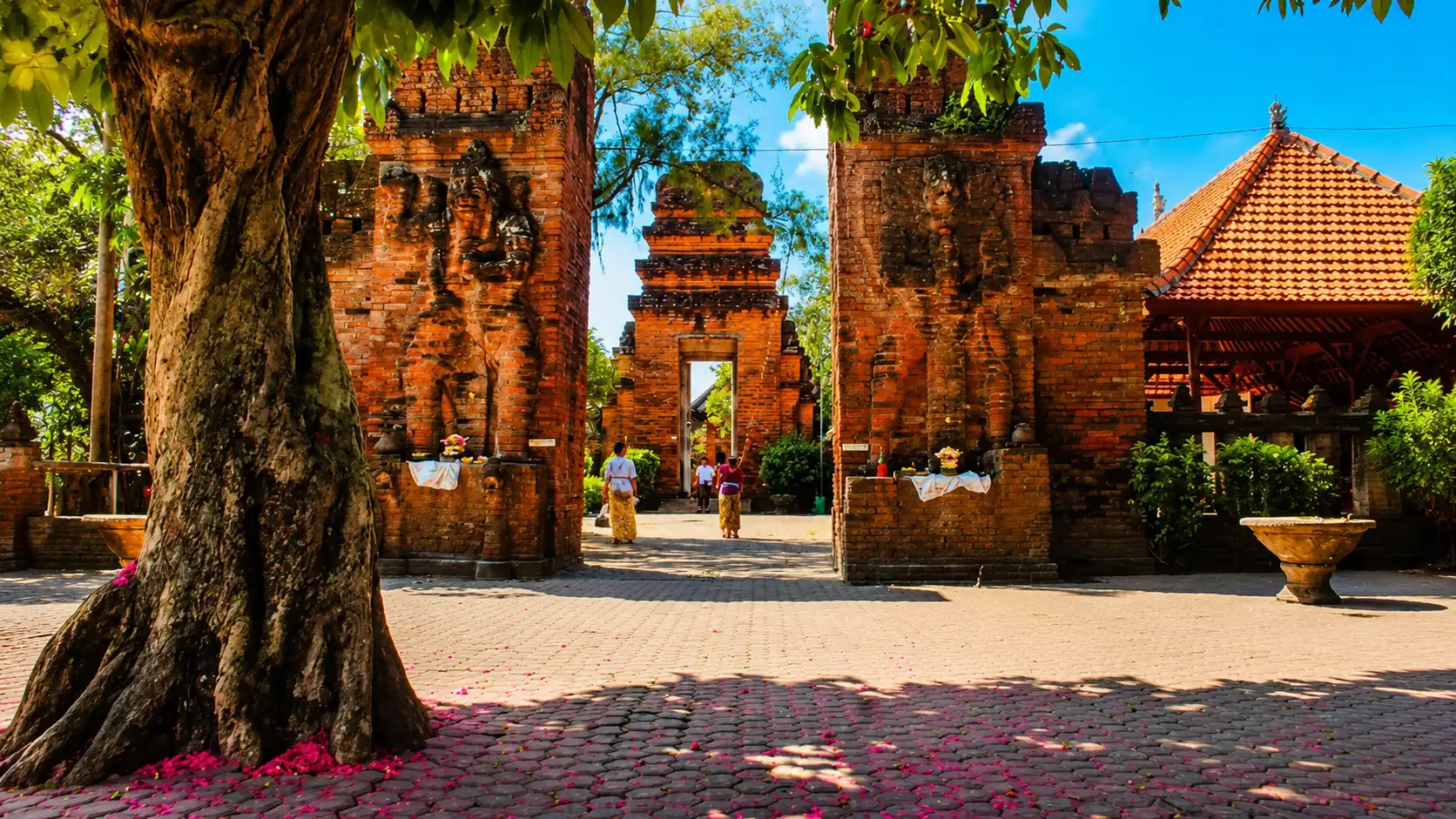
Maospahit Temple is one of Denpasar’s oldest Hindu sites. It traces back to the Majapahit Kingdom, which shaped much of Bali’s culture. Unlike most Balinese temples, it uses bare red brick instead of carved grey stone. So it stands out the moment you walk through the gate. This guide covers its history, its look, and what to know before you visit.

What Is Maospahit Temple?
Maospahit Temple sits in Pemecutan Kaja, North Denpasar. Locals also call it Pura Maospahit. Records date it to 1278 AD. Sri Kebo Iwa, a well known architect, built it for the Badung kingdom. Because it borrows from East Java’s Majapahit style, it looks quite different from other Bali temples nearby. It is one of several worthwhile heritage stops in the city. Check our Denpasar attractions guide for more places to explore nearby.
Visitor Information
📍
Jl. Sutomo No. 6, Pemecutan Kaja, North Denpasar, Bali 80231, in the heart of Denpasar city
🕐
Open daily, generally until the mid afternoon (around 4:00 PM); hours may shift during ceremonies
💰
No fixed price. Entry is by voluntary donation
🅿️
Available nearby for private vehicles
⏱️
About 30 to 45 minutes
📸
Morning light works best. Avoid photographing devotees during active prayers or ceremonies
History and Architecture of Maospahit Temple
Maospahit Temple carries centuries of Balinese and Javanese history within its walls. Its story spans from a 13th century founding to a hard recovery after a major earthquake, yet the temple has kept its original character through it all. The next sections walk through how it came to be and why its design still stands apart from every other temple in Bali.
Origins in the Majapahit era
Old records called the Babad Wongayah Dalem tell the story. Sri Kebo Iwa built the temple in Saka year 1200, or 1278 AD. He built it as part of his sacred duty to Badung. The main shrine, Candi Raras Maospahit, uses thick red brick and terracotta detail. This style closely matches old ruins in Trowulan, East Java, once the heart of the Majapahit Empire. Around 1553, another builder named I Pasek added a second shrine. It is called Candi Raras Majapahit. He studied temple design in Majapahit first, then built it back home.
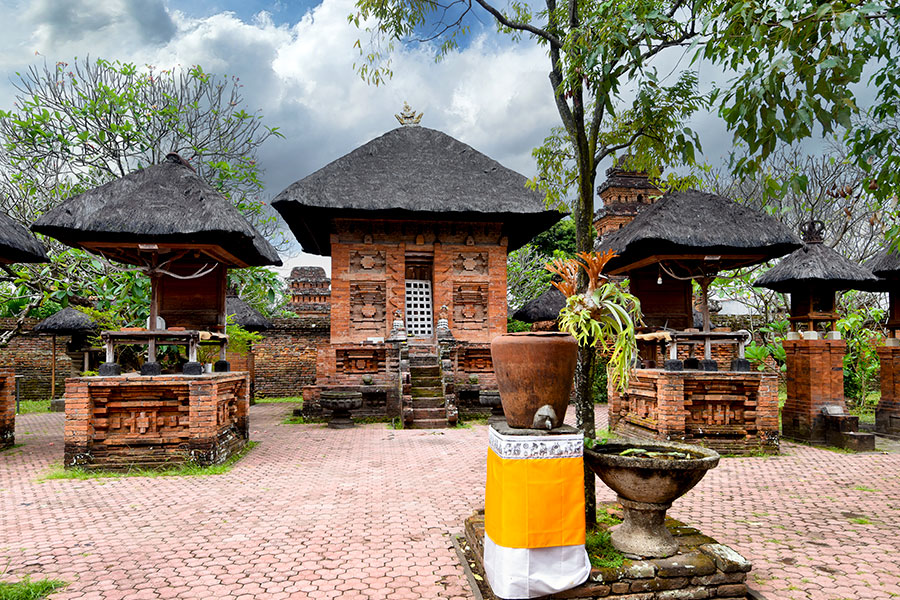
Maospahit Temple is also unique in one more way. It is the only temple in Bali built around the Panca Mandala idea. Most Balinese temples place their most sacred spot toward the mountain. This temple places it at the center instead. Five courtyards surround that center point. The layout echoes the old Majapahit court, not typical Balinese design.
Restoration after the 1917 earthquake
In 1917, a strong earthquake hit Bali. It damaged many old sites, including Maospahit Temple. Several structures fell or cracked. After that, local builders worked hard to restore it. They used old Balinese methods to keep it true to style. They rebuilt the roofs, gates, and carvings by hand. Their work kept the temple’s history alive for today’s visitors.
What Makes Maospahit Temple Special
Maospahit Temple stands out for more than its age. It gives Denpasar a direct link to the Majapahit era. Few other Bali temples offer the same feel. Here are some of its key features.
- Majapahit style architecture. Bare red brick walls, thick outer walls, split gates, and a carved main doorway give it an East Java look. You will spot carved figures of Bima and Garuda on the gate.
- Sacred carvings and relics. Stone carvings of gods such as Indra, Yama, Kwera, and Waruna line the walls. They offer a window into old Bali Java religious art.
- Panca Mandala layout. Five courtyards surround the main shrine at the center. No other temple in Bali uses this layout.
- An active place of worship. The temple still holds regular ceremonies today. So you get to see real Balinese Hindu tradition, not just an old ruin.
Want to see more of Bali’s sacred sites? Our guide to the best temples in Bali covers twenty spots worth a detour. Two easy pairings are Rambut Siwi Temple on Bali’s west coast and Jati Batur Temple by Lake Batur.
For a stop closer to Denpasar itself, Blanjong Temple in Sanur holds Bali’s oldest known inscription and pairs naturally with a Maospahit visit.
What to Expect When Visiting Maospahit Temple
A visit here takes most people thirty to forty five minutes. That is enough time to walk the courtyards and take in the details. Here is what stands out during a typical visit.
- Guided tours. Local guides can walk you through the five courtyards. They explain the story behind each shrine, gate, and carving.
- Historical artifacts. Old stone carvings and inscriptions sit around the complex. They reveal details about Bali’s early Hindu Buddhist roots.
- A quiet, uncrowded feel. Maospahit Temple draws far fewer visitors than Bali’s bigger temples. So you can explore at your own pace.
Entrance Fee, Opening Hours, and Facilities
Maospahit Temple has no fixed entrance fee. Visitors may leave a small donation at the gate. This helps fund upkeep and ceremonies. The temple opens daily and tends to close in the mid afternoon. Hours can shift during big ceremonies. So check locally first if you plan to visit during a festival.
Basic facilities sit nearby. You will find parking for private cars and simple restrooms. Since this is still an active temple, dress with care. Wear a sarong and sash. Staff often have these on hand if you forget your own. Stay quiet and respectful if a ceremony is underway.
Festivals and Ceremonies at Maospahit Temple
Like all Balinese temples, Maospahit Temple holds its own Odalan, or anniversary. This happens twice a year, timed to the Balinese Pawukon calendar. Expect offerings, dance, and processions during this time. The temple also marks Galungan, Kuningan, and Nyepi each year. Local devotees gather to pray and give offerings. Our guide to local ceremonies in Bali explains how these dates can shape your travel plans. From time to time, the temple also hosts traditional Balinese dance and gamelan music shows tied to festivals. The old red brick backdrop makes these events feel special.
If you plan a visit around a festival, check exact dates with a local guide first. These events follow the Balinese calendar, so dates shift each year. Some areas may also close off while locals perform their rituals.
Plan Your Bali Heritage Tour with Bali Touristic
Maospahit Temple is just one piece of Bali’s rich past. Want to see it along with other old temples and hidden gems near Denpasar? Bali Touristic’s private tour packages can build a trip around your interests. Each tour comes with a local driver who knows the story behind every site, so you get the context that a solo visit often misses.
Since Maospahit Temple sits off the usual tourist track, it rarely shows up on standard group tours. A private itinerary solves that easily, letting you fit it in alongside other Denpasar stops without feeling rushed. If you would rather set your own pace instead of following a fixed schedule, Bali Touristic’s car rental with driver service works well too. You get a comfortable ride, a driver who knows the area, and the freedom to stop wherever catches your eye.
Frequently Asked Questions About Maospahit Temple
What is Maospahit Temple known for?
Maospahit Temple is known for its rare Majapahit style architecture. It uses bare red brick instead of the grey stone found at most Balinese temples. It is also the only temple in Bali built with the Panca Mandala layout, placing its most sacred shrine at the center.
How old is Maospahit Temple?
Local records date Maospahit Temple to 1278 AD, or Saka year 1200. Sri Kebo Iwa, a well known architect of the Badung kingdom, built the original shrine.
Is there an entrance fee for Maospahit Temple?
No. Maospahit Temple does not charge a fixed entrance fee. Visitors can leave a small voluntary donation at the gate to help fund upkeep and ceremonies.
What should I wear when visiting Maospahit Temple?
Dress modestly and wear a sarong and sash, since this is still an active place of worship. Staff at the entrance often have sarongs available if you do not bring your own.
How long does a visit to Maospahit Temple take?
Most visitors spend thirty to forty five minutes at Maospahit Temple. That is enough time to walk through the courtyards and take in the architecture.
Is Maospahit Temple open every day?
Yes. Maospahit Temple opens daily and generally closes in the mid afternoon. Hours can shift during major ceremonies, so it helps to check locally if you plan to visit during a festival period.