

Peguyangan Waterfall, tucked into the cliffs of Nusa Penida in Klungkung Regency, is one of Bali’s most striking yet demanding destinations. It blends natural beauty, spiritual ritual, and a genuinely thrilling trek down to the coast. Because it perches right above the Indian Ocean, it easily ranks among the top Klungkung interesting places to visit, and it is not something you want to skip during a Nusa Penida trip.
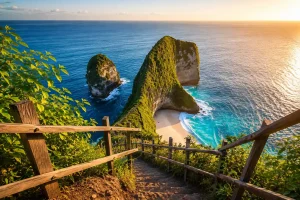
Three details make this stop so memorable. First, a bright blue staircase winds along the cliff face and frames some incredible panoramas. Next, jagged cliffs rise on either side, adding drama to every photo. Finally, past a small temple at the bottom, a natural pool carved into the rock offers a quiet place to rest. Together, these elements create a soothing atmosphere that is hard to match anywhere else on the island.

History and Spiritual Meaning of Peguyangan Waterfall
Peguyangan Waterfall carries more than scenic value. Local Hindus consider its water purifying, so many travelers come here specifically to perform melukat, a self-cleansing ritual. Because a temple sits right beside the falls, the whole site feels sacred, which is part of why it draws both curious tourists and devoted worshippers.
Location and Access to Peguyangan Waterfall
Peguyangan Waterfall sits in the southwestern part of Nusa Penida, about 45 minutes from Toyapakeh Harbor. Alternatively, you can cross from Kusamba Harbor. Once you land, rent a motorbike or hire a local driver to reach Batukandik Village, where the waterfall is located. The final stretch is the toughest part: a steep staircase, famous for its blue paint, drops roughly 700 steps down the cliff, so pace yourself and bring water.
| Trail Detail | Info |
| Distance (round trip) | About 3.4 km (2.1 mi) |
| Elevation change | About 170 m (561 ft) |
| Typical duration | 1 to 1.5 hours |
| Steps on the staircase | Approximately 700 |
| Entrance fee | IDR 15,000 to 20,000 per person |
Current Access Status and Safety Update
In January 2025, a landslide damaged the rock ledge near the base of Peguyangan Waterfall, and several recent visitor reports suggest the natural pool and temple area are still not consistently safe to reach. Some travelers have been redirected to nearby alternatives, such as Tembeling Waterfall, when conditions look risky. Before you commit to the descent, check recent reviews or ask your driver about the latest conditions, since the situation can change with the weather and ongoing repair work.
Highlights of Peguyangan Waterfall
For travelers hunting a genuine Nusa Penida hidden waterfall away from the crowds, this is about as good as it gets. Here is what stands out most:
- The iconic blue staircase clings to the cliff and delivers sweeping views of the open sea as you climb down.
- A natural pool with clear water sits inside a small cave near the base, forming what feels like a calm, sheltered stream.
- From the top of the cliff, the panoramic ocean view alone is worth the trip, especially with the breeze and the sound of waves below.
- Afternoon visitors often catch a striking sunset, when orange light meets the blue sea for a genuinely postcard-worthy scene.
- The mix of crashing waves, seabird calls, and the waterfall itself creates a kind of natural harmony you will not find inland.
Other names for Peguyangan waterfall
Locals and travelers refer to this spot by several names, so do not be surprised if you see it listed differently online. You might come across Guyangan Waterfall, the Blue Stairway to Heaven, or Air Terjun Peguyangan on Google Maps and travel blogs. They all point to the same location.
Spiritual Atmosphere and Sacred Sites
Beyond the natural beauty, this site carries a distinct spiritual weight. Here is what shapes that atmosphere:
- The waterfall itself is considered sacred, and locals often use its water for religious ceremonies, so dress modestly and stay respectful near the temple.
- A small temple close to the falls serves as a prayer space for the local community, and it is worth pausing here to take in the calm.
- The temples around the site hold real local history, and many Hindus visit specifically to find peace or seek blessings.
Things to Do at Peguyangan Waterfall
There is plenty to keep you busy once you reach the bottom of the stairs:
- Take a dip in the natural pool at the base, though only if current conditions confirm it is safe and open.
- Photograph the scene, since the blue stairs, coral cliffs, and open sea rarely combine this well anywhere else in Bali.
- Sit for a moment of meditation or quiet reflection, since the spiritual atmosphere here feels unusually calming.
- Watch for marine life from the clifftop, including seabirds and, occasionally, dolphins further out.
- Trek the blue staircase itself, which doubles as a genuinely fun physical challenge for active travelers.
- Chat with a local guide to learn more about the temple, the rituals, and what this place means to Balinese Hindu tradition.
- Pack a simple picnic and enjoy it with an ocean view, if you do not mind carrying your own lunch down the stairs.
- Time your visit for sunset, when the light turns the whole cliff a warm, romantic orange.

Flora and Fauna around Peguyangan Waterfall
This stretch of coastline hosts a mix of hardy tropical plants, including sea pandanus and coconut trees that cling to the cliffside. Seabirds circle the area often, which makes the spot a nice stop for casual birdwatchers and photographers alike.
Facilities at Peguyangan Waterfall
Facilities stay fairly basic given the remote setting. You will find a parking area at the top, a few small stalls selling drinks and snacks, and local guides who can walk you through the trek if you would like company or extra safety.
Tips for Visiting Peguyangan Waterfall
A little preparation goes a long way here, so keep these pointers in mind before you head down the stairs:
- Build up your stamina beforehand, since the 700-step climb back up is more demanding than it looks.
- Wear lightweight, non-slip shoes, since the stairs get slippery fast in wet conditions.
- Bring your own water and snacks, because options near the site are limited.
- Visit early morning or late afternoon to dodge the harshest sun, and skip the rainy season entirely if you can.
- Dress modestly out of respect for the temple, since this remains an active place of worship.
Visitor Information and Practical Tips
Best time to visit
Morning visits work best if you want to dodge the heat and enjoy a quieter trail. Skip the rainy season altogether, since wet stairs turn genuinely dangerous and the waterfall’s flow gets much stronger and harder to manage safely.
Safety and preparation
A safe visit starts with the right gear and a bit of caution, so keep these points in mind:
- Wear comfortable, non-slip trekking shoes.
- Pack a hat, sunscreen, and a small bag for your essentials.
- Take the stairs slowly, especially if you are traveling with children.
Entrance ticket
Entry usually runs about IDR 15,000 to 20,000 per person, and that fee typically covers sarong rental since you will pass a sacred temple along the way. Bring cash, since card payments are not available, and expect the price to shift occasionally based on local management.
Rules and etiquette at the site
Since this remains an active place of worship, a few simple courtesies go a long way:
-
- Keep the area clean and avoid littering.
- Respect other visitors performing rituals at the temple.
- Keep your voice down and stay mindful of local customs near the waterfall and temple.
More Waterfalls to Explore in Bali
If your Bali itinerary stretches beyond Nusa Penida, North Bali’s highlands hide a handful of equally rewarding waterfalls worth the extra drive.
- For a sacred twin-stream experience, head to Campuhan Waterfall in Gitgit Village, where two rivers merge over terraced rock and locals still use the site for cleansing rituals.
- Thrill-seekers might prefer canyoning at Gitgit Waterfall instead, where certified guides lead you through rappelling drops and natural water slides in the same highland district.
- Carat Waterfall offers a quieter, more remote alternative, with a dramatic 100-meter cascade tucked into North Bali’s less-visited countryside.
- And for travelers chasing hidden gems, Colek Pamor Waterfall delivers a jungle trek and a cool natural pool that rarely sees crowds.
Ready to Experience Peguyangan Waterfall?
Peguyangan Waterfall tends to stay with people long after they leave Nusa Penida. The blue stairs, the crashing ocean below, and the quiet temple pool at the base make the trip feel challenging, sacred, and beautiful all at once.
If you would rather skip the logistics, browse our bali tour package for Nusa Penida day trips that pair Peguyangan Waterfall with other highlights like Kelingking Beach, Angel’s Billabong, and Broken Beach, all with a local guide and transport included.
Landing in Bali soon? Start things off smoothly with our airport transfer service, which gets you from Ngurah Rai Airport to any hotel on the island without the hassle.
Prefer more flexibility once you are on the mainland side of your trip? Our rent a car with driver service pairs you with an experienced local driver who knows these winding coastal roads well.

Frequently Asked Questions About Peguyangan Waterfall
How do you get to Peguyangan Waterfall in Nusa Penida?
Peguyangan Waterfall sits in Batukandik Village, in southwestern Nusa Penida. Start with a fast boat from Sanur or Kusamba Harbor to Toyapakeh or Banjar Nyuh Harbor, which takes 30 to 45 minutes. From there, rent a motorbike or hire a local driver for about 45 minutes to reach Batukandik Village, where the blue staircase begins.
How many steps make up the Peguyangan Waterfall staircase?
The famous Peguyangan blue staircase runs roughly 700 steps down the cliff face. Sections get narrow and steep, so solid fitness and non-slip shoes matter here. Plan for 30 to 45 minutes going down, and closer to 45 to 60 minutes coming back up, since the climb is noticeably harder.
What does it cost to enter Peguyangan Waterfall?
Expect to pay around IDR 15,000 to 20,000 per person, which usually covers sarong rental for the temple area. Bring cash, since cards are not accepted, and keep in mind the price can shift depending on local management.
Is Peguyangan Waterfall safe to visit right now?
It is generally safe for visitors in good physical condition who take sensible precautions, though the January 2025 landslide means the pool and temple area may not always be accessible. Avoid the rainy season from November through March, hold the railings on the staircase, wear non-slip shoes, and skip the climb if you have knee or mobility concerns. Watch children closely on the stairs.
When is the best time to visit Peguyangan Waterfall?
Aim for the dry season between April and October, and try to arrive between 7 and 9 in the morning to beat both the heat and the crowds. Arriving by 8am usually means better lighting for photos and a much quieter experience.
Is Peguyangan Waterfall also known by another name?
Yes. You will sometimes see it listed as Guyangan Waterfall, Nusa Penida blue stairs, or Mata Air Peguyangan, especially on Google Maps and older travel blogs. They all refer to the same site.
Are the natural pools at Peguyangan Waterfall still open after the landslide?
Access has been inconsistent since the January 2025 landslide damaged part of the rock ledge near the base. Some visitors report the pools remain closed, so check recent reviews or ask a local driver about current conditions before planning to swim.
Can I book a Nusa Penida tour that includes Peguyangan Waterfall?
Yes. Our bali tour package covers full-day Nusa Penida trips with a private guide, fast boat transfer, and all on-island transport. We include Peguyangan Waterfall alongside the island’s most iconic spots, so you get a well-organized day without arranging anything yourself. You’ll find the booking link earlier in this guide, in the “Ready to Experience Peguyangan Waterfall” section.